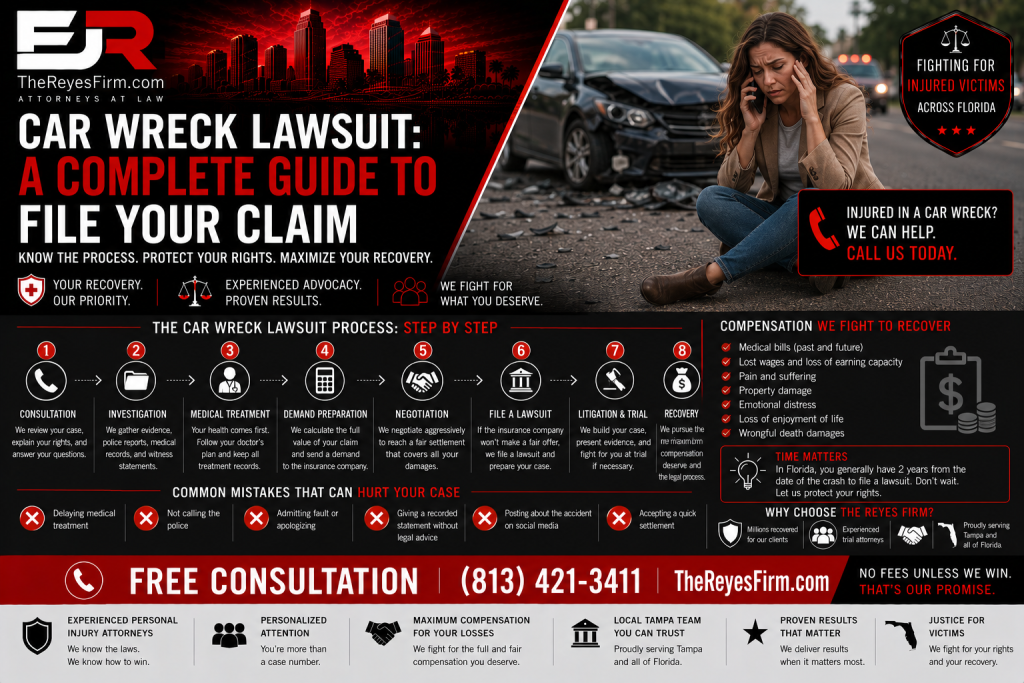
Car Wreck Lawsuit: A Complete Guide to File Your Claim
When an insurance company refuses to pay what your injuries are worth, a lawsuit may be the path to the compensation you deserve. But filing a car accident lawsuit in Florida is not as simple as deciding you want to sue, there are thresholds to meet, a strict deadline, and a process to follow. Here is a clear guide to how a car accident lawsuit works, and when you actually need one. The Reyes Firm Considering a Car Accident Lawsuit in Tampa? Find out if you have a case before the deadline runs. Had a bad day? Contact Us Now 2 Years Deadline to file your lawsuit Fla. Stat. § 95.11(5)(a) Threshold Serious injury needed to sue for pain and suffering Fla. Stat. § 627.737(2) 50% Bar Over half at fault means no recovery Fla. Stat. § 768.81 Most Settle The majority of cases resolve before trial What to expect Florida sees hundreds of thousands of traffic crashes every year, according to the Florida Highway Safety and Motor Vehicles, and a large share of them cause injuries. Most of those injury claims are resolved through insurance without anyone ever setting foot in a courtroom. But when an insurer will not offer a fair amount, or denies a valid claim outright, a lawsuit becomes the tool that holds the at-fault party accountable. Understanding how that process works helps you know what to expect and when to act. What is a car accident lawsuit, and when do you need one? A car accident lawsuit is a civil case you file in court against the party who caused your crash, asking a judge or jury to award the compensation you are owed. This is different from the insurance claim that resolves most accidents, where you negotiate with an insurance company for a settlement. A lawsuit is the step you take when that negotiation fails. You generally need a lawsuit when the insurance company refuses to offer a fair settlement, denies your claim, or disputes who was at fault, and when your injuries are serious enough to justify going to court. For a full picture of the insurance side that comes first, see our guide to how auto accident claims work. This article focuses on what happens when a claim becomes a lawsuit. When can you file a car accident lawsuit in Florida? Florida is a no-fault state, which affects your right to sue. After a typical crash, your own Personal Injury Protection coverage pays for a portion of your medical bills and lost wages regardless of who was at fault. To step outside that no-fault system and sue the at-fault driver for pain and suffering, your injury generally must meet a serious-injury threshold. Under Florida Statute § 627.737(2), that threshold includes a permanent injury, significant permanent scarring or disfigurement, significant and permanent loss of an important bodily function, or death. If your injuries meet it, you may pursue a lawsuit for the full range of damages, including pain and suffering. If they do not, your recovery is generally limited to what no-fault coverage provides. 💡 Did You Know? In Florida’s no-fault system, you generally cannot sue the at-fault driver for pain and suffering unless your injury meets a serious-injury threshold, such as a permanent injury under § 627.737(2). This is one of the biggest differences between a routine insurance claim and a car accident lawsuit, and it is why documenting the severity of your injuries matters so much. How long do you have to file a car accident lawsuit? Not long, and the deadline is strict. Under Florida Statute § 95.11(5)(a), you generally have two years from the date of the crash to file a lawsuit founded on negligence, which includes most car accident cases. This deadline was shortened from four years to two years for crashes governed by the law change that took effect in March 2023. This deadline, known as the statute of limitations, is separate from any insurance claim deadlines. If you miss it, the court can dismiss your case no matter how clearly the other driver was at fault or how serious your injuries are. Because building a lawsuit takes time, waiting until the deadline is near puts your entire case at risk. ⚠️ Deadline Warning: Under § 95.11(5)(a), you generally have two years from the date of your crash to file a car accident lawsuit in Florida, reduced from four years in March 2023. Once that deadline passes, your right to sue is generally gone for good. Speak with a lawyer as early as possible so there is time to investigate and file properly. What are the steps in a car accident lawsuit? A lawsuit moves through several stages, and most cases settle at some point along the way rather than reaching a verdict. Understanding the sequence takes the mystery out of the process: Filing the complaint. Your lawyer files a document with the court that names the defendant, describes the crash, and states what you are seeking. The defendant is then formally served. The answer. The defendant responds to the complaint, usually through their insurance company’s lawyers, admitting or denying the allegations. Discovery. Both sides exchange information and evidence through document requests, written questions, and depositions, which are recorded interviews under oath. This is often the longest phase. Mediation. The parties meet with a neutral mediator to try to settle. Many cases resolve here, once both sides see the strength of the evidence. Trial. If no settlement is reached, the case goes to trial, where a judge or jury decides fault and damages. Because the process before a lawsuit is filed matters just as much, our guide to what happens during the pre-suit phase explains the groundwork that comes first. How is fault decided in a car accident lawsuit? Fault is the heart of most car accident lawsuits, and Florida decides it using comparative negligence. Under this system, each party is assigned a percentage of fault, and your compensation is reduced by your share. If you