
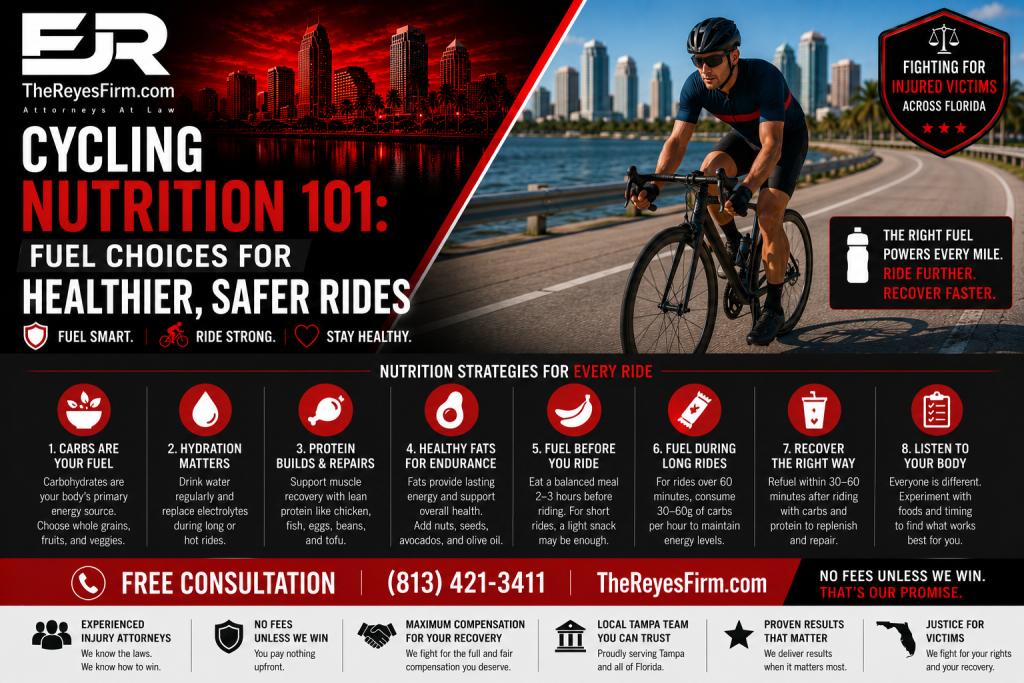
Cycling Nutrition 101: Fuel Choices for Healthier, Safer Rides
Strong legs get you up the hill, but what you eat gets you to the top and back safely. Good cycling nutrition helps you ride longer, stay focused, and recover faster, and staying sharp on the road can help you avoid a crash. Here is how to fuel every ride, plus what your rights are in Florida if a careless driver ever puts you down. The Reyes Firm Hit by a Driver While Cycling in Tampa? Know your rights as an injured cyclist in Florida. Had a bad day? Contact Us Now 2 Years Deadline to file an injury claim Fla. Stat. § 95.11(3)(a) 3 Feet Minimum safe passing distance Fla. Stat. § 316.083 Under 16 Bicycle helmet requirement age Fla. Stat. § 316.2065 50% Fault share that bars recovery Fla. Stat. § 768.81 Cycling is as much about fueling your body as it is about training it. The right nutrition helps you ride stronger, recover faster, and stay alert, and staying alert helps keep you safe. This guide walks through what to eat before, during, and after a ride, how nutrition connects to safety, and the legal rights Florida cyclists should know if a crash ever happens. What should you eat before a bike ride? The right pre-ride meal gives you the energy and focus to perform your best. Carbohydrates are a cyclist’s primary fuel, so for a long ride, gradually increase your carb intake in the days beforehand with foods like pasta, rice, bread, and potatoes to build up glycogen stores. Start the ride well-hydrated, and for hot or intense efforts, add an electrolyte drink to keep your fluids balanced. Timing matters too. Aim to eat a balanced meal about 2 to 3 hours before you ride, combining carbohydrates for energy, protein for muscle support, and a little healthy fat for lasting fuel. Good options include oatmeal with fruit and nuts, whole-grain toast with avocado and eggs, or pasta with vegetables and lean protein. What should you eat and drink during a ride? Fueling during a ride keeps your energy steady and helps you avoid the sudden fatigue that leads to mistakes. On longer or hotter rides, sports drinks replace the carbohydrates and electrolytes you lose through sweat, while energy gels deliver a fast, easy-to-carry boost during hard efforts. Hydration is just as important. Sip water or a sports drink regularly, even before you feel thirsty, and drink more in hot and humid conditions. A quick way to check your hydration is urine color, aim for pale yellow, and replace electrolytes like sodium and potassium on long rides to help prevent cramping. What should you eat after a ride to recover? What you eat after a ride helps your body rebuild so you are ready for the next one. Refuel with carbohydrates soon after finishing to replenish glycogen, and pair them with protein to support muscle repair, ideally within about 30 minutes. Rehydrate with water, and add an electrolyte drink after a long or intense effort. A good recovery meal within 30 to 60 minutes might be a smoothie with fruit, yogurt, and protein, scrambled eggs with whole-grain toast, or chicken or fish with rice and vegetables. Prioritizing recovery nutrition reduces soreness and keeps your performance consistent. What are the best foods and snacks for cyclists, and what should you avoid? A balanced cycling diet leans on carbohydrates for energy, lean protein for muscle repair, and healthy fats for overall health. Reach for whole grains, fruits, vegetables, and legumes for carbs, chicken, fish, tofu, and beans for protein, and olive oil, nuts, seeds, and avocado for fats, all supported by plenty of fluids. For on-the-go fuel, energy bars, gels, bananas, nuts, seeds, and trail mix all travel well. Some foods are better left off the menu before and during a ride. Fatty and greasy foods can cause indigestion, spicy foods can upset your stomach, too much fiber can lead to bloating, and alcohol dehydrates you and impairs performance. For a plan tailored to your body and goals, a registered dietitian can help, and sports nutrition research continues to show how much the right balance matters. How does proper nutrition keep you safer on the bike? Nutrition is a safety issue as much as a performance one. When your body runs low on fuel or fluids, your energy drops, your judgment slips, and your reaction time slows, exactly the conditions that lead to crashes. Poor fueling can leave you unable to respond quickly to a pothole, a car door, or a driver who does not see you. Staying properly fueled and hydrated helps you stay sharp and in control for the whole ride. That said, even a perfectly fueled cyclist can be hit by a careless driver, which is where knowing your legal rights becomes important. 💡 Did You Know? In Florida, a bicycle is legally defined as a vehicle, which gives cyclists the same rights to the road, and the same responsibilities, as the driver of a car. That means a cyclist injured by a negligent driver has the right to pursue a claim, just like any other crash victim. Source: Fla. Stat. § 316.2065. What are your legal rights if a cycling accident injures you in Florida? As a cyclist, you have the right to share the road safely, and Florida law backs that up. Drivers are required to give cyclists room when passing, and a driver who is speeding, distracted, or fails to yield can be held responsible for a crash. If another party’s negligence injures you, you may be entitled to compensation for your medical bills, lost wages, and pain and suffering. Florida law includes specific protections for cyclists. Drivers must allow at least three feet of clearance when passing a bicycle under Florida Statute § 316.083, and while only riders under 16 are legally required to wear a helmet, wearing one is one of the best ways to prevent a serious head injury. Understanding these rules helps you know when a driver was