
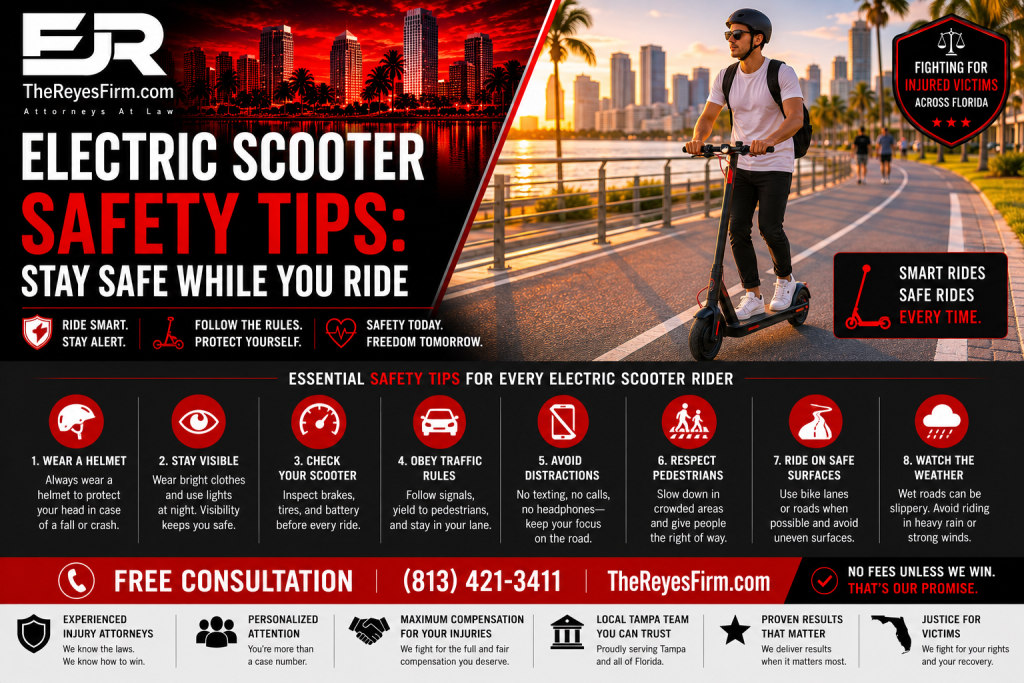
Electric Scooter Safety Tips: Stay Safe While You Ride
Electric scooters make getting around a city fast and fun, but a moment of someone else’s carelessness can end a ride in the emergency room. E-scooter injuries are climbing, and riders have far less protection than they think. Here is how to ride safely, and what your rights are in Florida if a driver, a defective scooter, or a hazardous road leaves you with a serious injury. The Reyes Firm Injured in an E-Scooter Accident in Tampa? A driver, a defective scooter, or a road hazard? Know your rights. Had a bad day? Contact Us Now 2 Years Deadline to file an injury claim Fla. Stat. § 95.11(3)(a) Bike Rights E-scooters share bicyclist rights Fla. Stat. § 316.2128 3 Years Notice deadline for government claims Fla. Stat. § 768.28 50% Fault share that bars recovery Fla. Stat. § 768.81 Electric scooters have transformed how people get around Tampa, offering a quick and affordable way to cover short distances. But their rising popularity has come with a sharp rise in injuries, and a UCSF study found e-scooter and e-bike injuries soaring across the country. This guide covers how to ride safely and what to do if someone else’s negligence, not your own, is what caused your crash. How do you stay safe on an electric scooter? Safe riding starts with the right gear and smart habits. A certified helmet is your most important protection, since it dramatically reduces the risk of a serious head injury. Choose one that meets a recognized safety standard like DOT or ECE 22.05, fits securely over your forehead and the back of your head, and is bright or reflective for visibility at night. Beyond the helmet, ride defensively. Treat your scooter like a vehicle by obeying speed limits, stop signs, and traffic signals, and stick to bike lanes or low-traffic streets rather than crowded sidewalks. Keep a safe distance from cars, pedestrians, and obstacles, and stay alert for hazards like potholes, uneven pavement, and distracted people around you. How should you maintain and charge your e-scooter safely? A well-maintained scooter is a safer scooter. Before each ride, check that your tires are properly inflated for a firm grip, inspect your brakes for wear, and test your headlights and taillights, especially if you ride at night. Keeping up with basic maintenance helps you avoid a mechanical failure at the worst possible moment. Battery safety deserves special attention. Use only the manufacturer’s recommended charger, avoid overcharging, charge indoors away from flammable materials, and do not leave the scooter charging unattended for long periods. Lithium-ion batteries can overheat and catch fire, so careful charging protects both you and your home. 💡 Did You Know? Lithium-ion batteries in electric scooters can overheat and catch fire, a hazard the U.S. Consumer Product Safety Commission has repeatedly warned about. If a defective battery, charger, or scooter causes your injury, you may have a product liability claim against the manufacturer or seller, separate from any claim against a driver. Source: U.S. Consumer Product Safety Commission. What injuries are common in e-scooter accidents? Because a rider stands exposed with little between them and the road, e-scooter injuries can be serious. The most common include fractures, especially to the wrists, arms, and legs, along with abrasions and road rash from falls. Head injuries are the greatest concern, and a traumatic brain injury can have lasting effects even when a rider is wearing a helmet. The severity often depends on what caused the crash. A low-speed tip-over may cause scrapes, while being struck by a car can cause life-changing harm. That is why both prevention and knowing your rights matter so much for anyone who rides. What should beginner e-scooter riders know? If you are new to riding, a little practice goes a long way. Start in a safe, open area like an empty parking lot, and get comfortable balancing on the scooter while stationary before you begin moving. Learn the throttle and brake controls, practice accelerating and stopping gradually, and keep an upright stance with your feet shoulder-width apart and knees slightly bent to absorb bumps. Building these fundamentals early makes every future ride safer. What are your legal rights if you’re injured on an e-scooter in Florida? Many riders do not realize that Florida law gives them real protection. Under Florida Statute § 316.2128, a person operating an electric scooter or micromobility device has the same rights and duties as a bicycle rider. That means if a negligent driver, a defective scooter, or a dangerous road condition causes your injury, you may be entitled to compensation for your medical bills, lost wages, and pain and suffering. Knowing that you have these rights is the first step. The key questions after a crash are who was responsible and what compensation you are owed, and an experienced attorney can help you answer both. ⚠️ Deadline Warning: Under Florida Statute § 95.11(3)(a), you generally have two years from the date of your crash to file a personal injury lawsuit. Missing this deadline almost always means losing your right to recover anything. Don’t wait to call a lawyer. Who is liable if you’re hurt in an e-scooter accident? Liability depends on what caused the crash, and more than one party may share responsibility. Common at-fault parties include: A negligent driver, who was speeding, distracted, or failed to yield and struck you, much like in a bicycle accident The scooter or battery manufacturer, when a design or manufacturing defect, such as failing brakes or a fire-prone battery, caused your injury A scooter rental company, when a poorly maintained shared scooter malfunctions, which can overlap with a ride-sharing accident claim A property owner or government entity, when a hazardous road, sidewalk, or path caused the crash Because e-scooters are motorized, some claims resemble a moped accident in how liability and insurance are handled. When a public road hazard is to blame, a claim against a city or county must follow the strict notice rules under Florida Statute § 768.28,