
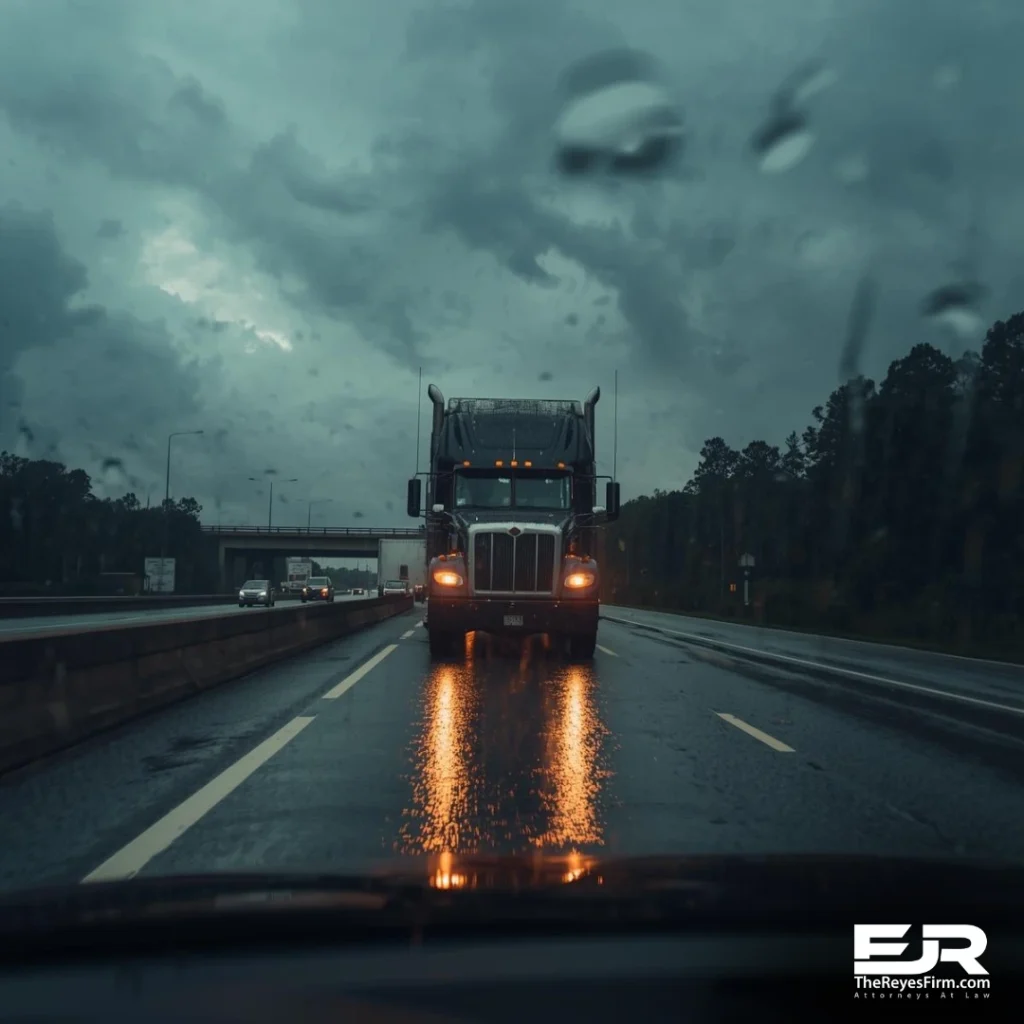
Weather-Related Semi-Truck Crashes in Florida: What You Need to Know
Imagine driving on Interstate 75 near Tampa when a classic Florida storm erupts, turning the highway into a sheet of water in mere seconds. Visibility drops to near zero, and the car ahead slams on its brakes. Now imagine a fully loaded semi-truck, weighing up to 80,000 pounds, failing to slow down behind you because the driver was pressured for time or wasn’t paying attention to the sudden change in conditions. This scenario is not a remote possibility; it is a deadly reality across Florida’s major highways, where the mixture of heavy commercial traffic and unpredictable tropical weather creates some of the most dangerous driving conditions in the nation. The core problem lies in the catastrophic power imbalance between a semi-truck and a passenger vehicle. When weather-related semi-truck crashes occur in Florida, the damage is disproportionately borne by the occupants of smaller vehicles. Unlike minor fender-benders, these collisions frequently result in life-altering injuries, including spinal cord trauma, traumatic brain injuries, and crushing fractures, or tragically, death. The sheer weight and momentum of a truck mean that even a slight delay in braking due to wet roads can double the stopping distance, making these accidents virtually unavoidable for innocent drivers. For the injured victims and their families, this issue matters because it shifts their entire lives from one of stability to one of financial and physical crisis. A trucking company and its insurance adjusters will often try to blame the weather, labeling the crash an “Act of God” to avoid paying fair compensation. However, a truck crash is rarely just an accident; it is usually the result of a negligent driver or a company’s failure to meet the strict legal standard under adverse conditions. The Reyes Firm exists to advocate for these victims, expose the actual negligence, and fight tirelessly to secure the Florida semi-truck accident compensation our clients need to rebuild their lives. What Special Rules Must Truck Drivers Follow in Bad Weather? The law holds commercial truck drivers to a much higher safety standard than regular drivers. This is known as the truck driver’s duty of care in bad weather conditions. The Federal Mandate of Extreme Caution The Federal Motor Carrier Safety Administration (FMCSA) sets the rules for all commercial motor vehicles. Section 392.14 of these rules is particular about driving in hazardous conditions like rain, fog, or mist: Extreme Caution is Required: Drivers must use “extreme caution” when visibility or traction is affected by weather. Speed Must Be Reduced: They cannot drive the posted speed limit if conditions make that speed unsafe. Their speed must be reduced to a safe operating speed. The Truck Must Stop: If conditions become dangerous, for example, if rain is so heavy that the driver cannot see clearly, the truck driver must pull over and wait until it is safe to drive again. When a truck driver fails to follow these straightforward rules, they are breaching their duty of care, which is often the foundation of a successful truck accident claim. How Does Florida’s Weather Make Semi-Truck Crashes More Dangerous? Florida’s tropical weather creates specific, well-known hazards that truck drivers are trained to handle. A Florida semi-truck accident often occurs when a driver fails to adjust to these familiar conditions. What is Hydroplaning, and Why is it Worse for Trucks? Hydroplaning is when a layer of water lifts a tire off the road, causing the vehicle to lose steering and braking control. Increased Risk: Because semi-trucks are so heavy, they require much more time and distance to stop than cars, especially on wet roads. If tire treads are worn (due to poor maintenance) or the driver is speeding, the risk of hydroplaning increases significantly. Jackknifing Danger: Sudden braking on a wet road can cause the trailer to swing violently around the cab, leading to a jackknife truck accident, which Florida rain often triggers. This is one of the most destructive types of truck accidents. What Role Does Low Visibility Play in Collisions? Heavy fog, particularly near coastal or swampy areas, and sudden, torrential rainstorms drastically reduce visibility. Failure to Use Lights: Drivers must use low-beam headlights in fog and rain. Using high beams in fog is a form of truck driver negligence, as it increases glare and reduces visibility for everyone. Following Distance: The FMCSA requires truck drivers to maintain a safe following distance. In low visibility, that distance must be increased. Tailgating in fog or heavy rain is highly dangerous and negligent. Who is Liable for a Truck Accident in Heavy Rain? After a collision, many people wonder, “Who is liable for a truck accident in heavy rain?” The answer is rarely just the truck driver; liability often extends to the company itself. The Driver, the Company, and Others In Florida, multiple parties can be held legally responsible for a truck accident: The Truck Driver: If their specific actions, such as speeding, driving while fatigued, or failing to pull over, caused the crash, they are directly negligent. The Trucking Company: The company is almost always a defendant because of two key legal concepts: Vicarious Liability: The employer is legally responsible for the mistakes their employee makes while working. Direct Negligence: The company may be at fault for its own actions, such as pushing unrealistic deadlines that force drivers to take risks in bad weather, or failing to maintain the truck’s tires or brakes, which directly contribute to a crash on a wet road. We hold the trucking company liable for adverse-weather semi-truck accidents in Florida and hold them accountable, ensuring our clients can recover damages from all available insurance policies. What Steps Should I Take After a Semi-Truck Crash in Florida? Your actions right after the crash are vital for both your health and your legal claim. If you can, take these steps to protect your rights. 5 Critical Steps for Victims: Get Medical Attention First: Your health is your top priority. Even if you feel okay, many severe injuries, especially head and neck trauma, are not immediately apparent. Seeking prompt