
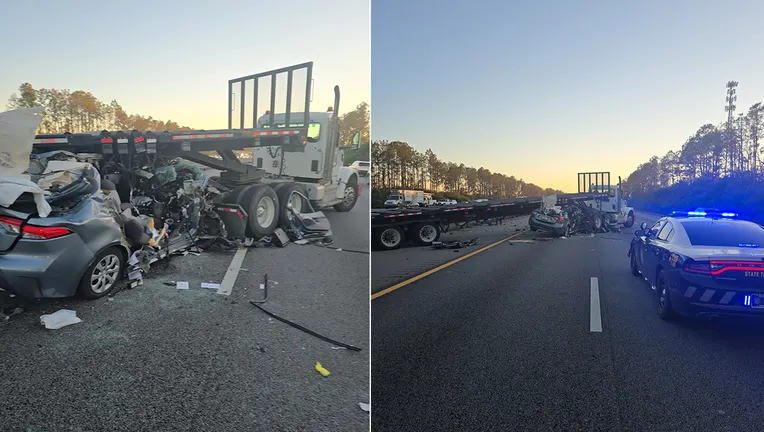
Fatal I-75 Truck Accident: Legal Rights After an Illegal U-Turn Crash in Hillsborough County
Imagine driving down the highway, minding your own business, when a wall of steel suddenly blocks your path. This nightmare became a reality on I-75 near the Hillsborough-Manatee County line this week. A 28-year-old man from Parrish was driving his Toyota Corolla when a massive tractor-trailer tried to make an illegal U-turn right in front of him. The crash was so bad that the young man later died at the hospital. Traffic was moving slowly that afternoon because of a fire near the Sun City Center exit. The truck driver, a 45-year-old man, apparently didn’t want to wait in line. Instead of being patient, he tried to whip his giant truck around into the southbound lanes. He was arrested for reckless driving, but for the family left behind, a simple arrest doesn’t fix the hole left in their lives. When something this tragic happens, people have many questions. How could a professional driver make such a dangerous choice? Who is responsible for the bills and the loss of a loved one? As a Tampa truck accident lawyer, the team at The Reyes Firm looks into these cases to find the truth. Under Florida law, families have specific rights to hold these drivers, and the companies they work for, accountable for their actions. Approximate crash area on I-75 (Sun City Center vicinity) Note: This map is for general location context based on public reporting, not an exact pin. The Danger of Illegal U-Turns on the Interstate Interstates like I-75 are designed for high-speed, forward motion. They are not built for 80,000-pound trucks to turn around in the middle of the road. When a truck driver decides to make an illegal U-turn, they are essentially creating a trap. Because these trucks are so long, they can block three or four lanes of traffic at once. Even if a driver sees the truck, a car traveling 70 mph cannot stop quickly enough to avoid a collision with a trailer parked sideways across the road. In Florida, there are strict rules, called “Statutes,” that specify where you can and cannot turn. Specifically, Florida Statute § 316.1515 says U-turns are only allowed if they can be made safely and without getting in the way of other people. On a busy highway like I-75, it is almost impossible for a big rig to do this safely. Who is Responsible for a Truck Crash? Most people think only the driver is at fault, but a Sun City Center truck accident lawyer knows there is often a bigger picture. While the driver made the bad choice to turn, the company he works for might also be in trouble. This is a legal idea called “Vicarious Liability.” This means that if an employee causes a crash while on the clock, the employer (the trucking company) is also responsible. There are other ways a company might be held liable: Negligent Hiring: Did the company check the driver’s history before hiring him? Before a trucking company hands over the keys to an 80,000-pound vehicle, it is required to perform a deep background check. If they hire a driver with a history of reckless driving or multiple accidents, the company can be held liable for placing a “dangerous instrument” on our local roads. Bad Training: Did the company teach the driver that illegal U-turns are dangerous? Operating a tractor-trailer requires specialized skills that go beyond a standard driver’s license. Companies must provide ongoing safety training to ensure their drivers understand that shortcuts, like illegal U-turns on I-75, are never an option, regardless of traffic delays. Hours of Service: Was the driver too tired because the company made him drive too many hours without a break? Fatigue is a leading cause of truck accidents in Florida. Federal laws limit how many hours a driver can be behind the wheel, but some companies pressure drivers to disregard these rules to meet deadlines, leading to slower reaction times and poor decision-making. Mechanical Failure: If the truck’s lights weren’t working or the brakes were old, the maintenance crew could be to blame. Trucks must be inspected and maintained regularly to stay safe. If a driver attempts a maneuver and their brakes fail, or if their trailer lights are out so that oncoming cars can’t see them at night, the maintenance team or the trucking company may be held liable for the resulting crash. Understanding Wrongful Death Rights in Florida When someone dies in a crash, it is called a “wrongful death” case. This isn’t the same as a criminal case where someone goes to jail. Instead, it’s a civil case in which the family seeks help with the financial and emotional pain the crash caused. In Florida, the “Wrongful Death Act” allows family members, such as a spouse, children, or parents, to seek compensation. This can include money for: Medical Bills: The cost of the hospital stay before the person passed away. When a serious accident occurs, medical expenses can accumulate within hours. From the emergency helicopter transport to the intensive care unit (ICU) costs, these bills become part of the legal claim to ensure the victim’s family isn’t left carrying the financial burden of a tragedy they didn’t cause. Funeral Costs: Paying for a proper service and burial. Losing a loved one is emotionally devastating, and the high cost of a funeral only adds more stress. A wrongful death claim helps cover the expenses for a respectful service, burial, or cremation, allowing the family to focus on saying goodbye rather than worrying about how to pay for it. Lost Wages: The money the person would have earned to support their family for the rest of their life. When a provider is gone, the family loses more than just a person; they lose their financial security. A Tampa truck accident lawyer works with experts to calculate the deceased’s lifetime earnings to ensure their spouse and children are provided for. Pain and Suffering: The emotional heartbreak of losing a family member. There is no price tag