
Person Hit by Semi Truck on I-75 in Sarasota: What Families Should Know
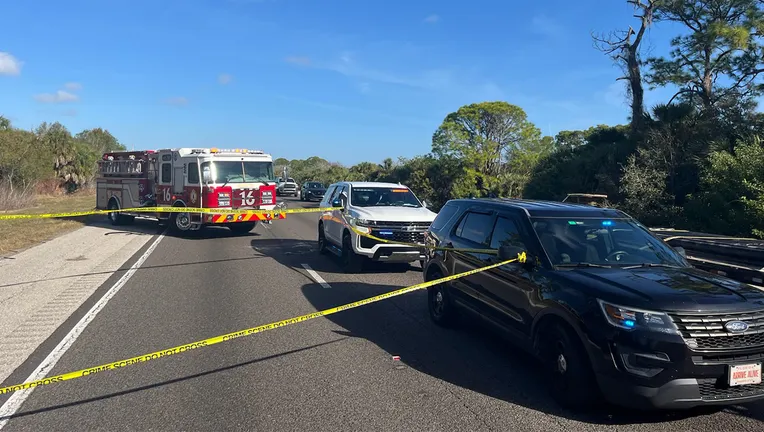
In the February 18, 2026, crash near the Clark Road area, a person on foot was hit by a semi-truck on I-75 in Sarasota, according to FOX 13’s report on the Florida Highway Patrol investigation. When a crash like this happens, families are left with shock, grief, and urgent questions about what happened, what investigators will review, and what Florida law may allow next. This guide explains what was reported, what investigators usually look for in a semi-truck case, and what Florida law may allow a family to do next after an I-75 pedestrian hit by semi truck in Sarasota. What Happened After a Pedestrian Was Hit by a Semi on I-75 Near Clark Road? This is the type of incident many people search for: a pedestrian hit by a semi, a pedestrian hit by a truck, or a Sarasota truck accident on I-75. According to FOX 13, the Florida Highway Patrol (FHP) said the crash happened shortly before 9 a.m. on February 18, 2026, on I-75 southbound near mile marker 202, a few miles south of the Clark Road exit in Sarasota. Troopers reported that a 64-year-old Sarasota man had parked on the shoulder. FHP said he then stepped into the right travel lane and was hit by a semi-truck. Sarasota County EMS pronounced him dead at the scene, and FHP’s Traffic Homicide Unit was investigating. Early reports are not the full story. In serious crashes, facts can become clearer after investigators review video, measurements, vehicle data, and witness statements. Map note: This map shows the Clark Rd (SR 72) interchange area for reference. The reported crash location was on I-75 southbound near Mile Marker 202, a few miles south of this exit. Why a Truck vs. Pedestrian Accident on I-75 Is So Dangerous Interstates like I-75 are built for speed. Cars and trucks are moving fast, and drivers have very little time to react if something unexpected happens. A semi-truck also needs much more distance to stop than a car. Even if a truck driver is paying attention, the laws of physics matter. A big truck has more weight, which makes stopping harder. That is why even a few seconds can make the difference between a close call and a tragedy. This is also why families often speak with a truck accident attorney or commercial truck accident attorney after a fatal crash, simply to understand what really happened and what the investigation might show. What families should know about Florida law and pedestrians on I-75 Florida law generally says pedestrians are not allowed to walk on a limited-access facility like I-75 (or on ramps connecting to it), except for certain maintenance workers. Families often hear that and assume, “So there is no case.” But civil law and “fault” are more complicated than that. A civil case asks a practical question: Did someone else’s negligence play a role in what happened? Sometimes the answer is no. Sometimes the answer is yes, even when the situation looks simple at first. That is why people often talk with a trucking accident attorney or 18-wheeler accident attorney to get clarity, not to jump to conclusions. How fault works in Florida (the 50 percent rule) Florida uses comparative fault in most negligence cases. Here is the simple version: If the person bringing the claim is found more than 50 percent at fault, they generally cannot recover damages. If they are 50 percent or less at fault, damages can be reduced by their percentage of fault. In a fatal crash, fault may be argued in many directions. That is one reason families need facts, not guesses. Evidence can change how fault is viewed, and a big rig accident attorney may bring in experts to explain what the evidence really means in plain English. What gets investigated in a fatal semi-truck crash In a serious semi-truck case, investigators and attorneys often look far beyond “the truck hit the person.” They try to answer: Was the crash avoidable, and did anyone break safety rules? This is where a commercial truck accident attorney or trucking accident attorney focuses: getting the records that explain what happened before the impact, not just after. 1) Truck speed, braking, and reaction time Investigators may look at: How fast the semi-truck was traveling When the driver applied the brakes Whether the driver swerved or tried to avoid impact How long the hazard was in view Many commercial vehicles have electronic information that helps confirm timing. This is important because people’s memories can be imperfect, especially during a shocking event. In some cases, that electronic data becomes one of the clearest sources of truth. 2) Visibility and road conditions Visibility is not just “could someone see.” It can involve: Sun glare and shadows Cloud cover or rain The color of clothing The location on the roadway Whether the shoulder area or the lane markings created confusion On I-75 near exits, there can be busy merging patterns, large trucks in multiple lanes, and drivers who are watching for traffic, not pedestrians. A truck accident attorney may work with reconstruction experts to explain whether a driver had enough time and distance to react. 3) The truck’s condition and maintenance A semi-truck’s condition matters because it affects stopping distance and control. Key questions include: Were the brakes in good shape? Were the tires worn down? Were the lights working properly? Were there recent inspections and repairs? Maintenance records can show whether safety was taken seriously or ignored. This is one reason families may reach out to an 18-wheeler accident attorney after a fatal crash, because trucking cases often come down to records most people never see. 4) Driver fatigue or distraction Truck drivers often work long hours. Investigators may look for signs of: Fatigue (tired driving) Distracted driving (phone use or in-cab distractions) Lack of proper rest If a driver is not alert, reaction time can be slower, and slower reactions can lead to deadly outcomes. A trucking accident attorney may request logs and related