
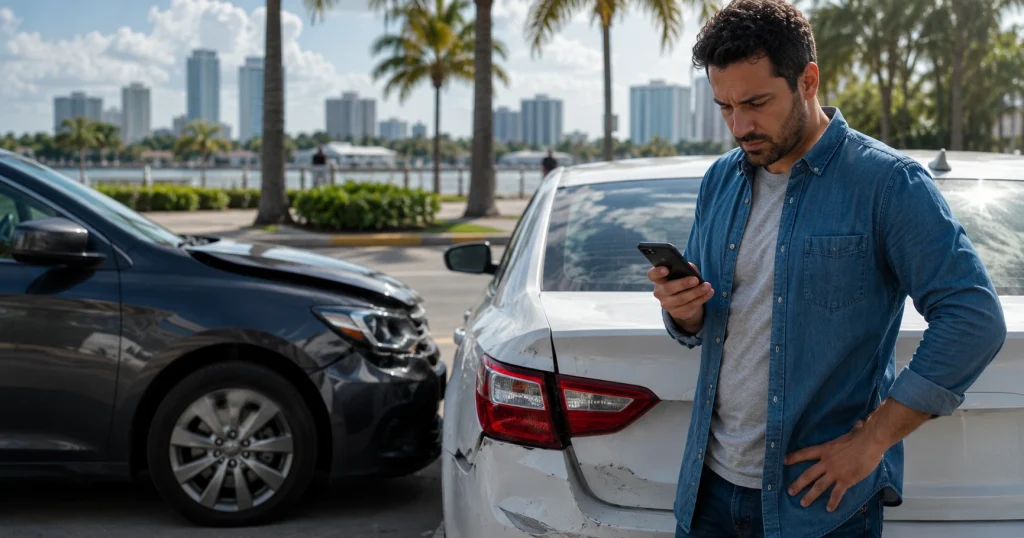
What to Do When Lyft’s Insurance Company Stops Returning Your Calls in Tampa
What You Need to Know Stop relying only on phone calls. Put your request for an update in writing. Save every email, voicemail, claim number, and unanswered message. Ask for the adjuster’s supervisor if your assigned adjuster stays silent. Keep getting the medical care your doctor recommends. Do not let an insurance delay cause you to miss a Florida legal deadline. Had a bad day? Call The Reyes Firm at 833-4 BAD DAY. You reported the Lyft crash. You provided the claim information. You may have even sent medical records, bills, or photographs. Now the adjuster has stopped returning your calls. If Lyft insurance is not responding in Tampa after your accident, you may feel like your claim has disappeared. It has not. You still have options, and keeping a clear written record can be especially important if you later consider suing Lyft for car accident injuries in Tampa. Who Pays After a Lyft Accident in Tampa? Lyft accident coverage may depend on whether the driver was offline, waiting for a ride request, traveling to pick up a passenger, or completing a ride. Watch this short video to learn why the driver’s app status can affect which insurance policy applies. Even when Lyft’s insurance company stops responding, continue documenting your calls, emails, medical treatment, bills, photographs, and claim submissions. Why Has the Lyft Insurance Adjuster Stopped Calling You Back? The claim may have been reassigned, the insurer may still be reviewing coverage, or the adjuster may be waiting for more information. Silence does not always mean your claim was denied. It does mean you should stop relying on phone calls and move every important request into writing. A Lyft crash can involve several insurance companies. The company handling your claim may be: Lyft’s insurance carrier. A third-party claims administrator. The Lyft driver’s personal insurer. Another driver’s insurance company. Your own PIP or uninsured motorist carrier. The correct policy often depends on what the Lyft driver was doing when the crash happened. Under Florida Statute § 627.748: If the Lyft app was off, the driver’s personal auto policy may apply. If the app was on but the driver had not accepted a ride, Florida requires at least $50,000 per person and $100,000 per crash in bodily injury coverage. If the driver had accepted a ride or had a passenger, at least $1 million in primary automobile liability coverage is required. The driver must also disclose, when properly asked after a crash, if the driver was logged into the Lyft network or completing a prearranged ride. Your Lyft receipt, app screenshots, driver details, and trip history may help show which insurance phase applied. What Should You Do When the Adjuster Ignores Your Calls? Send a short written request that includes your claim number, the crash date, and the dates of your unanswered calls. Ask for a clear update and give the insurer a reasonable date to respond. Send the message via email and through the claim portal to prove it was received. Your written request should ask: Is my claim still open? Who is the adjuster currently assigned to my claim? Is the insurer still investigating fault or coverage? Are any documents missing? When should I expect the next update? Who is the adjuster’s supervisor? You can use language like this: I am requesting a written update regarding claim number [claim number] from the Lyft crash on [date]. I have called on [dates] and have not received a response. Please confirm the current adjuster, the status of the claim, any remaining documents, and the expected date of the next update. Keep the message calm. Do not threaten the adjuster or make claims you cannot support. You can also send the request by certified mail when the delay continues, or important deadlines are approaching. ⚠️ Warning: The Adjuster’s Silence Does Not Stop Florida Deadlines Florida’s PIP law generally requires you to receive initial medical care within 14 days of a motor vehicle accident to qualify for medical benefits under Florida Statute § 627.736. Florida law also generally gives you two years to file a negligence lawsuit under Florida Statute § 95.11. Other deadlines may apply based on the facts of your case. Do not stop medical treatment while waiting for the insurer. Follow your doctor’s instructions and keep copies of every medical record, bill, referral, prescription, and work restriction. The Reyes Firm Has Lyft’s Insurance Company Stopped Returning Your Calls? You do not have to keep chasing the adjuster on your own. Talk with a Tampa rideshare accident attorney about your next steps. Schedule a Free Consultation What Records Should You Keep for a Delayed Lyft Claim? Save anything that shows what happened, what you sent, and how the insurer responded. A clear timeline can prevent the insurance company from claiming that you failed to cooperate. It can also help your lawyer identify delays, missing evidence, and changes in the insurer’s explanation. Create one folder for your Lyft accident claim. Keep: Your Lyft ride receipt and trip history. Screenshots from the Lyft app. The police crash report. Photographs and videos from the scene. Medical records and bills. Proof of lost income. Emails and claim portal messages. Voicemails from the adjuster. Certified-mail receipts. A written call log. Your call log can be simple: Date Person Contacted What Happened Next Step Promised July 6 Assigned adjuster Left voicemail No response July 8 Claims office Asked for update Told adjuster would call July 10 Supervisor Sent email Requested response by July 14 After any phone conversation, send a short email confirming what was discussed. For example: Thank you for speaking with me today. As discussed, you stated that the coverage review should be completed by Friday and that you would contact me afterward. Please let me know if I misunderstood anything. Florida Statute § 627.4137 also allows a claimant to request certain liability insurance information in writing. The insurer generally has 30 days to provide information such as the insurer’s name, the insured’s name, liability