
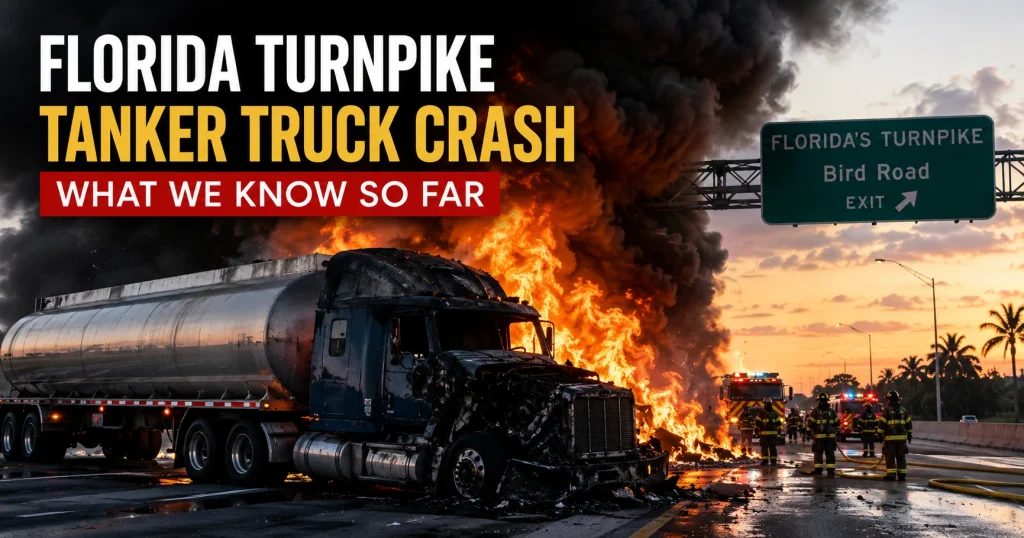
Fatal Florida Tanker Truck Fire: What Investigators Examine
What You Need to Know Florida Highway Patrol said a tanker truck overturned and struck a concrete barrier on Florida’s Turnpike near Bird Road. The tanker truck driver died at the scene. Authorities had not announced what caused the driver to lose control. Important evidence may include truck data, maintenance records, driver logs, cargo documents, video, and fire-scene findings. This crash happened in Miami-Dade County, but the same investigation issues can arise after a tanker truck crash in Tampa. Had a bad day? Call The Reyes Firm at 833-4 BAD DAY. When a tanker truck overturns and burns, families want answers fast. A Tampa tanker truck accident lawyer may need to preserve records before the truck, roadway, video, and company files are altered or disappear. On July 16, 2026, a tanker truck overturned on Florida’s Turnpike near Bird Road in southwest Miami-Dade County. The driver died, and the heavily charred tractor-trailer remained at the scene while firefighters and investigators worked nearby. This crash did not happen in Tampa. It still shows why tanker truck accidents require careful investigation rather than quick assumptions about speed, cargo, maintenance, or driver conduct. What Happened in the Florida Turnpike Tanker Truck Crash? Florida Highway Patrol said the tanker truck was traveling south on Florida’s Turnpike near Bird Road when the driver lost control, overturned, struck the center concrete barrier, and died at the scene. The truck was heavily charred, and investigators had not announced what caused the driver to lose control. The reported facts include: The crash happened near Bird Road in southwest Miami-Dade County. The tanker truck was traveling south. The driver reportedly lost control. The truck overturned and struck the center median barrier. The driver was pronounced dead at the scene. Both directions of the Turnpike were temporarily closed. Authorities had not released the cause of the crash. Where Did the Florida Tanker Truck Crash Happen? The crash occurred on Florida’s Turnpike near Bird Road in southwest Miami-Dade County. The map below shows the approximate reported location. The map shows the approximate location reported by local authorities. It does not identify the precise crash site. The report did not identify what the tanker was carrying. It also did not report a tire failure, a brake problem, a medical emergency, a distraction, fatigue, excessive speed, or a cargo issue. Those possibilities should not be presented as facts unless investigators find supporting evidence. ⚠️ Warning: Florida Filing Deadlines Can Expire: Florida Statute § 95.11 generally requires negligence and wrongful death actions to be filed within two years. Other notice rules or shorter deadlines may apply, including claims involving government entities. Important truck records can disappear long before the filing deadline, so waiting can still harm a case. What Can Cause a Tanker Truck to Overturn and Catch Fire? A tanker truck may overturn because of speed, a sharp steering move, shifting liquid cargo, tire or brake failure, poor maintenance, road conditions, driver fatigue, distraction, or another vehicle’s actions. A fire can begin after impact, but investigators must test each possibility rather than assume a cause based on the damage alone. A tanker can behave differently from a standard box trailer. Liquid cargo may move inside the tank during braking, turning, or sudden lane changes. This movement is sometimes called liquid surge. Possible investigation areas include: Issue investigators examine Records or evidence that may help Speed or steering input Electronic truck data, skid marks, video Brakes, tires, or steering Inspection and maintenance records Liquid cargo movement Cargo volume, loading records, tank design Driver fatigue or distraction ELD logs, phone records, dispatch messages Road or weather conditions Scene photos, roadway data, witness accounts Another vehicle’s actions Dashcam footage, traffic cameras, witnesses Fire origin Burn patterns, fuel systems, electrical systems Florida Statute § 316.302 makes commercial vehicle owners and drivers subject to state and federal safety rules. Depending on the truck and its cargo, those rules may cover driver hours, inspection, maintenance, cargo securement, hazardous materials, and required company records. Tanker trucks and other commercial vehicles regularly travel through Tampa on I-4, I-75, and I-275. A crash on one of these routes may involve the same truck data, company records, inspection files, and cargo questions. Our guide to the common causes of semi-truck accidents explains more about the issues investigators review. Did You Know? FLHSMV reported 46,651 commercial motor vehicle crashes and 315 fatalities in Florida during 2024. FMCSA’s A&I summary separately listed 8,834 reportable large truck and bus crashes in Florida, including 251 fatal crashes. The totals are not directly comparable because the agencies use different definitions and reporting systems. 💡 Did You Know? FLHSMV reported 46,651 commercial motor vehicle crashes in Florida during 2024. Those crashes resulted in 315 deaths, showing how serious collisions involving commercial vehicles can be. NHTSA’s updated national tables reported 39,254 traffic deaths and about 2.42 million injured people in 2024. The federal tables also track truck rollovers, vehicle fires, and large-truck crash conditions because those details help explain how severe crashes happen. What Evidence Should Be Preserved After a Tanker Truck Fire? After a truck fire, the most useful evidence may sit outside the burned cab. Investigators often review electronic truck data, driver logs, dispatch messages, maintenance files, cargo records, roadway video, witness accounts, inspection history, and fire-scene findings. Fast preservation matters because some electronic and company records may be overwritten. Important evidence may include: Engine control module or event data recorder information Electronic Logging Device records GPS and telematics data Dispatch instructions and company messages Dashcam, traffic camera, or nearby business video Driver qualification and training records Brake, tire, steering, and maintenance files Pre-trip and post-trip inspection reports Cargo manifests, bills of lading, and loading records Tank specifications and inspection history Fire investigation reports and scene photographs Witness statements and emergency response records The cargo records matter even when the load did not cause the crash. They may show the cargo type, tank fill level, weight, loading method, placarding requirements, and businesses involved in preparing the shipment. Investigators