
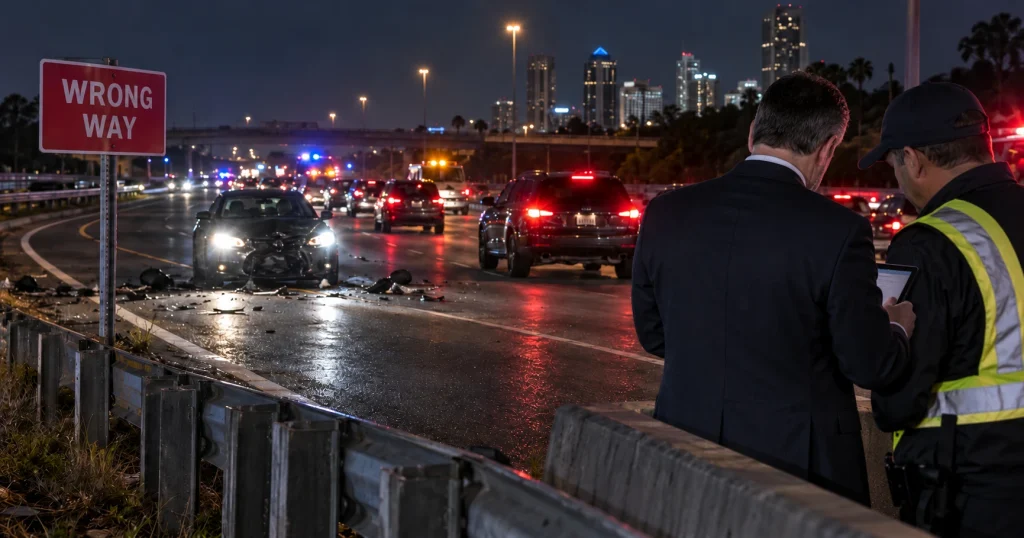
Tampa Wrong-Way Accident Lawyer: Who Can Be Held Liable?
What You Need to Know Wrong-way crashes often cause head-on impacts, catastrophic injuries, and fatalities. The wrong-way driver may not be the only party responsible for the crash. Camera footage, 911 calls, vehicle data, and other evidence can disappear quickly. PIP, liability, commercial, and uninsured motorist insurance may all need review. Florida has strict medical-treatment and lawsuit deadlines that can affect your claim. Had a bad day? Call The Reyes Firm at 833-4 BAD DAY ((833) 422-3329) SCHEDULE A FREE CASE REVIEW Seeing headlights coming toward you in your lane leaves almost no time to react. After the impact, you may face emergency treatment, a totaled vehicle, missed work, and questions about how the crash could have happened. A wrong-way accident lawyer should investigate more than the point of impact. The investigation should trace where the driver entered the roadway, why the driver continued in the wrong direction, which parties may share responsibility, and which insurance policies may cover your losses. At The Reyes Firm, we help people injured in Tampa and the South Shore communities understand their options after serious crashes. Why Are Wrong-Way Crashes So Dangerous in Tampa? Wrong-way crashes are especially dangerous because vehicles may meet at combined highway speeds with little time to react. In Tampa, these collisions can happen on interstate ramps, divided highways, and one-way streets. Darkness, impairment, confusing entry points, and missed warning signs can all contribute to a devastating impact. Wrong-way crashes often become head-on collisions. The front of each vehicle absorbs the impact, placing drivers and passengers at risk of brain injuries, spinal cord damage, internal injuries, fractures, and death. The danger is not limited to interstates. A driver can enter the wrong side of a divided road, turn incorrectly onto a one-way street, or cross a median into opposing traffic. Still, high-speed roads such as I-275, I-4, and I-75 can leave even less time to escape. The Florida Department of Transportation reports several serious patterns in its Wrong-Way Driving Program Strategic Plan: About 90% of Florida freeway wrong-way crashes occurred in darkness. About 59% involved alcohol. About 25% resulted in a fatality. On arterial roads, about 52% caused injury, and 7% were fatal. These figures show why investigators should examine lighting, visibility, impairment, road design, and the exact place where the wrong-way movement began. Read what to do after a head-on collision for additional steps that may protect your health and claim. 💡 Did You Know? About one in four Florida freeway wrong-way crashes resulted in a fatality, according to FDOT’s Wrong-Way Driving Program Strategic Plan. The report also states that 90% occurred in darkness and 59% involved alcohol. Who Can Be Held Liable for a Wrong-Way Accident? The wrong-way driver is usually the first person investigated, but other parties may share responsibility. Depending on the facts, a claim may involve the vehicle owner, an employer, an alcohol provider, another negligent driver, or a government road authority. Each potential claim requires separate evidence and legal analysis. Potentially responsible party When liability may apply Evidence that may help Wrong-way driver Impairment, distraction, fatigue, confusion, or reckless driving Toxicology results, phone data, vehicle data, and witnesses Vehicle owner The owner permitted someone else to drive the vehicle Title records, insurance policies, and permission evidence Employer The driver was performing a job-related task Schedules, GPS data, employment records, and company policies Alcohol provider Florida’s limited dram shop requirements are met Receipts, video, transaction records, and witnesses Road authority A legally actionable road condition or known signage problem contributed Inspections, prior complaints, plans, and maintenance records Another driver A separate negligent act contributed to the collision Video, vehicle data, witnesses, and reconstruction findings Florida does not make a bar or restaurant responsible each time an adult customer causes an alcohol-related crash. Under Florida Statute §768.125, liability may arise when someone willfully and unlawfully provides alcohol to a minor or knowingly serves a person habitually addicted to alcohol. A potential claim involving FDOT, a city, a county, or another public body requires careful legal review. Government cases have special rules, notice procedures, defenses, and limits. A confusing ramp alone does not establish government liability. What Evidence Can Show Where the Driver Entered the Wrong Way? A strong investigation should reconstruct the wrong-way driver’s route before the collision. Identifying the entry point may reveal ignored signs, impairment, a navigation error, construction, or another contributing factor. Video and electronic records may be erased quickly, so preservation requests should begin as soon as possible after the crash. The investigation may start at the crash scene and move backward along the route. Useful questions include: Which ramp or intersection did the driver use? How far did the vehicle travel against traffic? Did other motorists call 911 before the collision? Were “Wrong Way” or “Do Not Enter” signs visible? Were pavement arrows, lighting, or construction relevant? Did nearby cameras capture the vehicle or earlier near misses? Evidence may include 911 audio, dispatch logs, traffic-management alerts, dashcam footage, business video, vehicle event data, phone and navigation records, toxicology findings, witness statements, and roadway photographs. A police report is useful, but it may not identify the full route, every insurance policy, or every responsible party. It also does not calculate the cost of future treatment or prove how the injuries will affect your ability to work. ⚠️ Deadline Warning: Florida generally allows two years to file an action based on negligence under Florida Statute § 95.11. Other deadlines and notice requirements may apply. Video and electronic evidence may disappear long before the lawsuit deadline. Which Insurance Policies May Pay After a Wrong-Way Crash? Several insurance policies may provide compensation after a Florida wrong-way crash. Your PIP coverage generally applies first to covered medical expenses and lost income. You may also recover from the responsible driver, vehicle owner, employer, or your uninsured or underinsured motorist coverage if the available liability insurance is insufficient. Possible sources include: Your PIP coverage The wrong-way driver’s bodily injury coverage The vehicle owner’s insurance Employer or commercial