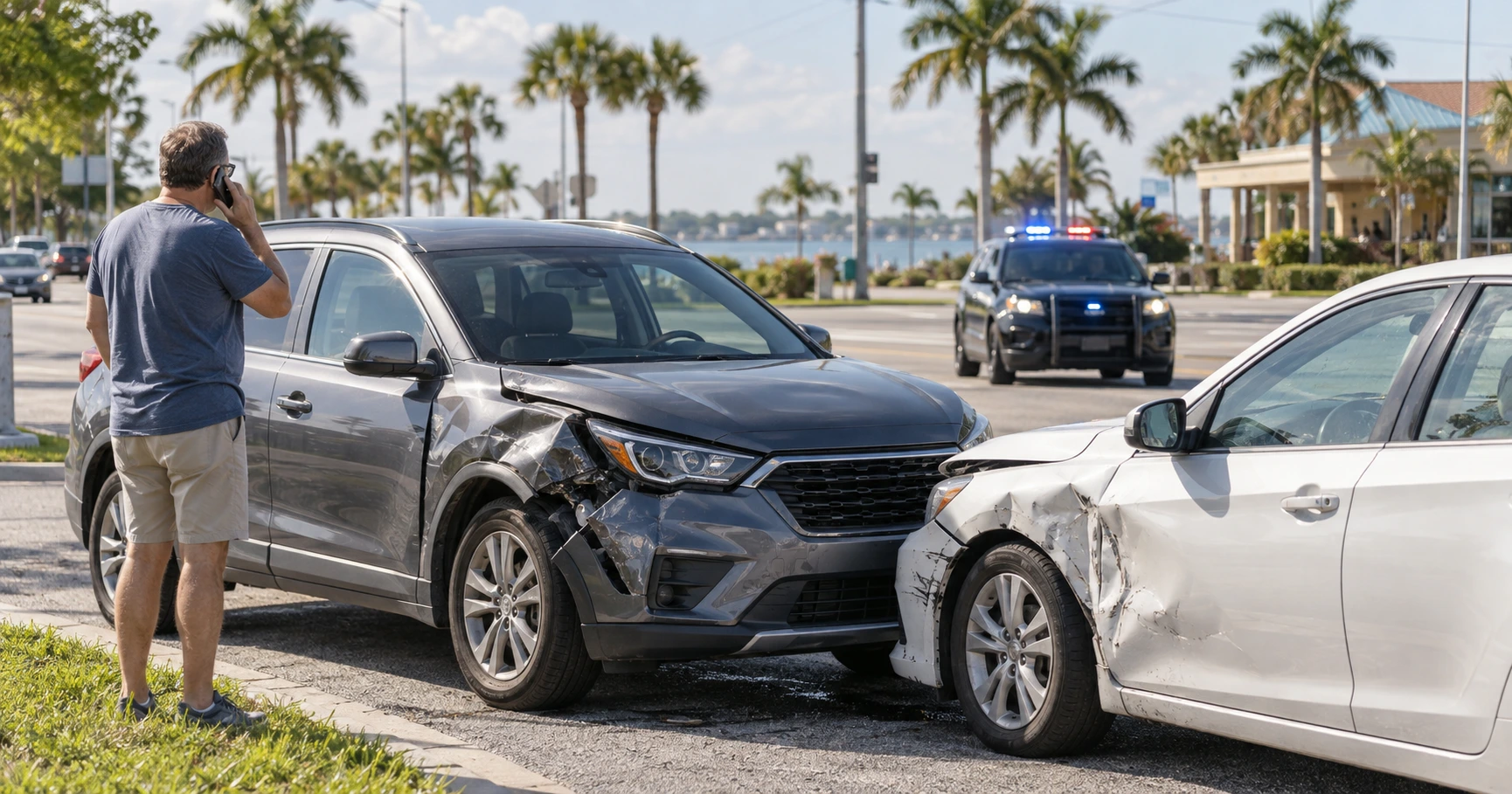
A sudden crash in a busy parking lot can change everything. People are shopping, meeting friends, and walking to their cars, when an impact happens. Sirens arrive. The scene fills with confusion and fear. Families are left asking what to do next.
When a PSTA bus is involved at Clearwater Mall, near the Gulf-to-Bay Blvd area, the situation can feel even more complicated. Public transit means different rules. There may be video on the bus, store cameras, and multiple agencies to contact. It is a lot to process.
This guide explains the next steps in clear, simple terms. It describes how Florida law addresses public transit accidents, including relevant deadlines and procedures for promptly preserving evidence. The goal is to help families understand their options after a PSTA bus crash, such as at Clearwater Mall or anywhere in Pinellas County.
What happened and why parking lots are risky
Large parking lots look slow and safe, yet serious injuries still happen. Visibility can change quickly between bright storefronts and darker, shaded driving lanes. People step out from behind parked cars. Buses make wide turns and have large blind spots. These details raise the risk of a pedestrian being hit by a bus or another vehicle.
At Clearwater Mall, traffic from several entrances mixes with walkers of all ages. Strollers, shopping carts, and delivery vehicles share the same space. If a crash occurs, it is not enough to look only at the final moment. A proper review examines the layout, lighting, lane markings, bus speed, mirror use, and what each person could realistically see.
Families should not assume fault based on first impressions. Evidence tells the story. That is why early preservation of video and records is so important after a public transit accident in Florida.
What to do right now after a pedestrian bus crash
- Call 911 and get medical care. Even if pain is mild, a doctor should check for hidden injuries.
- Take photos and a short video. Capture bus numbers, storefronts, crosswalks, curbs, lane arrows, and lighting.
- Collect names and contact details. Obtain information from witnesses, security personnel, and staff from nearby stores.
- Write down camera locations. Look for cameras in stores, parking lot poles, and the bus itself.
- Ask for the incident or report number. Note if it is a Clearwater Police crash report.
- Avoid recorded statements to insurers. Speak to a personal injury lawyer first.
- Call a local attorney who handles transit and wrongful death cases in Pinellas County.
Do families need the police report before calling a lawyer?
No. A case can start before the report is available. A personal injury lawyer in Clearwater, Florida, can immediately send letters to preserve bus video, store footage, and telematics data. When the Clearwater Police crash report is released, it helps confirm details, but families should not wait to begin.
Florida laws that affect a PSTA bus crash case
Florida sovereign immunity §768.28
When a public agency is involved, Florida’s sovereign immunity law sets special rules. A claim can still be brought for negligence, but there are notice requirements and damage caps that limit the amount that can be recovered unless the Legislature approves more through a claims bill—timing and procedure matter.
Can a family sue PSTA after a bus hits a pedestrian?
Yes. Families can pursue a claim against a transit agency, but the process is different. There are notice steps and damage limits under §768.28. Acting early helps the lawyer protect video and comply with the rules for public agencies.
Florida statute of limitations §95.11
Most negligence and wrongful death cases in Florida must be filed within two years of the incident. Claims involving public agencies can also include additional notice steps that begin well before any lawsuit is filed. Do not wait. Security video can be erased in days or weeks.
How long do families have to file claims?
The general deadline is two years under §95.11, but government claims often require earlier notice. A lawyer will track every cutoff date and make sure notices are sent on time. Fast action also helps save videos and documents that can disappear.
Florida PIP no-fault
Florida PIP can help with specific medical bills and some lost wages. In pedestrian cases, coverage depends on the household’s policies and the vehicles involved in the incident. The lawyer will check any auto policy for the person injured, and sometimes a resident relative’s policy.
Does PIP help a pedestrian after a bus crash?
It can. Pedestrians may access PIP through their own policy or a relative’s policy, depending on the facts. A careful review coordinates PIP with liability coverage and any other benefits so families do not leave money on the table.
Comparative negligence in Florida
Florida follows modified comparative negligence. If a person is more than 50 percent at fault, there is no recovery. If the fault is 50 percent or less, a recovery is still possible, reduced by that percentage. In parking lots, video, lighting, crosswalks, and bus turning paths are essential evidence.
What if the pedestrian made a mistake too?
A partial fault does not end every case. Recovery is still possible if the pedestrian is found to be 50 percent or less at fault. Camera footage, sight lines, signs, and bus routes can show how responsibility should be shared fairly.
Who can be liable in a PSTA bus–pedestrian crash?
Liability can involve more than one party. A pedestrian accident attorney will look at each of the following:
- Transit operator/agency (PSTA): Driver actions, training, routing, and safety procedures.
- Bus driver: Lookout, speed, mirror, and camera use, turning path, and right-of-way decisions.
- Property owner/manager (mall): Lighting, sight lines, signage, crosswalk markings, and traffic control within the lot.
- Contractors/maintenance firms: Striping, sign placement, or lighting repairs that were missed or delayed.
- Other drivers: A separate vehicle may have forced sudden movement or blocked sight lines.
- Product issues (rare): Defects in mirrors, cameras, or braking systems.
Why this matters: Identifying all responsible parties can increase the total insurance available and reduce the impact of sovereign immunity caps.
How lawyers prove fault in a Clearwater Mall bus case
A strong case is built on timely evidence:
- Bus video and telematics. Many buses record multiple camera angles and basic driving data.
- Driver files. Training records, route sheets, and dispatch notes show expectations and procedures.
- Parking lot cameras. Stores and outparcel businesses may have helpful footage, but retention is often short.
- Scene and lighting studies. Measurements and photographs help explain what each person could see.
- Witness accounts and 911 audio. Neutral voices support the facts.
- The Clearwater Police crash report. It confirms parties, time, and location, and can provide additional records.
Attorneys also review how people move into and out of the Gulf-to-Bay Blvd approaches that serve the mall. Signage, crosswalk placement, and turning movements can indicate where safety improvements might be beneficial. These details can influence faults and damage.
What the news reports say about the Clearwater Mall crash
Local coverage reports that just before 7:00 p.m. on Saturday, Sept. 27, 2025, an adult female pedestrian was fatally struck by a PSTA bus in the Clearwater Mall parking lot on the 2700 block of Gulf-to-Bay Blvd. Clearwater Police said the woman died at the scene, and the investigation is ongoing. Early reports can change as police review bus video, store cameras, and witness statements.
Approximate location near Clearwater Mall on Gulf-to-Bay Blvd. For official details, refer to the Clearwater Police crash report.
What damages can be claimed?
Damages depend on the facts, but they commonly include:
- Medical expenses and future treatment
- Lost wages and reduced earning ability
- Pain and suffering were allowed by law.
- Wrongful death damages such as funeral costs, loss of support and services, and survivors’ mental pain and suffering
When a public agency is involved, recovery may be limited by sovereign immunity caps. A thorough investigation also seeks to identify other responsible parties. A property owner, contractor, or another driver may share fault. If so, additional insurance policies may increase the total recovery.
Pinellas pedestrian crash statistics (2025 YTD) and why they matter
Official data helps families understand the risk near shopping centers and major roads, such as Gulf-to-Bay Blvd. According to the FLHSMV Crash Dashboard for Pinellas County covering 1/1/2025 to 9/19/2025 (data considered preliminary as of 09/20/2025):
- Pedestrian crashes: 312
- Pedestrian fatalities: 17
- Pedestrian injuries: 264
- Share of pedestrian crashes by investigator: Police Departments 75.00% (234), FHP 12.82% (40), Sheriff 12.18% (38)
- Countywide context shown on the dashboard: Total fatal crashes 54, total injury crashes 4,109, total hit-and-run crashes 2,575, hit-and-run fatalities 2, hit-and-run injuries 469
Why this matters: Even in places that feel slow and safe, pedestrians face real danger where buses, delivery vehicles, and shoppers all move at once. These numbers support the need for rapid evidence preservation following a PSTA bus crash at Clearwater Mall. Bus video, store cameras, and lighting studies often make the difference between guessing and proving what happened.
Quick safety clip from The Reyes Firm highlighting frequently dangerous Pinellas intersections. Use official data sources, such as the FLHSMV Crash Dashboard, for context.
Frequently Asked Questions
Who is the best accident lawyer near me
The best lawyer is one with real experience handling transit and pedestrian cases in Pinellas County, who acts quickly to secure bus and store video, and who explains each step in plain language. Ask how quickly the firm responds to preserve evidence and how frequently they update clients.
Is a parking lot crash different from a street crash?
The laws are similar, but the evidence is different. Parking lots have more blind spots and more private cameras. The video can be erased quickly. A fast investigation can make the difference between guessing and proving what really happened.
What if the family cannot pay for a lawyer right now
Personal injury firms typically work on a contingency fee. That means the firm is paid from a recovery, not upfront. Families can call to inquire about fees, costs, and the process before making a decision.
The Reyes Firm’s plan for a PSTA bus crash case
- Preserve evidence now. Send letters for bus video, telematics, driver files, and store cameras.
- Canvass the scene. Locate every camera and eyewitness in and around Clearwater Mall.
- Request public records. Obtain the Clearwater Police crash report and related materials when available.
- Use experts. Reconstruction and human-factors professionals study sight lines, bus paths, and timing.
- Build the damage file. Document medical care, time off work, future needs, and family losses.
- Follow sovereign immunity rules. Meet notice requirements under Florida sovereign immunity §768.28.
- Pursue all responsible parties. Consider the perspectives of transit users, property owners, contractors, and other drivers, if applicable.
How Can The Reyes Firm Help You?
The Reyes Firm represents families in cases involving public transit accidents throughout Pinellas County and the Tampa Bay area. The team moves quickly to save the bus and store video, gather the Clearwater Police crash report, and explain the next steps under §768.28, §95.11, PIP, and comparative negligence in Florida. The focus is on clear communication, careful evidence work, and steady support from start to finish.
- Free, no-pressure consultation
- English and Spanish support
- Local insight into Clearwater Mall and Gulf-to-Bay traffic patterns
- A direct plan to protect evidence and your rights
Had a bad day?
Visit us: 4730 N. Habana Ave., Suite 201, Tampa, FL 33614
Call: 833-4 BAD DAY