You got hurt. You were doing your job, or someone else was doing theirs, when they hit you. Now you’re fielding calls from an insurance adjuster you’ve never met, missing work, and wondering who actually pays. If your accident happened while driving for work, or the driver who hit you was on the clock, this is not a typical car crash claim. Employer liability in Florida car accidents follows its own rules, and knowing them can be the difference between full compensation and walking away with far less than you deserve.
Many of these situations involve company-caused car crashes in Tampa, where a business can be held responsible for its driver’s actions. Florida treats work-related driving differently from personal driving, and most people don’t realize it until after they’ve already talked to the wrong insurer. A crash may look the same on the roadway.
Still, the legal outcome differs depending on whether it was a car accident while driving for work, an employee car accident while working, or an accident in a company vehicle on personal time. Most people have no idea when a company should be involved or when only the individual driver is responsible.
This matters because employer policies often have higher insurance limits and more resources than a personal policy. If an injured person does not understand employer liability for a car accident in Florida, they may walk away with far less than they deserve. The Reyes Firm helps victims in Tampa and throughout Florida sort out these questions and pursue the full compensation available under the law.
Quick Answer: Injured in a Work-Related Car Crash in Tampa?
- If you were injured in a crash while on the job, your employer may be legally responsible under Florida’s respondeat superior doctrine.
- If the at-fault driver was working when they hit you, their employer’s commercial insurance may cover your injuries.
- Using your personal vehicle for work errands when you’re hurt does not automatically mean your employer escapes liability.
- Florida’s statute of limitations gives you 2 years from the crash date to file a negligence lawsuit under Fla. Stat. § 95.11.
- Had a bad day? Call The Reyes Firm at 833-4 BAD DAY.
What Does “Employer Liability” Actually Mean in a Florida Car Accident?
In Florida, an employer can be held legally responsible for a crash caused by their employee while on the job. This comes from a legal doctrine called respondeat superior, which holds that an employer is responsible for what an employee does within the scope of employment.
In simple terms, if a driver is working when the collision occurs, the injured person may have a claim against:
- The individual driver
- The company that benefits from the work being done
This type of employer liability car accident claim can open the door to commercial insurance coverage, which is often crucial in severe injury cases.
When Does “Course and Scope of Employment” Apply?
“Course and scope of employment” usually means the employee was:
- Doing assigned tasks
- Following work instructions
- Taking a trip that helps the employer’s business
When those pieces are present, the crash is more likely to be treated as a work-related car accident rather than a personal incident. In that situation, the law may view the employer as liable for the employee’s negligence in Florida, even though the company’s leadership was nowhere near the scene.
When Is an Employer Responsible If an Employee Causes a Crash?
Common Work-Related Driving Situations
An employer is more likely to be responsible when the collision happens during an apparent work activity, such as:
- A delivery driver bringing packages to homes or businesses
- A technician traveling between service calls
- A salesperson driving between client meetings
- A worker hauling tools or equipment to a job site
- An employee attending a work training, conference, or company event
📊 Did You Know?
In 2024, FLHSMV recorded 46,651 commercial motor vehicle crashes across Florida, resulting in 315 fatalities. Many of those crashes involved drivers operating within the course and scope of employment. When a business vehicle is involved, the liable parties and available insurance coverage can be dramatically different from a standard crash.Source: FLHSMV By the Numbers 2024, preliminary as of June 2025, flhsmv.gov
These situations are often treated as an employee car accident while working. If the employee’s careless driving injures someone, that person may pursue a company vehicle accident claim in Florida against the employer’s policy.
What Counts as a Car Accident While Driving for Work?
A car accident while driving for work usually involves more than simply being in a vehicle during the workday. The key questions are:
- Was the trip part of the job?
- Was the employee being paid for that time?
- Did the errand help the business in some way?
If the answer to these questions is “yes,” there is a strong argument that the incident was a valid employer liability car accident, and the company should be part of the claim.
What Happens If an Employee Gets in a Car Accident While Working for a Small Business?
If an employee gets in a car accident while working for a small business, the answer usually depends on what the employee was doing at the time, who was injured, and which insurance policies apply. A crash during a delivery, service call, client meeting, or assigned errand may involve the employer, the employee, the commercial auto insurer, and sometimes workers’ compensation.
For injured people, the most important question is whether the employee was acting within the course and scope of employment. If they were, the injured person may have a claim against both the driver and the business. If the employee was injured, workers’ compensation may cover medical care and partial wage benefits, while a separate injury claim may be available if another driver caused or contributed to the crash.
For small businesses, this is why documentation matters. Time sheets, route logs, work orders, delivery records, GPS data, and insurance information can help show whether the crash was work-related or personal. The sooner those records are preserved, the clearer the liability picture becomes.
When Is a Company Usually Not Responsible?
Accident in Company Vehicle on Personal Time
A significant limitation on an employer’s responsibility arises from an accident involving a company vehicle during personal time. Even if a car has the company logo on the door, the trip itself might have nothing to do with work.
Examples include:
- An employee using the work SUV to go out to dinner with friends
- A staff member taking the company pickup on a weekend family trip
- A worker running late-night personal errands in a company van
In those moments, the driver is not advancing the company’s interest. The trip is personal. In many cases, that means the crash is not considered an employer liability car accident, and liability may fall on the employee and personal insurance instead.
Car Accident While Driving to Work vs Driving for Work
A typical car accident while driving to work or going home after a shift is usually treated as part of the person’s private commute. Under the general “going and coming” rule, the employer is not responsible for typical commute crashes.
However, things can change if your employer paid for your travel time on that trip, your job is primarily road-based, like outside sales, or you were asked to make a required stop for the employer on the way.
If the facts show the worker was really engaged in a business errand, the incident might look more like a car accident while driving for work, which can bring the employer back into the picture.
What If I Was Using My Personal Vehicle for Work When the Crash Happened?
Your employer can still be liable even if you were driving your own car. If your employer directed you to use your personal vehicle for a work errand and you were injured in a crash while doing so, Florida courts may still apply the respondeat superior doctrine to hold the company responsible.
The key question is control. If the employer told you where to go, when to go, and what to do when you got there, that trip looks more like a work activity than a personal choice, even in your own car.
Common examples where this comes up:
- A manager asks you to drop off documents at a client’s office on your way home
- Your job requires you to drive between locations in your own vehicle and reimburses you for mileage
- You’re sent to pick up supplies for the office in your personal truck
What about damage to your personal car?
Workers’ compensation covers injuries to your body, not damage to your vehicle. If your personal car was damaged during a work errand, the path to recovery depends on fault, your employer’s commercial auto policy language, and the specific facts of the trip. An employer liability attorney can review those details and tell you what coverage actually applies.
⚠️ WARNING: If your employer asks you to sign anything or give a recorded statement about how you use your personal vehicle for work, talk to a lawyer first. That information can be used to limit your claim.
What Happens to Your Insurance Subrogation Rights After a Work Crash?
Subrogation is when your insurance company pays your claim and then steps into your shoes to recover that money from the party who was actually at fault. In work-related crashes, this gets complicated fast.
Here’s the typical chain: you’re hurt in a work crash, your health insurance or PIP coverage pays your medical bills, and your insurer then has the right to recover some of that money from any settlement you receive. If workers’ compensation also paid benefits, the employer’s workers’ comp carrier may have a subrogation lien on your personal injury recovery.
Can subrogation affect your driver’s license?
An unresolved subrogation claim does not directly suspend your license in Florida. License suspension in Florida after a crash is tied to various issues, such as failing to carry required insurance or having unsatisfied civil judgments under Florida Statute 324.051. However, if an at-fault employer or driver fails to satisfy a judgment, the unpaid balance can trigger suspension consequences for the individual driver.
Understanding how subrogation works matters before you settle. Settling for less than full value can leave you holding liens you didn’t expect.
What Are Your Legal Options After a Car Accident While Working?
Who Can You Claim Against If You Are Injured in a Company Car Accident?
If someone is injured in a company car accident, they may have more than one possible claim. Depending on the facts, an injured person may be able to seek recovery from:
- The employee who caused the crash
- The employer, if the worker was on the job
- Other drivers who contributed to the wreck
This is where the question “company car accident, who is liable?” becomes critical. When a crash is tied to work duties, the injured person may have access to larger commercial policies and stronger financial protection.
Video: Do I Have to Tell My Job I’m Filing a Claim After a Car Accident?
Many workers are unsure whether they must report a car accident claim to their employer, especially if a company vehicle or another company’s vehicle was involved. In this short video, Attorney Edward Reyes explains when you do and don’t need to involve your job, and how that decision can affect claims against your employer, workers’ compensation, and third-party drivers.
What If the Injured Person Is the Employee?
Sometimes the person hurt in the crash is the employee, not another driver. Florida car accident laws while working can involve several layers when this happens.
An injured employee may have:
- A workers’ compensation claim for medical treatment and partial wage replacement
- A personal injury claim against any third-party driver who caused or contributed to the crash
Employees often ask, “Is my employer liable for damage to my car?” when they use a personal vehicle for work errands. The answer depends on fault, policy language, and whether the trip was clearly job-related. Workers’ compensation usually covers injuries, not property damage, so a separate insurance analysis is often needed.
⚖️ Your Rights Under Florida Law
If you were injured in a crash while working, you may have both a workers’ compensation claim and a separate personal injury claim against a negligent third party. Florida Statute § 440.39 allows injured employees to receive workers’ compensation benefits while also pursuing a claim against a third-party tortfeasor. Workers’ comp may pay medical bills and partial wage benefits. A personal injury claim may allow recovery for damages workers’ comp does not cover, including pain and suffering, full lost income, and future losses.
Can Employers Make Employees Pay for Accident Damages?
In Florida, an employer’s ability to deduct accident repair costs from an employee’s wages depends on the existence of a prior written agreement and whether the deduction reduces the employee’s pay below the minimum wage, which would violate Florida Statute § 448.110 and the federal Fair Labor Standards Act (FLSA).
Many workers worry about this question: can an employer make an employee pay for accident costs, such as deductibles, repairs, or higher premiums?
This issue is separate from the rights of an injured victim. When someone is hurt, they can still pursue the legally responsible parties, including the employer, if the law allows employer liability for car accidents.
Whether the company later tries to recover money from the employee depends on employment contracts, company policy, and other laws. That is an internal matter between the business and the worker. It does not deprive the injured victim of the right to seek fair compensation.
Is the Employer Liable for the Employee’s Car Accident in Florida?
People often ask directly: Is the employer liable for an employee’s car accident in Florida?
The answer is: sometimes, yes. The key points are:
- The worker must be acting within the course and scope of employment
- The trip should clearly relate to the job or benefit the employer.
- The employee’s careless or reckless driving must have caused the crash.
When those pieces are in place, the employer may be liable for employee negligence in Florida. That means the injured person’s car accident lawyer can pursue the business and its insurance company, not just the individual driver.
What Evidence Helps Prove Employer Liability in a Car Accident?
Because companies and insurers often argue that a trip was personal, evidence matters. Helpful proof in an employer liability car accident case can include:
- Police reports noting the driver was “on duty” or “working”
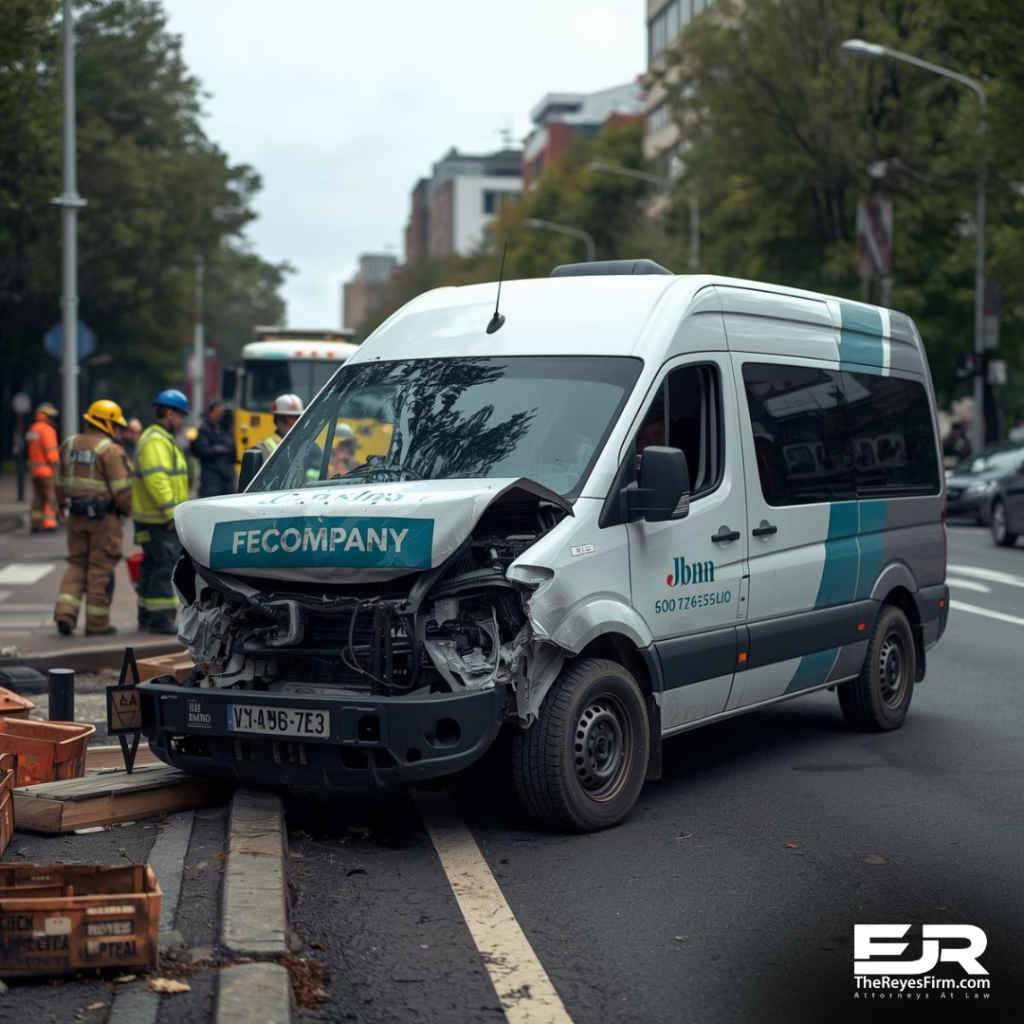
- Photos of company logos on the vehicle
- Time sheets and shift schedules showing when the employee was working
- Delivery logs, work orders, or route sheets
- Dispatch records, GPS data, or telematics from the vehicle
- Emails and text messages assigning tasks just before the crash
This type of documentation helps answer the question: company car accident, who is liable in this specific situation? A Tampa employer liability car accident lawyer can use these records to show that a Florida employer should be held responsible.
How Does Negligent Hiring or Supervision Affect Employer Liability?
Employer responsibility is not only about where the worker was going. Sometimes the company itself has acted carelessly, leading to harm.
For example, a victim who was injured in a company car accident may have a stronger case if the employer:
- Hired a driver with a known record of DUIs or reckless driving
- Failed to run any background check at all
- Ignored complaints about unsafe driving habits
- Pushed workers to rush or skip safety rules
In these situations, the claim may include both:
- Ordinary employer liability for car accident responsibility, and
- Direct claims for negligent hiring, training, or supervision
These additional claims can increase pressure on the company and may improve the chances of full compensation, especially in cases of severe injury.
⚠️ WARNING: Florida’s Deadline Is Shorter Than You Think
Florida Statute § 95.11 gives you 2 years from the date of your crash to file a negligence lawsuit if your accident happened on or after March 24, 2023. Miss that deadline and you lose the right to sue, no matter how strong your case is. Don’t wait.
FAQs About Employer Liability Car Accident Cases in Florida
What should I do right after a crash that might involve an employer?
If a crash might involve a company vehicle or a worker on duty, an injured person should:
- Call 911 and get medical help
- Ask the other driver if they are working and for whom
- Photograph the scene, vehicles, and any business logos.
- Collect witness names and contact information.
- Avoid giving detailed statements to insurance companies before speaking with a personal injury lawyer.
Quick action helps protect evidence and supports a strong company vehicle accident claim in Florida.
How is a car accident while driving to work different from driving for work?
A car accident while driving to work is usually considered part of a personal commute. In most cases, the employer is not responsible.
A car accident while driving for work between job sites, client visits, or assigned errands is different. That type of driving is more likely to be treated as a work activity, which can trigger employer liability rules for car accidents.
Who pays medical expenses if I am injured in a traffic accident during my commute?
A normal commute is usually treated differently from driving for work. If you are hurt while simply driving to or from work, your medical expenses may involve your own PIP coverage, health insurance, or the at-fault driver’s insurance. If your employer sent you on a special errand, paid you for travel time, or required the trip for business, the accident may be treated more like a work-related car accident.
Do I still have a claim if the driver was my co-worker?
Yes. If a co-worker causes an employee to have an accident while acting within the course and scope of employment, an injured person may still pursue the employer. The claim focuses on who was negligent and whether the trip was work-related, not on job titles or personal relationships.
Can I talk to the company’s insurance adjuster by myself?
You can, but it is risky. Corporate insurers often try to limit the amount they pay for employer liability car accident claims. They may downplay injuries, argue the trip was personal, or push for a quick, low settlement. Speaking with a personal injury lawyer first helps level the playing field.
Who pays for an accident in a work vehicle if a third-party driver caused the crash?
If a third-party driver is at fault, their liability insurance is usually the first source of payment, but an injured person may also tap the employer’s coverage or uninsured/underinsured motorist coverage if the at-fault driver’s policy is not enough.
What happens if an employee is at fault in an accident under my commercial auto policy?
If an employee causes a crash while driving for work, the employer’s commercial auto policy may become involved. The insurer may investigate coverage, fault, injuries, property damage, and whether the employee was acting within the scope of employment. An injured person may still have a claim against the employee, the employer, and available insurance coverage, depending on the facts.
What happens if I get in a car accident in a company vehicle outside of Florida?
You may still have a claim under Florida law and your employer’s policies, but the laws of the state where the crash happened can also affect your rights, so it is essential to speak with a Florida injury lawyer who understands multi-state accidents.
How long do I have to file a lawsuit for a work-related car accident in Florida?
In many Florida personal injury cases, you generally have two years from the date of the crash to file a negligence lawsuit under Florida’s statute of limitations (Fla. Stat. § 95.11) for claims arising on or after March 24, 2023. Deadlines can vary depending on the facts, and older crashes may be subject to different rules, so waiting to get legal advice can be risky.
Is it worth hiring a lawyer if the company’s insurer has already offered me a settlement?
It often is, because early offers are usually designed to close the claim quickly and cheaply, and a lawyer can review your injuries, future medical needs, and lost income to tell you whether the offer is fair or needs to be challenged.
What happens if I get in an accident in a company vehicle and it wasn’t my fault?
If you’re driving a company vehicle and another driver hits you, you generally aren’t personally liable for the crash. Your employer’s commercial auto policy typically covers the vehicle. You may also have a personal injury claim against the at-fault driver’s insurance. Report the crash to your employer, get the police report, and talk to a lawyer before giving any statements to the other driver’s insurer.
Can I get fired for crashing a company car in Florida?
Florida is an at-will employment state, meaning an employer can generally terminate an employee for most reasons, including an at-fault crash in a company vehicle. However, if you were injured in that crash, Florida law prohibits retaliation for filing a workers’ compensation claim under Florida Statute 440.205. If you’re hurt and afraid of losing your job, talk to an attorney before making any decisions about your workers’ comp filing.
How Can The Reyes Firm Help You?
Employer-related crashes involve more moving parts than a typical auto accident. There may be several insurers, company policies, and complicated questions about work duties and coverage. You should not have to sort that out alone while you are trying to heal.
A Tampa employer liability car accident lawyer at The Reyes Firm can:
- Investigate quickly to confirm the driver was working at the time of the crash, using dispatch records, GPS data, work orders, and time sheets
- Send preservation letters to the employer immediately to lock down telematics, route logs, and any dashcam footage before it disappears
- Identify every potentially liable party, including the driver, the employer, and any third-party contractors who may share responsibility
- Review all insurance policies in play, including the employer’s commercial auto coverage, any umbrella policies, and your own uninsured motorist protection
- Build the damage picture around your full losses, including current and future medical care, lost income, and the real impact on your daily life
- Shield you from direct contact with corporate adjusters and prepare the case to go the distance if the company refuses to make it right
If you were injured in a company car accident anywhere in Florida, you may have more options than you realize. The Reyes Firm focuses on protecting injured victims and holding employers and their insurers accountable when work-related driving causes harm.
The Reyes Firm
4730 N. Habana Ave., Suite 201
Tampa, FL 33614
Phone: 833-4 BAD DAY
Had a bad day? Let us help make it right.
Ready to talk? Call 833 4 BAD DAY or contact us online for a free, confidential consultation with The Reyes Firm—Tampa’s trusted company-caused car crash lawyers.
The information in this article is for general informational purposes only and does not constitute legal advice. Reading this article does not create an attorney-client relationship with The Reyes Firm or any of its attorneys. Every case is different, and the outcome of any legal matter depends on the specific facts and circumstances involved. If you were injured in a work-related car accident in Tampa or anywhere in Florida, contact a licensed Florida personal injury attorney to discuss your situation. Past results do not guarantee future outcomes.

Edward Reyes, Esq. is a Florida-licensed personal injury attorney and the founder of The Reyes Firm in Tampa, FL. He focuses on serious injury cases involving employer liability, commercial vehicle crashes, and work-related accidents across Hillsborough County and the South Shore communities. Edward Reyes was admitted to the Florida Bar and built The Reyes Firm around one promise: when a bad day happens, you shouldn’t have to fight alone. Read more about Edward Reyes.