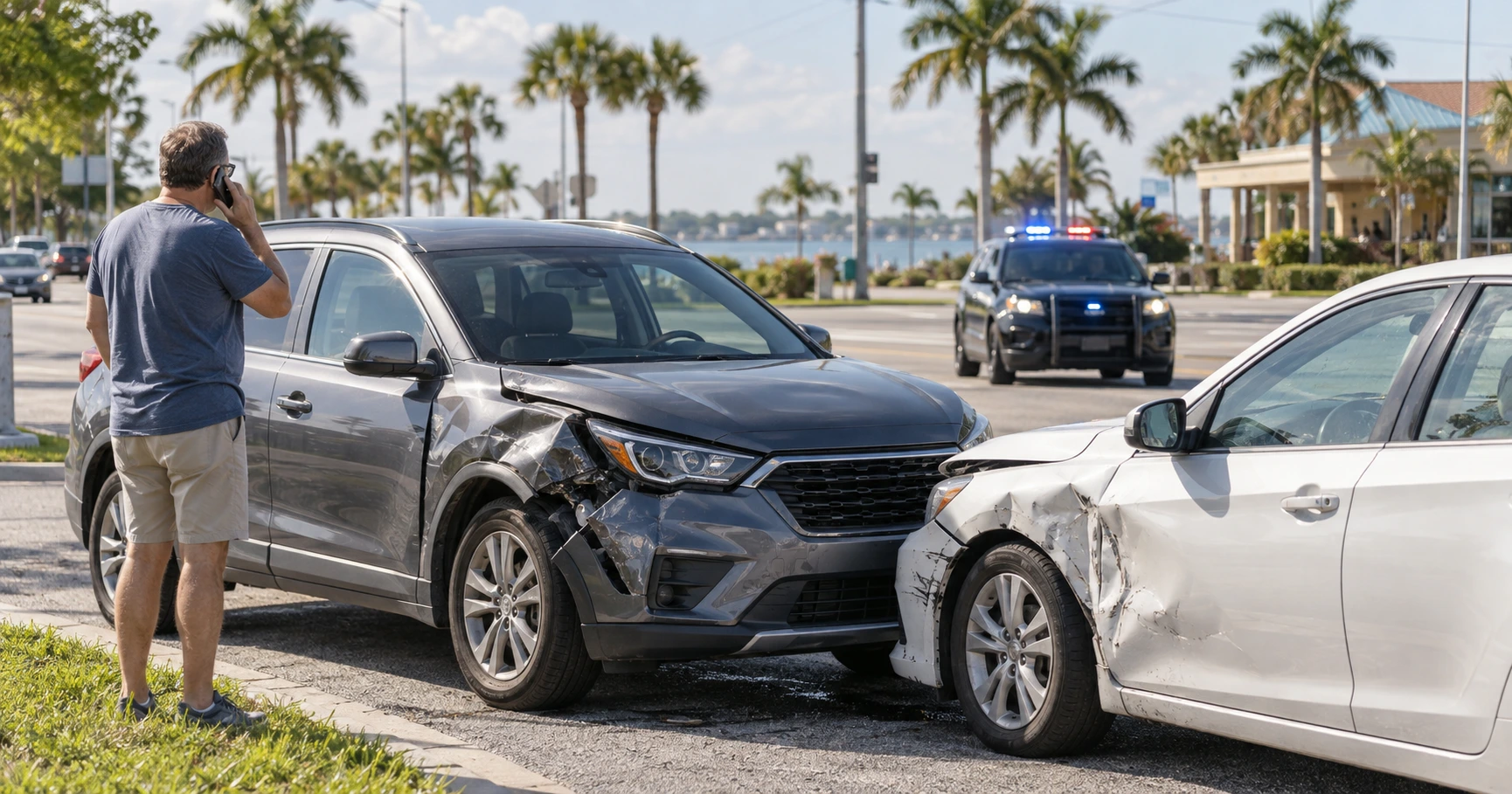
Driving on U.S. Highway 27 in Ocala is more than just a trip to the store. It is a drive on a road with a dark history. For decades, locals have called this stretch of highway “Bloody 27.” It earned that scary name because of how many serious accidents happen on it every year. While the road has been widened over time, the danger has not gone away. Just recently, the community in Marion County saw this firsthand when a terrible crash involving three pickup trucks happened near Northwest 90th Avenue.
This recent accident was a tragedy that took the life of a 25-year-old and sent others to the hospital. The crash was severe enough to close the road for several hours. One person who lives right next to the highway told reporters at WCJB News that “people land in my pastures constantly.” This shows that for people in Ocala, “Bloody 27” is not just a historical nickname. It is a daily reality.
When three big, heavy pickup trucks crash into each other, the results are catastrophic. If someone was hurt in a US 27 crash in Ocala, they are likely dealing with pain, medical bills, and a lot of questions. The Reyes Firm wants injured drivers and families to know they do not have to handle the insurance companies alone. This guide explains what happens after a serious crash and how to protect legal rights.
Why “Bloody 27” Is Still So Dangerous Today
A road with a nickname like “Bloody 27” should have become safer by now. The problem is a mix of high speeds and heavy traffic. US 27 is a major route through the “Backbone of Florida,” carrying everything from family cars to massive semi-trucks and heavy construction pickups. For more on how serious commercial crashes can be, see The Reyes Firm’s guide to semi-truck accidents in Florida.
In a three-vehicle pickup crash, vehicle weight plays a significant role. Pickup trucks are heavier and taller than many standard cars. When heavy vehicles collide, the impact is greater, and injuries are often more severe.
Many wrecks on this corridor happen during stop-and-go driving. One vehicle slows down to turn into a side road, driveway, or farm entrance, and the driver behind does not react in time. Heavy vehicles require more distance to stop, especially when the driver is distracted, fatigued, or speeding.
The “Pasture” Danger: Why Rural Crashes Can Be Worse
When a crash happens on a city street, curbs and buildings can limit where vehicles go. But on US 27 in Marion County, the road is surrounded by open fields and horse pastures. When vehicles leave the roadway at highway speeds, the crash can become even more dangerous.
- Rollovers: Pickup trucks are tall. If they slide into a ditch or soft ground, they are more likely to tip or flip.
- Secondary impacts: A vehicle may survive the initial impact and then crash into a fence, tree, or other off-road object.
- Delayed help: In rural areas, longer response times increase the risk of catastrophic injuries.
Common Injuries After a Major Pickup Truck Crash
The Reyes Firm often sees injuries that do not seem severe at first but become painful days later. In a multi-vehicle collision, a body can be thrown forward, sideways, or backward within a split second.
Hidden brain injuries
Even without a direct head strike, the brain can move inside the skull during a violent stop. This can cause a concussion or traumatic brain injury (TBI).
Warning signs can include headache, nausea, dizziness, confusion, and light sensitivity. Anyone with symptoms should seek medical care right away.
Neck and back damage
High-impact forces can injure the spine, including the discs and soft tissues. Symptoms may include neck stiffness, back pain, numbness, tingling, or radiating pain into the arms or legs. Early evaluation and consistent care are essential.
The 14-Day Rule: Do Not Lose PIP Benefits
Florida’s no-fault system often starts with Personal Injury Protection (PIP). Under Florida’s PIP statute, initial medical services must be received within 14 days of the crash to qualify for PIP medical benefits. Florida Statutes § 627.736 (PIP)
If someone waits too long, believing the soreness will fade, the insurer may deny PIP benefits. Even mild symptoms should be documented. Florida drivers can also review official guidance here: FLHSMV: Involved in a Crash?
The Nightmare of the “Middle Vehicle”
In a three-vehicle crash, the middle driver is often squeezed between two other vehicles. The rear driver may claim the middle driver stopped too fast. The front driver may state that the middle vehicle struck them before the rear impact occurred. Insurance companies can argue for months about who should pay.
Florida’s comparative fault rule can be harsh. In many negligence cases, a party found to be greater than 50% at fault may not recover damages. Florida Statutes § 768.81 (comparative fault)
This is one reason local legal help matters. A truck accident lawyer in Marion County can push for the evidence needed to place fault where it belongs.
Preserving the “Black Box” Evidence (EDR and Truck Data)
Many modern vehicles have an Event Data Recorder (EDR), sometimes called a “black box.” NHTSA explains that EDRs may record items such as pre-crash
vehicle dynamics, driver inputs, crash forces, and restraint use.
NHTSA: Event Data Recorder (EDR)
In a severe incident such as a US 27 crash in Ocala, EDR data can help confirm what happened and support or challenge a driver’s account. But this evidence can disappear fast if the vehicle is repaired, sold, or sent to a junkyard too soon.
If the crash involves a work truck or a commercial vehicle accident, the investigation can go even deeper. Company vehicles and semi-trucks may also include GPS data, dashcam footage, maintenance records, and other electronic data.
That is why acting quickly matters. The Reyes Firm can send preservation letters and take legal steps to help protect vehicles and key records
before they are altered, overwritten, or destroyed.
The 2-Year Clock Is Ticking.
Florida law sets a strict deadline for most negligence-based injury lawsuits. An action founded on negligence must be filed within two years.
Florida Statutes § 95.11 (2-year negligence deadline)
Florida also changed this deadline under House Bill 837, which took effect on March 24, 2023.
Florida Senate: HB 837
Two years can pass quickly when someone is dealing with doctor visits, therapy, and missed work. If the deadline is missed, the court may dismiss the case, and the injured person could lose the right to seek compensation for medical bills, lost income, and pain and suffering.
What Injured Drivers Should Do Next: A Step-by-Step Guide
After a multi-vehicle crash on US 27, health is the priority. Once the injured person is stable, these steps can help protect their legal rights. In three-vehicle cases, evidence can disappear fast, and insurance companies may start building defenses immediately.
1) Call 911 and report the crash
Florida law requires a driver to immediately notify law enforcement when a crash involves injuries, death, or apparent property damage of at least $500.
Florida Statutes § 316.065
A report helps document names, insurance information, and early observations. It is crucial evidence, but it is not the only evidence.
2) Use a phone to gather evidence (if safe)
If it is safe, take photos and videos of all vehicles, the road, skid marks, debris, and the surrounding area. A short walk-around video can capture lighting, traffic flow, and where vehicles ended up.
3) Collect witness information
Neutral witnesses can be powerful in a three-vehicle crash because they are not tied to any driver’s insurance company. Obtain names and phone numbers from witnesses who are willing to share them.
4) Report the crash to the injured person’s own insurance
Many policies require prompt notice. Keep it simple: who was involved, where it happened, and the report number. Avoid guessing speed, distance, or fault. If another insurer calls, the injured person can politely direct them to legal counsel.
5) Keep an injury journal
A daily log can help show the real impact of the crash, such as trouble sleeping, pain at work, or difficulty lifting children or groceries. This helps document losses that do not show up on a single medical bill.
How Can The Reyes Firm Help You
A serious crash can turn life upside down in a heartbeat. Injured drivers may be dealing with pain, a damaged vehicle, missed work, and fear about medical bills. The Reyes Firm helps by handling insurance adjusters, gathering evidence, and building a clear case for full compensation while the injured person focuses on healing.
Address: 4730 N. Habana Ave., Suite 201, Tampa, FL 33614
Phone: 833-4 BAD DAY
Had a bad day?
Call today. The Reyes Firm does not get paid unless it wins. Let The Reyes Firm be the voice that protects the injured person’s rights and helps turn a bad day around.
FAQs About a US 27 Crash in Ocala (Marion County)
1) How long does a car accident settlement usually take in Florida?
Many cases settle within a few months, but serious injury or disputed-fault crashes can take longer because treatment, investigation, and negotiation require time.
2) What if the at-fault driver does not have enough insurance to cover the damage?
There may be options through uninsured or underinsured motorist coverage and, in some cases, other policies or responsible parties.
3) Can a passenger (not the driver) file an injury claim after a crash?
Yes. Passengers often have strong claims, and coverage may apply through multiple insurance policies.
4) What happens if the crash involved a driver who was working at the time (delivery, rideshare, or on the job)?
Additional coverage may be available through an employer or commercial policy, and the claim may be subject to different rules and higher policy limits.
Disclaimer: This content is for general information and is not legal advice. Every crash is different.