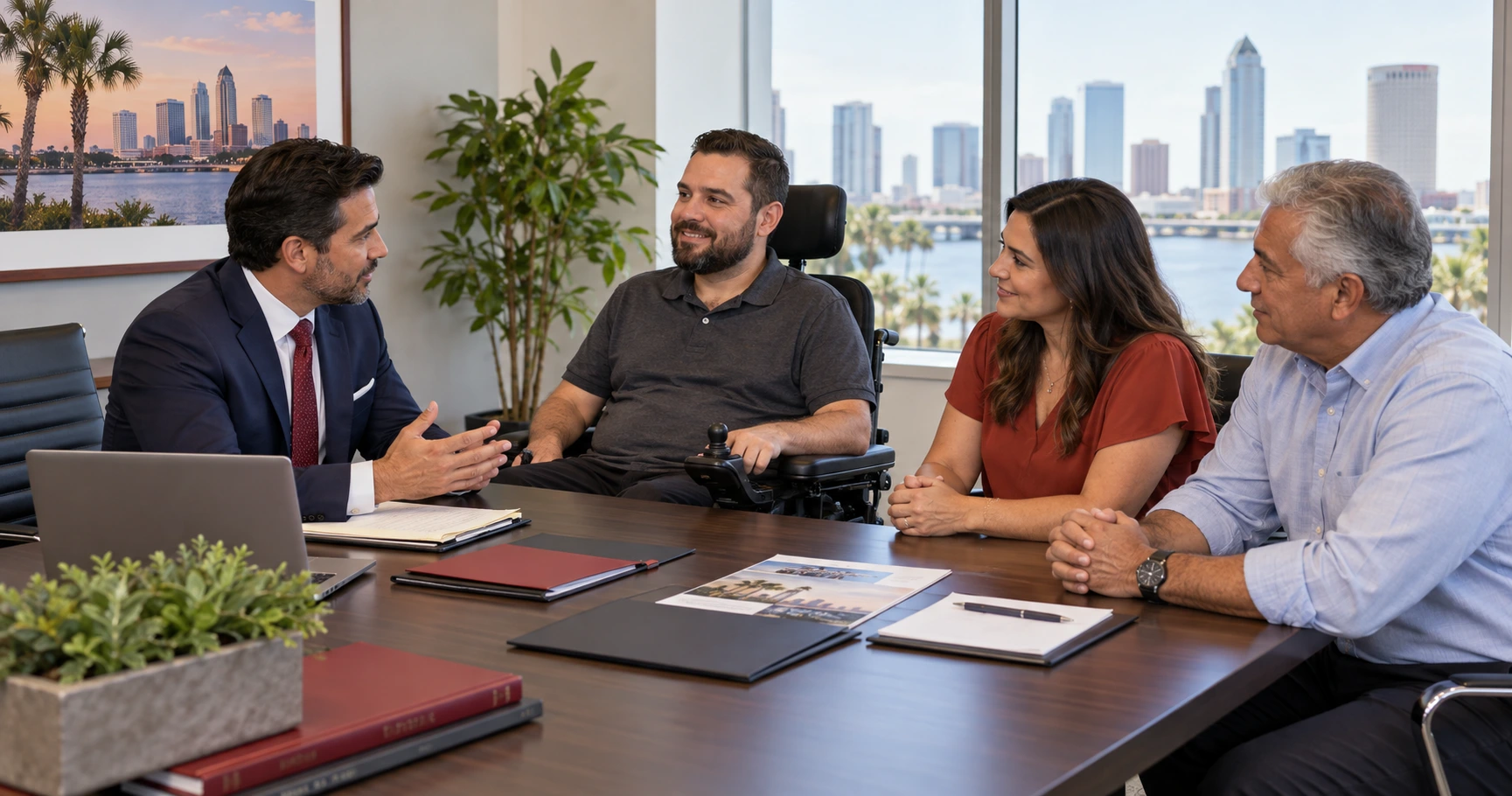
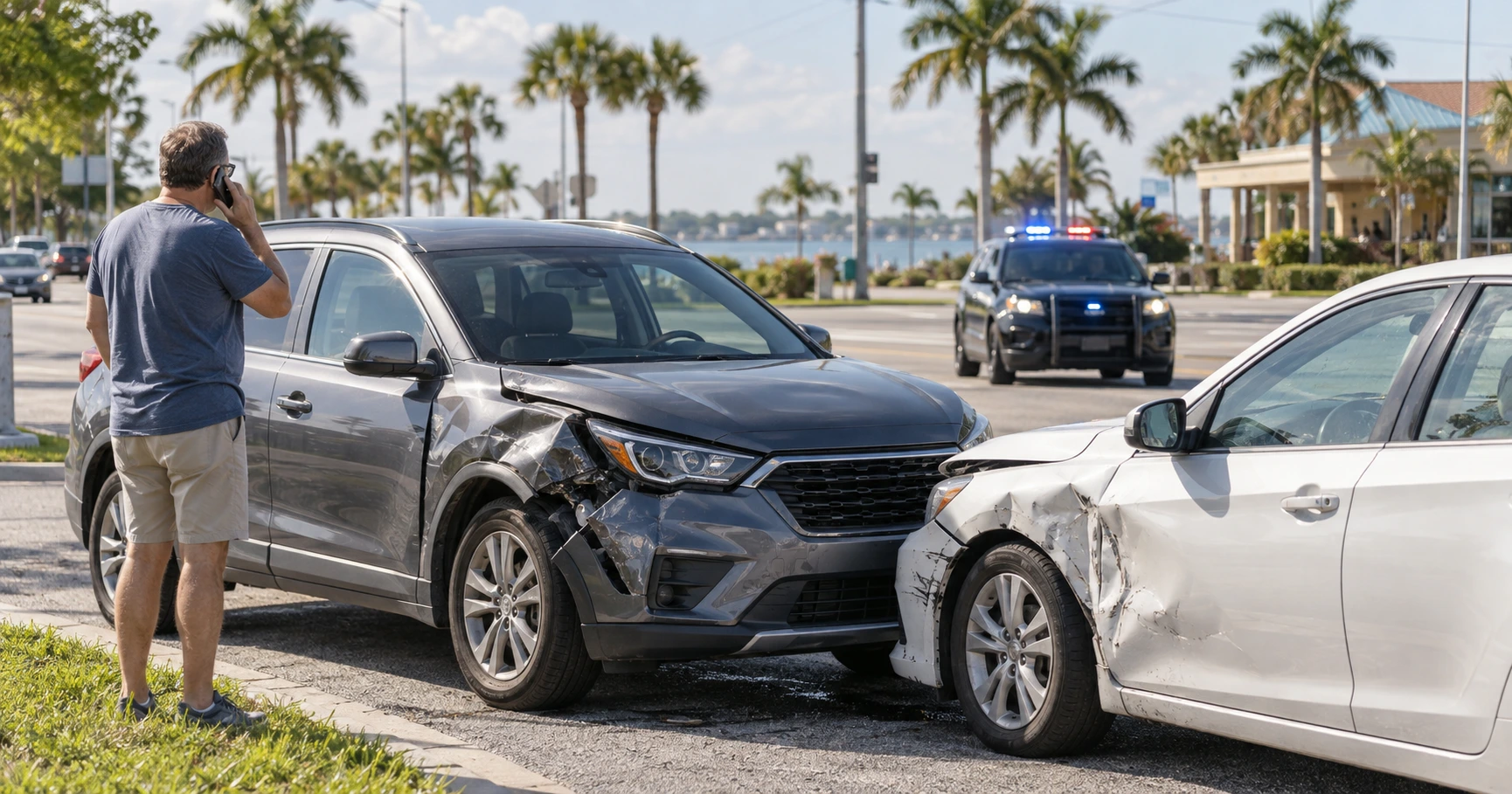
 Right after a serious semi-truck crash in Florida, life can feel unreal. A teen or young driver may look “okay” on the outside, but still feel rattled, sore, and scared. Parents often feel overwhelmed, too. They are trying to stay calm while juggling calls, paperwork, and the need to make fast decisions.
It is also common to second-guess everything. “Am I overreacting?” “Do they really need the ER?” “Should I just give the insurance company what they’re asking for so this stops?” Those thoughts hit hard when sleep is poor, and everyone is running on adrenaline.
This article gives families clarity, structure, and next steps. It explains why teen semi truck accident injuries in Florida cases can be so serious, what medical care usually looks like, and what Florida rules can affect health coverage and fault.
Why teen and young drivers face a higher risk on Florida highways
After a crash, many families feel confused about how it happened so fast. A teen may say, “I didn’t even see the truck.” That is not always carelessness. It is often a mix of inexperience and highway speed.
Teens and young drivers face a higher risk because:
- Less time behind the wheel. They have had fewer chances to practice judgment in heavy traffic.
- Faster decisions on highways. Merging, lane changes, and sudden slowdowns happen quickly on Florida interstates.
- Distractions and pressure. Phones, passengers, and stress can pull attention away at the wrong time.
- Following too closely. A small gap can feel safe until traffic stops suddenly.
Florida crash data shows the scale of the teen driving problem. Florida reported 82,447 teen crashes in 2024, including 102 teen driver fatalities and 38 teen passenger fatalities (preliminary figures as of June 2025).
Timing matters more than most families think
Families often ask, “Why did this happen on a normal day?” The truth is that certain times are riskier. The FLHSMV report notes that traffic crashes occur most frequently on Friday at 4 PM.
That timing often lines up with:
- After-school and after-work traffic
- Rushed drivers trying to get home
- More lane changes and merges
- Teens driving to sports, jobs, or social plans
This is one reason a teen driver’s highway crash in Florida often starts with “It was just a regular drive.”
Why are semi-trucks making teen driver mistakes more dangerous
Families are often pressured to treat a truck crash like a normal car crash. That can be a mistake. A semi-truck changes everything, including the injury risk and the investigation.
A few facts help explain why trailer truck accidents in Florida cases can hit harder:
- Weight and force. A semi-truck is much heavier than a passenger car. At highway speed, the force can be extreme.
- Longer stopping distance. Trucks need more room to slow down safely.
- Large blind spots. Teens may not realize how easily a car can disappear beside a trailer.
- Bigger crash scenes. A semi-truck crash often causes multi-car pileups, rollovers, or lane closures.
Florida reported 46,651 commercial motor vehicle crashes with 315 fatalities (preliminary). This is part of why the topic of semi-truck accident injuries in Florida matters for families. When a teen is involved, the physical and emotional impact can be even heavier.
Common teen semi truck accident injuries Florida families should watch for
It is normal for a teen to say, “I’m fine,” even when they are not. Many young drivers do not want to worry their parents. Some injuries also show up later, after adrenaline drops.
Common teen semi truck accident injuries in Florida cases include:
Head injuries and concussion symptoms
A concussion can happen even without a direct head hit. Families should watch for:
- A headache that does not go away
- Dizziness, nausea, balance problems
- Light or noise sensitivity
- Brain fog, trouble focusing
- Mood changes, irritability, unusual fatigue
Neck and back injuries
Neck and back pain can start hours or days later. Whiplash after a truck accident collision is common because the head and spine snap quickly.
Red flags include:
- Numbness or tingling
- Weakness in arms or legs
- Pain that worsens instead of improving
Chest and abdominal injuries
Seatbelts save lives, but bruising can still mean the body took a hard hit. Families should not ignore:
- Rib pain
- Shortness of breath
- Belly pain or deep soreness
Mental and emotional trauma
Many families feel unsure about this part. They may think, “It wasn’t that bad. Why is my teen acting differently?” Emotional symptoms can be real and serious, especially after a crash with a semi.
Signs can include:
- Nightmares or panic while riding in cars
- Avoiding driving completely
- Anger, crying, shutdown, or fear that feels “out of character.”
Mental recovery is part of medical recovery, and it can also affect school, work, and daily life.
What medical care after a crash should look like in Florida
Right after the crash, families often feel pressured to “wait and see.” They may worry about cost, time, or being judged. But early medical care matters for health and for insurance.
Step 1: Get checked early, even if symptoms feel mild
A teen may feel okay at the scene, then feel worse the next day. A medical check helps identify hidden injuries and documents symptoms.
This is one of those “better safe than sorry” steps after a crash.
Step 2: Know Florida’s 14-day PIP rule
Florida is a no-fault state for many car crashes, which means Personal Injury Protection (PIP) may help cover medical bills. Florida law says PIP medical benefits apply when the injured person receives initial services and care within 14 days after the accident.
That is why people search phrases like Florida PIP no-fault and 14-day rule, Florida car accident medical care. This rule isn’t about who caused the crash. It’s about how soon care happens.
Step 3: Understand what hospitals do after a semi-truck accident
Many families leave the ER with more questions than answers. They may wonder why the teen was not scanned or why the doctor focused on “symptoms” rather than the crash account.
Hospitals and ER teams often focus on:
- Vitals and signs of internal injury
- Brain injury screening if symptoms suggest a concussion
- Imaging when symptoms or crash force justify it
- Pain control and discharge instructions
- Follow-up referrals (primary care, ortho, neuro, physical therapy)
This is what it looks like in practice: the hospital focuses on safety first, then develops a plan for the next steps.
Step 4: Trauma centers can matter in serious cases
Some semi-truck crashes involve high-impact injuries that need trauma-level care. Florida has designated trauma centers, including major options in the Tampa Bay region (for example, Tampa General Hospital is listed as Level I and St. Joseph’s Hospital as Level II/Pediatric in the state trauma center list).
Families do not need to memorize levels. They just need to know that higher-impact crashes may lead to trauma-center evaluation, and that follow-up care still matters after discharge.
How is fault investigated in a teen-involved semi-truck crash
It is common to feel pressured by insurance calls. A teen may be asked for a recorded statement while they are still shaken. Parents may feel unsure about what to share.
A calmer way to think about it is this: fault is decided by evidence, not by who speaks first.
What evidence can matter in truck cases
A strong truck crash investigation may include:
- The Florida crash report and diagrams
- Photos of damage and the scene
- Witness names and contact info
- Dashcam or nearby business footage
- Truck driver logs and electronic data
- Maintenance and inspection records
- Company policies and dispatch records
Florida data shows that troopers investigated 106,647 of 381,210 codable crashes (27.98%) and worked 1,649 of 2,962 fatal crashes (55.67%) (preliminary).
That does not mean a family is on their own. It means early documentation and follow-through are important.
This is also where trucking company liability in Florida can come into play. A crash is not always only about the teen driver. Driver training, fatigue rules, equipment condition, and company decisions can all matter.
Florida’s comparative fault rule
Florida law says a party found to be greater than 50% at fault may not recover damages in a negligence case covered by the statute.
Families should hear this clearly: fault is not always simple. A teen might share some blame, but that does not automatically end the case. Each situation depends on the facts, evidence, and the assignment of fault.
What parents should document after a teen truck crash
After a crash, parents often feel compelled to “do everything” and get it perfect. They do not. They just need a simple structure.
Here is a practical checklist:
Medical and recovery documentation
- ER and urgent care paperwork
- Follow-up appointment notes
- A symptom journal (headaches, sleep, dizziness, pain)
- School impact (missed days, reduced workload, sports restrictions)
- Receipts for out-of-pocket medical items
Crash and evidence documentation
- Photos of the car, including the interior and airbags
- Photos of visible injuries (even bruises that change over days)
- Names of witnesses, if available
- Tow yard and storage information
Insurance communication documentation
- A log of calls, emails, and claim numbers
- Notes on what was asked and when
- Copies of any forms sent to the family
This kind of structure helps families feel less overwhelmed and more in control, especially in Florida semi truck accident injury cases, where the process moves quickly.
For more teen-specific guidance, families can also review The Reyes Firm’s Resources for Teens page.
Legal time limits families should know in Florida
Families are often unsure when to call a commercial vehicle and truck accident lawyer. They may think it is “too early” or worry about being judged.
A simple truth helps: legal deadlines exist even when a family is still dealing with doctors and school.
Florida law sets a two-year limitations period for actions founded on negligence.
Waiting too long can make it harder to protect evidence and options.
FAQs about teen semi-truck crashes and medical care in Florida
Can a parent be held responsible if a teen crashes a family car in Florida?
Sometimes, yes. Florida’s “dangerous instrumentality doctrine” can make the vehicle owner financially responsible when they give someone permission to drive, even if the owner was not in the car.
What are Florida’s driving curfew rules for 16- and 17-year-old licensed drivers?
In Florida, a 16-year-old generally may drive 6 a.m. to 11 p.m., and a 17-year-old generally may drive 5 a.m. to 1 a.m., with limited exceptions (like work or being with a licensed adult 21+).
Does Florida require supervised driving hours before a teen can get a license?
Yes. Florida requires 50 hours of supervised driving, including 10 hours at night, before a teen can qualify for a license stage that allows independent driving.
How long does it take to get a Florida crash report, and where can families request it?
Crash reports may take up to 10 days to become available, and families can purchase them through the FLHSMV Crash Portal once they are posted.
How Can The Reyes Firm Help You
After a semi-truck crash, families often feel pressured and unsure. They may be trying to protect their teen while also dealing with insurance questions, medical appointments, and the fear of saying the wrong thing.
The Reyes Firm helps families slow the process down, understand what matters first, and build a clear plan. That includes guidance on medical documentation, the steps that protect a claim, and how fault investigation works in serious truck cases. The goal is not to rush. The goal is to help the family feel steadier, informed, and protected while the teen focuses on healing.
Address: 4730 N. Habana Ave., Suite 201, Tampa, FL 33614
Phone number: 833-4 BAD DAY
Had a bad day?