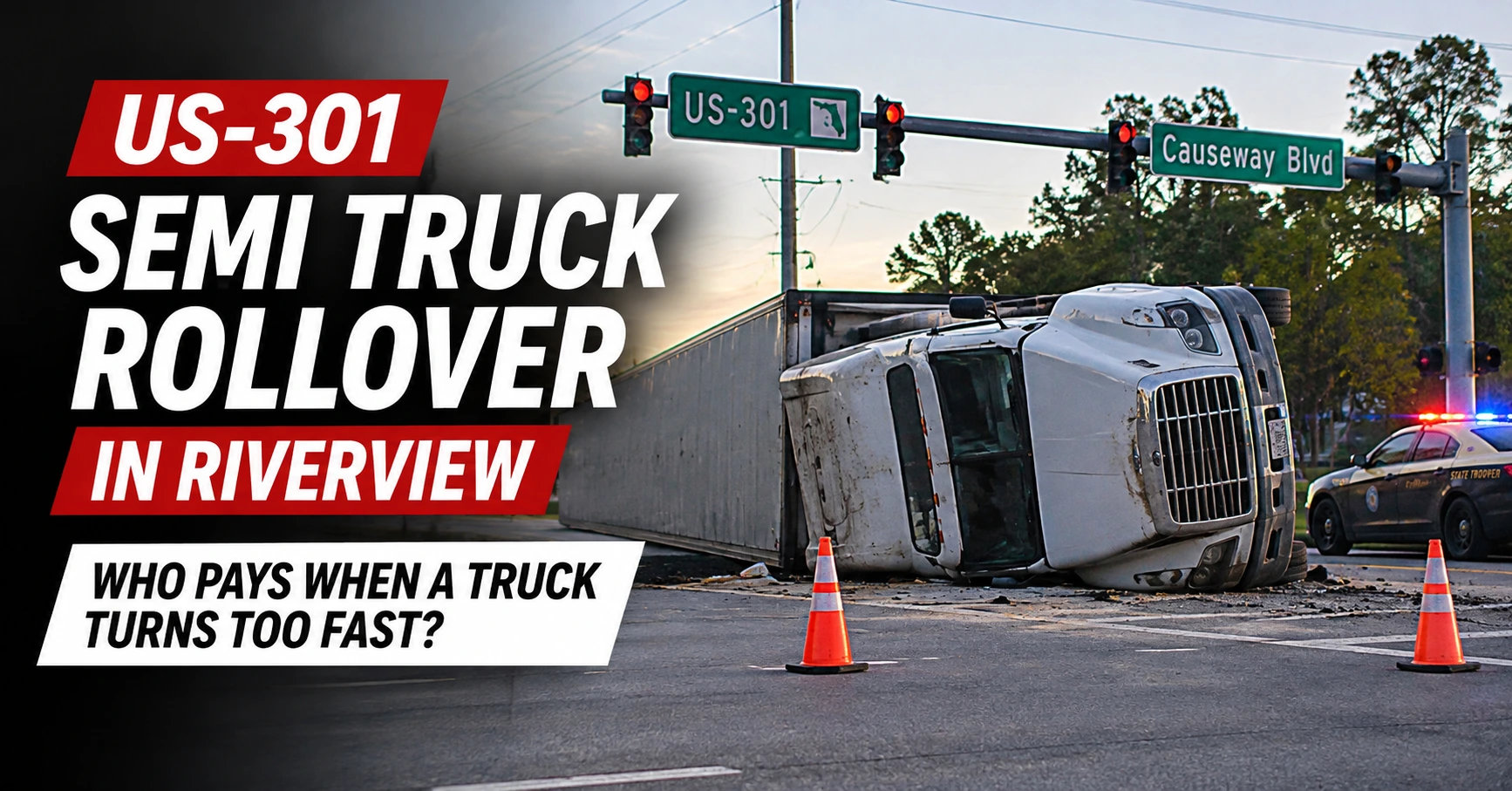
 Police lights are shown for illustration after a fatal semi-truck crash on US-27 in Belle Glade. (Credit: Getty Images via CBS12)
A normal drive can change in a second. One moment, a passenger is looking out the window on US-27, thinking about dinner, school pickup, or the next stop. The next moment, there is a violent impact, broken glass, and the scary quiet that comes when everyone realizes someone is badly hurt.
That is why news of a fatal semi-truck crash on US-27 in Belle Glade hits so hard. It is not just a traffic update. It is a reminder that crashes involving a semi-truck accident can cause catastrophic injuries, even when the passenger did nothing wrong.
In this reported Belle Glade crash, investigators said a car hit the back of a semi-truck, the driver died at the scene, and a passenger suffered serious injuries and was taken to the hospital. What comes next for an injured passenger is often confusing. There are medical decisions, insurance calls, and big questions about treatment, bills, and legal rights.
What happened in the Belle Glade crash on US-27
CBS12 reported details about a crash in Belle Glade involving a semi-truck and a Hyundai Elantra. The report cited investigators who said the Elantra struck the rear of the semi-truck, the driver died at the scene, and the passenger was seriously injured and transported to Delray Medical Center.
For local families, crashes on US-27 are especially concerning because this highway is a major route for commercial traffic. Semi-trucks travel this corridor every day to move goods across Florida. When something goes wrong with a large commercial vehicle, the damage is usually far worse than a typical fender bender.
This article focuses on one key question: after a serious crash like this, what should an injured passenger do next to protect health, safety, and legal rights?
Why a semi-truck crash is more dangerous than a normal car crash
A semi-truck can weigh many times more than a passenger vehicle. That size difference matters. When a smaller vehicle collides with a commercial truck, the smaller vehicle usually takes the brunt of the impact.
In a rear-end crash involving a semi-truck, injuries can be catastrophic because:
- The car may crush inward, leaving less space for the people inside.
- The impact can cause the head and body to snap forward and backward.
- The crash can lead to a secondary impact, such as hitting a guardrail or another vehicle.
Even if the passenger feels “okay” at first, the body can go into shock. Pain, stiffness, headaches, and dizziness can show up hours or even days later.
Common injuries passengers suffer in serious truck crashes
Passengers can suffer obvious and hidden injuries. After a truck crash, it is smart to take symptoms seriously.
Head and brain injuries
A concussion can happen even if there is no direct hit to the head. The brain can move inside the skull during a sudden impact. Warning signs include headaches, nausea, confusion, mood changes, blurry vision, and memory problems.
Neck and back injuries
Whiplash is common, but so are more serious problems like herniated discs. Back pain that shoots down the arms or legs can be a sign that nerves are involved. Neck pain with tingling in the hands should be checked quickly.
Broken bones and internal injuries
Broken ribs, fractured arms, and leg injuries can happen when the body hits the seat, door, or dashboard. Internal injuries can be dangerous because they may not hurt right away. That is one reason the ER takes imaging seriously after major impacts.
Emotional trauma
Serious semi crashes can cause anxiety, panic, nightmares, and fear of riding in a car again. These effects are real. Mental health care can be part of recovery.
Step 1: Get medical care first, then keep it consistent
For an injured passenger, health comes first. The best legal choice is usually the same as the best medical choice: get checked, follow the doctor’s instructions, and do not ignore symptoms.
Helpful steps include:
- Go to the ER or an urgent care center right away if you have pain, dizziness, weakness, or confusion.
- Schedule follow-up appointments promptly, even if symptoms seem minor.
- Take medications as directed.
- Attend physical therapy if recommended, and keep appointments consistent.
Consistency matters because insurance companies often look for “gaps” in treatment. If there is a long gap, they may argue that the passenger was not really injured or that the injury occurred later in a different way.
A simple documentation habit that helps
The passenger can keep a basic folder or phone note with:
- Discharge papers
- Prescriptions and referrals
- Appointment dates
- Receipts for medications and medical devices
- A short weekly note about pain, sleep, and daily limits
This is not about exaggerating. It is about recording what is happening while it is fresh.
Step 2: Do not give a recorded statement to an insurance adjuster right away
Insurance adjusters often call soon after a crash. They may sound friendly. Their job is to protect the insurance company, not the injured passenger.
A recorded statement can be risky because:
- The passenger may not yet know the full extent of the injuries.
- The passenger may guess about speed, distance, or timing.
- The passenger may accidentally say something that sounds like blame.
A safe response can be simple:
- “Medical care is the priority right now.”
- “Please send questions in writing.”
- “A lawyer will follow up.”
This is one reason people contact a truck accident attorney or trucking accident attorney early. It helps stop the pressure and keeps communication clear.
Step 3: Be careful with quick settlement offers
After a major crash, an insurer might offer money quickly. It can feel like relief when bills start showing up. But quick settlements can create long-term problems.
Once a release is signed, the case may be over forever. If the passenger later needs surgery, more treatment, or has long-term pain, the settlement may not cover it.
A fair claim usually takes time, so the injured passenger can understand:
- The real diagnosis and treatment plan
- How long will recovery take
- Whether future care is likely
- How work and daily life are affected
- What insurance coverage is actually available
Step 4: Understand how passenger claims work in Florida
Florida has insurance rules that can confuse people, especially after a serious truck crash. An injured passenger may have several insurance options, depending on the situation.
Coverage may include:
- The driver’s auto insurance
- The passenger’s own auto insurance (if the passenger has a policy)
- The semi-truck driver’s insurance
- The trucking company’s insurance
- Other responsible parties, if they exist
This is where a commercial truck accident attorney can help. Truck cases often involve bigger policies, more paperwork, and more pushback. A passenger should not have to guess which coverage applies or sign something without understanding it.
Step 5: Evidence matters, and it can disappear fast
In any serious truck crash, evidence is everything. It helps show what happened and who is responsible. If the case involves a semi-truck accident, evidence can be more complex than in a typical car crash.
Important evidence in many cases includes:
- Crash reports and diagrams
- Photos and videos from the scene
- Witness contact information
- Vehicle damage photos
- Medical records connecting injuries to the crash
Trucking cases can also involve extra evidence that does not exist in most car crashes:
- Driver logs and work schedules
- Maintenance and inspection records
- Dispatch records and delivery timelines
- Electronic data from the truck, when available
- Company safety policies and training records
Evidence can be lost quickly. Video can be overwritten. Vehicles can be repaired. Records can become harder to obtain. That is why acting early matters after a fatal semi-truck crash on US-27 in Belle Glade.
Step 6: The fault can be complicated, even when the passenger did nothing wrong
Passengers usually are not at fault. Still, insurance companies often try to shift blame to reduce what they pay.
They may ask questions like:
- Was the passenger wearing a seatbelt?
- Was the car driver distracted?
- Did the car brake too late?
- Was the semi-truck stopped or moving?
These questions can affect how the claim is valued, but they do not erase the passenger’s right to pursue compensation. The passenger is a separate injured person with separate damages.
A trucking accident attorney will usually look beyond the initial narrative and examine whether other factors played a role, such as visibility, lighting, road conditions, truck maintenance, driver fatigue, or unsafe company practices.
Step 7: Track damages that go beyond the hospital bill
Many people think a claim is only about the ER bill. In reality, serious injuries change everyday life.
Damages may include:
Medical costs
This can include ER care, imaging, follow-ups, specialists, physical therapy, prescriptions, and future care.
Lost income
If the passenger misses work, loses hours, or cannot do the same job tasks, that loss matters. Even students can suffer losses through missed school time and long recovery periods.
Daily life impact
Injuries can make everyday tasks harder, such as driving, lifting a child, sleeping, cleaning, or standing for long periods.
Pain and suffering
Pain is the day-to-day reality of living with physical limits, stress, and discomfort. It can include headaches, sleep loss, anxiety, and loss of enjoyment of life.
A simple weekly journal entry can help explain the injury’s real impact in plain language.
Step 8: If someone died, the family may have a wrongful death claim
In the reported Belle Glade crash, the driver died at the scene. When a crash is fatal, families are often overwhelmed. They may not know what steps to take, especially if insurance companies start calling soon after.
In Florida, wrongful death claims follow specific rules about:
- Who can bring the claim
- How the estate is involved
- What losses can be included?
- How deadlines apply
Families do not need to handle this alone. Speaking with a truck accident attorney early can help protect evidence and prevent avoidable mistakes during a painful time.
Step 9: What injured passengers should avoid doing
After a serious crash, it is easy to make choices that seem harmless but can hurt a claim later.
Common mistakes include:
- Posting details about the crash on social media
- Saying “I’m fine” to police or adjusters when pain has not fully appeared
- Skipping follow-up care because the pain comes and goes
- Accepting a settlement before the medical picture is clear
- Signing broad medical releases without understanding what they allow
The injured passenger does not have to be perfect. They just need to be careful, honest, and consistent.
Frequently asked questions after a serious truck crash in Belle Glade
Can a passenger still file a claim if the driver of the car made a mistake?
Yes. The passenger’s claim is separate. Liability and insurance can involve multiple parties depending on the facts.
What if the passenger does not have health insurance?
There may be options to coordinate care depending on the situation and available coverage. A commercial truck accident attorney can explain realistic paths based on the facts of the case.
How long does the passenger have to take action?
Deadlines depend on the type of claim and the facts. Acting early is smart because evidence can disappear and memories fade, even before legal deadlines become the main issue.
How Can The Reyes Firm Help You
After a fatal semi-truck crash on US-27 in Belle Glade, an injured passenger should not have to fight trucking insurance companies while also trying to heal. Trucking cases can move fast, and the insurance side often starts working immediately.
The Reyes Firm helps injured passengers and families by:
- Handling insurance calls so the injured person is not pressured into a recorded statement
- Moving quickly to preserve trucking evidence before it disappears
- Investigating who is responsible, including company-level issues when appropriate
- Building a claim that reflects the true impact of the injuries, not just the first hospital visit
- Pushing back against low offers and unfair blame shifting
Had a bad day? Call 833-4 BAD DAY.
The Reyes Firm
4730 N. Habana Ave., Suite 201
Tampa, FL 33614
Phone: 833-4 BAD DAY
This article is for general information and is not legal advice. Every case is different.