Quick Summary
- A company-owned or marked vehicle is not always required for an employer liability claim.
- The purpose of the employee’s trip may matter more than who owned the vehicle.
- Being on the clock is relevant evidence, but it does not automatically make the employer responsible.
- A normal commute, personal detour, mixed-purpose trip, or contractor relationship can affect the claim.
- Preserve work assignments, messages, location data, and all possible insurance information as soon as possible.
Had a bad day? Call The Reyes Firm at 833-4 BAD DAY.
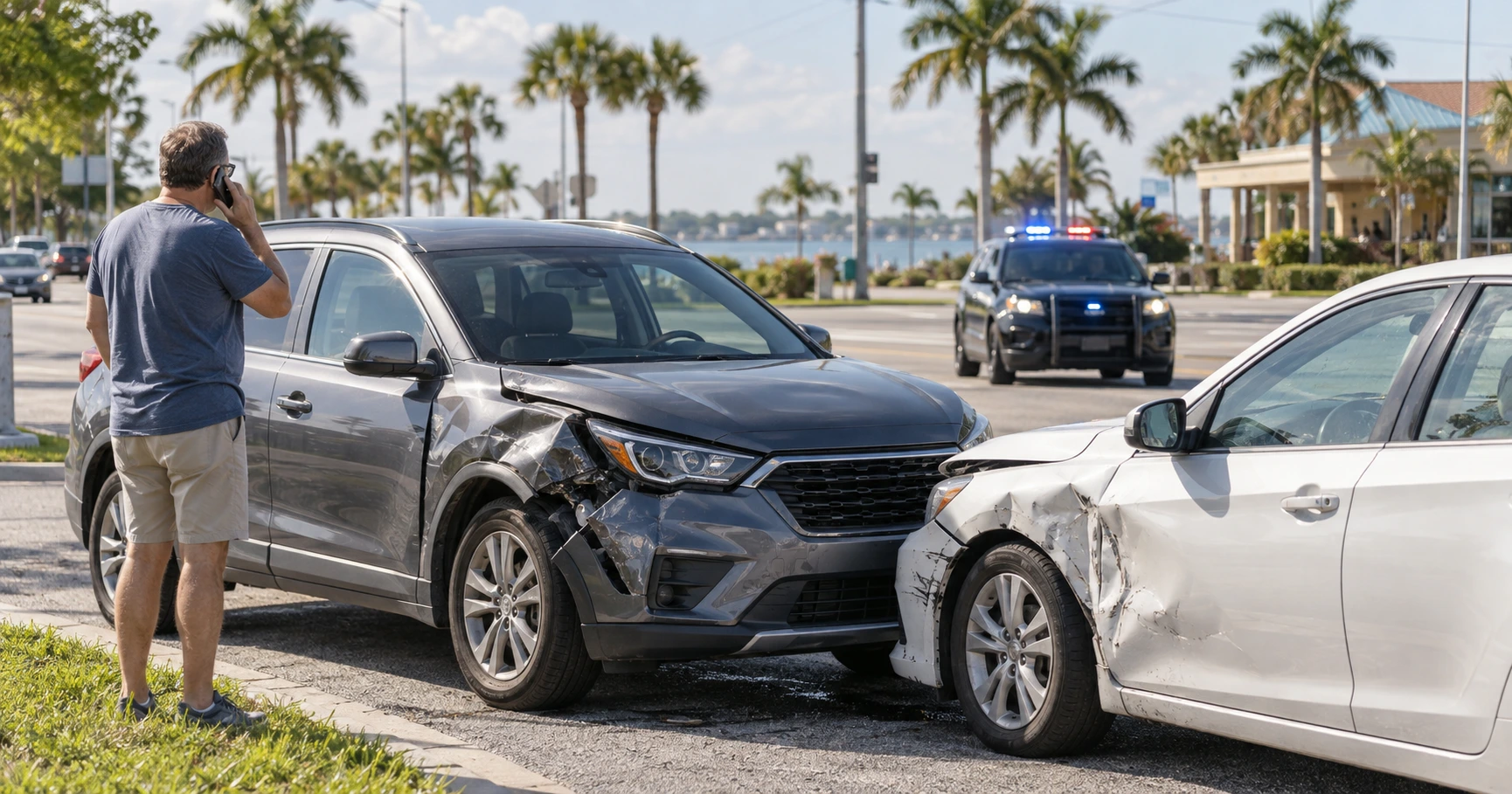
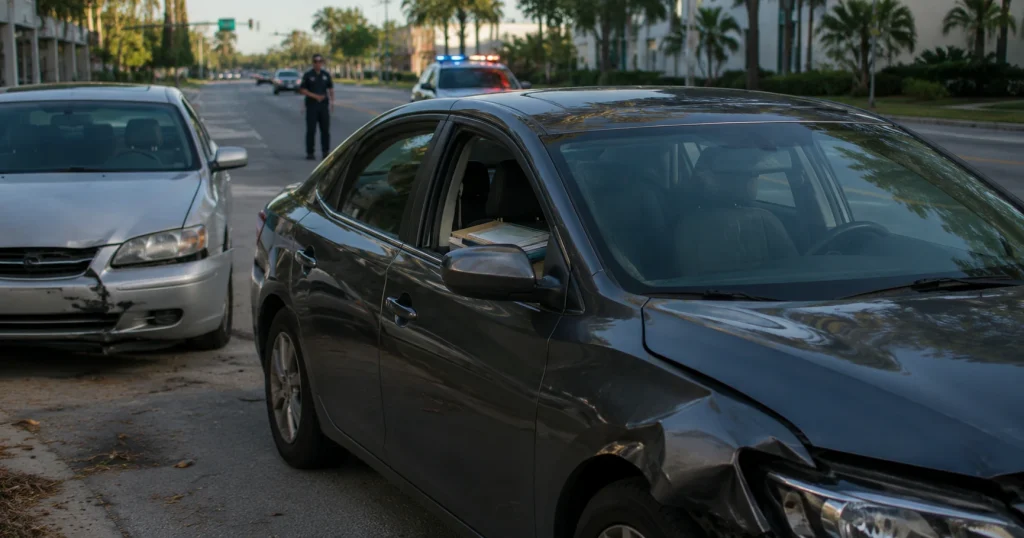
The driver who hit you may have been working, but the car had no company logo, business name, or commercial markings. That can leave you unsure about who should pay. Employer liability for employee car accident claims in Florida does not turn only on who owned the vehicle.
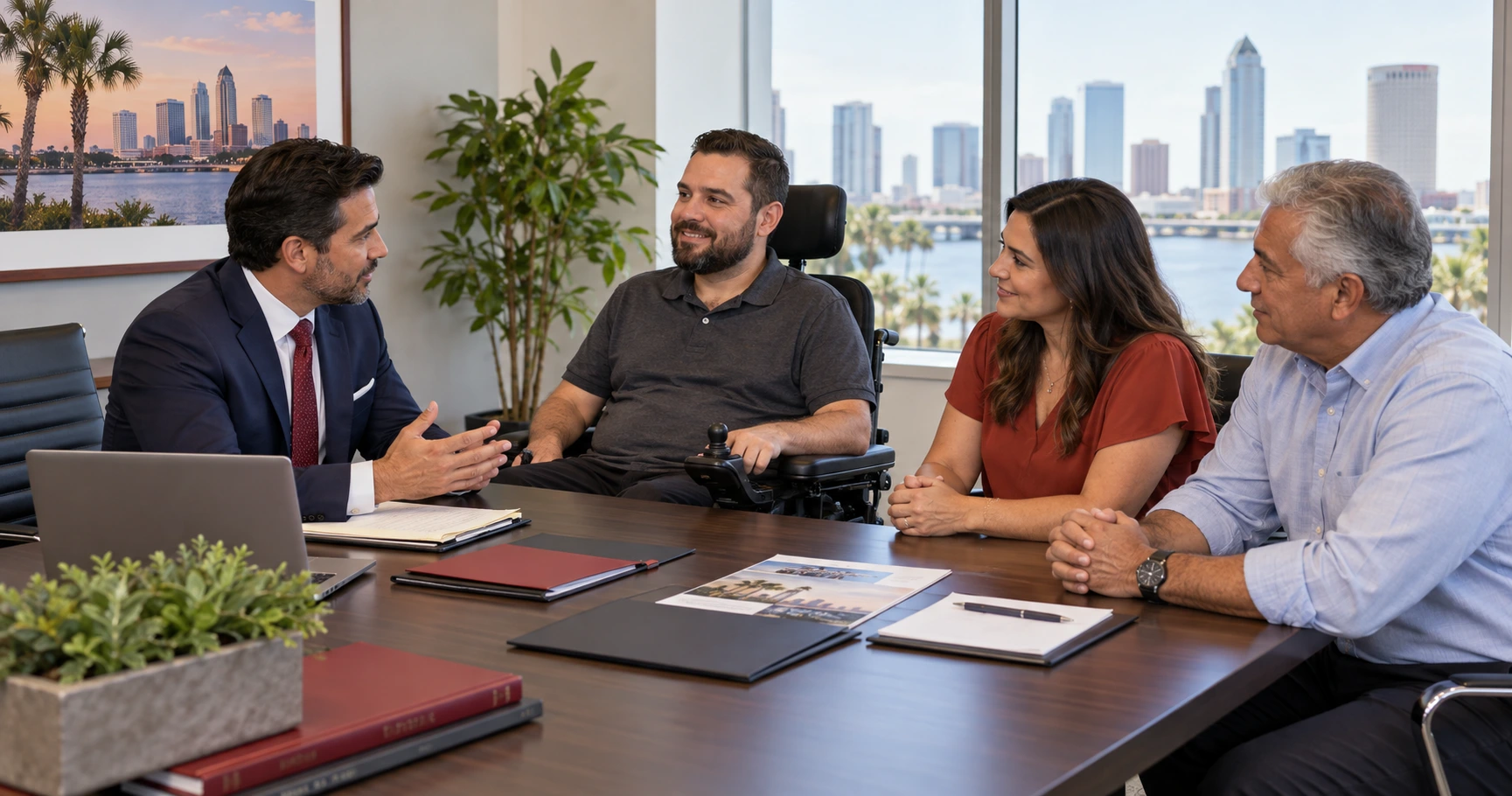
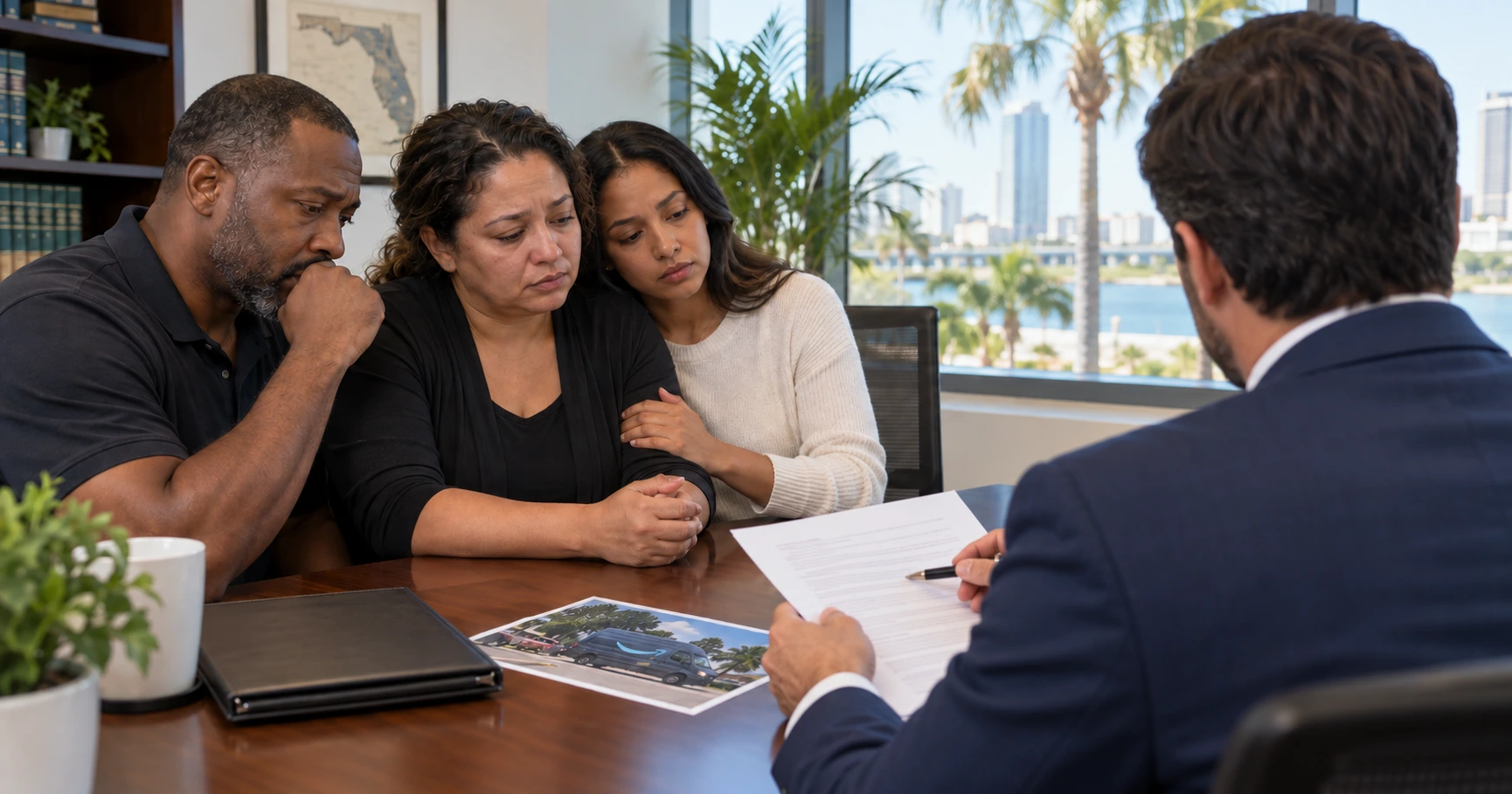
In a recent YouTube Short, Edward Reyes, Esq. explains why a personal or unmarked vehicle does not automatically remove the employer from a car accident claim. A Tampa personal injury lawyer can investigate the purpose of the trip, the driver’s work status, the company’s control, and every available insurance policy.
This guide explains how Florida evaluates work-related crashes, when an employer may share responsibility, how personal and business insurance may apply, and what evidence can show that the driver was working.
Edward Reyes, Esq. explains when an employer may share responsibility after an employee causes a crash in a personal or unmarked vehicle.
Can an Employer Be Liable If the Employee Used a Personal Vehicle?
Yes. A Florida employer may share responsibility when an employee causes a crash in a personal, borrowed, rented, or unmarked vehicle while carrying out company business. The key questions usually concern the purpose of the trip, the employer’s control, and if the employee was acting within the scope of employment.
Florida calls this type of responsibility vicarious liability in Florida. In plain English, a company can sometimes be held responsible for an employee’s negligence even when the company did not personally cause the crash. The doctrine is also called respondeat superior.
Florida’s general rule comes mainly from court decisions and agency instructions, not from one statute that automatically makes every employer liable. The current Florida civil jury instructions focus on the company’s right to control the worker and ask if the employee was performing assigned services, trying at least in part to serve the employer, or doing something reasonably connected to the job.
The Florida Supreme Court’s decision in Tsuji v. Fleet also recognizes that an employer may sometimes answer for an employee’s negligence committed within the course and scope of employment.
An accident involving a personal vehicle used for work may arise during tasks such as:
- Delivering documents
- Picking up supplies
- Visiting a customer
- Traveling between job sites
- Making a bank deposit
- Getting coffee or food at a supervisor’s request
- Completing another authorized task for the business
None of these examples creates automatic liability. The details still matter. A coffee run requested by a manager for a meeting may support a work-purpose argument. An employee leaving solely to buy a personal drink may present a different issue.
The same analysis may apply to an employee driving a borrowed or rented vehicle. Vehicle ownership and commercial markings are evidence, but they are not always the deciding facts in a work-related personal vehicle accident.
Does Being on the Clock Automatically Make the Company Responsible?
No. An employee’s paid status is useful evidence, but it does not settle the issue by itself. Florida courts look at what the driver was doing, who directed the trip, how the trip served the business, and if the employee had left the work assignment for a personal reason.
A crash involving an employee who was on the clock may support a claim when the worker was carrying out a manager-directed task. The claim can become harder when the employee had finished the assignment, made a substantial personal detour, or was simply traveling to or from the regular workplace.
A normal commute is often treated differently from a trip made for company business. A short stop during a work trip may also be treated differently from a major departure that no longer serves the employer. Mixed-purpose trips require a close review of the route, timing, instructions, and benefit to the company.
| Situation | Possible Liability Issue | Evidence to Check |
| Manager-directed errand | The trip may fall within the employee’s assigned work | Texts, emails, timecards, manager testimony |
| Employee visiting a client | The travel may directly benefit the employer | Calendar, appointment records, mileage logs |
| Employee’s normal commute | The company may argue the employee was outside the scope of employment | Work schedule, route, special instructions |
| Personal lunch trip | The employer may argue the trip was solely personal | Receipts, messages, destination, timing |
| Work trip with a personal detour | Liability may turn on the length and purpose of the detour | GPS data, phone location, route history |
| Independent contractor completing a delivery | The company may dispute an employment relationship or right of control | Contract, app rules, dispatch records, payment records |
For a Florida scope-of-employment car accident claim, “on the clock” is one fact among many. The work assignment, the employer’s benefit, and the company’s control often carry more weight than the label used on a timesheet.
⚠️ Warning: Florida Gives You Limited Time to File
Florida Statutes section 95.11 generally gives an injured person two years to file a negligence lawsuit. Waiting can also cause texts, videos, GPS data, and company records to disappear.
Claims involving a state agency, local government, or public employee may have added written-notice rules and special procedures under section 768.28, so early review matters.
What If the Employee’s Car Had No Company Logo?
No. A company logo, commercial plate, or business name on the door is not required before an employer can face a claim. An ordinary personal car may still be tied to company business if records show the employee was completing an authorized task when the crash happened.
The appearance of the vehicle can mislead an injured person. An unmarked vehicle crash in Tampa may involve a salesperson, home-service worker, office employee, manager, technician, caregiver, or delivery worker using an ordinary car for a company task.
Useful evidence may include:
- Time records and payroll records
- Dispatch records and delivery instructions
- Text messages and emails
- Work calendars and customer appointments
- Expense reports and mileage reimbursement records
- GPS records and phone-location data
- Dashcam footage and nearby surveillance video
- Witness statements
- Company vehicle-use policies
- Personal and business insurance policies
Do not rely only on the car’s paint, plate, or lack of a logo. A claim involving company responsibility for an employee’s crash often turns on records that the injured person cannot see at the scene.
Preserve your own photos, the police report number, witness details, and anything the driver said about work. Data from black boxes in cars may also help show speed, braking, and other vehicle activity before impact. A lawyer may then seek company records before they are deleted or changed.
💡 Did You Know?
FLHSMV reported 381,210 codable traffic crashes in Florida during 2024, with 3,184 people killed in vehicle crashes that year. NHTSA reported that crashes involving distracted drivers killed 3,208 people nationwide in 2024.
These figures show why work messages, navigation use, and phone records can matter in a crash investigation.
When Might the Employer Dispute Responsibility?
An employer may dispute responsibility by arguing that the employee was commuting, pursuing a personal activity, working as an independent contractor, or acting outside an assigned task. These defenses are fact-specific. Time records, messages, policies, route data, and the company’s right to control the work can change the analysis.
Common disputes include claims that:
- The employee had already completed the assignment.
- The employee made a substantial personal detour.
- The trip was a normal commute.
- The driver was an independent contractor.
- No manager authorized the errand.
- The employee violated a workplace rule.
- The trip mixed business and personal purposes.
- Only the driver’s personal insurance applies.
Breaking a workplace rule does not always end the inquiry. An employee may still have been carrying out company business when the violation occurred. The employer’s written policy, actual practices, enforcement history, and instructions may all matter.
An independent contractor label also does not always settle the relationship. The current Florida jury instructions focus heavily on control. A true independent contractor generally uses their own methods without the hiring party controlling how the work is performed. The facts can be more important than the title written in a contract.
A Florida car accident claim based on vicarious liability focuses on responsibility for the employee’s conduct. A lawyer may also evaluate separate claims based on the company’s own conduct, such as negligent hiring, retention, supervision, or entrustment, when the evidence supports those claims.
🛡️ Your Rights Under Florida Law
Florida Statutes section 768.81 allows an insurer or defendant to argue that you share part of the fault. Your damages may be reduced based on your percentage of responsibility.
Under the current rule, a person found more than 50 percent at fault for their own harm generally cannot recover damages in an ordinary negligence action.
What Insurance May Cover a Work-Related Personal Vehicle Crash?
Several insurance policies may need review after a work-related personal vehicle crash. Coverage can come from the employee’s personal policy, the employer’s commercial or non-owned auto coverage, umbrella insurance, another business policy, your own PIP benefits, or uninsured or underinsured motorist coverage. Policy language and the driver’s exact work activity matter.
Potential coverage may include:
- The employee’s personal auto insurance
- The employer’s commercial auto policy
- Hired and non-owned auto coverage
- Umbrella or excess insurance
- Insurance issued to another involved company
- Uninsured or underinsured motorist coverage
- Your own Florida PIP coverage
Hired and non-owned auto coverage may protect a business when workers use vehicles the company does not own. The actual policy must be reviewed. A personal auto policy may also contain a business-use exclusion or limitation, but no exclusion should be assumed before the policy language and facts are examined.
Our guide to commercial vs. personal insurance after a Florida crash explains why a personal insurance card may not reveal every policy connected to a work-related trip.
For delivery cases, our guide to Florida delivery company insurance limits explains how several policies may overlap. A traffic accident lawyer can compare the driver’s status, the active assignment, the employer’s policies, and all layers of coverage.
Florida Statutes section 627.736 generally requires initial qualifying medical care within 14 days after a motor vehicle crash. PIP is only one part of the coverage analysis, and it does not decide the employer liability question.
How The Reyes Firm Handles Your Work-Related Vehicle Accident Case
The Reyes Firm investigates both the crash and the work relationship behind it. We move quickly to preserve electronic records, identify all available insurance, document your losses, and prepare the case as if a trial may be required. That focused approach helps expose responsibility that an unmarked vehicle can hide.
Our team may:
- Investigate what the employee was doing at the moment of the crash
- Preserve texts, emails, dispatch records, app data, and other electronic evidence
- Identify the driver’s employee or contractor status
- Review timecards, assignments, calendars, and reimbursement records
- Locate personal, commercial, umbrella, and non-owned auto coverage
- Investigate negligent hiring, retention, supervision, or entrustment when supported by evidence
- Document medical costs, lost income, pain, disability, and long-term harm
- Prepare the case for trial from the beginning
A car accident attorney in Tampa should look beyond the police report and the vehicle’s appearance. The employer may hold records that show who requested the trip, what the driver was carrying, where the driver was going, and how the company benefited.
The Reyes Firm handles serious and complex cases with focus, speed, case-specific knowledge, and trial readiness. A Tampa commercial vehicle accident lawyer from our team can also evaluate a crash involving a personal vehicle used for business, even when the car was not legally classified as a commercial vehicle.
Our team assists clients in Tampa and the South Shore communities, serving Tampa, Riverview, Brandon, Plant City, and communities across Hillsborough County.
The Reyes Firm
4730 N. Habana Ave., Suite 201, Tampa, FL 33614
833-4 BAD DAY
thereyesfirm.com
Frequently Asked Questions About Employee Work-Related Crashes in Florida
These cases often turn on hidden work records, the reason for the trip, the employment relationship, and several insurance policies. The answers below explain common issues, but each Tampa employer liability claim needs a fact-specific review before anyone can identify every responsible party or available source of coverage.
Can I sue the company if its employee hit me in a personal car?
You may have a claim if the employee was acting within the scope of employment when the crash occurred. The evidence should show why the company may be liable for the employee’s car accident, such as company control, an assigned task, or a business benefit.
Does the employee have to be driving a company vehicle?
No. An accident involving an employee driving a personal car for work can still involve employer responsibility. The vehicle may be personal, borrowed, rented, or unmarked, but the purpose of the trip and the work relationship remain central.
Is the employer liable if the employee was getting coffee?
A manager-directed coffee run for a meeting may be treated differently from an employee leaving solely for a personal drink. To decide if the employer is responsible for an employee car accident, investigators look at who requested the trip, why it happened, and how it served the business.
What if the employee was driving home from work?
A normal commute often presents a stronger defense for the employer. A special assignment, business stop, required route, or work task during that trip could change the analysis, so the full route and instructions should be reviewed.
What if the company calls the driver an independent contractor?
The label is relevant, but control and actual working conditions also matter. A Tampa car accident attorney can review the contract, payment records, app rules, schedules, uniforms, reporting duties, and the company’s power to direct the work.
How can I prove the driver was completing a work errand?
Texts, emails, dispatch records, calendars, customer appointments, receipts, mileage reimbursement, GPS data, and witness statements may help. A car accident lawyer in Tampa, Florida can send preservation demands and seek records that are not available to you at the scene.

Edward Reyes, Esq. is a Tampa personal injury attorney who represents people harmed by negligence. He is admitted to The Florida Bar. His practice includes car, truck, delivery, rideshare, commercial vehicle, and other serious injury cases.
How Can The Reyes Firm Help You?
If you’ve had a bad day — a car accident, a slip and fall, a trucking crash, or any injury that wasn’t your fault — The Reyes Firm is in your corner. Our Tampa personal injury attorneys offer free consultations and work on a contingency fee basis, which means you pay us nothing unless we win your case.
You shouldn’t have to fight the insurance companies alone. Let us fight for you.
📍 4730 N. Habana Ave., Suite 201, Tampa, FL 33614
Had a bad day? Call The Reyes Firm. We’ll handle the rest.
This article provides general educational information and is not legal advice. Reading this article or watching the video does not create an attorney-client relationship. Past outcomes do not guarantee future results. Every claim depends on its facts, evidence, insurance policies, and current Florida law.