What You Need to Know
- An amputation caused by negligence may support a Florida personal injury claim.
- Compensation may cover prosthetics, surgeries, rehabilitation, lost income, and lifelong care.
- Drivers, employers, contractors, property owners, and manufacturers may share responsibility.
- Medical records, accident evidence, and expert opinions can help document the full impact.
- Florida generally gives you two years to file a negligence lawsuit.
Had a bad day? Call The Reyes Firm at 833-4 BAD DAY.
Losing a limb can change almost every part of your life. You may be facing surgery, intense pain, rehabilitation, and the challenge of learning how to move through the world differently. You may also be worried about returning to work and supporting your family.
An amputation injury lawyer can investigate what happened, identify the responsible parties, and calculate losses that may continue for the rest of your life. Your claim should consider more than the bills sitting in front of you today.
At The Reyes Firm, we help people in Tampa and the South Shore communities after life-changing injuries caused by negligent drivers, unsafe machinery, dangerous properties, commercial vehicles, and careless companies.
What Accidents Can Lead to a Traumatic Amputation?
A traumatic amputation can happen when an accident immediately severs a limb or damages it so severely that doctors must remove it later. Car crashes, commercial-vehicle collisions, motorcycle accidents, construction incidents, unsafe machinery, explosions, and severe burns can all cause permanent limb loss when another person or company acts negligently.
Common causes include:
- Car and motorcycle crashes
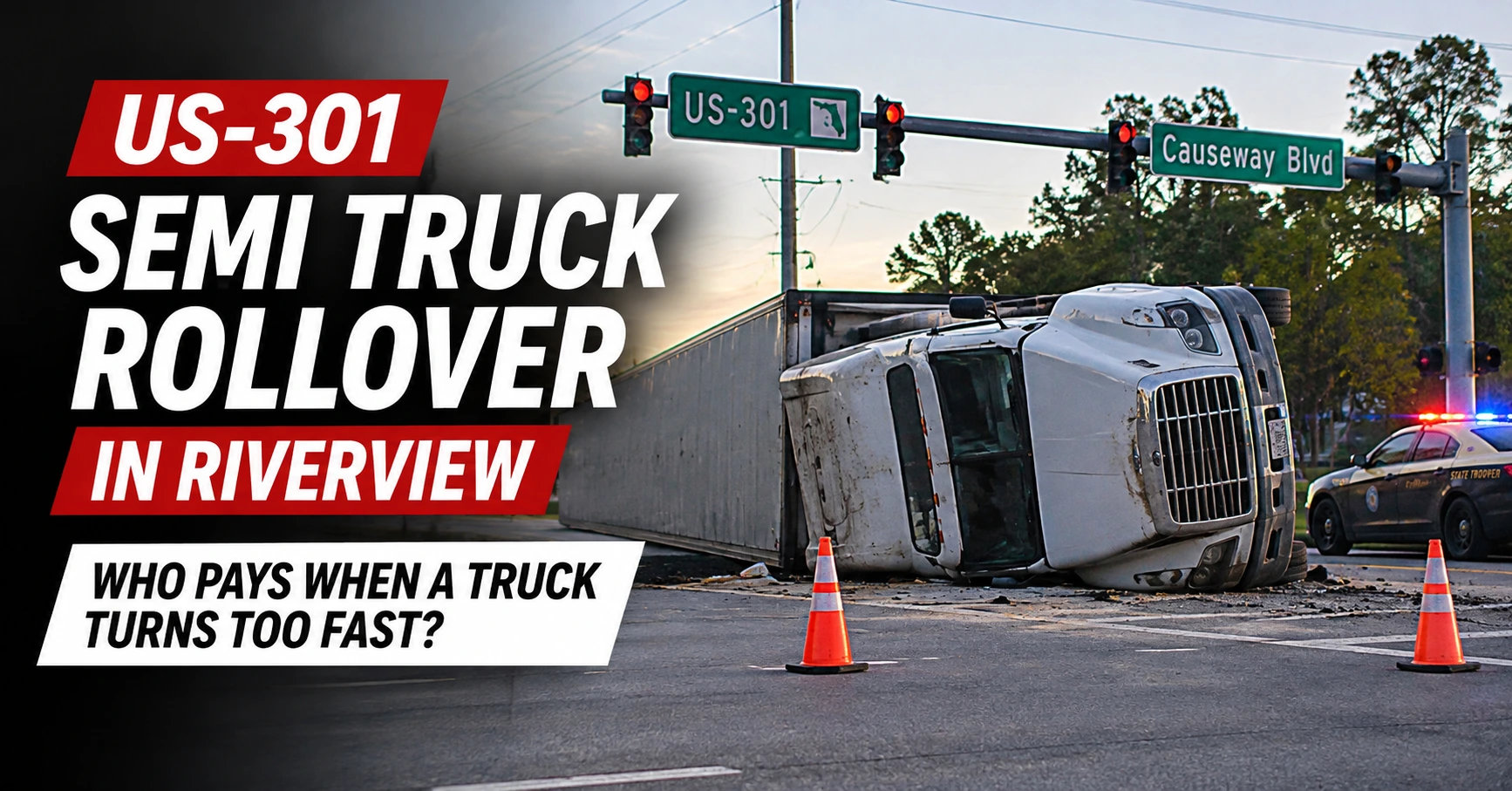
- Semi-truck and commercial-vehicle collisions
- Pedestrian and bicycle accidents
- Construction accidents
- Defective or unguarded machinery
- Fires, explosions, and electrical accidents
- Severe crush injuries
- Unsafe consumer products
A traumatic amputation occurs when a body part is severed during an accident. A surgical amputation happens when doctors must later remove a limb because blood vessels, nerves, muscles, or bones are damaged beyond repair.
Both types can support a personal injury claim if another party’s negligence caused the original injury.
💡 Did You Know? OSHA reports that approximately half of workplace amputations occur in manufacturing. Other cases are distributed across construction, retail, wholesale trade, services, and additional industries. OSHA also identifies stationary and portable machinery as the primary cause of workplace amputations.
A workplace injury may involve more than a workers’ compensation claim. A manufacturer, contractor, equipment owner, maintenance provider, or another third party may also be responsible.
Who Can Be Held Responsible for an Amputation Injury?
Responsibility depends on how the injury happened. A negligent driver, trucking company, employer, contractor, equipment manufacturer, maintenance provider, or property owner may be liable. Some cases involve several responsible parties and insurance policies, so the investigation must look beyond the person directly involved in the accident.
Potentially responsible parties may include:
| Type of accident | Potentially responsible parties |
|---|---|
| Car or motorcycle crash | Negligent driver, vehicle owner, or employer |
| Commercial truck crash | Driver, motor carrier, maintenance provider, or cargo company |
| Construction accident | Contractor, subcontractor, property owner, or equipment owner |
| Machinery accident | Manufacturer, distributor, installer, or maintenance provider |
| Unsafe property accident | Property owner, tenant, or maintenance contractor |
| Defective product | Manufacturer, distributor, or seller |
Traffic and commercial-vehicle accidents
A driver may be responsible for speeding, distracted driving, impairment, or another unsafe act. If that person was working at the time, the employer may also be involved.
Commercial-vehicle cases may require investigating the driver, motor carrier, maintenance company, cargo company, and other businesses. Our guide to amputation injuries in cement mixer crashes explains how a severe truck collision can lead to crushing injuries and limb loss.
People injured by a semi-truck, delivery vehicle, construction truck, or other business vehicle can also learn about working with a Tampa truck and commercial vehicle accident attorney.
Construction and machinery accidents
Amputation injuries can occur when workers become caught in presses, conveyors, saws, compactors, or other powered equipment. Missing guards, poor maintenance, defective controls, and inadequate training may contribute to the accident.
A worker may receive workers’ compensation benefits while also having a separate claim against a negligent third party. Review these claims carefully because different deadlines and rules may apply.
Defective products
A product manufacturer may be responsible when defective equipment cuts, crushes, or traps someone. Evidence may include the equipment itself, maintenance records, operating manuals, safety warnings, photographs, and information about similar incidents.
Preserve the equipment before anyone repairs, alters, or destroys it.
What Compensation Can You Pursue After Losing a Limb?
An amputation claim may seek compensation for current medical bills, future treatment, prosthetic devices, rehabilitation, lost income, reduced earning ability, pain, emotional distress, and diminished independence. The claim must account for losses that may continue for decades, not only the expenses you face immediately after the accident.
Available compensation may include the following categories.
Medical treatment and rehabilitation
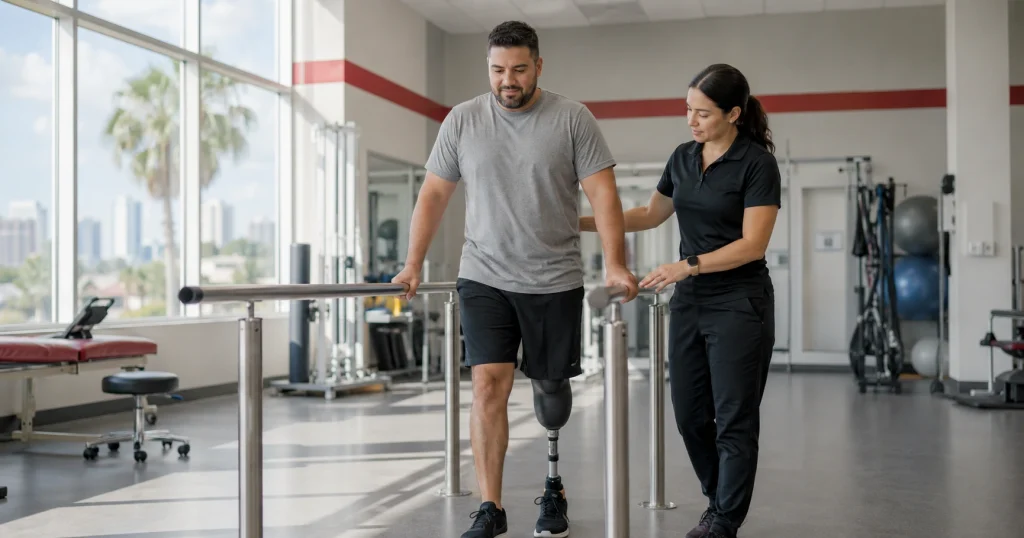
An amputation can require extensive medical care, including:
- Emergency transportation and trauma care
- Hospitalization
- Amputation and revision surgeries
- Wound care
- Treatment for infections
- Physical and occupational therapy
- Pain management
- Psychological counseling
- Future specialist care
Florida Statute §768.0427 controls how evidence of past and future medical expenses may be presented in personal injury and wrongful death cases.
A careful claim should document amounts already paid, unpaid bills, available health coverage, and reasonable future medical expenses.
Prosthetic devices and accessibility needs
A prosthetic device is not always a one-time expense. A person may require different components, repairs, adjustments, socket replacements, and entirely new devices over time.
A claim may include:
- Initial and replacement prosthetics
- Prosthetic maintenance and repairs
- Mobility aids and wheelchairs
- Accessible home modifications
- Vehicle modifications
- Personal assistance
- Specialized exercise or rehabilitation equipment
The type of prosthetic device needed may depend on the level of amputation, age, work, activity level, skin condition, and overall health.
Lost income and reduced earning ability
You may lose income while recovering. A permanent amputation may also prevent you from returning to your former position or reduce the amount you can earn during your career.
Compensation may address:
- Wages already lost
- Reduced work hours
- Lost employment benefits
- Job retraining
- Reduced earning capacity
- Loss of future career opportunities
The Bureau of Labor Statistics recorded 6,200 work-related amputation cases requiring days away from work in 2018. Those workers missed a median of 31 days, compared with nine days across all workplace injuries.
The statistic does not predict how long one person will be unable to work. It does show that amputations can cause much longer work absences than many other occupational injuries.
Pain, disability, and emotional harm
The personal effects of losing a limb can be difficult to measure. Compensation may address:
- Physical pain
- Phantom limb pain
- Emotional distress
- Scarring and disfigurement
- Loss of mobility
- Reduced independence
- Loss of enjoyment of life
- Changes in family relationships
Learn more about the damages that may be available through our guide to catastrophic injury compensation in Florida.
🛡️ Your Rights: Florida follows a modified comparative negligence system under Florida Statute § 768.81. Your compensation may be reduced if you share responsibility for the accident. In negligence cases covered by the statute, a person found more than 50 percent responsible for their own harm generally cannot recover damages.
Do not accept an insurance company’s accusation of fault without reviewing the evidence.
How Are Future Costs and Evidence Documented?
We calculate future costs by reviewing your age, health, diagnosis, work, mobility, treatment plan, and expected prosthetic needs. Strong evidence must also connect the accident to the amputation and show how limb loss changed your health, employment, family responsibilities, independence, and daily life.
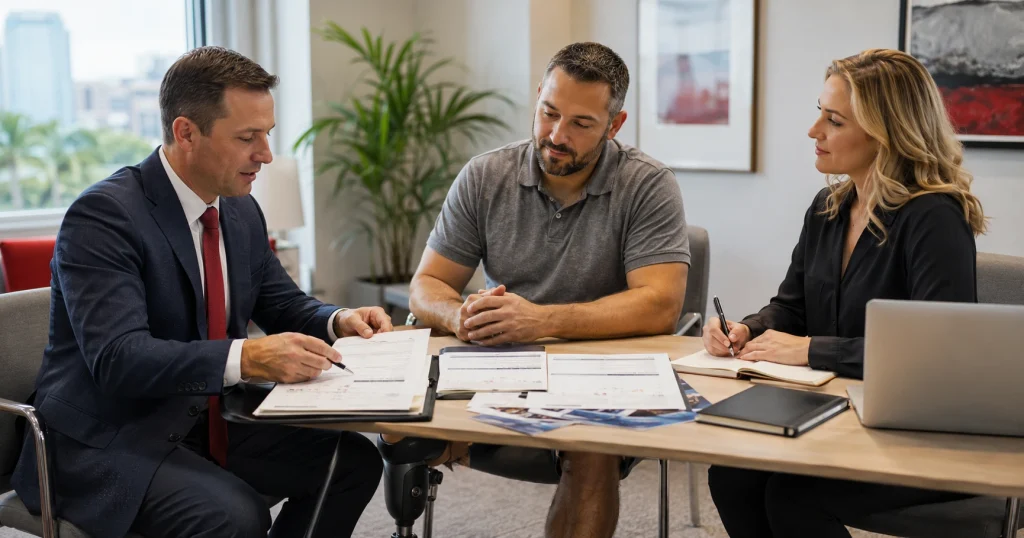
An amputation claim may require help from:
- Treating physicians
- Surgeons
- Prosthetists
- Physical and occupational therapists
- Life-care planners
- Vocational experts
- Economists
- Mental health professionals
- Accident reconstruction professionals
Why is a life-care plan useful?
A life-care plan identifies medical and personal needs that may continue throughout your lifetime. It may address future surgery, prosthetic replacements, therapy, medication, mobility equipment, transportation, home care, and accessibility modifications.
A life-care plan is not automatically required in every case. It may be valuable when the injury is permanent and future needs are complex.
What evidence should be preserved?
Important evidence may include:
- Police or incident reports
- Photographs and videos
- Medical and surgical records
- Prosthetic evaluations
- Rehabilitation records
- Employment and income documents
- Witness statements
- Surveillance footage
- Vehicle or machinery evidence
- Maintenance and inspection records
- Electronic commercial-vehicle data
- Expert opinions
Keep a written record of your pain, medical appointments, daily limitations, missed family activities, and challenges at work. These details can help explain changes that medical bills alone do not show.
⚠️ Warning: Florida Filing Deadline: Florida Statute § 95.11 generally provides two years to file a lawsuit based on negligence. Government claims, workplace injuries, defective products, and other cases may involve additional rules or shorter notice requirements.
Evidence can disappear long before the legal deadline. Video may be erased, machinery may be repaired, and witnesses may become difficult to locate.
If the amputation arose from a motor vehicle accident, Florida’s PIP law also matters. Florida Statute §627.736 generally requires initial medical services within 14 days for PIP medical benefits to apply.
How The Reyes Firm Handles Your Amputation Injury Case
The Reyes Firm handles an amputation injury case by investigating the accident, preserving evidence, identifying every responsible party, and documenting the injury’s lifelong effects. Our team reviews your medical needs, prosthetic expenses, lost earnings, daily limitations, and future care before entering serious settlement discussions or preparing the case for trial.
We Start by Listening
We take time to understand how the injury has affected your life.
That includes your health, pain, mobility, employment, family responsibilities, emotional well-being, and future plans. An amputation case cannot be reduced to a diagnosis or hospital bill.
We Act Quickly to Protect Evidence
Our team may:
- Send evidence-preservation letters
- Request video and electronic records
- Obtain police and incident reports
- Inspect vehicles, machinery, or equipment
- Interview witnesses
- Review maintenance and employment records
The required evidence depends on what caused the injury.
We Identify Every Responsible Party
We investigate the actions of drivers, employers, contractors, property owners, manufacturers, maintenance providers, and other parties connected to the accident.
Finding all responsible parties matters when one insurance policy isn’t enough to cover lifelong losses.
We Document the Full Cost of the Injury
We review medical care, prosthetic needs, rehabilitation, lost earning capacity, accessibility needs, and the personal effect of permanent limb loss.
Qualified experts may help explain future treatment and financial needs when appropriate.
We Prepare for Serious Negotiations and Trial
Insurance companies may focus on immediate bills while ignoring decades of future needs. We build each case around the person’s actual diagnosis, work history, medical plan, and daily challenges.
We remain ready to take the case to court if the responsible parties and insurers refuse to offer a fair resolution.
The Reyes Firm serves Tampa and the South Shore communities, including Riverview, Brandon, Plant City, and communities across Hillsborough County.
The Reyes Firm
4730 N. Habana Ave., Suite 201
Tampa, FL 33614
833-4 BAD DAY
Learn more about working with a catastrophic injury attorney in Tampa and how to choose a catastrophic injury lawyer in Tampa.
Frequently Asked Questions About Amputation Injury Claims
How long do I have to file an amputation injury lawsuit in Florida?
Florida generally gives you two years to file a negligence lawsuit under §95.11. Different deadlines or notice requirements may apply to claims involving government agencies, workplace incidents, medical negligence, or defective products.
Can I pursue compensation for future prosthetic replacements?
Future prosthetic replacements, repairs, fittings, and related treatment may be included when supported by medical and financial evidence. A prosthetist or life-care planner may help estimate how often the device will need adjustment or replacement.
Can I file a claim if doctors amputated my limb after the accident?
Yes, a claim may still be possible if the accident caused damage that later made surgical amputation necessary. Medical records and expert opinions can help connect the original trauma to the surgery.
Who pays if a truck crash causes an amputation?
Potentially responsible parties may include the truck driver, motor carrier, maintenance provider, cargo company, vehicle owner, or another business. Liability depends on the cause of the crash and each party’s role.
Can my family pursue damages after my amputation?
In some cases, a spouse may have a loss-of-consortium claim. This type of claim addresses harm to the marital relationship, companionship, and support caused by the injury.
What if an insurance company says I caused part of the accident?
Florida’s comparative negligence law may reduce compensation based on your percentage of fault. Do not assume the insurance company’s conclusion is correct, especially before photographs, video, witness statements, and other evidence have been reviewed.
How much is an amputation injury case worth in Tampa?
There is no fixed average settlement for an amputation injury. The value depends on fault, insurance coverage, medical expenses, future prosthetic needs, lost earning capacity, pain, disability, and the strength of the evidence.
Do I need an amputation injury lawyer if the insurer offers a settlement?
You have the right to speak with a lawyer before accepting an offer. Once you sign a release, you may lose the ability to pursue additional compensation if future surgeries, prosthetic expenses, or complications cost more than expected.

Edward Reyes, Esq. is the founder of The Reyes Firm and is admitted to The Florida Bar. He focuses his practice on serious personal injury cases involving catastrophic injuries, commercial-vehicle crashes, and permanent disability. He represents injured people and families in Tampa and communities across Central Florida.
How Can The Reyes Firm Help You?
If you’ve had a bad day — a car accident, a slip and fall, a trucking crash, or any injury that wasn’t your fault — The Reyes Firm is in your corner. Our Tampa personal injury attorneys offer free consultations and work on a contingency fee basis, which means you pay us nothing unless we win your case.
You shouldn’t have to fight the insurance companies alone. Let us fight for you.
📍 4730 N. Habana Ave., Suite 201, Tampa, FL 33614
Had a bad day? Call The Reyes Firm. We’ll handle the rest.
This article provides general information and is not legal advice. Reading it does not create an attorney-client relationship. Laws, deadlines, and available claims can vary based on the facts. Speak with a qualified Florida attorney about your specific situation.