An Amazon delivery crash can leave you shaken, hurt, and unsure about what to do next. Once everyone is safe, start protecting the facts. Photos, video, witness information, medical records, and delivery data may help explain what happened and who may be responsible.
If you need a broader overview, our guide explains what happens if an Amazon driver hits your car and what steps you can take afterward.
Some of that evidence is in your hands. Other records may be held by the driver, a delivery company, Amazon, an insurer, a nearby business, or another company involved in the route. Those records can be changed or deleted during normal business operations, so early action matters.
The Reyes Firm serves Tampa and the South Shore communities, including Tampa, Riverview, Brandon, Plant City, and communities across Hillsborough County.
What You Need to Know
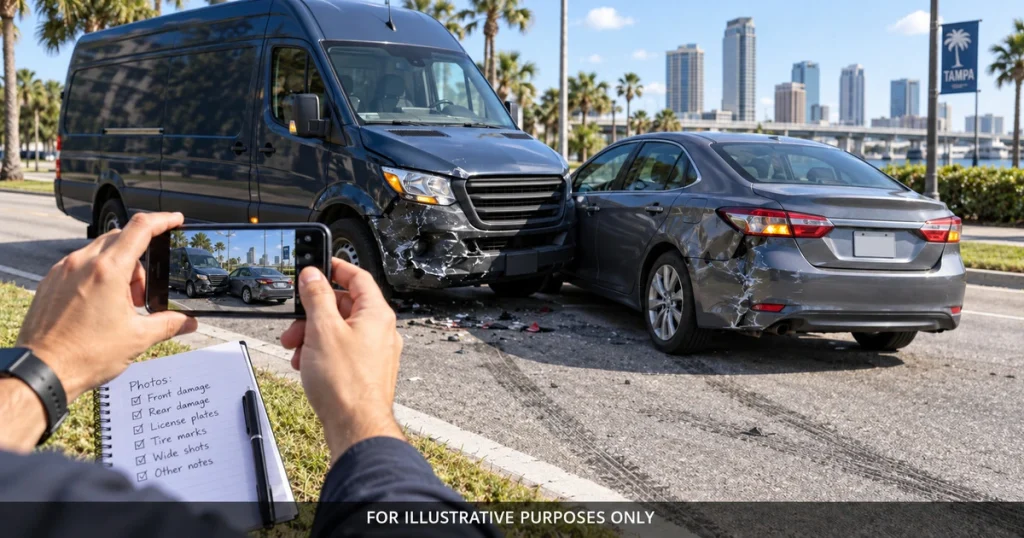
- Photograph the vehicles, road, injuries, packages, skid marks, and nearby cameras.
- Save original photo, video, and dashcam files instead of keeping only screenshots.
- Get the driver’s name, insurance details, license plate, and delivery-company information.
- Ask an attorney about preserving app activity, route data, camera footage, and company records.
- Keep medical bills, work-loss records, receipts, and a simple recovery journal.
What Should You Save at the Crash Scene?
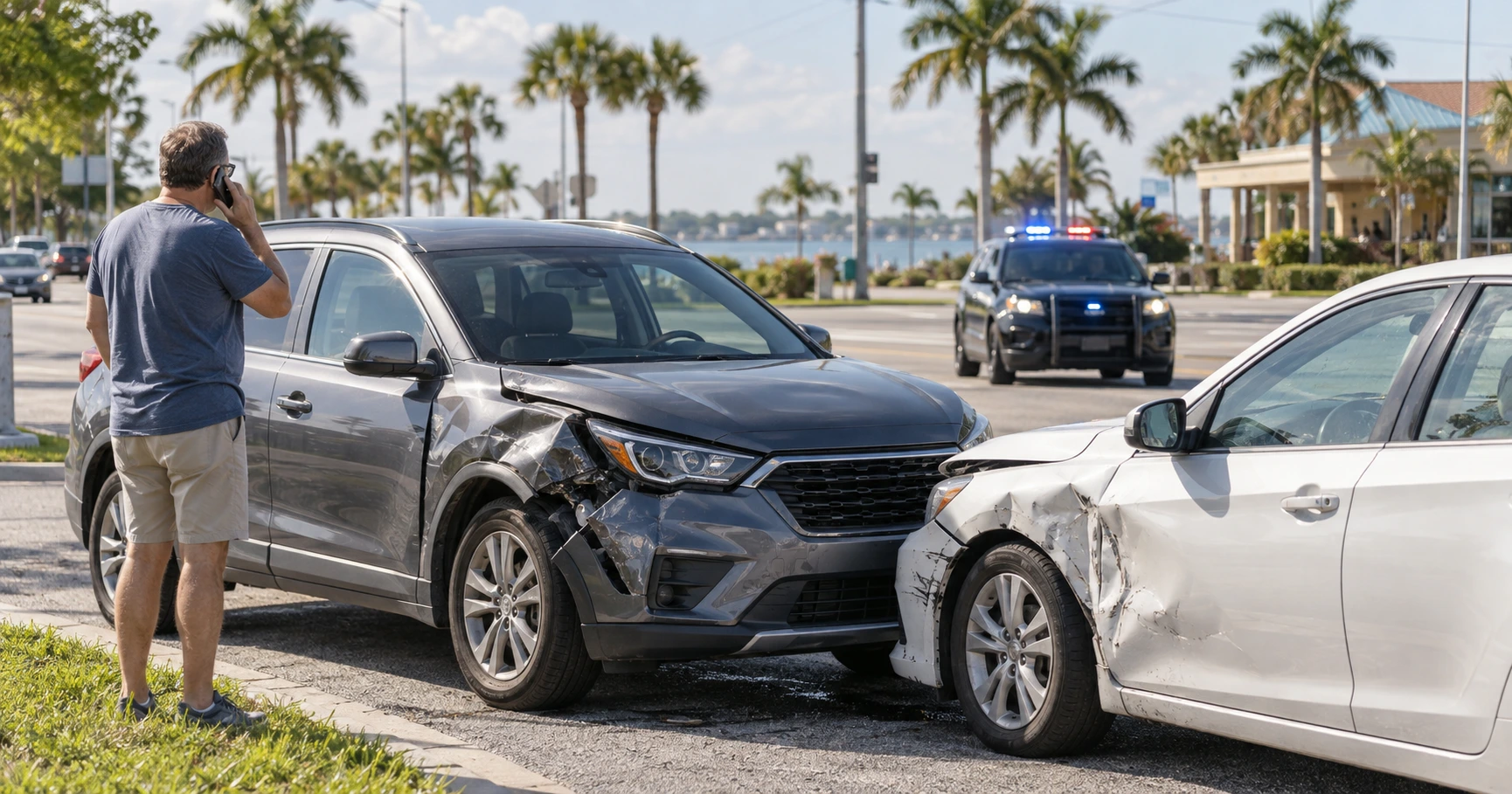
Start with the evidence that may disappear first. Take wide photos of the full scene, then closer photos of vehicle damage, injuries, road marks, debris, signs, and traffic signals. Record the date, time, location, weather, and anything the driver said without arguing about fault.
If you can do so safely:
- Photograph every side of each vehicle.
- Capture the Amazon logo and the name of any delivery company shown on the van, uniform, badge, or paperwork.
- Photograph the license plate, vehicle number, and any U.S. Department of Transportation number.
- Save dashcam footage before the device records over it.
- Ask witnesses for their names, phone numbers, and email addresses.
- Note homes, stores, apartment buildings, buses, and intersections that may have cameras.
- Request the law-enforcement report number.
Do not edit the original files. Keep them on the device and save a backup. A screenshot can help with sharing, but the original file may include date, time, and location details that a screenshot loses.
Your safety comes first. Do not stand in traffic or worsen an injury to collect evidence. If you cannot document the scene, ask a passenger or trusted person to help.
What Digital Records May Exist After an Amazon Delivery Crash?
The available digital evidence depends on the vehicle, driver, delivery model, and companies involved. Possible records include GPS points, route information, package scans, delivery-app activity, dispatch messages, camera footage, safety alerts, and vehicle data. A lawyer can identify likely sources without assuming every system created a record.
Amazon says its Fleet Edge equipment includes an in-vehicle computer, street-view camera, and GPS receiver. Amazon also says its branded vans use camera-based technology that monitors driving behaviors. Those public descriptions do not prove that a specific record exists or can be obtained in every case, but they show why digital preservation should be considered early.
💡 Did You Know? Amazon describes Fleet Edge as an in-vehicle computer, street-view camera, and GPS receiver that helps update routing information. Its branded delivery vans may also use camera-based safety technology. The equipment on the vehicle involved in a crash must still be confirmed. Sources: Amazon Fleet Edge and Amazon workplace safety report.
Digital records can help answer practical questions:
- Where was the vehicle before the impact?
- Was the driver making a delivery or traveling between stops?
- Did the system record speed, braking, distraction, or another safety event?
- Were dispatch messages sent near the time of the crash?
- Was there a route change, delay, or time pressure?
- Did a camera capture the collision or the moments before it?
Do not try to enter another person’s account or obtain private records yourself. The safer step is to identify the possible evidence and use a proper legal request.
Who May Have the Evidence?
Amazon-branded vehicles do not all operate under the same arrangement. A Delivery Service Partner may employ the driver. An Amazon Flex driver may use a personal vehicle. A freight carrier may move trailers between facilities. Identifying the delivery model helps show which companies may hold records and insurance information.
| Possible evidence holder | Records that may exist | What the records may help show |
|---|---|---|
| You or a passenger | Photos, video, dashcam files, messages, medical documents | The scene, damage, injuries, and what happened afterward |
| Driver | License, insurance, phone data, app activity, statements | Identity, coverage, activity, and possible distraction |
| Delivery Service Partner | Personnel file, training, schedules, dispatch messages, vehicle records | Employment, supervision, route assignments, and vehicle care |
| Amazon or a technology provider | Route data, delivery scans, GPS-related data, camera or safety-system records | Delivery status, movement, stops, and possible driving events |
| Vehicle owner or maintenance company | Inspections, repairs, maintenance, telematics | Vehicle condition and reported problems |
| Nearby people or businesses | Doorbell, security, traffic, or dashcam video | An independent view of the crash |
| Police and emergency responders | Crash report, body-camera footage, photographs, dispatch logs | Early observations, statements, and scene conditions |
| Insurers | Recorded statements, photographs, estimates, claim communications | How the crash and damage were reported |
The logo on the vehicle is a starting point, not the full answer. Responsibility may depend on ownership, employment, control, contracts, the driver’s activity, and the evidence. Our guide to Amazon delivery accident liability explains why that distinction matters.
Watch: Who May Be Responsible for a Delivery Truck Accident?
Delivery truck claims can involve the driver, a delivery company, an insurer, or multiple parties. This short video explains why identifying everyone involved is an important part of investigating the crash.
How Can a Preservation Letter Protect Evidence?
A preservation letter tells a person or company that a crash-related claim may exist and identifies records to keep. It is most useful when it names the correct parties, vehicle, driver, date, time, location, and evidence categories. It does not automatically produce the records or guarantee they will survive.
A focused request may cover:
- In-cab, road-facing, backup, and 360-degree camera footage
- GPS, route, stop, and package-scan information
- Delivery-app logins, activity, and status records
- Dispatch messages and call logs
- Driver schedules, training, safety reviews, and prior incident records
- Vehicle inspection, repair, and maintenance files
- Telematics, braking, speed, and safety-event data
- Contracts and insurance policies that may identify responsible parties
- The driver’s electronic logs when federal hours-of-service rules apply
⚠️ Warning: Florida Statute § 95.11 generally gives a person two years to file a negligence lawsuit. Missing the deadline may bar recovery. Other deadlines and exceptions may apply, and evidence can disappear much sooner. Review the facts promptly with a licensed Florida attorney. Read Florida Statute § 95.11.
For some regulated commercial vehicles, federal rules require a motor carrier to retain electronic logging device records of duty status and supporting documents for six months. Many neighborhood delivery vans are not subject to those ELD rules. The vehicle and operation must be checked before relying on that retention period. FMCSA explains the six-month ELD rule.
Early action also matters for third-party video. A store, apartment complex, or homeowner may record over footage long before a lawsuit deadline arrives.
What Medical and Financial Records Should You Keep?
Evidence is not limited to proof of fault. A claim also requires clear records of the injuries, treatment, costs, missed work, and ways the crash changed daily life. Keep documents as they arrive, and write down important details while your memory is fresh.
Save:
- Emergency room, urgent care, therapy, and specialist records
- Bills, insurance explanations of benefits, and prescription receipts
- Mileage and transportation costs for medical visits
- Pay stubs, tax records, employer letters, and missed-work dates
- Repair estimates, towing bills, rental costs, and damaged-property photos
- A short journal noting pain, sleep problems, appointments, and activities you cannot do
- Emails and letters from insurers or delivery companies
Follow medical advice and describe your symptoms accurately. Do not exaggerate, and do not minimize a real problem. Gaps in treatment can make recovery harder and may also lead an insurer to question the injury.
🛡️ Your Rights: Florida’s PIP law generally requires initial medical care within 14 days after a motor vehicle crash to qualify for PIP medical benefits. Coverage and benefit limits depend on the policy, treatment, and medical findings. Read Florida Statute § 627.736.
What Mistakes Can Make Evidence Harder to Use?
The biggest problems are often simple: waiting too long, losing original files, guessing about fault, or giving a recorded statement before understanding the claim. Keep your account factual, preserve what you have, and avoid signing broad releases or accepting a final settlement while treatment and evidence questions remain open.
Try to avoid these mistakes:
- Posting crash details, injuries, travel, or activities on social media
- Repairing or disposing of a vehicle before it is properly documented
- Deleting texts, voicemails, emails, app notifications, or photos
- Sending only compressed copies of video and losing the original
- Speculating about speed, distance, or fault when you do not know
- Signing a medical authorization that reaches far beyond relevant records
- Assuming an Amazon logo proves that Amazon is the driver’s employer
Be careful with calls from insurers. You can provide basic notice without guessing or agreeing to a recorded statement on the spot. Before signing anything, understand which claims and parties the document covers.
How The Reyes Firm Handles Your Amazon Delivery Accident Case
The first job is to understand the crash, not force it into a template. The Reyes Firm can review the police report, scene evidence, vehicle information, insurance coverage, and delivery arrangement. The team can then identify likely record holders and send focused preservation requests.
The investigation may include:
- Confirming if the driver worked for a Delivery Service Partner, used Amazon Flex, or operated for another carrier
- Locating witnesses and nearby cameras
- Seeking route, app, dispatch, camera, and vehicle records
- Reviewing driver training, schedules, and maintenance history when relevant
- Coordinating with medical providers and documenting financial losses
- Dealing with insurers while the client focuses on treatment
For a broader look at these cases, visit our guide to working with an Amazon truck accident lawyer in Florida. Flex crashes may involve different records and coverage, which we explain in our Amazon Flex accident lawyer guide. Serious commercial-vehicle cases are also covered on our Tampa truck and commercial vehicle accident attorney page.
The Reyes Firm
4730 N. Habana Ave., Suite 201
Tampa, FL 33614
833-4 BAD DAY
thereyesfirm.com
Frequently Asked Questions
What is the first piece of evidence I should save?
Save any video that may be recorded over, especially dashcam or security footage. Then preserve original scene photos, witness details, and the driver’s identifying and insurance information. Medical care and personal safety still come before evidence collection.
Can I get the Amazon driver’s GPS or delivery-app records myself?
Usually, you must request those records from the person or company that controls them. A lawyer can identify likely record holders, send preservation notices, and use the legal process to seek relevant material. Not every requested record will exist or be available.
Is a photo of the Amazon logo enough to prove Amazon is responsible?
No. The logo helps identify the delivery connection, but responsibility may depend on the driver’s employer, vehicle owner, route, contracts, control, and conduct at the time. That is why company and app records can matter.
What if an Amazon Flex driver used a personal car?
Save the personal vehicle’s plate, the driver’s insurance details, and any sign that the driver was making a delivery. App status and delivery-block records may help show what the driver was doing. Insurance questions can change based on the driver’s activity at the time.
Should I give the insurer a recorded statement?
You may need to cooperate with your own insurer under your policy, but that does not mean you should guess or speak without preparation. Ask what the statement is for and who will receive it. Consider legal advice before giving a recorded statement to another party’s insurer.
How long should I keep my evidence?
Keep it until the claim and any related legal matter are fully resolved, then ask your attorney before deleting anything. Use backups and preserve original file formats. Do not assume a company will keep its copy for the same length of time.
Can deleted digital evidence ever be recovered?
Sometimes, but recovery can be difficult, expensive, or impossible. Backups, vendor systems, audit logs, or another device may hold a copy. Prompt preservation is safer than relying on later recovery.
How long do I have to bring a Florida negligence claim?
Florida Statute §95.11 generally provides two years for a negligence action, but a different deadline or exception may apply. Claims involving death, government vehicles, minors, or other special facts need individual review. Evidence should be preserved long before the filing deadline.

Edward Reyes, Esq., is a member of The Florida Bar and the founder of The Reyes Firm. He represents people injured in motor vehicle, truck, and commercial delivery accidents. His work includes investigating liability, insurance coverage, and evidence in Florida personal injury claims.
How Can The Reyes Firm Help You?
If you’ve had a bad day — a car accident, a slip and fall, a trucking crash, or any injury that wasn’t your fault — The Reyes Firm is in your corner. Our Tampa personal injury attorneys offer free consultations and work on a contingency fee basis, meaning you pay nothing unless we win your case.
You shouldn’t have to fight the insurance companies alone. Let us fight for you.
📍 4730 N. Habana Ave., Suite 201, Tampa, FL 33614
Had a bad day? Call The Reyes Firm. We’ll handle the rest.
Legal Disclaimer: This article provides general information, not legal advice, and does not create an attorney-client relationship. Every case is different, and past results do not guarantee a similar outcome. Speak with a licensed Florida attorney about your situation.