You rented your Tampa Bay property in good faith — and now your tenant hasn’t paid, and every day of delay is money out of your pocket. Florida law gives you a path to reclaim your property, but it starts with a properly served three-day eviction notice — and one procedural mistake means starting over from scratch.
TL;DR — QUICK SUMMARY
- Florida law requires landlords to serve a written three-day notice before filing for eviction, and the notice must strictly comply with Florida Statute § 83.56.
- There are three legally accepted methods to serve the notice: personal delivery, mailing by certified or registered mail, or posting at a conspicuous location on the premises.
- Weekends and court holidays do not count toward the three-day period — only business days are included in the calculation.
- A defective notice forces you to restart the entire eviction process, adding weeks of delay and lost rent to your situation.
- If the tenant does not pay or vacate within three days, you may proceed to file a complaint for eviction with the Hillsborough County Clerk of Court.
The Reyes Firm
Tampa Landlord? Tenant Won’t Pay or Leave?
Get clear next steps on Florida’s three-day notice process. Had a bad day? We’ll handle the rest.
What Is a Three-Day Eviction Notice in Florida?
A three-day eviction notice — formally called a Three-Day Notice to Pay Rent or Vacate — is the legally required first step in Florida’s residential eviction process. Under Florida Statute § 83.56(3), a landlord cannot file a complaint for eviction in court until this notice has been properly served and the three-day period has expired without the tenant paying the overdue rent or voluntarily vacating the premises.
The notice must be in writing and must include:
- The exact amount of rent owed
- A clear demand that the tenant pay the full amount or surrender possession of the property
- The landlord’s name and address (or the agent’s name and address) where payment is to be delivered
If any of these elements are missing or incorrect, a Florida court may dismiss your eviction case — requiring you to restart the entire process from the beginning.
Who Can Serve a Three-Day Notice in Florida?
Either the landlord or an authorized agent of the landlord can serve the three-day notice. You do not need a process server or a sheriff’s deputy for this step — the law allows for personal service by the property owner or their representative. However, once you proceed to court and need to serve the formal eviction summons, the rules become more stringent.
The Three Legally Accepted Ways to Serve the Notice
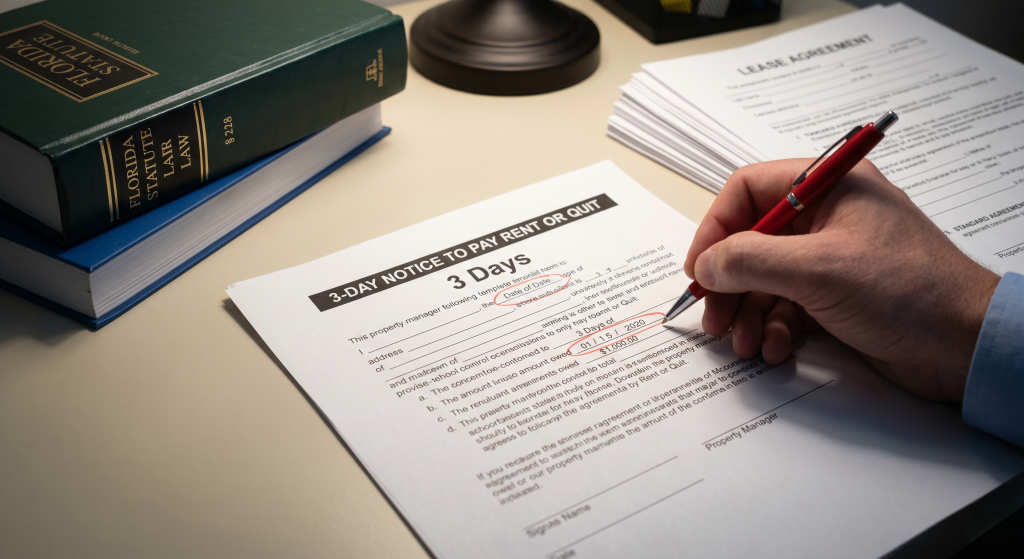
Florida law provides exactly three valid methods for serving a three-day eviction notice. Using any other method may invalidate the notice entirely.
Method 1: Personal Delivery to the Tenant
The most straightforward method is handing the written notice directly to the tenant in person. This is the most reliable approach because there is no ambiguity about whether the tenant received it. Keep a record of the date, time, and location of delivery.
Method 2: Mailing by Certified or Registered Mail
You may send the notice by regular mail, registered mail, or certified mail. Using certified mail with a return receipt requested is strongly recommended — the receipt creates a paper record of both delivery and the date the tenant received the notice. This documentation can be critical if the eviction is contested in court. Keep in mind that when you mail the notice, Florida courts will add five days to the required notice period to account for mailing time.
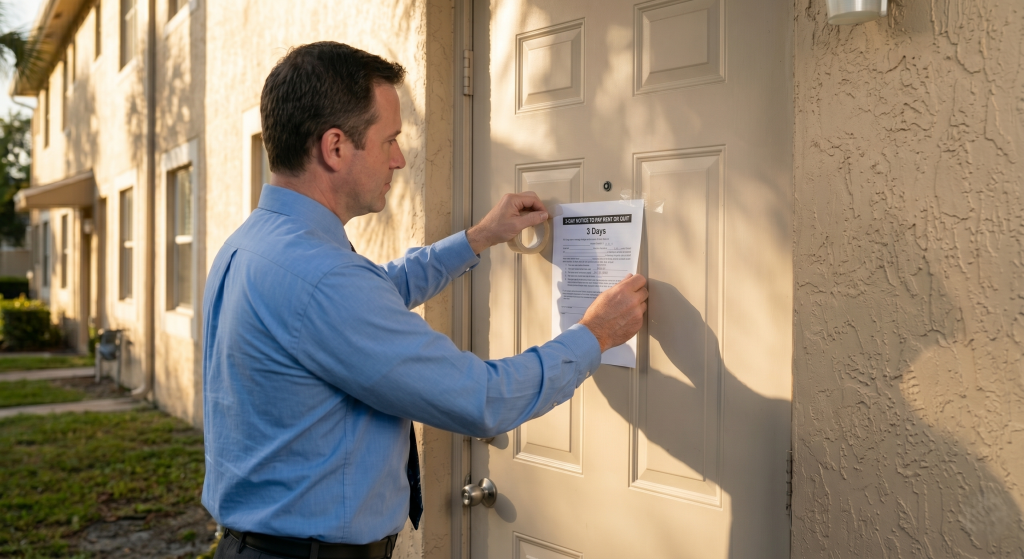
Method 3: Posting at the Premises
If the tenant is not home, you may leave a copy of the notice posted at a conspicuous place at the rental unit — typically the front door. The notice must be in a clearly visible location so the tenant cannot reasonably claim they missed it. Some landlords choose to both post and mail the notice simultaneously to create a stronger record.
How to Count the Three Days Correctly
Miscounting the three-day period is one of the most common mistakes landlords make — and it can get your eviction case dismissed. Florida courts do not count weekends or legal court holidays as part of the three-day period. Only business days count.
Here is how the count works in practice:
- Day 0: The day you serve the notice (this day does not count)
- Days 1–3: The next three consecutive business days
- Day 4 (or later): If the tenant has not paid or vacated, you may file for eviction with the court
For example, if you serve the notice on a Thursday, Day 1 is Friday, Day 2 is Monday (skipping the weekend), and Day 3 is Tuesday. You may file your eviction complaint on Wednesday at the earliest.
What Happens After the Three-Day Notice Period Expires?
Once the three business days have passed and the tenant has neither paid the full amount owed nor vacated the property, you have the right to proceed with a formal eviction lawsuit — called an “unlawful detainer” or “summary procedure” action — in the county where the property is located.
For Tampa landlords, this means filing with the Hillsborough County Clerk of Circuit Court. The process involves:
- Filing a Complaint for Eviction along with a copy of the three-day notice and proof of service
- Serving the tenant with the court summons through a sheriff’s deputy or certified process server
- Attending the hearing — typically scheduled within 5 business days if the tenant does not respond
- Obtaining a Final Judgment of possession if the court rules in your favor
- Writ of Possession — if the tenant still does not leave after the judgment, the sheriff enforces the writ
Common Mistakes That Invalidate a Three-Day Eviction Notice
Florida courts scrutinize eviction notices closely. Any of these errors can force you to restart the entire process:
- Wrong rent amount: If the notice states an amount different from what is actually owed — even by a few dollars — the court may dismiss the case.
- Missing payment address: The notice must state where the tenant can deliver rent. Omitting this information is a fatal defect.
- Improper service method: Slipping the notice under the door, emailing it, or leaving it with a neighbor does not satisfy Florida law.
- Accepting partial payment: Taking any money after the notice is served generally waives the notice under Fla. Stat. § 83.56(5).
- Incorrect counting of days: Filing too early — before the three business days have actually elapsed — gives the tenant grounds to dismiss.
Can a Tenant Challenge a Three-Day Eviction Notice?
Yes. A tenant can raise defenses at the eviction hearing, including claiming the notice was not properly served, that the rent amount stated was incorrect, or that the landlord accepted payment after the notice was served. Tenants may also claim the landlord failed to maintain the property in a habitable condition under Florida Statute § 83.51, which can serve as a defense to nonpayment in some circumstances.
This is one reason why working with a qualified Florida attorney before serving the notice — and throughout the eviction process — can prevent costly delays.
The Reyes Firm
Need Help With a Florida Eviction Notice?
Don’t risk starting over. Get it right the first time with legal guidance from a Tampa attorney.
How The Reyes Firm Helps Tampa Landlords Navigate Florida Evictions
At The Reyes Firm, we understand that a problem tenant isn’t just a legal headache — it’s lost income, property damage risk, and significant stress. Our Tampa legal team helps landlords throughout Hillsborough County and the surrounding area with the full eviction process, starting with making sure the three-day notice is drafted and served correctly the first time.
We can help you with:
- Drafting a legally compliant three-day notice with the correct rent amount, payment address, and required language
- Advising on proper service method and documentation to withstand court scrutiny
- Filing the eviction complaint with the Hillsborough County Clerk of Court once the notice period has expired
- Representing you at the eviction hearing and responding to any tenant defenses
- Pursuing a writ of possession if the tenant refuses to vacate after a court judgment
You have rights as a property owner in Florida. Let us help you enforce them efficiently and correctly. Call us today at 833-4 BAD DAY or schedule a free consultation online.
Frequently Asked Questions: Three-Day Eviction Notice in Florida
What is a three-day eviction notice in Florida?
It is a written notice a landlord must serve on a tenant who has not paid rent, giving the tenant three business days to pay the full amount owed or vacate the property. It is required under Florida Statute § 83.56(3) before a landlord can file for eviction in court.
Do weekends count in the three-day eviction notice period in Florida?
No. Weekends and official court holidays are excluded from the three-day count. Only business days count, so a notice served on a Friday may not expire until the following Wednesday or later depending on any intervening holidays.
What happens if I serve the three-day notice incorrectly?
A defective notice is grounds for the court to dismiss your eviction case. You would have to re-serve a corrected notice and wait another three business days before refiling, which can add weeks to the process and cost you additional rent and court fees.
Can I email or text a three-day notice to my tenant in Florida?
No. Florida law does not recognize electronic delivery — email, text message, or social media — as a valid method for serving a three-day eviction notice. You must use one of the three methods specified in Fla. Stat. § 83.56: personal delivery, certified or registered mail, or conspicuous posting at the premises.
Can I accept partial rent payment after serving the three-day notice?
Accepting any payment after serving the notice — even a partial amount — can legally waive the notice under Florida law and require you to start the entire eviction process over. Consult an attorney before accepting any money once the notice has been served.
How do I count the three days if I mail the notice?
When you mail the notice, Florida courts add five additional days to the required notice period to account for delivery time. So instead of three business days, you must wait at least eight days — including the five mailing days — before filing your eviction complaint. This is why certified mail with a return receipt is highly recommended.
What should the three-day eviction notice say in Florida?
The notice must state the exact amount of rent owed, demand that the tenant either pay in full or vacate the premises, and include the name and address of the landlord or authorized agent where the tenant can deliver payment. Missing any of these required elements can invalidate the notice.
What do I do after the three-day notice period expires in Tampa?
If the tenant has not paid in full or moved out, you may file a Complaint for Eviction with the Hillsborough County Clerk of Circuit Court. You will need to attach a copy of the notice and proof of service. A court hearing is typically scheduled within five business days if the tenant does not file a written response.
Does a three-day notice apply to lease violations other than nonpayment?
The three-day notice specifically applies to nonpayment of rent. For other lease violations — such as property damage or unauthorized occupants — Florida law requires a seven-day notice to cure or vacate under Fla. Stat. § 83.56(2). The procedures and timelines are different, so it is important to use the correct notice for the specific violation.

Edward Reyes, Esq. is a Florida Bar-admitted personal injury attorney and the founder of The Reyes Firm in Tampa, Florida. His practice focuses on serious injury and wrongful death cases arising from commercial vehicle crashes, including delivery truck accidents involving FedEx, UPS, Amazon, and other carriers. Edward Reyes, Esq. represents injured Floridians in Tampa and throughout Hillsborough County on a contingency fee basis, meaning clients pay nothing unless the firm recovers compensation for them.
Read more about Edward Reyes.
How Can The Reyes Firm Help You?
If you’ve had a bad day — a car accident, a slip and fall, a trucking crash, or any injury that wasn’t your fault — The Reyes Firm is in your corner. Our Tampa personal injury attorneys offer free consultations and work on a contingency fee basis, which means you pay us nothing unless we win your case.
You shouldn’t have to fight the insurance companies alone. Let us fight for you.
📍 Address: 4730 N. Habana Ave., Suite 201, Tampa, FL 33614
📞 Phone: 833-4 BAD DAY
🌐 Website: Schedule your free consultation today at thereyesfirm.com
Had a bad day? Call The Reyes Firm. We’ll handle the rest.
The information in this blog post is for general informational purposes only and does not constitute legal advice. Reading this article does not create an attorney-client relationship with The Reyes Firm. Every case is unique. If you need assistance with a Florida three-day eviction notice or residential eviction, consult a licensed Florida attorney about your specific situation.