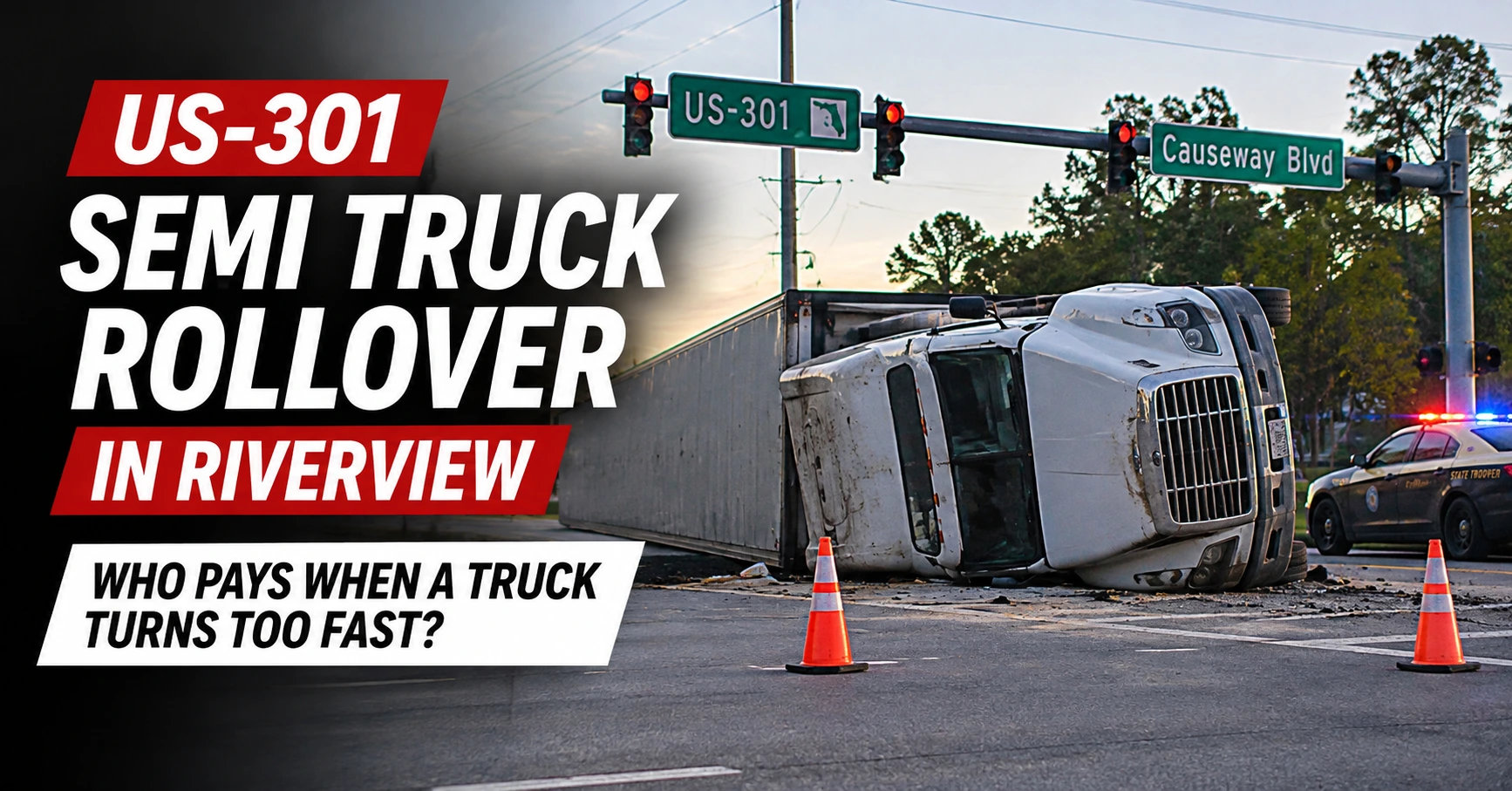
What You Need to Know
A truck driver’s medical emergency does not automatically excuse a crash in Florida.
The driver or trucking company must prove that the medical event was sudden and could not reasonably have been predicted.
A trucking company may still be responsible if it knew about warning signs and allowed the driver to stay on the road.
Your PIP coverage may help pay medical bills and lost wages if you get initial medical care within 14 days.
Florida has strict deadlines for injury claims, so it is smart to have your deadline checked as soon as possible.
Had a bad day? Call The Reyes Firm at 833-4 BAD DAY.
You were driving through Tampa when a semi suddenly crossed into your lane and hit you. Then you hear that the truck driver “passed out.”
Now the insurance company may be telling you the crash was nobody’s fault.
That can be frustrating when you are hurt, missing work, and trying to figure out how you will pay your bills. A sudden medical emergency defense related to a truck driver’s medical emergency in Florida can affect an injury claim, but a company cannot simply say “medical emergency” and make the case disappear.
Florida law places limits on this defense. What the driver knew about their health before the crash can matter. What the trucking company knew can matter too.
Here is what you need to know.
What Is the Sudden Medical Emergency Defense in Florida?
A sudden medical emergency defense may protect a driver from liability if an unexpected loss of consciousness caused the crash. But the driver or company has to prove the medical event came before the negligent driving, happened suddenly, and was not something the driver could reasonably have expected.
Florida courts have addressed this issue in cases such as Feagle v. Purvis.
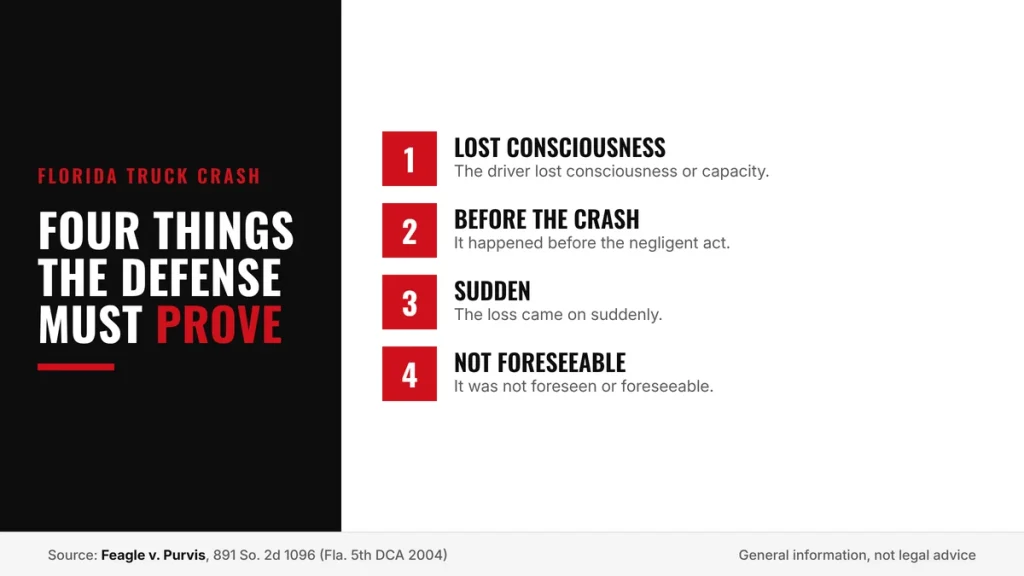
That last point can become especially important.
Imagine a driver has never fainted before and suffers an unexpected medical event behind the wheel. That is very different from a driver who has experienced repeated fainting spells but continues driving a commercial truck.
A medical condition by itself also does not automatically decide the case. The driver’s history, symptoms, treatment, and knowledge can all matter.
Can a Trucking Company Avoid Responsibility Because Its Driver Passed Out?
No. A driver passing out does not automatically protect the trucking company from responsibility.
The medical emergency defense must still be proven. The company may also face separate questions about its own decisions, including what it knew about the driver’s ability to safely operate a commercial vehicle.
Who may be responsible depends on the facts. An attorney may investigate several possible parties:
| Party | Why They May Be Responsible |
|---|---|
| Truck driver | The driver continued driving despite known symptoms or a known medical condition |
| Trucking company | The company may have ignored warning signs or failed to follow required safety procedures |
| Vehicle owner | Florida law may place responsibility on the owner of the vehicle |
| Leasing or dispatch company | Contracts and control over the truck or driver may create additional responsibility |
| Other parties | Another person or business may have contributed to the crash |
Florida’s dangerous instrumentality doctrine can also affect claims involving a vehicle’s owner, as discussed by the Florida Supreme Court in Rippy v. Shepard.
Independent contractor arrangements can complicate these cases. Calling someone an independent contractor does not, by itself, answer every liability question. Courts may need to review the contracts, leasing arrangements, and level of control.
💡 Did You Know? In 2024, 5,340 people died in crashes involving large trucks across the United States, according to NHTSA’s Traffic Safety Facts 2024 Data: Large Trucks, released in June 2026. Seventy percent of those killed were occupants of other vehicles. These are national figures, not Florida-specific numbers.
What If the Driver or Trucking Company Knew About the Medical Condition?
Prior warning signs can make a major difference. If the driver knew that a medical condition could cause fainting, seizures, or another sudden loss of control, it may be harder to argue that the crash was completely unpredictable.
Florida courts focus heavily on foreseeability in these cases.
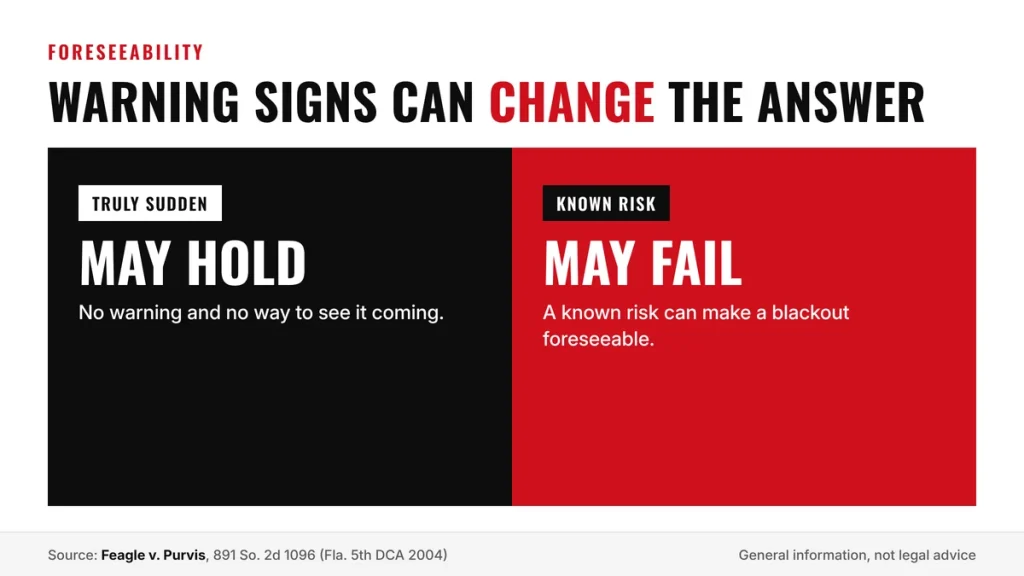
Consider a simple example.
A commercial driver faints twice within a month but continues driving. The company knows about the episodes and does nothing. The driver then passes out again and causes a crash.
Those earlier incidents could raise serious questions about what the driver and company knew before the collision.
Evidence may include:
Medical certification records
Previous incidents or complaints
Treatment and prescription records when legally available
Company emails and internal communications
Dispatch records
Driver logs and statements
The trucking company’s own actions matter too. If the company knew about a serious safety risk but chose to keep the driver on the road, its conduct may become a separate part of the injury claim.
In rare cases involving particularly serious misconduct, Florida’s punitive damages statute, section 768.72, may also become relevant. Punitive damages have a much higher legal standard and are not available in every case.
How Can DOT Medical Records Affect a Florida Truck Accident Claim?
DOT medical records can help show what the driver and trucking company knew before the crash. Federal rules require many commercial drivers to meet medical standards intended to reduce the risk of a driver suddenly losing control because of a health condition.
Under 49 CFR 391.41, commercial drivers must meet certain medical qualifications.
Relevant rules include:
49 CFR 391.41(a): Commercial drivers must meet federal medical certification requirements.
49 CFR 391.41(b)(4): Certain cardiovascular conditions that may cause fainting or collapse can disqualify a driver.
49 CFR 391.41(b)(8): Epilepsy and certain conditions that may cause loss of consciousness or loss of vehicle control can affect qualification.
Medical examinations are generally required at least every 24 months under 49 CFR 391.45, although some drivers may need more frequent examinations.
There are also exceptions. The Federal Motor Carrier Safety Administration may grant exemptions to certain drivers, including some people with a seizure history.
A driver’s qualification file may help answer important questions:
Was the driver’s medical certificate current?
Were medical concerns disclosed?
Did the company know about restrictions?
Did the company follow federal qualification requirements?
Were there warning signs before the crash?
An expired medical certificate can also raise questions about a driver’s qualifications. Learn more about how an expired DOT medical certificate can affect a Florida truck accident claim.
Florida also applies federal motor carrier safety requirements to certain commercial vehicles through section 316.302.
These rules can be especially important after crashes involving commercial trucks traveling on I-4, I-75, I-275, and other major Tampa freight routes.
Does My PIP Still Pay If the Truck Driver Had a Medical Emergency?
Yes. Florida PIP coverage generally applies regardless of who caused the crash. If you receive initial medical treatment within 14 days, PIP may pay 80 percent of covered medical expenses and 60 percent of lost income, subject to the policy limits and Florida law.
Florida PIP benefits are generally available up to $10,000 under section 627.736. If you are not diagnosed with an emergency medical condition, medical benefits may be limited to $2,500.
PIP is only one part of the picture.
A claim against a truck driver, trucking company, or another responsible party may involve losses that PIP does not fully cover, including:
Medical expenses
Lost income
Future treatment
Reduced ability to work
Pain and suffering when Florida’s legal requirements are met
Florida’s injury threshold under section 627.737 can affect claims for pain and suffering.
Your share of fault can also affect your compensation. Under Florida’s modified comparative negligence rule, you generally cannot recover damages if you are found more than 50% responsible for the crash. Learn more about Florida’s 51 percent rule and how it affects your injury claim.
🛡️ Your Rights Under Florida Law: You do not have to accept the trucking company’s first explanation of what happened. Florida’s comparative fault law, section 768.81, allows responsibility to be divided among the parties who contributed to a crash. Before accepting blame, giving a detailed recorded statement, or signing a settlement, you can have the evidence reviewed.
What Should I Do After a Truck Crash on US 301 Near Wimauma?
Focus first on your health and safety. Call 911, get medical attention, and make sure the crash is documented. After that, start protecting evidence. A trucking company and its insurer may begin investigating quickly, so information from the truck, driver, and company should be preserved as soon as possible.
After a crash:
Get medical care. Some injuries become more noticeable hours or days later.
Call 911. Make sure law enforcement documents the collision.
Take photos and video. Photograph the vehicles, roadway, debris, skid marks, and visible injuries when you safely can.
Identify the truck. Write down the company name, license plate, and DOT number if visible.
Stick to the facts. Do not guess about why the crash happened or accept blame.
Keep your records. Save medical bills, pay records, repair estimates, and insurance correspondence.
Talk with a truck accident attorney early. Trucking evidence can be lost or overwritten over time.
Florida recorded 395,175 crashes and 3,375 traffic deaths in 2023, according to Florida Highway Safety and Motor Vehicles. Those numbers include all types of vehicles, not only commercial trucks.
⚠️ Warning: Florida generally gives people two years to bring negligence claims that arose after March 24, 2023, under section 95.11. Other deadlines may apply depending on the claim. Do not assume you have the full two years. Have an attorney confirm the deadline that applies to your situation.
How The Reyes Firm Handles Your Truck Crash Medical Emergency Case
A truck crash involving a driver’s medical condition can require much more than reviewing a police report.
The Reyes Firm looks at the driver, the trucking company, the medical qualification records, the insurance coverage, and the evidence surrounding the crash. Our Tampa truck accident attorneys build each case with settlement negotiations and trial preparation in mind from the beginning.
Here is how we help:
We listen first. We learn what happened, how you were hurt, and what you need now.
We investigate the crash. We review the scene, vehicles, reports, and available truck data.
We preserve evidence. This may include driver qualification files, medical certificates, electronic data, logs, and company records.
We identify everyone who may be responsible. That could include the driver, carrier, truck owner, or another business.
We investigate the medical emergency claim. We look at what the driver and company knew before the crash.
We find available insurance coverage. That can include commercial policies, your PIP coverage, and other applicable insurance.
We document your losses. We organize medical records, lost income information, and evidence showing how the crash has affected your life.
We prepare for settlement and trial. We handle communication with insurers while you focus on your recovery.
The Reyes Firm serves Tampa and the South Shore communities, serving Tampa, Riverview, Brandon, Plant City, and communities across Hillsborough County.
The Reyes Firm
4730 N. Habana Ave., Suite 201
Tampa, FL 33614
833-4 BAD DAY
thereyesfirm.com
Frequently Asked Questions About Truck Driver Medical Emergency Crashes
Is a medical emergency the same as Florida’s sudden emergency doctrine?
No. A sudden medical emergency usually involves a driver losing consciousness or the physical ability to control a vehicle. A sudden emergency argument generally involves a conscious driver reacting to an unexpected danger on the road.
Can I still bring a claim if a truck driver had a seizure and hit me in Florida?
Possibly. Saying the driver suffered a seizure does not automatically end an injury claim. One major question is if the event was truly unexpected or if the driver or trucking company had warning signs beforehand.
Who could be responsible besides the truck driver?
The trucking company, truck owner, leasing company, or another business may share responsibility depending on the facts. Contracts, driver records, company policies, and control over the vehicle can all matter.
Can I still get my car repaired if the truck driver blacked out?
Yes, vehicle damage is separate from PIP benefits. Payment may come from applicable property damage insurance or your own collision coverage if you carry it. The available coverage will depend on the policies involved.
What can I recover besides medical bills?
A personal injury claim may include lost income, future medical expenses, reduced earning ability, and pain and suffering when Florida’s requirements are met. The amount and types of compensation available depend on the facts of the case.
Should I give the trucking company’s insurance adjuster a recorded statement?
Consider speaking with an attorney first. The adjuster may ask questions about the crash, your injuries, or your medical history, and those statements may later become part of the claim.
What if the truck driver was an independent contractor?
The trucking company may still have responsibility depending on the contracts, leasing arrangement, level of control, and its own conduct. The label “independent contractor” does not answer every liability question.
How long do I have to file a Florida truck accident claim?
Florida generally has a two-year limitation period for negligence claims arising after March 24, 2023, under section 95.11. Exceptions and different deadlines can apply, so have your deadline checked as soon as possible.

Edward Reyes, Esq., is the founder of The Reyes Firm and is admitted to The Florida Bar. His practice focuses on serious personal injury cases, including truck crashes, motor vehicle collisions, and catastrophic injury claims. He represents injured people and families throughout Tampa and Hillsborough County.
How Can The Reyes Firm Help You?
If you’ve had a bad day — a car accident, a slip and fall, a trucking crash, or any injury that wasn’t your fault — The Reyes Firm is in your corner. Our Tampa personal injury attorneys offer free consultations and work on a contingency fee basis, which means you pay us nothing unless we win your case.
You shouldn’t have to fight the insurance companies alone. Let us fight for you.
📍 Address: 4730 N. Habana Ave., Suite 201, Tampa, FL 33614
📞 Phone: 833-4 BAD DAY
🌐 Website: Schedule your free consultation today at thereyesfirm.com
Had a bad day? Call The Reyes Firm. We’ll handle the rest.
Legal Disclaimer: This article provides general information only. It is not legal advice and does not create an attorney-client relationship. Florida and federal laws can change, and every case is different. Filing deadlines and other legal requirements should be confirmed based on the specific facts of your case.