Should You Talk to an Insurance Adjuster After a Car Accident in Florida?
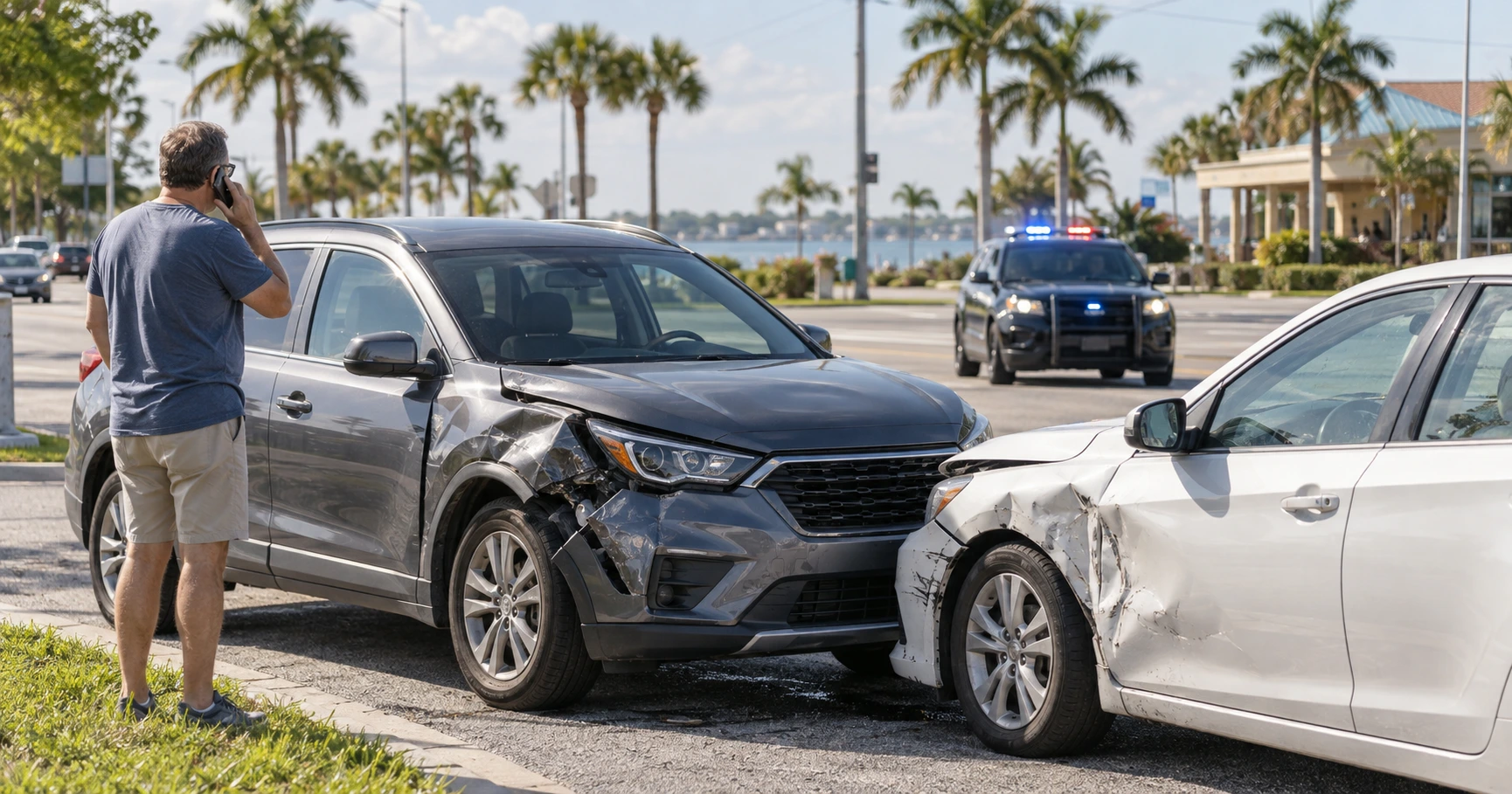
After a crash, the phone may ring before you have even had time to process what happened. The caller may say they are an insurance adjuster and only want to “get your side of the story.”
They may sound friendly. They may say the call is routine. They may ask if they can record you.
Be careful.
Knowing what not to say to an insurance adjuster after a car accident in Florida can protect your injury claim, your right to compensation, and your ability to respond if the insurance company later tries to blame you.
The safest answer is this: you can report basic facts, but you should not provide a detailed statement, a recorded statement, a medical opinion, an apology, or an explanation of fault before speaking with a Florida personal injury attorney.
This is especially important in Tampa and across Hillsborough County, where crash victims may be dealing with busy roads, commercial vehicles, uninsured drivers, rideshare vehicles, and multiple insurance companies.
Why Does the Insurance Adjuster Call You So Fast After a Crash?
Insurance adjusters often contact crash victims quickly because early statements can be valuable to the insurance company.
Right after a crash, you may be scared, in pain, confused, or still trying to understand what happened. You may not know the full extent of your injuries yet. You may not have seen the police report, photos, witness statements, or medical records.
That creates risk.
An adjuster may listen for statements such as:
- “I’m fine.”
- “I didn’t see them.”
- “I’m sorry.”
- “It happened so fast.”
- “I might have been going a little over the speed limit.”
- “I think I’m okay.”
- “I just want this to be over.”
Even if you are only trying to be polite, those statements can later be used to question your injuries, your credibility, or your share of fault.
Many serious injuries do not fully appear right away. Back injuries, neck injuries, concussions, herniated discs, and soft tissue injuries can become more painful in the days after a crash. That is why it is safer to avoid giving injury details until you have been medically evaluated.
⚠️ Important Florida Deadline: For many negligence claims in Florida, the statute of limitations is now two years. Florida Statute § 95.11(5)(a) lists a two-year deadline for an action founded on negligence.
This deadline is separate from your insurance claim. Waiting too long can put your right to file a lawsuit at risk. Speak with a Florida personal injury attorney as soon as possible after a crash.
What Is the Difference Between Your Insurance Adjuster and the Other Driver’s Adjuster?
Not all insurance adjusters have the same role. After a Florida car accident, you may hear from two different types of adjusters.
First-party insurance adjuster
A first-party adjuster works for your own insurance company. You may need to notify your insurer about the crash because your policy likely includes a cooperation clause.
This does not mean you should give unlimited statements, guesses, or detailed injury explanations before speaking with a lawyer. It means you should report the crash and provide basic information.
Third-party insurance adjuster
A third-party adjuster works for the other driver’s insurance company. That company does not represent you. It represents the person or business that may be responsible for your injuries.
You generally do not have to give the other driver’s insurance company a recorded statement. You can politely decline and tell them your attorney will handle communications.
A simple response is:
“I am not giving a recorded statement. Please contact my attorney.”
Then end the call.
Watch: Should You Speak to an Insurance Adjuster After a Car Accident?
In this short video, The Reyes Firm explains when you should avoid speaking to the other driver’s insurance company, when you may need to communicate with your own insurer, and why having an attorney involved can help protect your claim.
Key takeaway: You generally should not discuss the accident or your injuries with the other driver’s insurance company. If your own insurance company needs information, keep the conversation focused and consider having an attorney present for any recorded statement.
Do You Have to Talk to the Other Driver’s Insurance Company in Florida?
No. You generally do not have a legal obligation to give a recorded statement to the other driver’s insurance company after a Florida crash.
The other driver’s insurer may call repeatedly. They may suggest that your claim cannot move forward unless you speak with them. They may ask for permission to record the call. They may ask you to explain how the accident happened.
You do not have to help them build a defense against your claim.
You can provide basic identifying information if needed, but you should not:
- Explain fault
- Guess what happened
- Describe your injuries in detail
- Agree to a recorded statement
- Sign a broad medical release
- Accept a settlement before knowing the full value of your claim
If the other driver’s insurance company contacts you, the safest step is to speak with a lawyer first.
💡 Did You Know? Florida drivers often face insurance coverage issues after a crash. Some drivers may have limited coverage, no available bodily injury coverage, or no insurance at all. If the at-fault driver is uninsured or underinsured, your own policy may become important. That is one reason to be careful when speaking with any insurance company, including your own.
Why Do Insurance Adjusters Ask for Recorded Statements?
Insurance adjusters ask for recorded statements because they create a permanent version of your story.
Once you give a recorded statement, the insurance company can compare it against:
- The police report
- Medical records
- Photos and video
- Witness statements
- Later deposition testimony
- Social media posts
- Repair estimates
- Prior medical history
Even small inconsistencies can be used to challenge your credibility.
For example, if you tell the adjuster “my back feels okay” on the day of the crash, but you later need treatment for a back injury, the insurance company may argue that your injury is unrelated. If you say, “I didn’t see the car coming,” they may argue that you were distracted. If you say “I’m sorry,” they may treat it as an admission of fault.
This is why you should not give a recorded statement to the other driver’s insurance company without legal guidance.
What Not to Say to an Insurance Adjuster After a Car Accident in Florida
Never say these things to an insurance adjuster after a crash in Florida.
“I’m fine” or “I feel okay.”
You may not know if you are fine yet. Some injuries take hours or days to appear. A better response is:
“I am still being evaluated.”
“I’m sorry.”
Even if you mean it politely, an apology can be twisted into an admission of fault.
“I didn’t see them.”
This may sound harmless, but it can be used to suggest you were distracted or not paying attention.
“It was my fault.”
Do not admit fault. Fault should be determined after reviewing the evidence, not during a phone call with an insurance company.
“I may have been speeding.”
Do not guess. Any statement about speed, distraction, distance, or reaction time can affect fault.
“I already feel better.”
Your symptoms may change. Do not minimize your injuries before you understand your diagnosis.
“Yes, you can record this.”
You are generally not required to give a recorded statement to the other driver’s insurance company.
“I just want this to be over.”
This tells the adjuster you may accept a fast, low settlement.
“You can have my full medical history.”
Do not sign a broad medical release from the other driver’s insurance company without speaking with an attorney. Adjusters may look for old injuries or pre-existing conditions to argue that your pain was not caused by the crash.
How Can an Adjuster Use Florida’s 51 Percent Fault Rule Against You?
Florida’s modified comparative negligence law makes your statements especially important.
Under Florida Statute § 768.81, a party found to be greater than 50 percent at fault for their own harm may not recover damages in negligence actions covered by the statute. The statute also states that this specific greater-than-50-percent bar does not apply to medical negligence actions under Chapter 766.
That means insurance companies have a strong reason to look for facts that increase your share of fault.
A recorded statement can give them those facts.
For example, the adjuster may ask:
- “Were you in a hurry?”
- “Were you looking at your phone?”
- “How fast were you going?”
- “Could you have stopped sooner?”
- “Did you see the other vehicle before impact?”
- “Were you familiar with that intersection?”
These questions may sound routine, but the answers can affect how fault is assigned.
How the 51 Percent Rule Can Affect Compensation
| Your Fault Percentage | Total Damages | Possible Recovery |
| 20% | $100,000 | $80,000 |
| 40% | $100,000 | $60,000 |
| 50% | $100,000 | $50,000 |
| 51% | $100,000 | $0 in a covered negligence claim |
One percent can make the difference between partial recovery and no recovery from the at-fault party in a covered negligence claim.
This does not mean every insurance benefit disappears. For example, Florida PIP benefits are a separate first-party insurance issue. But it does mean your injury claim against the at-fault party can be seriously damaged if your words are used to shift blame onto you.
What Should You Say If You Have to Talk to an Insurance Adjuster?
If you must speak with an insurance adjuster before hiring a lawyer, keep the conversation short and factual.
You can provide:
- Your name
- Your contact information
- The date and time of the crash
- The location of the crash
- The vehicles involved
- The police report number, if available
- Your insurance information, if appropriate
Do not provide:
- A recorded statement
- A detailed explanation of how the crash happened
- Guesses about fault
- Statements about speed or distraction
- Detailed injury descriptions
- Your full medical history
- Permission to access all medical records
- A signed release
- A settlement agreement
You can say:
“I am not prepared to discuss the details of the crash. Please contact my attorney.”
If you do not yet have an attorney, you can say:
“I am seeking legal guidance before making any statement.”
Then write down the adjuster’s name, company, phone number, claim number, and the date and time of the call.
⚖️ Your Rights Under Florida Law: You have the right to consult with an attorney before making statements that could affect your injury claim. The other driver’s insurance company may ask for a recorded statement, but you generally do not have to provide one. Florida Statute § 768.81 controls how fault can affect recovery in many negligence cases, which makes your statements important.
When Do You Have to Cooperate With Your Own Insurance Company?
Your own insurance company is different from the other driver’s insurance company.
Most auto insurance policies require you to notify your insurer after a crash and cooperate with the claim process. If you fail to cooperate, your own insurer may try to deny benefits under your policy.
But cooperation does not mean you should make careless statements.
You can report the crash by giving basic facts:
- Date of the crash
- Location of the crash
- Vehicles involved
- Police report number
- Whether you are seeking medical care
You do not need to guess about the fault. You do not need to minimize your injuries. You do not need to give a detailed recorded statement before you understand your medical condition and legal rights.
Florida PIP insurance is also time-sensitive. Under Florida Statute § 627.736, PIP provides up to $10,000 in medical and disability benefits, but initial medical services must be received within 14 days after the motor vehicle accident.
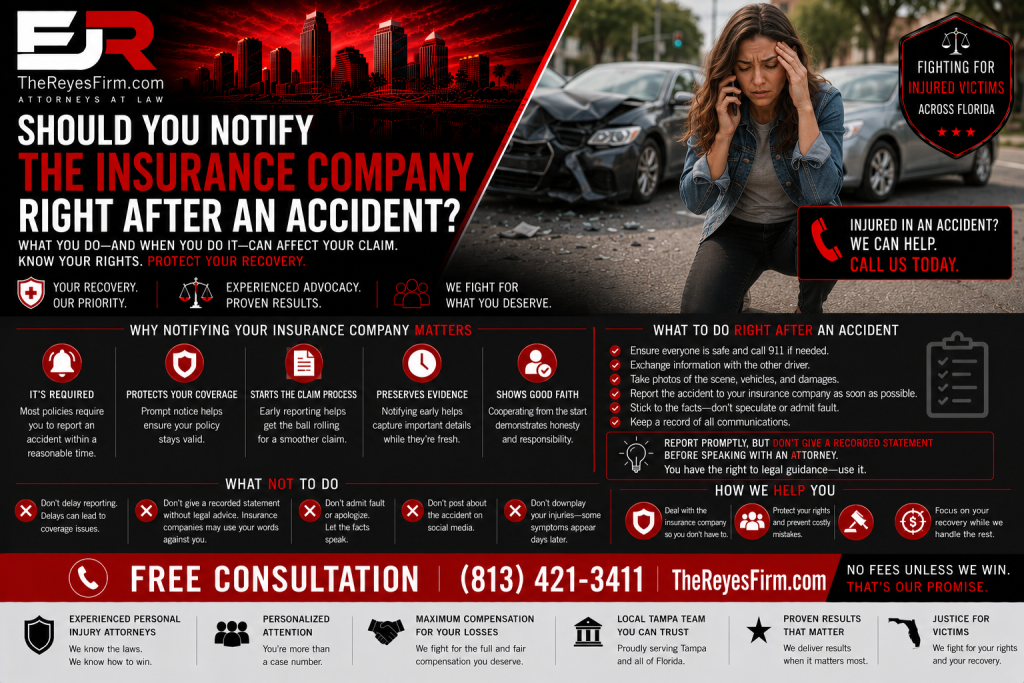
That is why your first steps after a crash should be simple:
- Call 911.
- Get medical care.
- Report the crash to your insurer.
- Avoid detailed statements.
- Speak with a lawyer before dealing further with insurance companies.
What If a Company Vehicle, Truck, or Rideshare Driver Was Involved?
If the crash involved a commercial vehicle, company car, work truck, delivery driver, semi-truck, or rideshare vehicle, the insurance issues may be more complicated.
There may be multiple insurance companies involved, including:
- The driver’s personal insurer
- The employer’s insurer
- A commercial auto policy
- A trucking company policy
- A rideshare policy
- A third-party administrator
- An uninsured or underinsured motorist policy
There may also be important evidence that can disappear quickly, such as:
- Dashcam footage
- Vehicle data
- Electronic logging device records
- GPS records
- Dispatch records
- Maintenance records
- Driver qualification files
- Cell phone records
- Witness statements
In these cases, speaking with an adjuster too early can create problems before the full investigation begins. The Reyes Firm often moves quickly to preserve evidence and identify every possible source of insurance coverage after crashes involving commercial vehicles and company drivers.
How Can The Reyes Firm Help With Insurance Adjusters After a Crash?
When you call The Reyes Firm after a crash, you are not left to deal with insurance companies alone.
The insurance company already has professionals protecting its interests. We make sure you have someone protecting yours.
When we handle a car accident claim, we can:
- Take over communication with the insurance companies
- Help prevent adjusters from pressuring you into recorded statements
- Review any statement you may have already given
- Identify how Florida’s comparative fault rule may affect your claim
- Protect your access to PIP benefits and other available coverage
- Send preservation letters to secure important evidence
- Investigate whether a commercial vehicle, employer, or third party may share fault
- Build a damages claim that includes medical care, lost income, future treatment needs, and the full impact on your life
We also keep you updated in plain language. No confusing legal jargon. No leaving you in the dark.
The Reyes Firm serves Tampa, Riverview, Brandon, Plant City, and communities across Hillsborough County.
📍 4730 N. Habana Ave., Suite 201, Tampa, FL 33614
📞 833-4 BAD DAY
Frequently Asked Questions
Do I have to give a recorded statement to the other driver’s insurance company?
No. You generally do not have to give a recorded statement to the other driver’s insurance company after a Florida car accident. You can decline, tell them you are seeking legal advice, and direct future communication to your attorney.
Should I talk to my own insurance adjuster after a crash?
You should notify your own insurance company that the crash happened. However, you should avoid giving detailed opinions about fault, injuries, or how the crash occurred before speaking with a lawyer. Your own policy may require cooperation, but you still have the right to protect yourself from careless statements.
What should I not tell an insurance adjuster?
Do not say you are fine, admit fault, apologize, guess about speed, minimize your injuries, agree to a recorded statement, or sign a broad medical release. Keep the conversation short and factual.
What should I tell an insurance adjuster after an accident?
Only provide basic facts, such as your name, contact information, date of the crash, location of the crash, vehicles involved, and police report number. Do not discuss fault or detailed injuries without legal guidance.
What happens if I have already given a recorded statement?
Call a lawyer as soon as possible. A recorded statement does not automatically ruin your case, but an attorney should review what you said and prepare a response if the insurance company tries to use it against you.
Can an insurance adjuster use my medical history against me?
Yes. If you sign a broad medical release, an insurance company may look through your past medical records and try to blame your current pain on a pre-existing condition. Do not sign medical authorization forms from the other driver’s insurance company without speaking to an attorney.
How does talking to an adjuster affect my ability to sue later?
Your statements can become evidence. If you admit fault, minimize your injuries, or give inconsistent answers, the insurance company may use those statements to reduce your claim or argue that you are more than 50 percent at fault.
How does Florida’s 51 percent fault rule affect my claim?
Under Florida Statute § 768.81, if you are found to be more than 50 percent at fault in a covered negligence action, you may not recover damages from the other party. That is why you should be careful about giving statements that could be used to increase your share of fault.
What if the other driver’s insurance company keeps calling me?
You do not have to keep answering. You can tell them to contact your attorney. Once The Reyes Firm represents you, we can handle communication with the insurance companies on your behalf.
What should I do first after a crash in Tampa?
Call 911, get medical care, document the scene if you can, exchange information, avoid admitting fault, report the crash to your insurer, and speak with a personal injury attorney before giving detailed statements to any insurance company.

Edward Reyes, Esq. is the founder of The Reyes Firm and a member of The Florida Bar. He focuses his practice on personal injury cases involving crashes with commercial vehicles, company cars, uninsured motorists, and serious injury claims across Tampa and Hillsborough County.
Edward Reyes built The Reyes Firm around one principle: when insurance companies have professionals on their side, injured people should too.
Read more about Edward Reyes.
How Can The Reyes Firm Help You?
If you had a bad day because of a car accident, trucking crash, rideshare collision, slip and fall, or another injury that was not your fault, The Reyes Firm is here to help.
Our Tampa personal injury attorneys can deal with the insurance companies, protect your claim, and help you understand your next steps.
We offer free consultations and work on a contingency fee basis. That means you pay no attorney’s fee unless we win your case.
You should not have to fight the insurance companies alone.
📍 Address: 4730 N. Habana Ave., Suite 201, Tampa, FL 33614
📞 Phone: 833-4 BAD DAY
🌐 Website: Schedule your free consultation today
Had a bad day? Call The Reyes Firm. We’ll handle the rest.
The content on this page is for general informational purposes only and does not constitute legal advice. Reading this article does not create an attorney-client relationship between you and The Reyes Firm or Edward Reyes, Esq.
Every case is different. Outcomes depend on the facts, available evidence, insurance coverage, medical records, and applicable law. Florida law, including Florida Statute § 768.81, Florida Statute § 95.11, and Florida Statute § 627.736, may be subject to change and judicial interpretation.
For advice about your specific situation, contact a licensed Florida personal injury attorney.