Every day in Tampa Bay, people see delivery trucks from Amazon, UPS, and FedEx rushing down busy roads like I‑275, I‑4, and Dale Mabry Highway. These trucks deliver packages quickly. But when they’re involved in crashes, the damage can be severe. One of the worst types of injuries someone can suffer is a catastrophic brain injury. These are life-altering injuries that can profoundly impact a person’s thoughts, movements, and daily life.
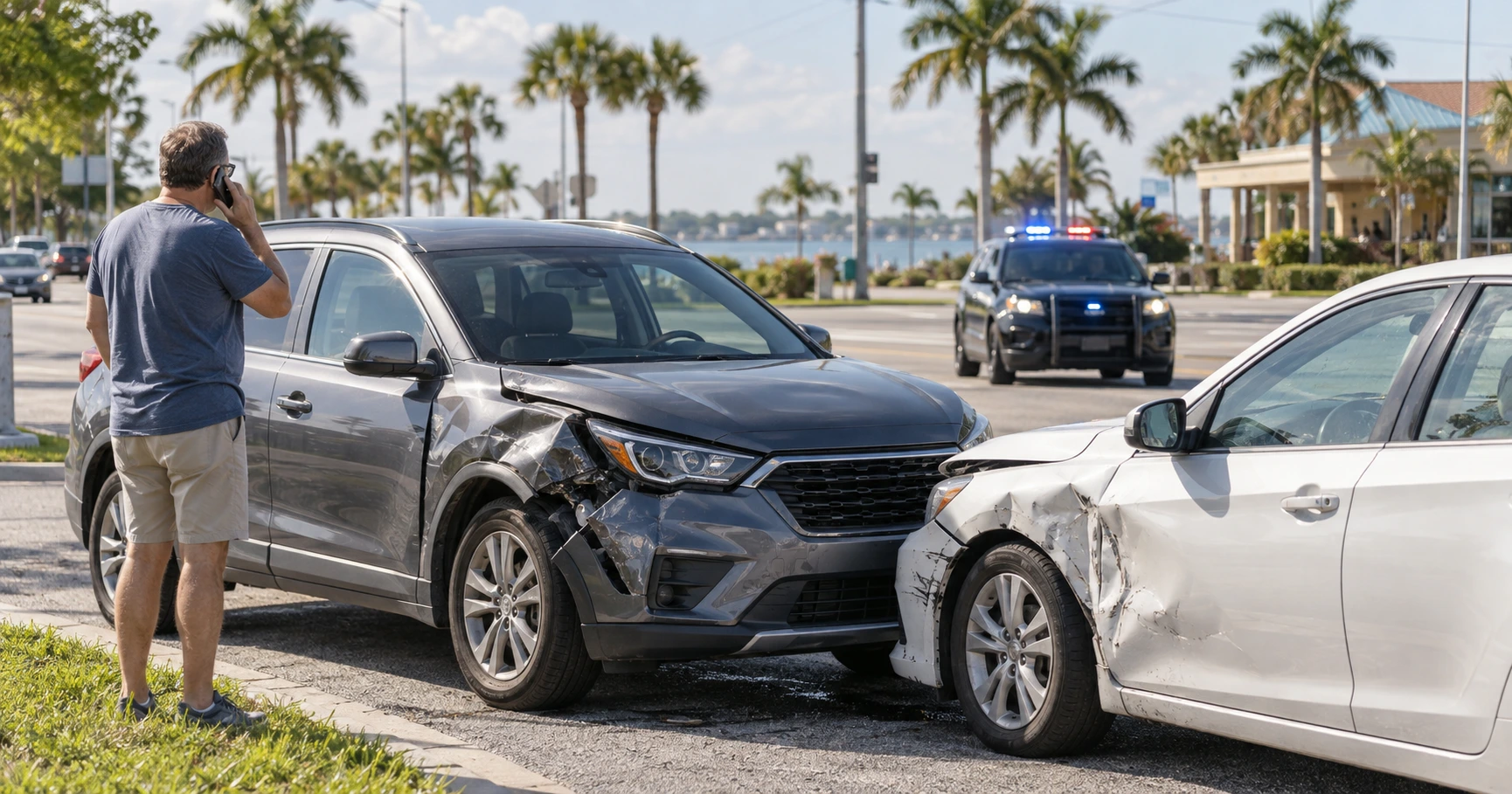
Imagine a family driving home from Busch Gardens or returning from Tampa International Airport. Suddenly, a delivery truck slams into their car at full speed. The crash is loud, the glass shatters, and someone hits their head. At first, they might feel okay. But hours or days later, they’re dizzy, confused, or can’t remember simple things. These are signs of a severe brain injury. And they can lead to extended hospital stays, therapy, or even permanent disability.
Families in Tampa, Brandon, St. Pete, Clearwater, and surrounding areas deserve to understand what happens after these dangerous crashes. This article explains what catastrophic brain injuries are, how they occur in delivery truck collisions, what Florida laws say, and how victims can get help from a trusted Tampa personal injury lawyer.
Quick Answer: What should you do after a Tampa UPS, FedEx, or Amazon truck crash?
If you were injured in a trucking collision in Tampa involving UPS, FedEx, Amazon, or another delivery vehicle, your first steps should be to get medical care, document your symptoms, report the crash, avoid giving detailed statements to insurance adjusters, and speak with a lawyer who handles commercial vehicle and brain injury claims.
Brain injuries are not always obvious right away. Headaches, dizziness, confusion, memory problems, vision changes, seizures, or unusual behavior after a crash should be evaluated by a medical professional as soon as possible.
What Is a Catastrophic Brain Injury?
A catastrophic brain injury is a serious injury to the brain that can change a person’s life forever. These are not just “bumps on the head” or minor concussions. They can affect brain functions like memory, motor skills, speech, and emotional regulation, all of which are critical areas impacted by a traumatic brain injury.
Different types of brain injuries can happen in a crash:
- Traumatic Brain Injury (TBI) – This occurs when a person’s head hits something hard, like a steering wheel or window.
- Diffuse Axonal Injury – This type occurs when the brain shakes or twists quickly inside the skull.
- Coup-Contrecoup Injury – This type of brain injury occurs when the force of impact causes the brain to strike one side of the skull, then bounce back and hit the other side, resulting in damage to multiple areas of the brain.
- Penetrating Injury – This occurs when something sharp, like glass or metal, breaks the skull and hits the brain.
These catastrophic injuries often need emergency surgery, long-term care, and special rehabilitation. Victims may have to relearn how to talk, walk, or even feed themselves.
Watch this YouTube video: Why brain injuries can be missed after truck crashes
In this YouTube video, Attorney Edward Reyes explains why brain injuries can be overlooked after a truck or delivery vehicle crash and why symptoms like headaches, dizziness, confusion, memory changes, or seizures should not be ignored.
A CT scan can help doctors look for urgent problems such as bleeding or swelling, but a normal scan does not always answer every question about a concussion or mild traumatic brain injury. If symptoms continue, follow-up care with a medical provider is important.
How Amazon, UPS, and FedEx Truck Accidents Cause Brain Injuries
Delivery trucks are much bigger and heavier than regular cars. A fully loaded UPS or FedEx truck can weigh over 10,000 pounds. When these vehicles crash into a smaller car, the impact is intense, and the occupants of the smaller car are significantly more likely to be injured.
Here are some common crash situations:
- Rear-End Crashes – Delivery trucks may not be able to stop in time due to traffic congestion on Interstate 4 (I-4) or Interstate 275 (I-275).
- Running Red Lights – A driver might be rushing and hit a car crossing an intersection in Brandon or Tampa Heights.
- Improper Lane Changes – On tight roads like Kennedy Boulevard or Fowler Avenue, a large truck might sideswipe a car.
- Bicycle or Pedestrian Hits – In neighborhoods near USF or Temple Terrace, trucks making deliveries may not see a child or cyclist.
These crashes can throw people around inside the car, causing their heads to hit hard surfaces with considerable force. Even if there are no cuts or bleeding, the brain can still be injured inside the skull.
Who may have a claim after a delivery truck brain injury crash in Tampa?
A person may have a claim if a UPS, FedEx, Amazon, or other delivery truck crash caused or worsened a brain injury. This may include:
- A driver hit by a delivery truck
- A passenger injured in the crash
- A pedestrian or bicyclist struck by a delivery vehicle
- A person injured in a rear-end or sideswipe crash
- Someone hurt in a chain-reaction crash caused by a delivery truck
- A child, senior, or vulnerable passenger whose symptoms appeared later
You do not have to know exactly who is responsible before asking for help. In many truck accident cases, the investigation determines whether the driver, delivery company, contractor, truck owner, maintenance provider, or insurance company may be involved.
Warning Signs of a Brain Injury After a Truck Crash
Some signs of a brain injury appear immediately. Others might take hours or even days. That’s why it’s essential to get checked by a doctor after any crash, even if you feel fine at first.
Watch for these symptoms:
- Headaches that won’t go away
- Feeling dizzy or confused
- Blurry vision or ringing in the ears
- Trouble speaking or understanding
- Memory loss or forgetting where you are
- Sleeping too much or having trouble sleeping
- Sudden mood changes, such as anger or sadness.
Some symptoms may require emergency medical attention. Call 911 or seek urgent care if the injured person has a seizure, repeated vomiting, worsening headache, weakness, numbness, slurred speech, unusual behavior, loss of consciousness, or trouble waking up.
A seizure after a crash may be connected to trauma affecting the brain, bleeding, swelling, or abnormal electrical activity after a traumatic brain injury. Even if the seizure happens hours or days later, it should be treated seriously.
For children and seniors, the signs may be harder to notice. A child may cry more than usual or struggle academically. An older adult might seem forgetful or withdrawn. These signs should never be ignored.
Who Is Responsible for the Crash?
After a crash with a delivery truck, it’s essential to figure out who is at fault. This can be particularly challenging, especially with companies like Amazon, which frequently employ third-party delivery services.
Here is how responsibility may differ depending on the delivery company and the facts of the crash:
- Amazon delivery crashes: Amazon often works with Delivery Service Partners (DSPs). These are third-party delivery businesses that deliver Amazon packages. A claim may involve the DSP, the driver, insurance companies, and potentially other parties, depending on how much control Amazon had over the delivery process.
- FedEx delivery crashes: FedEx cases can vary. Some FedEx Ground routes involve independent service providers or contracted businesses, while other FedEx operations may be structured differently. This is why it is important to identify the exact company, driver, truck owner, and insurance policy involved.
- UPS delivery crashes: UPS drivers are often company employees operating UPS vehicles, but the facts still need to be confirmed. The crash investigation should review the driver, vehicle, route, company policies, and any third-party maintenance or loading issues.
The name on the truck does not always tell the full story. A truck accident lawyer can investigate employment records, contracts, insurance coverage, dispatch records, maintenance records, and delivery data to identify every party that may be responsible.
Under Florida Statutes § 768.81, the state follows comparative fault laws, which allow an injured person to recover compensation even if they were partially responsible for the accident. But the amount may be reduced based on their share of responsibility. An experienced truck accident lawyer can help prove who was really responsible.
Things that may prove fault include:
- Dashcam or traffic camera footage
- Black box data from the truck
- Cell phone records showing distracted driving
- Driver logs showing long shifts without breaks.
- Past safety violations
What Can Victims Get Compensation For?
Catastrophic brain injuries often lead to extensive medical expenses and significant loss of income, sometimes totaling hundreds of thousands of dollars. The law allows victims to seek money for:
- Emergency room visits and hospital bills
- Surgeries and specialist care
- Physical and speech therapy
- Wheelchairs or in-home care support
- Lost wages and future earning problems
- Pain and suffering
- Emotional distress and anxiety
- Loss of enjoyment of life
If the crash causes death, the family may also file a wrongful death claim for funeral costs and the loss of companionship.
How long do you have to file a truck accident claim in Florida?
In many Florida negligence cases, the deadline is two years from the date of the crash. However, deadlines can depend on the facts, the parties involved, and the type of claim. Waiting can also make it harder to preserve video footage, driver records, delivery data, and medical evidence.
Necessary evidence, such as video footage, truck maintenance logs, and driver schedules, can be deleted or lost within a matter of days. This is why it’s crucial to consult a truck accident attorney as early as possible to protect your rights and build a strong case.
What should you do after a UPS, FedEx, or Amazon truck crash in Tampa?
If you or a loved one was hit by a delivery truck in Tampa, Brandon, Clearwater, Riverview, Temple Terrace, or anywhere in Hillsborough County, take these steps:
- Call 911 immediately and report the crash.
- Get medical care right away, especially if you hit your head or feel “off.”
- Ask the doctor whether you need follow-up care for possible concussion, TBI, seizures, dizziness, vision problems, or memory changes.
- Take photos and videos of the crash scene, your injuries, the truck, license plate, company markings, and road conditions.
- Get witness names and phone numbers if possible.
- Do not give a recorded statement to the delivery company’s insurance adjuster without legal guidance.
- Keep copies of medical records, discharge papers, prescriptions, and follow-up appointments.
- Call a personal injury lawyer who understands truck crash cases, delivery company liability, and brain injury claims.
📍 Need help? Here’s where to find us:
How Can The Reyes Firm Help You?
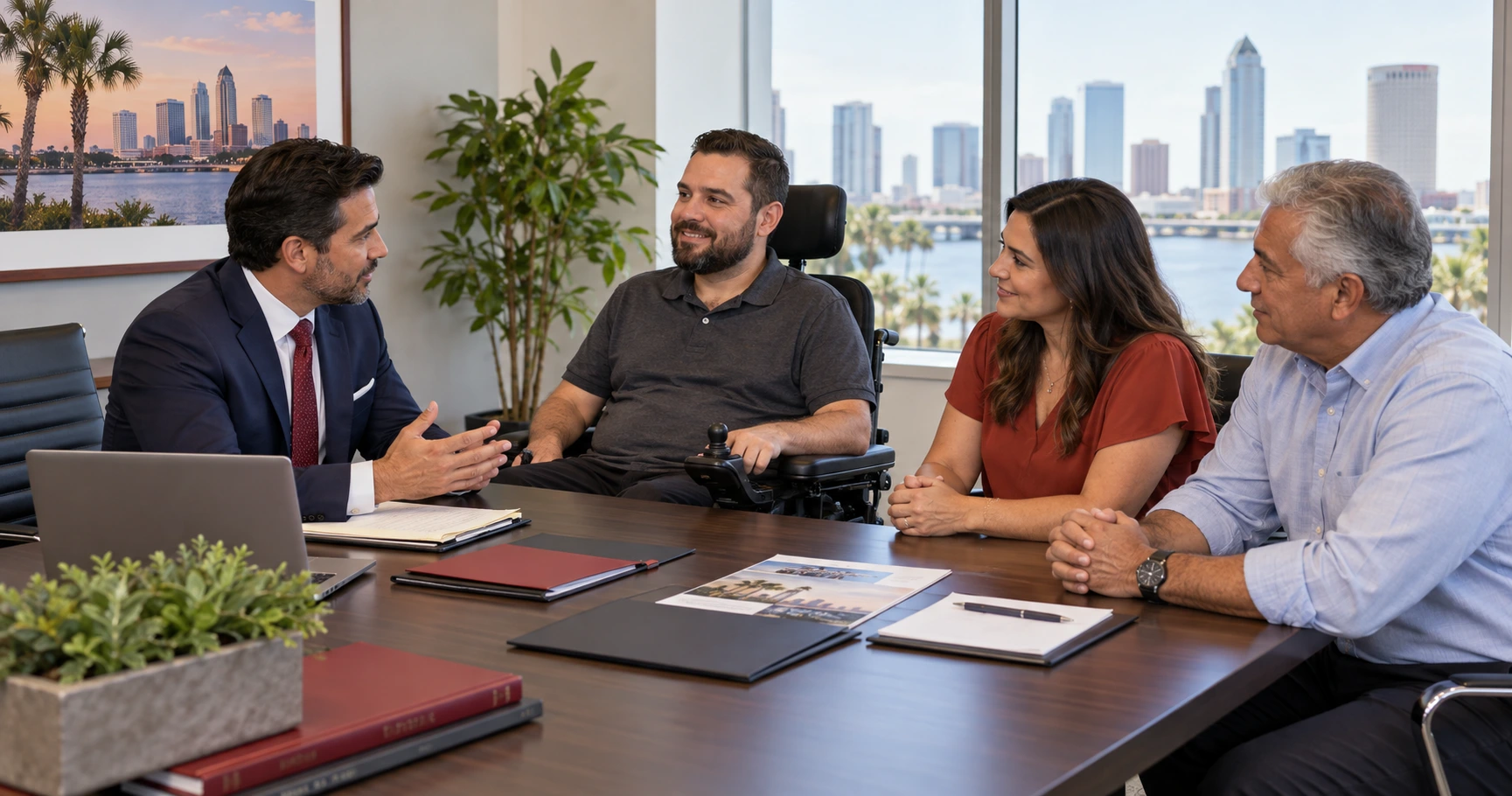
At The Reyes Firm, we know how serious catastrophic brain injuries can be. Not just for the person hurt, but for the whole family. You shouldn’t have to fight big companies like Amazon, UPS, or FedEx on your own. That’s when the experience of our truck accident lawyers becomes essential.
We will:
- Investigate the crash and get the necessary evidence fast
- Talk to doctors and experts who understand brain trauma.
- Handle all insurance calls and paperwork.
- Fight for the full value of your claim, whether through settlement negotiations or litigation.
- Support you every step of the way.
We’re based right here in Tampa, and we’re committed to supporting our community. If you’ve had a bad day because of a delivery truck crash, let us help make it better.
Visit Us: 4730 N. Habana Ave., Suite 201, Tampa, FL 33614
Call Now: 833-4 BAD DAY
Had a bad day? Call The Reyes Firm. We can help you take the next step.
Should you talk to the delivery company’s insurance adjuster?
Be careful before speaking with the insurance adjuster for Amazon, UPS, FedEx, a DSP, or another delivery company. The adjuster may ask for a recorded statement, medical authorization, or quick settlement before the full extent of the brain injury is known.
You can report basic facts, but you should avoid guessing about fault, injuries, speed, symptoms, or recovery. If you are dealing with headaches, dizziness, memory problems, seizures, or other possible TBI symptoms, speak with a lawyer before signing anything or giving a detailed statement.
Frequently Asked Questions
- Can a brain injury get worse over time after a truck accident?
Yes, some brain injuries, especially concussions or internal bleeding, may not show full symptoms immediately and can worsen if left untreated. - What type of doctor should I see after a suspected brain injury?
You may start with an emergency room, urgent care center, or primary care doctor, depending on how serious your symptoms are. For suspected brain injuries, you may also be referred to a neurologist, a traumatic brain injury specialist, a neuropsychologist, a physical therapist, a vestibular therapist, a speech therapist, or a vision specialist. The right doctor depends on your symptoms, imaging results, and recovery needs. - Will my child’s brain injury from a truck accident affect their development?
Possibly. Children’s brains are still developing, so traumatic brain injuries can impact learning, behavior, and physical growth long-term. - Can I sue Amazon directly for a crash caused by one of its delivery drivers?
It depends. Amazon often uses third-party delivery companies, so suing Amazon directly may require proof that it controlled or influenced the actions of the driver.