Most people in Gibsonton never think about personal injury law until the day they need it.
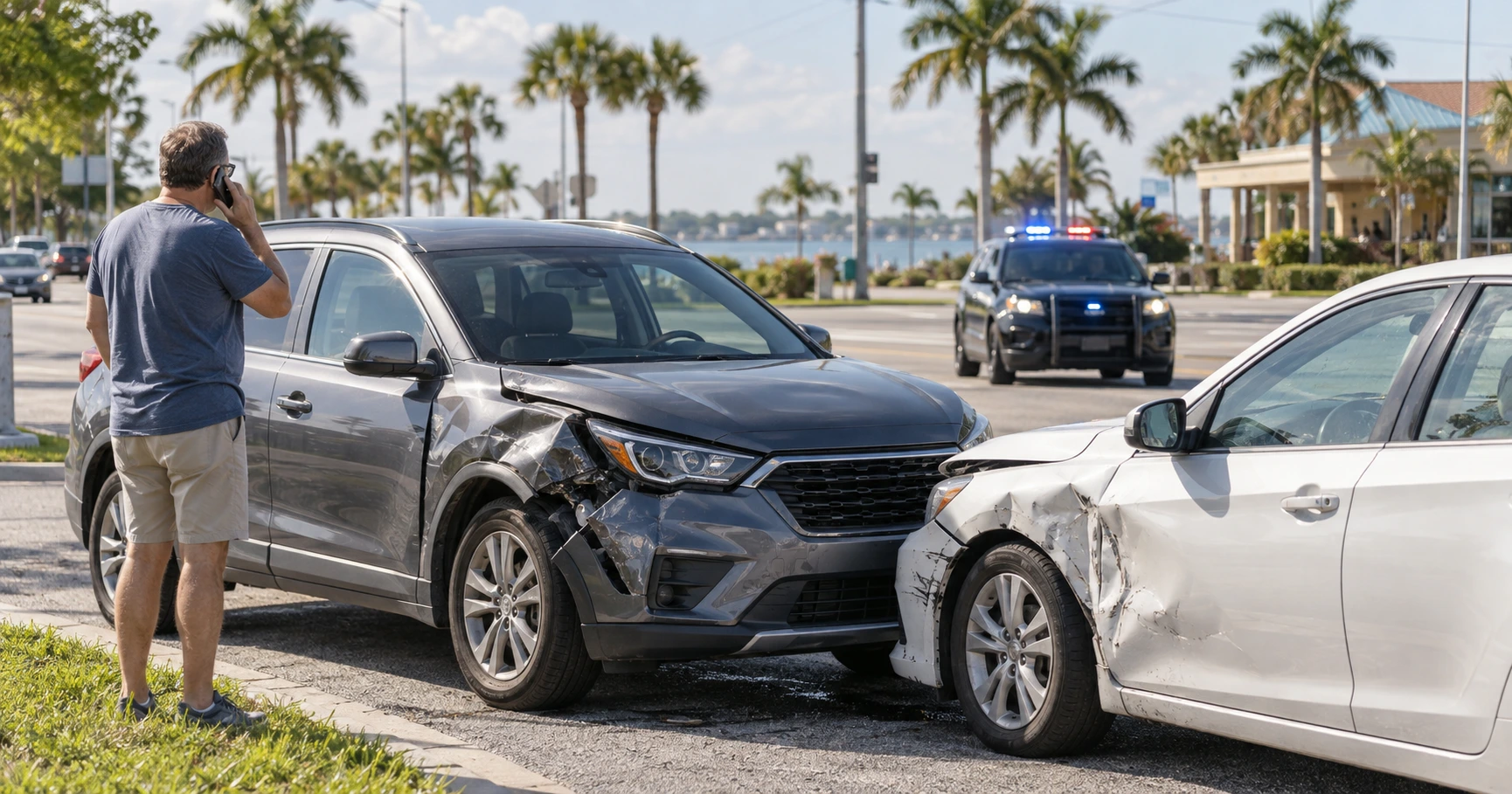
Maybe it was a rear-end crash on US-41 during the afternoon rush. Maybe it was a slip and fall at a local store that left someone with a broken wrist and a surgery they didn’t budget for. Maybe it was a serious truck accident near the I-75 interchange that changed a family’s life overnight. Whatever the situation, the moment an injury happens because of someone else’s carelessness, a clock starts ticking, and most people don’t even know it.
Gibsonton is a working community tucked along the southeastern edge of Hillsborough County, just south of Tampa. Residents here deal with heavy traffic on US-41 and US-301 every day. Commercial trucks move through the area constantly. Intersections get dangerous fast. And when accidents happen, the people hurt are often left alone to figure out insurance claims, medical bills, and legal deadlines they’ve never heard of before. That’s a lot to deal with while recovering from an injury.
This guide covers everything a Gibsonton resident needs to know after getting hurt in an accident, what the law says, what rights injury victims have, and why working with a personal injury attorney in Gibsonton, FL can make the difference between a fair recovery and getting shortchanged by an insurance company.
Quick Summary
- If someone was hurt in a Gibsonton accident that wasn’t their fault, they likely have a legal right to compensation, but they have to act fast.
- Florida law gives injury victims only 2 years from the date of the accident to file a personal injury claim under Florida Statute § 95.11(3)(a).
- Florida recorded 381,210 traffic crashes in 2024, more than 1,000 every single day (FLHSMV).
- The smartest first step is a free consultation with a Gibsonton personal injury lawyer to find out exactly where the case stands.
- Had a bad day? Call The Reyes Firm at 833-4 BAD DAY, free consultation, no fee unless we win.
What Counts as a Personal Injury Case in Gibsonton?
A personal injury case is any situation in which one person’s carelessness caused another person to be injured.
That definition covers more ground than most people realize. Car accidents are the most common type of personal injury claim in Florida, but the law covers a wide range of incidents. Slip and fall accidents at stores, restaurants, or apartment complexes. Dog bites. Motorcycle crashes. Bicycle accidents. Injuries caused by defective products. Wrongful death when a loved one is killed because of someone else’s negligence. All of these fall under personal injury law in Florida.
The legal foundation of every personal injury case is something called negligence. Negligence simply means that someone failed to act with reasonable care, and that failure caused harm to another person. A driver who ran a red light on Gibsonton Drive was negligent. A property owner who left a wet floor unmarked was negligent. A trucking company that put an overloaded, poorly maintained rig on I-75 was negligent. When negligence leads to an injury, the person who caused the harm is responsible for the consequences.
Florida personal injury law gives injured people the right to seek compensation for what they lost. That includes medical bills, lost income, future treatment costs, and the very real suffering that comes with being hurt through no fault of their own. The goal of a personal injury claim is not to punish anyone. It is to make the injured person as whole as possible after something they didn’t deserve happened to them.
According to the Florida Department of Highway Safety and Motor Vehicles (FLHSMV), Florida recorded 381,210 traffic crashes in 2024, more than 1,000 crashes every single day. That same year, 3,184 people were killed in Florida vehicle crashes.
Not every accident leads to a case worth pursuing, and not every injury is caused by someone else’s fault. That’s exactly why speaking with a Gibsonton injury lawyer early matters so much. A free consultation costs nothing, and it gives the injured person a clear, honest picture of whether they have a claim and what it might be worth.
How Long Does Someone Have to File a Personal Injury Claim in Florida?
The deadline is 2 years from the date of the accident, and missing it permanently forfeits the right to compensation.
Under Florida Statute § 95.11(3)(a), the statute of limitations for negligence-based personal injury claims is two years. This is a hard legal deadline. Florida courts do not grant extensions because someone was too busy, too stressed, or didn’t know the deadline existed. Once those two years pass, the case is almost always dismissed, no matter how strong the evidence is or how serious the injuries were.
This deadline was shortened from four years in 2023, which means many Floridians are still operating under the old assumption that they have more time than they actually do. That misconception has cost real people real money.
Florida’s statute of limitations for most personal injury claims is 2 years from the date of the accident under Florida Statute § 95.11(3)(a). Miss this deadline and the right to seek any compensation may be gone forever, regardless of how strong the case is.
Two years may sound like a comfortable amount of time. In practice, it goes fast. Building a strong personal injury case takes time. Investigators need to visit the scene. Medical records need to be gathered. Expert witnesses sometimes need to be brought in. Accident reconstruction specialists may need to analyze what happened. All of that takes weeks and months, which is why Gibsonton accident lawyers consistently advise people to start the process as early as possible.
There is another reason not to wait: evidence disappears. Traffic camera footage gets overwritten. Skid marks fade. Witnesses move away or forget details. Physical evidence at the scene of a slip-and-fall is cleaned up or repaired. The longer someone waits, the harder it becomes to build a solid case. Acting quickly protects the evidence and protects the claim.
There are a few exceptions to the two-year rule. For example, if the injured person didn’t discover the injury immediately, the clock may start on the date of discovery rather than the date of the accident. Cases involving government entities often have much shorter notice requirements. A Gibsonton personal injury lawyer can explain exactly which deadline applies to a specific situation.
What Should Someone Do Right After an Accident in Gibsonton?
The steps taken in the hours and days after an accident can make or break a personal injury claim.
The first priority is always safety and medical care. Anyone who is hurt should call 911 immediately. Even if the injuries seem minor at first, getting checked out by a medical professional as soon as possible is essential. Some injuries, like soft tissue damage, concussions, and internal bleeding, don’t feel serious right away but can become severe within days. A doctor visit also creates a medical record that directly links the injuries to the accident, which is one of the most important pieces of evidence in any personal injury case.
Here is what injury victims should do in the immediate aftermath of an accident:
- Call 911. Get police and emergency medical services on the scene. A police report is an official document that can be critical evidence later.
- Seek medical attention right away. Under Florida Statute § 627.736, accident victims must seek initial medical treatment within 14 days to preserve their Personal Injury Protection (PIP) insurance benefits. Waiting longer than 14 days can eliminate thousands of dollars in coverage.
- Document everything. Take photos and videos of the scene, the vehicles, any visible injuries, road conditions, traffic signs, and anything else relevant. This evidence is hard to recreate later.
- Get witness information. If anyone saw the accident, get their name and phone number. Witness statements can be powerful.
- Do not apologize or admit fault. Even a casual “I’m sorry” can be used by an insurance company to argue partial liability.
- Contact a personal injury attorney before speaking with any insurance adjuster. This step is more important than most people realize.
The insurance company will likely call quickly, sometimes within hours of the accident. Their adjusters are trained to gather information that can be used to reduce or deny the claim. Speaking with a Gibsonton accident lawyer first ensures that the injured person doesn’t say anything that could hurt their case.
Why Do You Need a Personal Injury Lawyer After an Accident?
Insurance companies are focused on limiting what they pay out. This video explains why having a personal injury lawyer can help protect your claim, your medical care, and the compensation you may be entitled to after an accident in Gibsonton.
This video explains why injured people often benefit from legal representation when dealing with insurance adjusters, medical bills, lost wages, and settlement negotiations after a crash.
How Does Florida’s No-Fault Insurance System Work?
Florida is one of a small number of states with a no-fault insurance system, and understanding how it works is key to knowing what comes next after an accident.
Under Florida’s no-fault law, every driver is required to carry Personal Injury Protection (PIP) insurance under Florida Statute § 627.736. PIP covers 80% of medical expenses and 60% of lost wages up to a total of $10,000, regardless of who caused the accident. That means after most car accidents, an injured person’s own insurance pays their initial bills, not the other driver’s.
The benefit of PIP is that it pays quickly without requiring proof of fault. The problem is that $10,000 goes fast, especially with emergency room visits, imaging, and follow-up care. For anyone with serious injuries, PIP is usually just a starting point, not full compensation.
Under Florida Statute § 627.736, Florida drivers are entitled to Personal Injury Protection (PIP) benefits covering 80% of medical bills and 60% of lost wages up to $10,000 after a crash, regardless of fault. Victims with serious injuries can step outside the no-fault system and pursue full compensation from the at-fault driver.
To go beyond PIP and file a claim against the at-fault driver, Florida law requires that the injuries meet a “serious injury” threshold under Florida Statute § 627.737. Serious injuries include significant and permanent loss of an important bodily function, permanent injury, significant scarring or disfigurement, or death. If the injuries meet this standard, the injured person can step outside the no-fault system and pursue full compensation, including damages for pain and suffering, from the driver who caused the crash.
This is where having an experienced personal injury attorney in Gibsonton, FL, becomes especially valuable. Determining whether an injury meets the serious injury threshold, negotiating with insurance companies, and calculating the full value of a claim requires legal knowledge that most people don’t have on their own.
What If the Injured Person Was Partly at Fault?
Being partly at fault does not automatically mean losing the right to compensation.
Florida follows a modified comparative fault system under Florida Statute § 768.81, which was updated in March 2023. Under this rule, an injured person can still recover damages as long as they were 50% or less responsible for the accident. If someone was 51% or more at fault, they are barred from any recovery. If they were 30% at fault, their compensation is reduced by 30%.
Here is a simple example. Suppose someone’s total damages from a car accident in Gibsonton add up to $80,000. If a jury finds them 25% at fault for the crash, they would recover $60,000, which is 75% of the total. That is still significant compensation, even with shared fault.
Insurance companies know this law well, and they use it aggressively. One of their most common tactics is to overstate the injured person’s share of fault in order to reduce the payout. They may point to a late lane change, a slightly fast speed, or a phone glance to argue that the victim contributed to their own injury. An experienced Gibsonton injury lawyer knows how to challenge those arguments with accident reconstruction evidence, traffic data, witness testimony, and medical records.
The key takeaway is this: even if someone believes they made a mistake that contributed to the accident, they may still have a strong claim. The only way to know for certain is to speak with a personal injury attorney in Gibsonton, FL.
What Damages Can a Personal Injury Victim Recover in Florida?
A personal injury settlement or verdict can cover far more than just hospital bills.
Florida law divides damages into two main categories: economic and non-economic. Economic damages are those with a clear dollar amount attached. Non-economic damages cover the human cost of an injury, the pain, the fear, the lifestyle changes, that don’t come with a receipt but are just as real.
Economic damages can include:
- Emergency room visits and hospitalization
- Surgery and follow-up procedures
- Physical therapy and rehabilitation
- Future medical treatment related to the injury
- Lost wages while recovering
- Loss of future earning capacity if the injury affects the ability to work long-term
- Property damage, such as a totaled vehicle
Non-economic damages can include:
- Physical pain and suffering
- Emotional distress and anxiety
- Loss of enjoyment of life, meaning the activities, hobbies, and routines the injury took away
- Loss of consortium, which covers the impact on a spouse or family relationship
According to the National Highway Traffic Safety Administration (NHTSA), an estimated 39,345 people were killed in traffic crashes nationwide in 2024, a number that represents not just lives lost, but families torn apart and futures cut short.
In cases involving extreme recklessness or intentional misconduct, punitive damages may also be available under Florida law. These are designed to punish the wrongdoer and deter others from similar behavior. They are rare but possible in cases involving drunk drivers, road rage incidents, or companies that knowingly ignore dangerous conditions.
The Reyes Firm works with medical experts, financial analysts, and life care planners to make sure every client’s damages are calculated completely, not just the current bills, but everything the injury will cost down the road.
Frequently Asked Questions
How much does it cost to hire a personal injury lawyer in Gibsonton, FL?
There is no upfront cost. The Reyes Firm works on a contingency fee basis, meaning clients pay nothing unless the firm wins their case. The free consultation also costs nothing. There are no hidden fees and no hourly charges.
How long does a personal injury case take to resolve?
The timeline varies depending on the complexity of the injuries, the strength of the evidence, and whether the case settles or goes to trial. Many cases in Florida settle within several months after medical treatment is complete. More serious or disputed cases can take longer. The Reyes Firm keeps clients updated throughout the process so there are never long stretches of silence or confusion.
What if the other driver didn’t have insurance?
Options still exist. Florida law does not require drivers to carry bodily injury liability coverage, which means uninsured drivers are common. If the injured person carries uninsured motorist (UM) coverage on their own policy, that coverage can step in to pay for damages. A Gibsonton accident lawyer can review the policy and identify every available source of compensation.
Does the injured person have to go to court?
Most personal injury cases settle before ever going to trial. Insurance companies often prefer to settle rather than risk a larger jury verdict. However, if a fair settlement cannot be reached, The Reyes Firm is fully prepared to take the case to court and fight for the full amount the client deserves.
What if there was a delay in seeing a doctor after the accident?
Medical treatment should begin as soon as possible, ideally the same day as the accident. Under Florida Statute § 627.736, PIP benefits require that treatment begin within 14 days of the crash. Beyond that, gaps in medical care give insurance companies grounds to argue that the injuries were not serious or were not caused by the accident. Starting treatment promptly protects both the client’s health and their legal claim.
Can a claim still be filed if the accident happened several months ago?
Possibly. As long as the two-year deadline under Florida Statute § 95.11(3)(a) has not passed, a claim may still be viable. Time is still of the essence, though, because evidence may have already been lost. Anyone in this situation should contact a personal injury attorney in Gibsonton, FL as soon as possible for a free case evaluation.
How Can The Reyes Firm Help You?
If you’ve had a bad day, a car accident, a slip and fall, a trucking crash, or any injury that wasn’t your fault, The Reyes Firm is in your corner. Our personal injury attorneys offer free consultations and work on a contingency fee basis, which means you pay us nothing unless we win your case.
You shouldn’t have to fight the insurance companies alone. Let us fight for you.
📍 4730 N. Habana Ave., Suite 201, Tampa, FL 33614 📞 833-4 BAD DAY 🌐 Schedule your free consultation today
Had a bad day? Call The Reyes Firm. We’ll handle the rest.

Local attorney Edward Reyes is the founder and managing attorney of The Reyes Firm. He brings experience from both the medical and legal sides of personal injury and built the firm to help injured people get clear answers after serious crashes.
Read more about Edward Reyes.