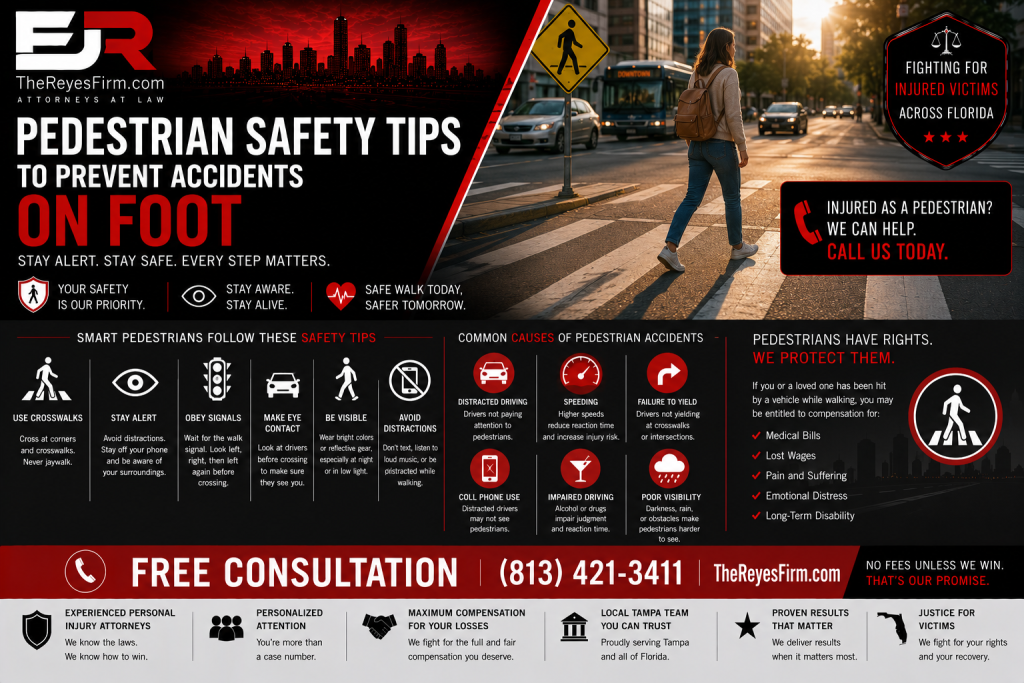
Walking is one of the simplest, healthiest things you can do, but as a pedestrian you have no protection if a driver makes a mistake. A few smart habits go a long way toward keeping every walk safe and enjoyable. These pedestrian safety tips help you prevent accidents, and if a careless driver ever causes you harm, our pedestrian accident attorneys are here to help.
The Reyes Firm
Hit by a Car While Walking in Tampa?
You had the right of way. Let us fight for you. Had a bad day?
Most walks are uneventful and good for both body and mind. But because a person on foot has no barrier between them and a vehicle, the consequences of a collision can be severe, even at low speeds. The habits below are simple and quick to adopt, and together they meaningfully lower your risk of a pedestrian accident. Think of them as your everyday walking safety toolkit.
Why does pedestrian safety matter so much?
Pedestrians are among the most vulnerable people on or near the road. With no vehicle around them, a person on foot absorbs the full force of a collision, which is why even a relatively slow-moving car can cause serious injury. Common pedestrian injuries include broken bones, head and brain injuries, spinal injuries, and internal harm.
That vulnerability is exactly why prevention is worth the small effort it takes. You cannot control the drivers around you, but you can greatly improve your odds by being visible, predictable, and alert. The tips that follow focus on the habits that make the biggest difference to your safety.
How should you cross the street safely?
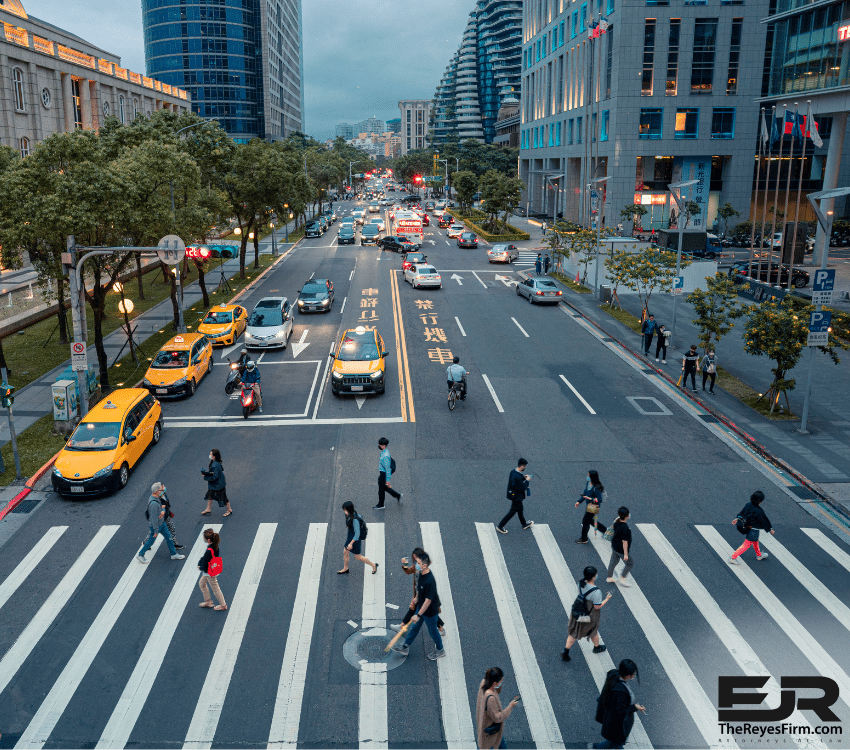
Crossing is where many pedestrian accidents happen, so it deserves the most care. Whenever possible, cross at marked crosswalks or intersections, where drivers expect and look for people on foot, rather than darting out mid-block. Obey pedestrian signals and traffic lights, and even when you have the walk signal, take a moment to look left, right, and left again before stepping off the curb.
Never assume a driver sees you or will stop. Make eye contact with drivers when you can, watch for turning vehicles that may not be looking your way, and be especially cautious of cars pulling out of driveways and parking lots. A few extra seconds of caution at a crossing prevents a great many collisions.
💡 Did You Know? The risk to pedestrians rises sharply after dark, when drivers have far less time to see and react. Wearing bright or reflective clothing and carrying a small light or using your phone’s flashlight at night are simple habits that make a real difference in whether a driver notices you in time.
How can you stay visible to drivers?
Being seen is one of your strongest defenses as a pedestrian, because many crashes happen simply because a driver did not notice the person on foot. During the day, favor bright, high-contrast clothing, and at dawn, dusk, and night, add reflective materials and carry a light. Dark clothing at night can make you nearly invisible until a driver is dangerously close.
Choose your path with visibility in mind, too. Avoid crossing between parked cars or other spots where a driver would not expect a pedestrian to appear, and try to position yourself where approaching drivers have a clear line of sight to you. The goal is to give every driver the best possible chance to see and react to you in time.
What habits keep you safe while walking?
Where and how you walk matters as much as how you cross. Use sidewalks whenever they are available, and when there is no sidewalk, walk on the shoulder facing oncoming traffic so you can see approaching vehicles and react if needed. Stay as far from the travel lane as you safely can.
Just as important is staying alert. Distraction is a growing danger for pedestrians, so keep your eyes up and avoid looking down at your phone while walking, especially when crossing. Limit headphone volume so you can hear traffic, and never walk impaired, since alcohol and drugs reduce your judgment and reaction time just as they do for drivers. Awareness is a safety tool you carry everywhere.
Where and when are pedestrians most at risk?
Certain places and times carry more risk, and knowing them helps you stay alert where it counts. Intersections and crossings, where the paths of people and vehicles meet, are common sites for collisions, as are parking lots, driveways, and areas with heavy turning traffic. Nighttime and low-light conditions raise the danger considerably.
Some pedestrians face added risk as well. Children may not judge traffic well, and older adults may move more slowly or be more seriously hurt in a collision, so extra care and patience around them benefits everyone. Being especially watchful in these situations, both as a pedestrian and as a driver, helps prevent the crashes that are most likely to cause harm.
🛡️ When Safety Isn’t Enough: Even the most careful pedestrian cannot control a distracted, speeding, or careless driver. If a driver’s negligence caused your injury, you may be entitled to compensation, and under Florida Statute § 95.11(5)(a) you generally have two years from the crash to file a claim.
Watch: Essential Pedestrian Safety Tips
If you prefer to see it explained, the short video below covers essential pedestrian safety tips to help prevent accidents.
And if you have been injured as a pedestrian in a crash that wasn’t your fault, The Reyes Firm offers free consultations with no obligation.
Your quick pedestrian safety checklist
Keep these five habits in mind every time you head out on foot. Together they meaningfully lower your risk.
- Cross at crosswalks and intersections. Obey signals, and look left, right, and left again before stepping out.
- Make yourself visible. Wear bright or reflective clothing and carry a light after dark.
- Use sidewalks. Where there is none, walk on the shoulder facing oncoming traffic.
- Stay alert. Keep your eyes up, limit headphone volume, and never walk impaired.
- Never assume a driver sees you. Make eye contact and watch for turning cars. If a driver hurts you, call 833-4 BAD DAY.
The Reyes Firm
4730 N. Habana Ave., Suite 201, Tampa, FL 33614
Phone: 833-4 BAD DAY | thereyesfirm.com
How The Reyes Firm helps injured pedestrians
You can cross at the crosswalk, wait for the signal, and stay alert, and still be struck by a driver who was not paying attention. Pedestrians are especially vulnerable in a crash, and they too often face unfair blame from insurers who suggest the pedestrian must have done something wrong. We stand up for injured pedestrians throughout Tampa and Hillsborough County.
When we represent an injured pedestrian, we typically:
- Investigate the crash thoroughly, gathering the crash report, photos, witness accounts, and any available video to establish what really happened
- Push back on unfair blame, countering attempts to shift responsibility onto the injured pedestrian
- Handle the insurers for you, so you are not pressured into an early, inadequate settlement
- Bring in qualified experts when needed to reconstruct the crash and document your injuries
- Pursue your full damages, including medical bills, lost wages, future care, and pain and suffering, as our guide to what drives a settlement explains
- Work on contingency, so there is no fee unless we recover for you
No lawyer can promise a particular outcome. What we can promise is that we take pedestrian cases seriously, treat you with respect, and fight for the full compensation you deserve.
Frequently asked questions about pedestrian safety
Where is the safest place to cross the street?
At a marked crosswalk or intersection, where drivers expect and look for pedestrians. Obey the pedestrian signals, look both ways before stepping out, and avoid crossing mid-block or between parked cars where drivers are less likely to see you.
Why is walking at night more dangerous?
After dark, drivers have far less time to see and react to a pedestrian, especially one in dark clothing. Wearing bright or reflective materials and carrying a light greatly improves your visibility and lowers your risk at night.
Should I walk with or against traffic?
Use a sidewalk whenever one is available. When there is no sidewalk, walk on the shoulder facing oncoming traffic so you can see approaching vehicles and react if a driver drifts toward you.
Is it really dangerous to look at my phone while walking?
Yes. Distraction is a growing cause of pedestrian injuries, because looking down at a phone takes your eyes and attention off traffic. Keep your eyes up, especially when crossing, and limit headphone volume so you can hear approaching vehicles.
Who is most at risk as a pedestrian?
Everyone on foot faces risk, but children, who may misjudge traffic, and older adults, who may move more slowly or be more seriously injured, can be especially vulnerable. Extra care around them, by pedestrians and drivers alike, helps prevent the most serious crashes.
Do pedestrians always have the right of way?
Not in every situation, and the rules depend on the circumstances and local law. Even where a pedestrian has the right of way, it is safest to never assume a driver will yield, and to make eye contact and confirm it is safe before crossing.
What should I do if a car hits me while I am walking?
Get medical attention promptly, report the crash and get a crash report, and document the scene and any witnesses if you are able. Then be cautious with insurers and consider speaking with a lawyer about your options.
How long do I have to file a pedestrian accident claim in Florida?
Under Fla. Stat. § 95.11(5)(a), you generally have two years from the date of the crash to file a personal injury lawsuit, reduced from four years in March 2023. It is best to consult a lawyer well before that deadline.

Edward Reyes, Esq. is a Florida Bar-admitted personal injury attorney and the founder of The Reyes Firm in Tampa, Florida. He represents people injured by the negligence of others in cases involving pedestrian accidents, car crashes, and other serious injuries throughout Tampa and the surrounding counties. Edward Reyes, Esq. handles personal injury claims on a contingency fee basis, meaning clients pay nothing unless the firm recovers compensation for them.
Read more about Edward Reyes.
How Can The Reyes Firm Help You?
If you’ve had a bad day, whether a pedestrian accident, a car crash, or any injury that wasn’t your fault, The Reyes Firm is in your corner. Our Tampa personal injury attorneys offer free consultations and work on a contingency fee basis, which means you pay us nothing unless we win your case.
You shouldn’t have to fight the insurance companies alone. Let us fight for you.
📍 Address: 4730 N. Habana Ave., Suite 201, Tampa, FL 33614
📞 Phone: 833-4 BAD DAY
🌐 Website: Schedule your free consultation today at thereyesfirm.com
Had a bad day? Call The Reyes Firm. We’ll handle the rest.
The information in this blog post is for general informational purposes only and is neither professional safety advice nor legal advice. Always follow local traffic laws and use your own good judgment for your safety. Reading this article does not create an attorney-client relationship with The Reyes Firm. Every case is unique. If you have been injured as a pedestrian in an accident that wasn’t your fault, consult a licensed Florida personal injury attorney about your specific situation.