 Sirens, flashing lights, and speeding vehicles usually mean help is on the way. But in a Polk County ambulance crash, the very vehicle that is intended to save lives can suddenly become the cause of serious harm. When a Polk County Fire Rescue ambulance crashes at a busy intersection in Haines City or anywhere in Central Florida, patients, paramedics, and everyday drivers can all be put in danger.
News about a Haines City ambulance crash or a “Haines City car accident today” is never just a headline. Behind every story are real people dealing with sudden injuries, hospital visits, and the stress of determining who will pay medical bills and lost wages. Ambulance collisions are more complex than regular car wrecks because special rules apply to emergency vehicles, and multiple parties may share responsibility.
This article explains, in clear and straightforward terms, what injured people and their families should know after an ambulance accident in Polk County. It covers the recent crash, how Florida’s rules for emergency vehicles apply, who is liable in an ambulance crash, victims’ rights, and steps to take after an emergency vehicle accident in Florida. It also explains how a Polk County personal injury lawyer at The Reyes Firm can help.
News Summary: Polk County Ambulance Crash in Haines City
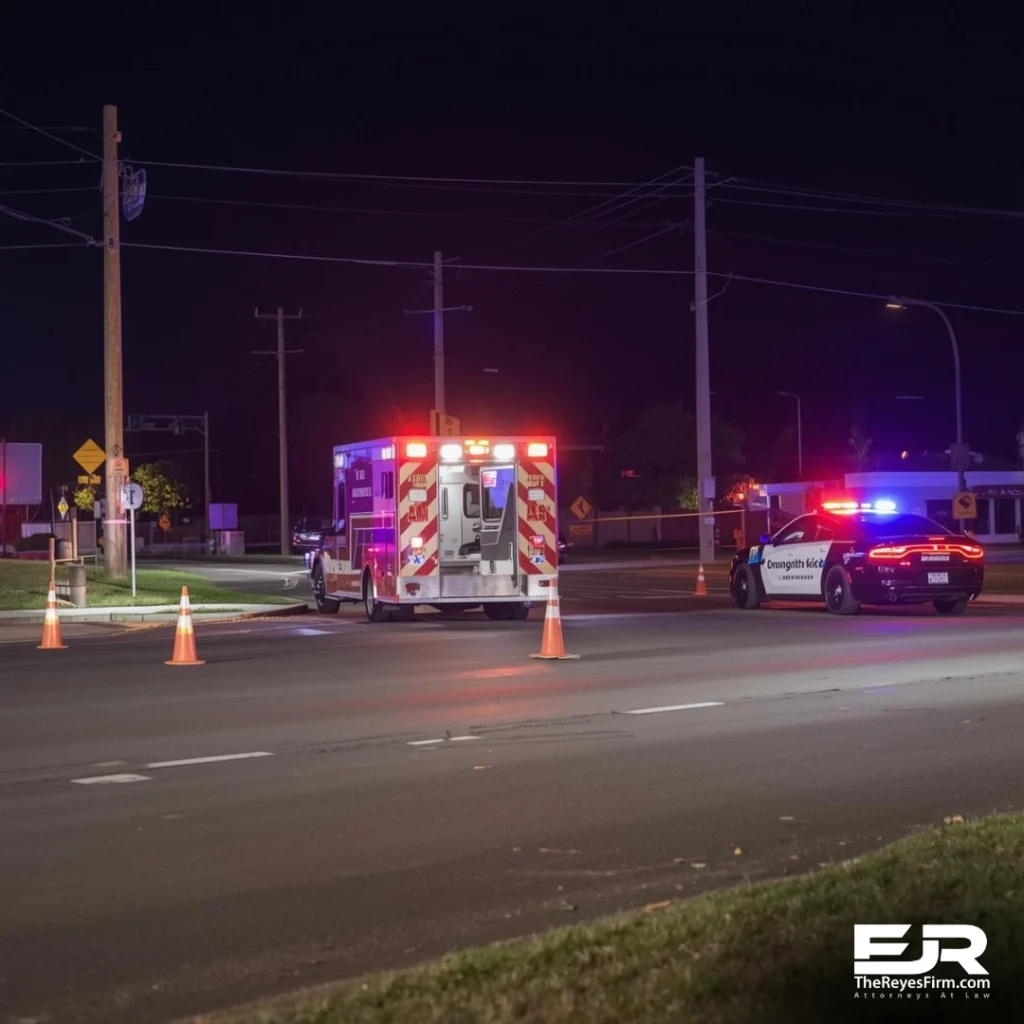
According to local news reports, a Polk County ambulance crash happened just after 8:30 p.m. at a busy intersection near Haines City. A Polk County Fire Rescue ambulance was traveling from Haines City toward a nearby hospital, with a patient already inside, when it entered an intersection with emergency lights activated.
At the same time, a pickup truck towing a trailer entered the intersection and struck the ambulance’s side, pushing it off the roadway. Four people were taken to local hospitals: the patient and a paramedic in the back suffered critical injuries. At the same time, the ambulance driver and the pickup driver were also hurt but are expected to recover. Deputies shut down part of the highway for several hours while investigators examined the crash scene.
Polk County Ambulance Crash Location and Directions to The Reyes Firm
Directions from the Haines City ambulance crash area to The Reyes Firm:
If you or a loved one were involved in an ambulance crash near the intersection of US Highway 27 and Lucerne Park Road in Haines City, you can travel west toward Tampa and follow I-4 West. From there, follow the signs into Tampa and head toward North Habana Avenue. The Reyes Firm’s Tampa office is located at
4730 N. Habana Ave., Suite 201, Tampa, FL 33614, near the intersection of N. Habana Ave. and W. Cayuga Street.
For turn-by-turn directions from the crash area or from anywhere in Polk County, you can open Google Maps and search for “The Reyes Firm, 4730 N. Habana Ave., Suite 201, Tampa, FL 33614”.
Why Ambulance Crashes Are So Serious
An ambulance accident in Polk County is often more dangerous than a typical crash for several reasons, and understanding these helps explain why injuries can be so severe.
Speed and urgency
Ambulances respond to emergencies and often travel faster than other vehicles. They may need to go through red lights or stop signs when they believe it is safe. High speeds combined with intersections and cross-traffic increase the risk of serious collisions, especially when other drivers are not paying attention.
Size and weight
An ambulance is larger and heavier than most passenger vehicles. In a collision, the smaller car usually takes more damage, and the people inside that car are more likely to suffer serious injuries like broken bones, head injuries, and spinal problems. Even at moderate speeds, the impact can be catastrophic.
Vulnerable patients and crew
Inside the ambulance, the patient is often already injured, sick, or unable to move. They may be strapped to a stretcher and cannot brace for a crash. Paramedics in the back are focused on medical care, not seat belts, and may also be thrown around in a collision. A Polk County ambulance crash can turn an already serious medical situation into a true emergency for everyone involved.
Complex insurance and responsibility
In a Polk County ambulance accident, several insurance companies may be involved. Polk County Fire Rescue, a private ambulance company, or a hospital system might own the ambulance. Another driver on the road might share fault. This mix of government entities, private companies, and multiple policies makes these cases more complex than a simple two-car crash.
Florida Emergency Vehicle Right-of-Way Laws Explained
Many people assume that emergency vehicles can ignore all traffic rules, but that is not true. Florida emergency vehicle right-of-way laws grant ambulances certain privileges but also impose duties on both ambulance drivers and other drivers.
Duties of regular drivers
When drivers in Florida see or hear an ambulance with lights and sirens:
- They must safely move over to the right side of the road when possible.
- They should slow down and, if necessary, stop until the ambulance passes.
- They should avoid blocking intersections or turning directly in front of the ambulance.
If a driver fails to yield and causes or contributes to a crash involving a Polk County ambulance, that driver can be held responsible for the resulting injuries.
Duties of ambulance drivers
Emergency drivers must still exercise caution, even in an emergency. They are expected to:
- Use lights and sirens when responding to an emergency call.
- Slow down when approaching red lights, stop signs, and intersections.
- Ensure an intersection is reasonably clear before entering.
- Drive with “due regard” for the safety of other drivers, cyclists, and pedestrians.
- Obey standard traffic rules when not responding to an emergency.
If an ambulance driver speeds through an intersection without checking cross-traffic, fails to use lights and sirens, or otherwise drives carelessly, that behavior can be considered negligence. When negligence causes a Polk County Fire Rescue ambulance to crash, the driver and the ambulance’s owner may be legally responsible.
Who Is Liable in an Ambulance Crash?
After a serious Polk County ambulance crash, families often want to know who is liable and who will pay for medical bills and other losses. Responsibility depends on what actually happened.
The ambulance driver
If the ambulance driver violated safety rules, such as running a red light without slowing or driving too fast for the conditions, the driver may be at fault. Evidence may include police reports, witness statements, dash-cam video, and footage from nearby traffic or security cameras.
The ambulance owner or agency
The company or government agency that owns the ambulance is usually responsible for the actions of its driver. In a Polk County, FL ambulance crash, this may mean Polk County or another government body. Claims against government agencies follow special rules and deadlines, so it is essential to consult a car accident lawyer promptly.
Another driver on the road
Not every emergency vehicle accident in Florida is caused by the ambulance. A distracted or careless driver might block the intersection, fail to yield, or make a sudden left turn across the ambulance’s path. In those situations, the driver and their insurer may be partly or wholly at fault.
Shared fault
Sometimes more than one person shares responsibility. For example, another driver might fail to yield while an ambulance driver also travels too fast through a crowded area. Florida’s comparative fault system allows responsibility to be apportioned among multiple parties. A Polk County car accident attorney can review the facts and work to assign fair percentages of fault to each person or entity involved.
Rights After an Ambulance Accident
People hurt in an ambulance accident in Polk County have necessary legal rights, whether they were riding in the ambulance, driving another car, or walking nearby.
Some key rights after an ambulance accident include:
- The right to seek emergency care and follow-up medical treatment.
- The right to pursue compensation for medical bills, lost wages, and pain and suffering.
- The right to seek money for future care, physical therapy, and long-term disability when necessary.
- The right to consult an ambulance crash lawyer in Florida and refuse recorded statements to insurance adjusters until after getting legal advice.
These rights also apply to patients who were already being transported. If the crash creates new injuries or makes an existing condition worse, those additional harms may be part of a personal injury or wrongful death claim.
Who Pays for the Ambulance After a Crash in Florida?
Many people injured in a Polk County ambulance crash worry about how the ambulance bill will be paid. In the video below, Attorney Edward Reyes explains how Florida’s no-fault system, PIP benefits, and health insurance usually work together to cover the cost of an ambulance ride after a car crash.
Injured in an Ambulance Accident: What To Do
Many families search “what to do if injured in an ambulance accident” right after a serious crash. Taking the proper steps can help protect both health and legal rights.
1. Get medical help and follow the doctor’s orders
Health should always come first. Injured people should accept transport to the hospital, follow doctors’ advice, attend follow-up appointments, and keep records of all treatments. These records help demonstrate the severity of the injuries.
2. Make sure the crash is officially reported
Law enforcement should prepare a crash report for any Haines City ambulance or car accident today that results in injuries. This report becomes a key document for any insurance claim or lawsuit.
3. Gather information, if possible
If it is safe to do so, someone can:
- Take photos or videos of the vehicles, road conditions, traffic signals, and visible injuries.
- Get names and contact details for witnesses.
- Note the ambulance unit number and the agency or company that owns it.
If the injured person is unable to do this, a family member or friend may be able to collect this information later.
4. Be careful with insurance companies
Insurance companies may quickly contact victims after a Polk ambulance accident and ask for recorded statements or broad medical releases. These are often designed to help the insurer, not the victim. Speaking with a lawyer before signing or saying anything can prevent mistakes that may hurt a claim.
5. Contact a lawyer who handles ambulance crash cases
An attorney experienced with emergency vehicle accidents in Florida can initiate an investigation, request necessary records, and ensure compliance with deadlines. Early legal help makes it easier to secure dash cam footage, dispatch logs, GPS data, and other evidence before it is lost or overwritten.
When To Contact an Ambulance Crash Lawyer in Florida
Any serious injury linked to a Polk County ambulance crash is a strong reason to call a lawyer. Warning signs that legal help is needed include:
- Hospital stays, surgery, or ongoing physical therapy.
- Trouble returning to work, school, or normal daily activities.
- Confusing or conflicting stories from the ambulance agency, other drivers, or their insurers.
- Pressure from insurance adjusters to accept a quick settlement before the full impact of the injuries is known.
A skilled ambulance crash lawyer in Florida can:
- Investigate the crash scene and vehicles involved.
- Work with accident reconstruction experts if needed.
- Review safety policies, training records, and maintenance logs for the ambulance agency.
- Calculate a fair value for current and future medical bills, lost wages, and other losses.
- Negotiate with insurance companies and, if necessary, file a lawsuit and take the case to court.
For families in Polk County, working with a local firm that understands Central Florida roads, juries, and government procedures can make a meaningful difference.
How Can The Reyes Firm Help You
The Reyes Firm is a Tampa-based personal injury law firm that represents victims of serious crashes throughout Polk County and the greater Tampa Bay area. When a Polk County ambulance crash or other emergency vehicle accident in Florida turns an ordinary day into a crisis, the firm is ready to help injured people and their families.
As a Polk County personal injury lawyer, Attorney Edward Reyes and his team understand the complex rules governing county agencies, private ambulance services, and first responders. The firm carefully investigates what happened, identifies all responsible parties, and fights for full compensation for medical bills, lost wages, pain and suffering, and long-term care needs.
Anyone harmed in a Haines City ambulance crash, a Polk County Fire Rescue ambulance crash, or any other serious ambulance accident in Polk County can contact The Reyes Firm for a free case review. The firm is paid only if it recovers money for the client.
The Reyes Firm
4730 N. Habana Ave., Suite 201
Tampa, FL 33614
Phone: 833-4 BAD DAY
Had a bad day? The Reyes Firm is ready to fight for the justice and compensation injured victims deserve.
Frequently Asked Questions About Polk County Ambulance Crashes
- How long do I have to file a claim after an ambulance crash in Florida?
In many Florida personal injury cases, victims generally have two years from the date of the crash to file a lawsuit. Still, claims involving government agencies may have shorter notice deadlines, so it is essential to speak with a lawyer as soon as possible. - Can someone still bring a claim if they were partly at fault for the ambulance crash?
Yes, under Florida’s modified comparative negligence rules, an injured person may still recover money as long as they were not primarily at fault. Still, their percentage of fault can reduce their compensation. - What types of compensation might be available after an ambulance accident in Polk County?
Victims may be able to recover compensation for medical bills, lost wages, pain and suffering, property damage, and future medical or rehabilitation costs. - Does hiring a lawyer mean the ambulance crash case will definitely go to court?
Not always; many ambulance crash claims are resolved through negotiations with insurance companies, and a lawsuit is only filed if a fair settlement cannot be reached.