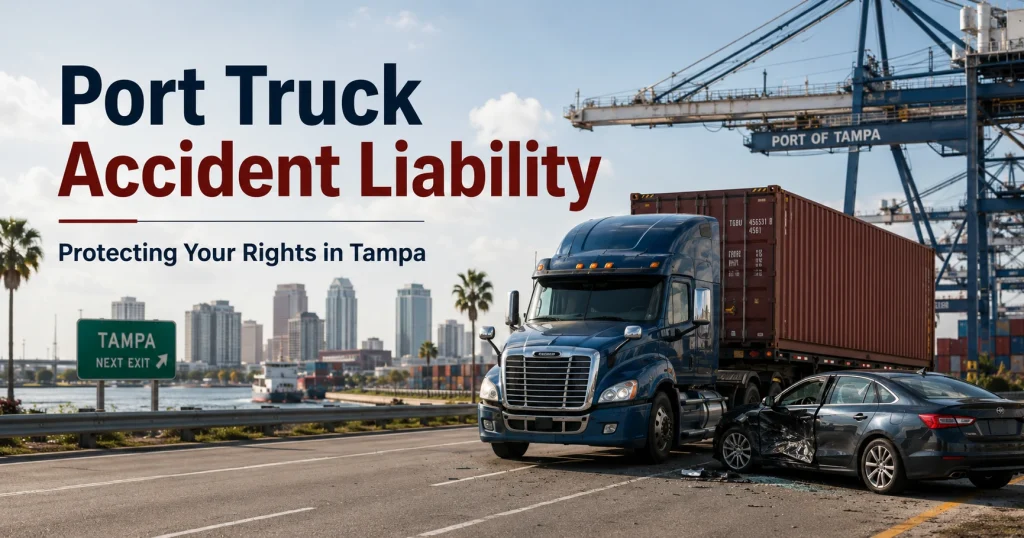
Driving near the Port of Tampa means sharing crowded roadways with long lines of semi‑trucks, stacked shipping containers and tight turns. With thousands of commercial vehicles moving through port gates every day, collisions aren’t rare — they’re bound to happen. When a truck from the port hits your car, the physical injuries, time off work and insurance battles can feel overwhelming. This guide breaks down why these wrecks are different, who may be responsible and how you can protect yourself.
Quick Summary
If you need the gist right away, here are the main points:
- Multiple players: Port‑related crashes can involve the driver, their employer, the cargo loader and the port itself. Identifying everyone responsible is vital.
- Evidence is fragile: Electronic logs, ELD data, cargo records and surveillance footage help prove fault, but some of this evidence can disappear within days.
- See a doctor fast: Florida’s no‑fault Personal Injury Protection (PIP) law requires you to get medical care within 14 days to qualify for benefits.
- Serious injury threshold: To go beyond no‑fault benefits, injuries must meet the state’s serious injury threshold. (627.737)
- Comparative fault rules: You cannot recover damages if you are more than 50% to blame. (768.81)
- Short deadlines: You typically have only two years to file a negligence claim. (95.11)
- Legal help matters: An experienced truck accident attorney can preserve evidence, negotiate with insurers and fight for fair compensation. Contact The Reyes Firm for a free consultation. (contact)
Why Port Truck Crashes Are Different
Ports are bustling economic engines. At the Port of Tampa, thousands of containers move through a maze of access roads every day. Drivers are under constant pressure to meet delivery schedules, navigate tight turns and merge with commuter traffic. A fully loaded semi‑truck can weigh up to 80,000 pounds — roughly 20 times the weight of a passenger car — so even a low‑speed impact can cause devastating injuries and property damage. Port accidents also involve more than just the truck driver; carriers, shipping companies, terminal operators and cargo loaders all play a role, and each has its own insurance policies and legal duties. Finally, port truckers must follow federal hours‑of‑service rules that limit how long they can drive without rest and require drug and alcohol testing. Violations of these regulations can provide evidence of negligence.
Who Could Be Responsible for Your Injuries
After a port accident, liability often rests with several parties:
- Truck driver: Speeding, distracted driving or violating hours‑of‑service limits.
- Trucking company/carrier: Poor hiring practices, inadequate training or neglected maintenance.
- Cargo loading company: Improperly secured freight or overloaded trailers that can tip or jackknife.
- Port operator: Unsafe road design, poor signage or inadequate traffic control within the port.
- Manufacturers/mechanics: Defective equipment or negligent repairs that lead to brake or tire failures.
Gathering Evidence for Port Accident Claims
Evidence is the foundation of a successful claim. Port operators and carriers may erase or overwrite data quickly, so securing proof early is essential.
- ELD data and driver logbooks showing hours on duty
- Black box or engine control module recordings capturing speed, braking and acceleration
- Cargo manifests, bills of lading and port entry records identifying who loaded the freight
- Port and dash‑cam surveillance footage from the crash scene and surrounding area
- Witness statements and photos of skid marks, road conditions and vehicle damage
🛡️ Key Takeaway: Emotional trauma is just as real as physical injuries. If you feel anxious, sleepless, or on edge after a port truck crash, seek medical help and document your symptoms. Mental health treatment can be part of your injury claim.
Florida Rules You Must Know
Several state laws control how and when you can recover after a truck crash. Missing a deadline or misunderstanding a requirement could cost you your case.
- PIP 14‑day rule: Get medical care within 14 days to qualify for no‑fault benefits (PIP)
- Serious injury threshold: Only certain severe injuries allow lawsuits outside PIP (Serious)
- Modified comparative negligence: If you are more than 50% at fault, you recover nothing (Modified)
- Crash report privilege: Statements made for police crash reports cannot be used in court (Crash)
- Commercial vehicle regulations: Florida adopts federal safety rules, including limits on hours of service and drug testing (Commercial)
- Two‑year statute of limitations: Most negligence claims must be filed within two years (Two‑year)
ℹ️ Information Point: Evidence can vanish quickly and deadlines come fast. An attorney can send preservation letters to stop data deletion and ensure you meet all filing deadlines.
Steps to Protect Your Rights After a Port Truck Crash
1. Call 911 and make sure police create an official crash report.
2. Get immediate medical attention — even if you feel okay — and follow up within 14 days to preserve PIP benefits.
3. Take pictures of the vehicles, road conditions, cargo spillage and any visible injuries.
4. Exchange contact and insurance details with the truck driver, their employer and any witnesses.
5. Decline to give a recorded statement to insurers before speaking with a lawyer.
6. Notify your own insurance company about the crash, but stick to basic facts.
7. Start an evidence file: save medical bills, repair estimates, pay stubs and notes about your pain.
8. Consult with an experienced truck accident attorney; they can send preservation letters to secure ELD logs, black box data and port surveillance.
9. Do not sign any settlement offers until you know the full extent of your injuries and losses.
10. Stay off social media — posts can be used to undermine your claim.
When to Contact a Lawyer
Trucking companies and their insurers deploy rapid response teams to protect themselves after a crash. The longer you wait to seek counsel, the harder it becomes to collect crucial evidence. An experienced attorney can investigate the wreck, identify every responsible party, send preservation letters and negotiate with insurers. If a fair settlement cannot be reached, they will file a lawsuit and take your case to trial.
Watch: Port Truck Traffic and Liability
See why congestion around the Port of Tampa makes accidents so predictable. Our short video explains the constant flow of semis, the narrow lanes and how negligence creates danger for everyday drivers.
Frequently Asked Questions
Why do port truck accidents happen so often?
High traffic volumes, tight deadlines, and difficult turns create a perfect storm for collisions at ports.
Who could I sue after a port truck crash?
Potential defendants include the driver, their employer, the shipping carrier, the port authority, the cargo loader, and sometimes manufacturers or maintenance providers.
Do port operators owe a duty to motorists?
Yes. Ports must maintain safe roadways and manage traffic. Failure to do so may expose them to liability.
How can improper loading cause a crash?
Shifting cargo can destabilize a trailer during turns or braking. If a loader fails to secure freight, they may share responsibility.
How does comparative fault work?
Under Florida’s modified comparative negligence law, you cannot recover damages if you are more than 50% at fault.
What kinds of damages can I recover?
You may pursue compensation for medical bills, lost wages, pain and suffering, property damage, and reduced earning capacity.
Why is prompt medical treatment important?
The Florida PIP statute requires treatment within 14 days. Delaying care could jeopardize your no-fault benefits.
What if the driver ignored hours-of-service rules?
Violations of federal drive-time limits can prove fatigue and negligence, strengthening your case.
What is a spoliation letter?
It’s a notice telling the trucking company and other parties to preserve all evidence, including ELD logs and camera footage.
Can a trucking company be liable if the driver is an independent contractor?
Yes. Carriers can still be accountable for negligent hiring, supervision, training, and maintenance.
What happens if drugs or alcohol played a role?
Driving under the influence is illegal and can lead to punitive damages. Police reports and toxicology results are key evidence.
How does black box data help?
Electronic control modules record speed, braking, and engine data in the moments before a crash, which can help prove negligence.
Could poor port traffic management be blamed?
Yes. If inadequate signage, lighting, or lane design contributed to the collision, the port operator may share liability.
How long do I have to file a claim?
Florida generally gives two years for negligence lawsuits, so speak with a lawyer as soon as possible.
Why choose The Reyes Firm?
Our team investigates accidents, handles insurers, preserves evidence, and fights for fair compensation. Consultations are free, and you owe no fee unless we recover for you.

Edward Reyes, Esq., is a Florida Bar-admitted personal injury attorney and the founder of The Reyes Firm, where he focuses on serious crashes involving commercial vehicles, including port trucks, semis, and company fleets operating in and around Tampa and the South Shore communities. He represents injured people and families going up against trucking companies, carriers, and their insurers, investigating every layer of liability so his clients aren’t the only ones without a professional in their corner.
Read more about Edward Reyes.