What You Need to Know
- The rental truck driver may be liable when speeding, distraction, an unsafe turn, or another careless action causes the crash.
- A rental company may be responsible if its own negligent maintenance, inspection, repair, or rental decision contributed to the collision.
- Federal law generally limits claims based only on the rental company’s ownership of the truck.
- Insurance may be available through the renter, rental agreement, employer, another driver, or an uninsured motorist policy.
- Preserve rental agreements, maintenance records, photographs, video, cargo evidence, and electronic vehicle data quickly.
Had a bad day? Call The Reyes Firm at 833-4 BAD DAY.
A rental truck crash can leave you facing an unusual problem. The person who hit you may not own the truck. The rental company may deny responsibility. Several insurance companies may point fingers at one another while your medical bills and missed work continue to add up.
A Tampa U-Haul & rental truck accident lawyer can investigate the driver, the rental company, the truck’s condition, cargo loading, and available insurance coverage. These cases may look like ordinary car accidents at first, but determining liability can require a close review of federal law, Florida law, rental records, and several insurance policies.
A Tampa truck and commercial vehicle accident attorney can investigate every person, company, and insurance policy connected to the collision.
💡 Did You Know? Florida recorded 46,651 crashes involving commercial motor vehicles in 2024. Those crashes resulted in 315 fatalities, according to the Florida Department of Highway Safety and Motor Vehicles. These figures are not limited to rental trucks, but they show the serious harm larger vehicles can cause on Florida roads.
Who Is Liable After a U-Haul or Rental Truck Accident?
The rental truck driver, rental company, employer, cargo loader, maintenance provider, vehicle manufacturer, or another motorist may be liable. Responsibility depends on what caused the crash and how each person or business contributed. Florida law may divide fault among several parties when more than one careless act caused the collision.
The rental truck driver
Investigators often examine the renter first. Rental truck drivers must operate the vehicle with reasonable care, even if they have never driven a large moving truck before.
The driver may be liable for:
- Speeding or following too closely
- Driving while distracted or impaired
- Making an unsafe wide turn
- Failing to check large blind spots
- Changing lanes without enough space
- Driving too fast for rain or traffic
- Failing to allow enough stopping distance
Many people rent moving trucks because their personal vehicles cannot carry furniture, appliances, or other large items. That does not mean they have experience handling a long, heavy vehicle with limited rear visibility.
A renter may misjudge the truck’s width, take a turn too sharply, or brake too late in traffic. On crowded Tampa roads, a small mistake can cause a serious crash.
Another driver
The presence of a U-Haul or other rental truck does not automatically make its driver responsible.
Another motorist may cause or contribute to the collision by:
- Running a red light
- Cutting in front of the truck
- Making an unsafe left turn
- Driving aggressively
- Entering the truck’s lane without enough space
- Causing a chain-reaction crash
Police reports, video, vehicle damage, skid marks, and witness accounts can help show how the crash started.
An employer or business
An employer may share responsibility if an employee rented or drove the truck for a work assignment. This may include a business using a rental truck for deliveries, construction supplies, equipment, or a company move.
An attorney may investigate:
- Who paid for the rental
- Who selected the driver
- Who planned or directed the trip
- What the driver was doing when the crash happened
- Who loaded the truck
- Which business insurance policies apply
A business may also be directly liable for unsafe loading, poor supervision, or allowing an unfit employee to operate the truck.
A moving company or cargo loader
The driver may not have loaded it. Friends, employees, contractors, or a moving company may have packed the cargo area.
Improper loading can destabilize the truck. Heavy objects placed too high can raise the center of gravity. Uneven weight can pull the truck to one side, and weak restraints can allow cargo to shift during a turn or sudden stop.
A cargo loader may share liability when unsafe loading contributes to a rollover, loss of control, or falling objects.
How does Florida’s comparative fault law apply?
Florida can divide responsibility among several parties. Under Florida Statute § 768.81, a person found more than 50% responsible for their own harm generally cannot recover damages in a negligence action covered by the law.
If an injured person is 50% or less at fault, the court may reduce the recovery by that percentage. Evidence, not assumptions made at the scene, determines fault.
When Can the Rental Truck Company Be Held Responsible?
A rental truck company is not automatically responsible simply because it owns the vehicle. It may still be liable if its own negligent inspection, maintenance, repair, or rental decision contributed to the crash. To build a claim against the company, you need evidence connecting its conduct to the collision.
What is the Graves Amendment?
The federal Graves Amendment, 49 U.S.C. § 30106, generally protects a company that rents vehicles from liability based solely on ownership.
In plain English, an injured person usually cannot hold the rental company responsible solely because its name appears on the truck.
The law does not protect a rental company from claims based on its own negligence or criminal wrongdoing. A direct claim may still exist if the company rented an unsafe truck, failed to repair a known defect, or committed another negligent act that contributed to the crash.
Did poor maintenance cause the accident?
Rental trucks may travel many miles and pass through many drivers. Regular inspection and maintenance are essential.
Potential problems include:
- Worn or damaged tires
- Defective brakes
- Steering problems
- Broken lights
- Damaged mirrors
- Unsafe trailer connections
- Ignored safety complaints
- Missed inspections
Maintenance records may show inspection dates, reported defects, repairs, and prior customer complaints. These records can help establish if the company knew about a dangerous condition before the crash.
Did the company negligently entrust the truck?
Negligent entrustment means giving a vehicle to someone the company knew, or should have known, was unfit to drive it safely.
A possible claim may require evidence that the company ignored an obvious warning sign, such as:
- No valid driver’s license
- Visible impairment
- An unauthorized driver
- An obvious inability to operate the truck safely
The rental company is not required to guarantee that every renter will be a safe driver. The question is usually whether the company’s own conduct was unreasonable under the specific circumstances.
How do Florida’s rental-vehicle rules affect the case?
Florida Statute § 324.021 contains provisions addressing vehicle ownership, financial responsibility, and lessor liability.
These Florida provisions must be considered together with the federal Graves Amendment. The type of truck, rental term, insurance coverage, vehicle use, and rental company’s conduct can all affect the legal analysis.
🛡️ Your Rights: The Graves Amendment limits claims based only on a rental company’s ownership of a truck. It does not protect a company from responsibility for its own negligence or criminal wrongdoing. Maintenance, inspection, repair, and rental records may show if the company’s conduct contributed to the crash.
What Insurance Pays After a Rental Truck Accident in Florida?
Insurance after a rental truck accident may come from several sources. The renter’s personal auto policy, protection purchased with the rental, an employer’s commercial policy, another driver’s insurance, and uninsured motorist coverage may all require review before you can determine the available compensation.
Does the renter’s personal auto policy apply?
Some personal auto policies cover certain rental vehicles. Others exclude large moving trucks, vehicles above a specific weight, or vehicles used for business.
Coverage may depend on:
- The exact policy language
- The truck’s weight and size
- Personal or business use
- The identity of the driver
- Vehicle-type exclusions
- The type of damage claimed
Never assume a personal policy applies based only on coverage for ordinary rental cars. Review both the policy and the rental agreement.
What protection did you purchase with the rental?
Rental companies may offer several forms of protection. Depending on the agreement, these may address liability, damage to the rental truck, personal property, or other losses.
A damage waiver is not always the same as liability insurance. A waiver may protect the renter from some charges for damage to the truck without paying for injuries the renter causes to another person.
An attorney can obtain the complete agreement and determine which protections were selected, rejected, or included automatically.
Was the truck being used for business?
If the truck was rented for a work assignment, an employer’s commercial policy may apply.
Business insurance may become important when the rental truck was used for:
- Commercial deliveries
- Moving-company work
- Construction or repair services
- Transporting company equipment
- An employee-directed assignment
The business name may not appear on the truck. Rental receipts, payment records, texts, emails, schedules, and employer instructions can show the trip’s purpose.
What if another driver caused the crash?
Another negligent driver’s liability insurance may cover the claim. A crash involving a rental truck can still begin with a passenger vehicle running a light, making an unsafe turn, or cutting into traffic.
More than one policy may apply when several drivers share fault.
What if the at-fault driver is uninsured?
Uninsured or underinsured motorist coverage may help when an at-fault driver has no liability insurance or insufficient limits.
UM/UIM coverage may be available through the injured person’s policy or another applicable policy. Coverage depends on the contract, insured vehicles, household relationships, and other facts.
Does Florida PIP apply?
Florida Personal Injury Protection may help pay certain early medical expenses and lost income. Under Florida Statute § 627.736, an injured person generally must receive qualifying initial care within 14 days to access PIP medical benefits.
The correct PIP carrier depends on the injured person’s role in the crash and the available policies. Seek medical care promptly and have the coverage reviewed.
What Causes Rental Truck Accidents in Tampa?
Rental truck accidents often result from driver inexperience, large blind spots, longer stopping distances, unsafe cargo loading, or mechanical problems. Identifying the exact cause helps determine responsibility and which records, insurance policies, and legal rules apply to the claim.
Driver inexperience
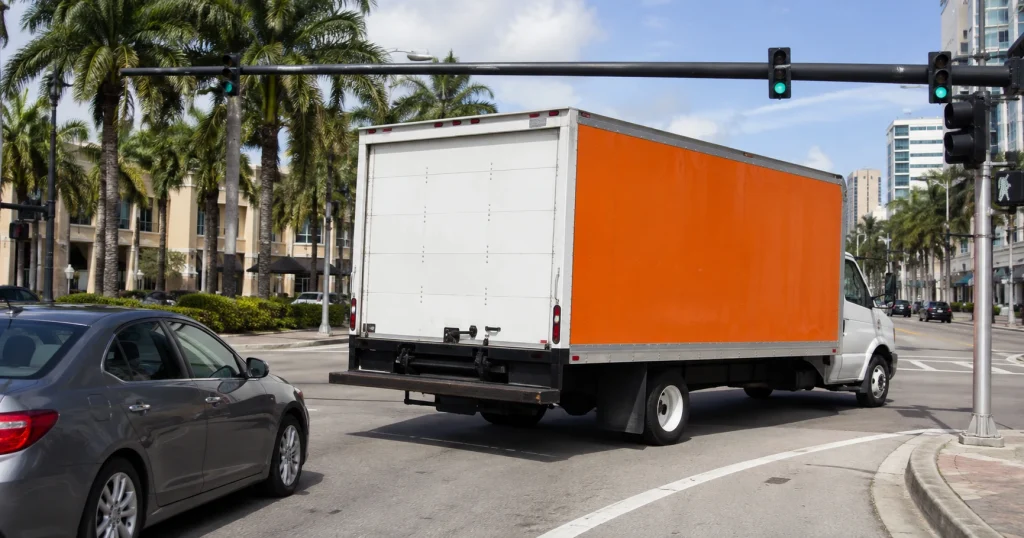
A person with a standard driver’s license may be legally permitted to operate many rental moving trucks. Still, legal permission does not create practical experience.
An inexperienced driver may struggle with:
- Wide turns
- Lane position
- Longer braking distances
- Low-clearance structures
- Highway merging
- Reversing
- Parking
- Heavy Tampa traffic
Roads such as I-4, I-75, and I-275 can leave little room for error. A fully loaded truck may react differently than an empty one when braking, turning, and changing lanes.
Large blind spots
Many moving trucks have no direct rear visibility. Drivers must rely heavily on properly adjusted side mirrors.
A driver who fails to scan the mirrors carefully may not see a smaller car, motorcycle, cyclist, or pedestrian. Blind-spot crashes often happen during merging, lane changes, and right turns.
Improperly secured cargo
Unsafe cargo can affect people inside and outside the truck. A shifting load may cause the driver to lose control, while escaping cargo can create a hazard across several lanes.
According to the National Highway Traffic Safety Administration, about 850 people are killed, and nearly 19,000 are injured each year in crashes involving objects on the roadway. NHTSA reports that 73% of the vehicles involved are passenger vehicles.
These figures cover roadway-object crashes generally and do not include rental trucks.
Mechanical defects
A worn tire, defective brake, broken mirror, steering problem, or unsafe trailer hitch can cause a crash even when the driver responds correctly.
The driver, rental company, maintenance provider, repair shop, or manufacturer may be responsible, depending on who knew about the defect and who had a duty to address it.
Do commercial vehicle rules apply?
Not every personally rented moving truck is a regulated commercial motor vehicle. The rules may depend on the truck’s weight, ownership, operation, cargo, and use.
A truck used for business may face different requirements from one used by a family moving between homes. An attorney should verify the vehicle and trip details before relying on Florida Statute § 316.302 or federal motor-carrier regulations.
Rental vehicles may include moving trucks, box trucks, pickup trucks, trailers, and cargo vans. Our guide from a cargo van accident lawyer in Tampa explains how liability may change when a van is used for business or delivery work.
What Evidence Can Prove a Rental Truck Accident Claim?
Rental agreements, maintenance records, photographs, video, witness statements, cargo evidence, and electronic vehicle information may help prove fault. Because the truck and many records are controlled by other parties, send preservation requests before evidence is altered, overwritten, lost, or destroyed.
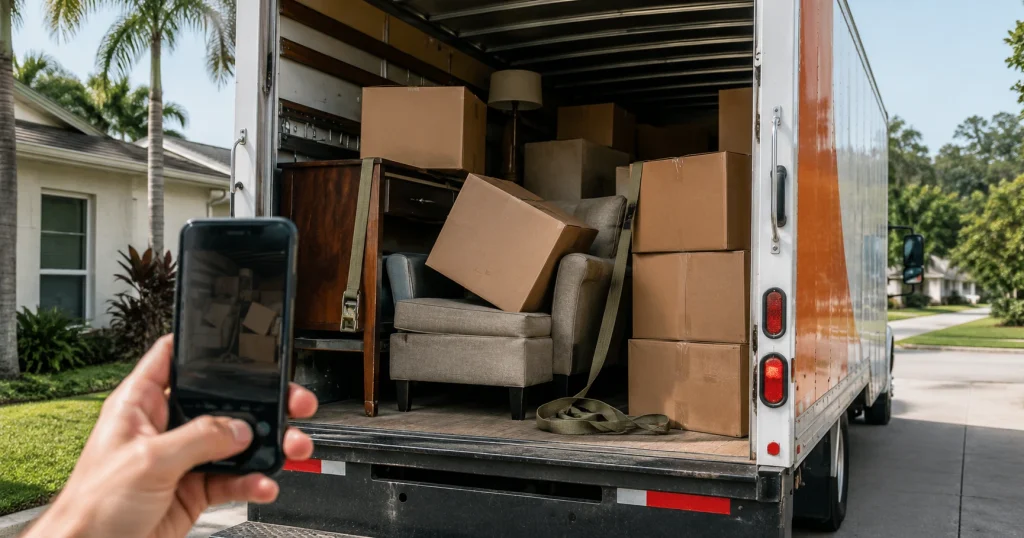
Evidence from the crash scene
If you can do so safely, photograph:
- The truck’s unit number
- License plate and vehicle identification number
- Damage to every vehicle
- Tires, wheels, lights, and mirrors
- The cargo area and restraints
- Debris and skid marks
- Traffic signs and signals
- Road and weather conditions
Get the driver’s name, contact information, license details, insurance information, and rental documents. Ask witnesses for their names and phone numbers before they leave.
Rental and insurance records
Important documents may include:
- The full rental agreement
- Authorized-driver information
- Coverage selected during the rental
- Damage waivers
- The renter’s personal insurance policy
- Employer or business insurance
- Incident reports made to the rental company
The name on the agreement may help identify who rented the truck, but it does not always establish who was driving.
Company-controlled evidence
A lawyer may request:
- Inspection records
- Maintenance history
- Repair orders
- Prior customer complaints
- Rental transaction records
- Internal incident reports
- GPS or telematics records
- Event data recorder information, if available
Not every rental truck contains the same electronic systems. Identify the vehicle before making specific data requests.
Cargo evidence
Evidence of improper loading may include:
- Photographs before and after the crash
- Weight records
- Receipts and inventories
- Tie-downs and straps
- Statements from people who loaded the truck
- Damage inside the cargo area
- Video showing cargo shifting or falling
⚠️ Warning: Florida generally gives you two years from the crash date to file a negligence lawsuit under Florida Statute § 95.11. Rental records, surveillance video, electronic data, and physical evidence may disappear much sooner.
What Damages Can You Recover After a Rental Truck Accident?
Damages in a Tampa truck accident may include medical expenses, lost income, reduced earning ability, property damage, future care, pain, disability, and other documented losses. Your recovery depends on your injuries, fault, evidence, applicable insurance policies, and Florida law.
Medical expenses and future care
Recoverable medical losses may include:
- Ambulance and emergency care
- Hospital treatment
- Surgery
- Doctor appointments
- Physical therapy
- Medication
- Medical equipment
- Home care
- Future treatment
Florida Statute § 768.0427 governs evidence offered to prove medical expenses in personal injury cases.
Lost income and earning ability
A claim may include pay lost while recovering. Catastrophic injuries may also reduce the person’s ability to return to the same occupation or earn the same income in the future.
Employment records, tax documents, pay statements, medical restrictions, and expert analysis may help prove these losses.
Pain and other personal losses
Non-economic damages may include:
- Physical pain
- Mental anguish
- Disability
- Disfigurement
- Emotional trauma
- Loss of enjoyment of life
Whether these damages are available depends on Florida law and the injuries involved.
Catastrophic injuries
Common injuries from a truck accident in Tampa may include traumatic brain injuries, spinal cord damage, internal injuries, broken bones, severe burns, amputations, and permanent mobility limitations.
A catastrophic injury attorney in Tampa can document future medical care, reduced earning ability, and the long-term effects of a life-changing injury.
Wrongful death damages
If a rental truck collision causes a death, eligible family members may be able to pursue damages under Florida’s Wrongful Death Act. A Tampa wrongful death attorney can explain who may bring the claim and which losses may be recoverable.
How The Reyes Firm Handles Your Rental Truck Accident Case
A Tampa U-Haul & rental truck accident lawyer at The Reyes Firm can investigate the renter, rental company, vehicle condition, cargo loading, and every available insurance policy. Our team moves quickly to preserve evidence, document your losses, and prepare serious injury cases for trial.
When we handle a rental truck accident case, our team may:
- Obtain the rental agreement and identify every authorized driver
- Preserve rental, inspection, maintenance, and repair records
- Investigate the renter’s conduct and reason for renting the truck
- Review personal, supplemental, commercial, and UM/UIM policies
- Inspect the truck, tires, brakes, mirrors, lights, and cargo area
- Secure crash reports, witness statements, video, and electronic data
- Document medical treatment, missed work, future care, and daily limitations
- Negotiate with insurers and prepare the case for trial when needed
We do not assume that the driver is the only responsible party. We follow the evidence and examine every person, business, defect, and insurance policy connected to the crash.
The Reyes Firm handles serious and complex injury cases with focus, speed, clear communication, case-specific knowledge, and trial readiness.
The Reyes Firm
4730 N. Habana Ave., Suite 201
Tampa, FL 33614
833-4 BAD DAY
We are serving Tampa, Riverview, Brandon, Plant City, and communities across Hillsborough County, including Tampa and the South Shore communities.
Frequently Asked Questions About Tampa Rental Truck Accidents
Can I sue U-Haul if one of its rental trucks hits me?
You may have a claim against the negligent driver. You may also have a claim against the rental company if its negligent maintenance, repair, inspection, or rental decision contributed to the collision.
Is the rental company automatically liable for the renter’s negligence?
No. The Graves Amendment generally prevents liability based only on the rental company’s ownership of the vehicle. It does not protect the company from claims based on its own negligence or criminal wrongdoing.
Does my personal car insurance cover a U-Haul accident?
Coverage depends on the policy, truck type, vehicle weight, use, authorized drivers, and exclusions. A Tampa U-Haul & rental truck accident lawyer can review the rental agreement and every potentially applicable policy.
Who pays if the rental truck driver has no insurance?
Coverage may be available through protection purchased with the rental, an employer’s commercial policy, another liable driver’s insurance, or the injured person’s UM/UIM coverage. Answering this question requires reviewing the rental documents and insurance contracts.
What if I was driving the rental truck when I was injured?
You may have a claim if another driver, a mechanical defect, an unsafe repair, improper loading by another party, or another negligent act caused the crash. Your rental agreement and insurance selections may also affect the available coverage.
Can an employer be liable for an employee’s rental truck accident?
An employer may be responsible if the employee was performing assigned work when the crash happened. The employer may also be directly liable for negligent supervision, unsafe loading, or allowing an unfit employee to drive.
What should I photograph after a rental truck accident?
Photograph the unit number, license plate, vehicle damage, tires, lights, mirrors, cargo area, restraints, debris, skid marks, traffic controls, and all involved vehicles. Save the original files so their dates and metadata remain available.
How long do I have to file a truck accident claim in Tampa?
Florida generally gives you two years to file a negligence lawsuit. Important evidence may disappear much sooner, so you should investigate the claim promptly.

Edward Reyes, Esq. is a Florida Bar-admitted personal injury attorney and the founder and managing attorney of The Reyes Firm in Tampa, Florida. His practice focuses on serious injury and wrongful death cases arising from car, truck, and commercial vehicle crashes. He represents injured people and families throughout Tampa and Hillsborough County.
How Can The Reyes Firm Help You?
If you’ve had a bad day — a car accident, a slip and fall, a trucking crash, or any injury that wasn’t your fault — The Reyes Firm is in your corner. Our Tampa personal injury attorneys offer free consultations and work on a contingency fee basis, meaning you pay nothing unless we win your case.
You shouldn’t have to fight the insurance companies alone. Let us fight for you.
📍 4730 N. Habana Ave., Suite 201, Tampa, FL 33614
Had a bad day? Call The Reyes Firm. We’ll handle the rest.
This information is for general informational purposes only and is not legal advice. Reading this article does not create an attorney-client relationship with The Reyes Firm. Every rental truck accident is different, and the applicable laws, deadlines, insurance policies, and claims depend on the specific facts. This content may be considered attorney advertising under Florida Bar rules.