What You Need to Know
- A used tire can fail even when its tread appears deep enough.
- The tire seller, installer, manufacturer, dealership, or vehicle owner may be responsible.
- The failed tire, wheel, receipt, photographs, and repair records can become critical evidence.
- Florida negligence and product-related claims may have different filing deadlines.
- A tire’s DOT number can reveal its age and help identify safety recalls.
Had a bad day? Call The Reyes Firm at 833-4 BAD DAY ((833) 422-3329).
A tire failure can turn a normal drive into a terrifying crash. You may lose control before you understand what happened. Afterward, the tire shop may blame the driver, the manufacturer may blame poor maintenance, and the insurance company may push for a quick answer before the evidence has been examined.
If you are searching for a Tampa used tires lawyer, the key issue is not simply that the tire was previously owned. The real questions are why it failed, who knew or should have known it was unsafe, and what evidence proves the failure caused your injuries.
The Reyes Firm helps injured people investigate serious crashes involving unsafe tires and vehicle components. We look beyond the crash scene to determine how the tire was manufactured, stored, inspected, sold, installed, repaired, and maintained.
Why Can a Used Tire Fail Even When the Tread Looks Safe?
A used tire may have acceptable tread and still be unsafe. Age, heat exposure, internal belt damage, poor storage, improper repairs, and long-term underinflation can weaken parts you can’t see from the outside. Tread depth matters, but it doesn’t tell the tire’s full history.
Used tires create a special problem because the new owner may know little about their past. A tire could have struck a pothole, run while underinflated, carried too much weight, or sat outside in Florida heat for years.
Some damage develops inside the tire. A buyer may not see weakened belts, separation between layers, or damage covered by a prior repair. The tire may appear usable until highway speed, heat, or pressure causes it to fail.
Common warning signs include:
- Cracks or dry rot
- Bulges or bubbles in the sidewall
- Uneven or unusually shallow tread
- Exposed cords
- Tread beginning to separate
- Repeated pressure loss
- Vibration or unusual road noise
- A repair in the sidewall or shoulder
- A missing or unreadable DOT number
- A size or load rating that does not match the vehicle
Warning sign | What it may indicate |
| Cracked rubber | Age, sunlight exposure, or poor storage |
Sidewall bulge | Internal structural damage |
| Uneven tread | Alignment, suspension, or inflation problems |
Sidewall repair | An improper repair in a high-stress area |
| Exposed cords | Severe wear or structural failure |
Mismatched tires | Reduced handling or stability |
| Missing DOT number | Difficulty confirming age and recall history |
The National Highway Traffic Safety Administration says to replace tires when tread reaches 2/32 of an inch. It also warns that you can’t always detect tire aging by appearance alone. Some vehicle and tire manufacturers recommend replacement after six to ten years, even when tread remains. Tampa’s warm climate also matters because NHTSA identifies sunlight and warmer conditions as factors that contribute to tire aging.
Why Tire Tread Matters After a Commercial Vehicle Accident
Worn tire tread can reduce traction and make a commercial vehicle more difficult to control, especially on wet roads. After a truck accident, examining the tires, tread depth, brakes, and maintenance records may reveal whether poor vehicle maintenance contributed to the crash. In this video, Tampa personal injury attorney Edward Reyes explains why these inspections matter.
Video: Edward Reyes discusses tire-tread inspections and other maintenance evidence that may be examined after a commercial vehicle or semi-truck accident.
💡 Did You Know? NHTSA reported that 511 people died in tire-related crashes in 2024. Its 2024 recall report also lists 12 tire-only recalls affecting 1,366,468 tires. These figures show why a tire’s condition and recall history deserve more than a quick visual check. (NHTSA TireWise; NHTSA 2024 Annual Recalls Report)
Who Can Be Held Liable for a Used Tire Accident in Tampa?
Several parties may be responsible for a used tire accident in Tampa. Liability may fall on the shop that sold the tire, the technician who installed it, the manufacturer, a vehicle dealership, a maintenance company, or an owner who kept driving after learning that the tire was unsafe.
The correct answer depends on the cause of the failure. A tire with a manufacturing defect presents a different case from a sound tire damaged by an unsafe repair. A tire shop may also share responsibility with another company or driver.
| Potentially responsible party | Conduct that should be investigated |
| Used-tire seller | Selling a damaged, recalled, excessively old, or unsuitable tire |
| Installation shop | Missing visible damage or installing the wrong size or rating |
| Repair technician | Using an unsafe repair method or repairing an unsafe location |
| Tire manufacturer | A design or manufacturing defect |
| Vehicle dealership | Selling a vehicle with unsafe tires or making misleading statements |
| Maintenance company | Failing to inspect, rotate, repair, or replace the tire properly |
| Vehicle owner | Ignoring damage, warnings, or repeated pressure loss |
| Another driver | Creating the collision that followed the tire failure |
The used-tire seller
A seller may be liable if it sold a tire that a reasonable inspection should have identified as unsafe. Relevant questions include:
- Did the seller inspect both the inside and outside of the tire?
- Was the tire too old for safe use?
- Did it contain an unsafe repair?
- Was it the correct size and load rating for the vehicle?
- Was the tire under an active recall?
- Did the seller remove or hide identifying information?
- What did the seller tell the customer about its condition?
The installer or repair shop
A technician may install a safe tire incorrectly or install a tire that should have been rejected. Investigators may review mounting procedures, air pressure, balancing, valve-stem work, wheel damage, repair location, and torque records.
The manufacturer
A tire manufacturer may be responsible for a design or production problem. Possible issues include weak bonding, belt separation, production contamination, incorrect labeling, or a tire that fails to meet applicable safety standards.
A dealership or prior vehicle owner
If the tire came with a used vehicle, the dealership’s inspection records and sales representations may matter. A prior owner may also be responsible if they knew about a dangerous condition and failed to address or disclose it.
🛡️ Your Rights Under Florida Law: Florida Statute § 768.81 defines a product liability action to include claims involving a product’s manufacture, design, installation, preparation, or assembly. The statute also allows fault to be apportioned among responsible parties. In covered negligence actions, a claimant found more than 50 percent responsible for their own harm may not recover damages. (Florida Statute § 768.81)
What Evidence Should You Preserve After a Tire Failure?
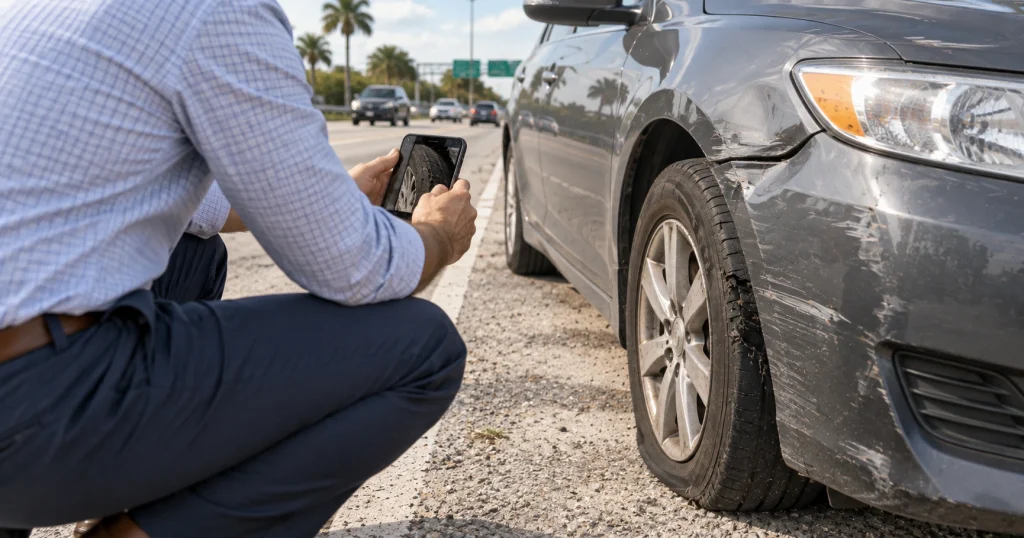
Preserve the failed tire, wheel, valve stem, tread pieces, and vehicle before repairs or disposal. These items may reveal tire age, improper installation, underinflation damage, tread separation, or a manufacturing problem. Once a tire is discarded or altered, proving the cause of the failure can become much harder.
Do not assume the towing company, repair shop, salvage yard, or insurer will keep the tire. Ask that the tire and vehicle remain unchanged. Put the request in writing and speak with a lawyer as soon as you can.
Save or photograph the following:
- The failed tire from every side
- The complete DOT Tire Identification Number
- The wheel, valve stem, and pressure sensor
- Separated tread and debris from the road
- Damage to the vehicle and surrounding roadway
- The tire receipt, warranty, and installation invoice
- Alignment, rotation, pressure, and repair records
- The vehicle’s maintenance and purchase records
- Tow-yard and storage information
- Dashcam or nearby surveillance footage
- Names and contact details for witnesses
- Messages or statements from the seller or installer
Why the DOT number matters
The complete DOT Tire Identification Number can help identify the manufacturer, production location, tire specifications, and production date. The final four digits show the week and year of manufacture. For example, 2321 means the tire was made during the 23rd week of 2021.
Look on both sidewalls. NHTSA explains that the complete number may appear on only one side.
What a tire expert may examine
A qualified expert may inspect the tire for:
- Belt and tread separation
- Bead or sidewall damage
- Impact marks
- Improper puncture repairs
- Heat and underinflation damage
- Wear patterns
- Tire size and load rating
- Wheel and valve-stem condition
- Manufacturing markings
- Evidence that the tire continued rolling after losing pressure
This examination can help distinguish a product defect from road impact, poor maintenance, overloading, or an installation error.
⚠️ Warning: More Than One Deadline May Apply: Florida Statute § 95.11 generally provides four years for an injury claim founded on the design, manufacture, distribution, or sale of personal property. A negligence claim generally has a two-year deadline. Product liability claims can also face a separate statute of repose under § 95.031. Do not wait to have the specific claims and deadlines in your case reviewed. (Florida Statute § 95.11; Florida Statute § 95.031)
Protecting the physical evidence is only one part of the process. Our guide on what to do after a car accident explains other immediate steps that can protect your health and claim.
How Can You Check a Used Tire’s Age and Recall History?
You can check a tire’s age by finding its DOT Tire Identification Number on the sidewall. The final four digits identify the manufacturing week and year. Then use the tire’s brand, model, size, and identification information to search NHTSA’s recall database for known safety problems.
Follow these steps:
- Photograph every side of the tire.
- Find and record the complete DOT number.
- Record the brand, model, and tire size.
- Compare the size with the label inside the driver’s door or the owner’s manual.
- Search the NHTSA recall database.
- Save screenshots or copies of any recall results.
- Report a suspected safety defect to NHTSA.
A recall is strong evidence that a tire line had a known safety issue, but the absence of a recall does not automatically prove that a specific tire was safe. A defect can affect one tire, one production run, or a group of tires before a formal recall begins.
Pressure history also matters. NHTSA reports that only 19 percent of consumers properly inflate their tires. A tire-pressure monitoring system helps, but it usually warns only after a tire becomes significantly underinflated. It does not replace routine inspection with an accurate gauge.
Commercial vehicles can present separate risks because their tires carry heavier loads and operate under different rules. Read more about truck tire blowout accidents.
What Compensation May Be Available After a Defective Tire Accident?
Compensation may cover medical care, lost income, reduced earning ability, property damage, pain, emotional trauma, disability, and future care. The amount depends on the injuries, available insurance, evidence connecting the tire failure to the crash, and the share of fault assigned to each responsible party.
Recoverable damages may include:
- Ambulance and emergency-room bills
- Hospitalization and surgery
- Physical therapy and rehabilitation
- Medication and medical equipment
- Future treatment and personal care
- Lost wages
- Reduced earning capacity
- Vehicle and personal-property damage
- Physical pain
- Emotional distress
- Disability or disfigurement
- Loss of enjoyment of life
- Wrongful death damages when a family loses a loved one
The insurance company may argue that the driver failed to maintain the tire or reacted incorrectly after the blowout. It may also try to separate the tire failure from the injuries. Medical records, expert analysis, physical evidence, and a clear timeline can help answer those arguments.
Our car accident settlement guide explains factors that can affect a claim’s value. Serious injuries may also involve non-economic damages for pain, emotional harm, and changes to daily life.
How The Reyes Firm Handles Your Used Tire Accident Case
The Reyes Firm investigates more than the collision itself. We work to determine why the tire failed, who sold or installed it, what each company knew, and which insurance policies may apply. We move quickly because the tire, vehicle, video, and business records may disappear.
Our work may include:
- Securing the tire and vehicle before evidence is lost
- Sending preservation demands to businesses holding evidence
- Identifying the tire’s age, manufacturer, seller, and installer
- Checking recalls and safety complaints
- Obtaining purchase, inspection, repair, and maintenance records
- Reviewing dealership representations and vehicle history
- Consulting tire and crash-reconstruction experts when needed
- Identifying responsible companies and insurance policies
- Documenting medical needs, lost income, and future losses
- Preparing the case for trial from the beginning
- Handling communications with insurers and corporate defendants
We give serious injury cases the focus, speed, and preparation they require. You receive clear updates and direct answers while we handle the investigation and legal pressure.
The Reyes Firm
4730 N. Habana Ave., Suite 201
Tampa, FL 33614
833-4 BAD DAY
We serve Tampa and the South Shore communities, including Riverview, Brandon, Plant City, and communities across Hillsborough County.
Frequently Asked Questions About Used Tire Accidents in Tampa
Is it illegal to sell used tires in Florida?
Selling a used tire is not automatically unlawful. A seller may still be responsible for selling a dangerous tire, hiding damage, providing misleading information, or failing to identify a condition that a reasonable inspection should have revealed.
Can a tire shop be responsible for installing an unsafe tire?
Yes. A tire shop may be liable if its technician missed visible damage, installed an incompatible tire, used an unsafe repair, or failed to warn the customer about a known risk.
What should I do with the tire after a blowout?
Keep the tire, wheel, valve stem, tread pieces, and related debris. Do not allow a towing company, shop, salvage yard, or insurer to discard or alter them before an independent inspection.
How can I tell how old a used tire is?
Find the DOT Tire Identification Number on the sidewall. The final four digits show the manufacturing week and year, though the complete code may appear on only one side of the tire.
Can I bring a claim if the tire was already on a used car?
You may have a claim depending on the cause of the failure and what the dealership, prior owner, seller, or installer knew. Inspection records, advertisements, sales documents, and maintenance history can help identify responsibility.
Can I recover compensation if poor maintenance contributed to the crash?
Florida law may reduce compensation based on your share of fault. In covered negligence actions, a person found more than 50 percent responsible for their own harm may be unable to recover damages.
How long do I have to file a defective tire lawsuit in Florida?
The deadline depends on the claims. A product-related injury claim may have a four-year limit, while a negligence claim may have a two-year limit. A separate product statute of repose may also affect the case.
How much does a Tampa used tire accident lawyer cost?
The Reyes Firm offers free consultations and handles injury cases on a contingency fee basis. You pay no attorney’s fee unless we win your case.

Edward Reyes, Esq. is the founder of The Reyes Firm in Tampa, Florida. He is admitted to The Florida Bar and represents people and families harmed in serious personal injury cases. His practice includes complex motor vehicle crashes, defective vehicle components, commercial vehicle accidents, and catastrophic injuries.
How Can The Reyes Firm Help You?
If you’ve had a bad day, whether from a car accident, slip and fall, trucking crash, or any injury that wasn’t your fault, The Reyes Firm is in your corner. Our Tampa personal injury attorneys offer free consultations and work on a contingency fee basis, meaning you pay nothing unless we win your case.
You shouldn’t have to fight the insurance companies alone. Let us fight for you.
📍 Address: 4730 N. Habana Ave., Suite 201, Tampa, FL 33614
📞 Phone: 833-4 BAD DAY
Had a bad day? Call The Reyes Firm. We’ll handle the rest.
Legal Disclaimer: This article provides general information and does not constitute legal advice. Reading this article or contacting The Reyes Firm does not create an attorney-client relationship. Every case is different, and legal rights and deadlines depend on the specific facts. Speak with a qualified Florida attorney about your situation.