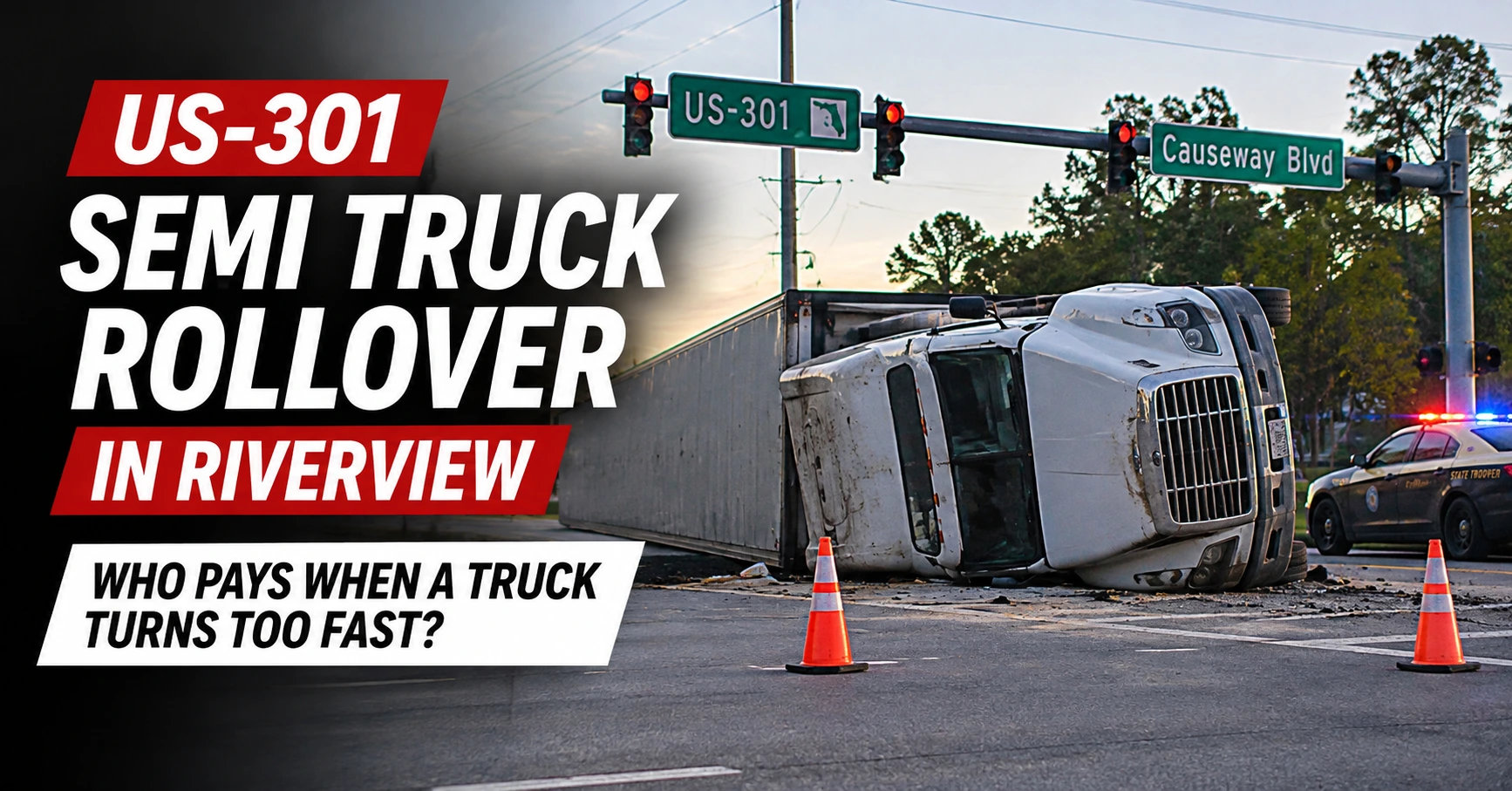
When an 80,000‑pound semi‑truck collides with a 4,000‑pound car, the physics aren’t fair. Semi‑truck accidents often lead to devastating injuries, lost income and shattered lives. To prevent these tragedies and hold the right parties accountable, it’s important to understand what causes them—and what you should do after one occurs.

Quick Summary
- Semi‑trucks weigh 20 to 30 times more than passenger cars, so collisions often cause catastrophic injuries.
- The leading causes of semi‑truck crashes include driver fatigue, distracted driving, speeding and aggressive maneuvers, improper loading, mechanical failures like brake issues, and unsafe road design or weather.
- Multiple parties may be liable—drivers, trucking companies, loaders, manufacturers, maintenance providers and government agencies.
- Strong evidence matters: police reports, photos, black‑box data, driver logs, maintenance records and expert analysis.
- Florida’s strict rules require you to seek medical care within 14 days, meet the serious injury threshold to sue for pain and suffering, and file your claim within two years; if you’re more than 50% at fault, you can’t recover.
- Key steps after a crash: call 911, move to safety, get medical care, document everything, collect witness information, avoid recorded statements, obtain the crash report, preserve evidence and contact an attorney.
- The Reyes Firm works on contingency—no fees unless we win.
Why Are Semi‑Trucks So Dangerous?
Because of their enormous size and weight, semi‑trucks handle very differently from passenger cars. They need much longer distances to stop, they have large blind spots, and they make wide turns that can squeeze smaller vehicles off the road. When a tractor‑trailer weighing 80,000 pounds hits a sedan weighing 4,000 pounds, the smaller vehicle and its occupants take the brunt of the impact.
Top Causes of Semi‑Truck Crashes
No single factor explains every semi‑truck crash. In most cases, multiple causes overlap. The following issues appear again and again in Florida crash investigations:
Driver Fatigue
Long shifts, overnight hauls and tight delivery windows mean truckers sometimes push past safe limits. Even though federal hours‑of‑service rules restrict drive time, violations are common. Fatigue slows reaction time, makes lane drift more likely and leaves drivers less able to respond to sudden hazards.
Distracted Driving
Cell phones, GPS screens, dispatch radios and snacks can all steal a driver’s attention. A semi‑truck barreling down I‑4 for just a few seconds without a focused driver can cause devastating harm. Phone records, dash‑cam footage and witness statements often reveal distraction.
Speeding & Aggressive Driving
Despite their weight, some rigs travel at speeds far above posted limits. Stopping distances lengthen dramatically as speed increases, and aggressive behaviors like tailgating, weaving and sudden lane changes create deadly situations—especially in construction zones. Engine control modules, often called “black boxes,” record speed data that can prove the driver was traveling too fast.
Improper Loading & Cargo Shifts
Heavy steel, concrete and equipment must be balanced and secured. When cargo is overloaded or stacked unevenly, weight can shift in transit, causing the trailer to jackknife or tip over. Cargo loading companies, contractors and third‑party logistics providers may all share responsibility for proper loading.
Mechanical Failures
Brakes, tires and steering components wear out quickly on commercial trucks that travel hundreds of miles each day. Brake failures, tire blowouts and steering malfunctions are among the most common mechanical causes of semi‑truck crashes. Florida’s hot weather accelerates wear, making regular inspections critical. When a maintenance provider or trucking company neglects repairs, they can be held liable.
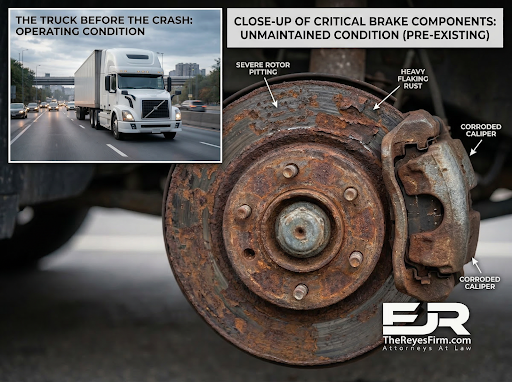
| Key Takeaway: Brake Failures Demand Action A single worn brake pad can mean the difference between a safe stop and a catastrophic collision. Always request maintenance records after a truck crash and send a spoliation letter immediately to preserve them. |
Unsafe Road Design & Weather
Narrow lanes, unclear signage, sharp curves and sudden traffic shifts are dangerous for big rigs. Construction zones create additional hazards, especially when lane markings are poor or equipment intrudes into travel lanes. Heavy rain and wind can compound these issues. In these cases, liability may extend to a government agency or contractor responsible for road design and maintenance.
Who Can Be Held Liable?
In a semi‑truck crash, responsibility can lie with more than one person or company. Parties that may share fault include:
- The driver, for violating traffic laws or hours‑of‑service rules
- The trucking company, for negligent hiring, training, supervision or scheduling
- Cargo loaders or logistics companies, for improper loading and securement
- Manufacturers and parts suppliers, for defective brakes, tires or other components
- Maintenance providers, for negligent inspection and repair
- State or local agencies, for unsafe road design or poor signage
How to Prove a Truck Crash Claim
Proving negligence in a semi‑truck crash requires detailed evidence and technical analysis. Key evidence includes:
- Accident scene documentation: Photographs, videos, skid marks, debris and road signs record what happened and preserve evidence before vehicles are moved.
- Black‑box and ELD data: Electronic logging devices and event data recorders track speed, braking, hours driven and other critical metrics.
- Driver logs and employment files: Logbooks, dispatch records and personnel files reveal hours‑of‑service violations or unsafe work demands.
- Maintenance and inspection records: Service logs show whether brakes, tires and steering components were inspected and repaired as required.
- Witness statements and expert analysis: Eyewitnesses, accident reconstruction experts and engineers help establish what caused the crash and who is responsible.
Florida Laws & Deadlines
Florida’s personal injury laws set strict requirements for truck accident claims. Missing a deadline or failing to meet a threshold can bar your recovery. Important rules include:
- PIP 14‑Day Rule: You must obtain medical treatment within 14 days to access personal injury protection benefits under Florida Statutes. (§627.736)
- Serious Injury Threshold: To recover non‑economic damages, your injuries must be permanent or significantly disfiguring as defined in Florida Statutes. (§627.736)
- Modified Comparative Fault: If you are more than 50% at fault, you cannot recover damages under Florida Statutes. (§768.81)
- Two‑Year Statute of Limitations: Most negligence lawsuits must be filed within two years according to Florida Statutes. (§95.11)
- Crash Report Privilege: Statements made for crash reports cannot be used as evidence in court under Florida Statutes. (§316.066)
- Commercial Vehicle Regulations: Florida Statutes (§316.302) adopts federal safety rules, including hours‑of‑service limits and inspection requirements.
| Information Point: Florida shortened the statute of limitations for most negligence cases to two years. If your claim isn’t filed on time, it will be dismissed, so speak with an attorney as soon as possible. |
Watch: Brake Failure & Maintenance Issues
This short video explains how poorly maintained brakes contribute to truck crashes and why maintenance records are key evidence.
What to Do After a Semi‑Truck Crash
- Dial 911 and get emergency medical help for anyone injured.
- If you can safely do so, move away from traffic and switch on hazard lights.
- Seek medical treatment immediately—even if you feel fine. Some injuries appear hours or days later.
- Document the scene: take photos of vehicles, road conditions and visible injuries.
- Collect contact and insurance information from the truck driver and any witnesses.
- Do not admit fault or give a recorded statement to an insurance adjuster without legal advice.
- Obtain a copy of the crash report from law enforcement.
- Start an evidence file with medical records, receipts, wage statements and communications from insurers.
- Send spoliation letters requesting preservation of driver logs, black‑box data and maintenance records.
- Contact an experienced truck accident attorney to protect your rights and build your claim.
How The Reyes Firm Can Help
Semi‑truck crashes often pit injured victims against deep‑pocketed trucking companies. The Reyes Firm investigates driver behavior, fleet maintenance, loading practices and road conditions to identify every liable party. We handle negotiations and litigation so you can focus on recovery. Call (833) 4 BAD DAY or contact us online for a free consultation.
Frequently Asked Questions
- Why are semi‑truck accidents usually so severe?
Because semi‑trucks can weigh dozens of times more than passenger cars, collisions generate extreme forces that crush smaller vehicles and cause serious injuries.
- What are the most common causes of truck crashes?
Driver fatigue, distraction, speeding, improper loading, mechanical failures and unsafe road design are leading contributors.
- How can I prove that a truck driver was fatigued?
An attorney can obtain driver logs, dispatch records and electronic logging device data to see if hours‑of‑service rules were violated.
- Is distracted driving as dangerous for truck drivers?
Yes—texting, watching videos or fiddling with a navigation system takes a trucker’s eyes off the road and can lead to catastrophic crashes.
- How do speeding and aggressive maneuvers cause accidents?
High speed increases stopping distance and impact force. Tailgating and unsafe lane changes create conditions where even a slight miscalculation can lead to a pile‑up.
- What happens if cargo shifts during transit?
If cargo is loaded improperly, it can tip or jackknife the trailer. In that case the loading company, contractor or shipper may share liability.
- Are brake failures really that common?
Brake components wear out quickly on commercial trucks. Poor maintenance can lead to overheating, failure and crashes. That’s why maintenance logs are critical evidence.
- Can poor road design make the government liable?
Yes—if inadequate signage, narrow lanes or unsafe work zones contribute to a crash, the responsible agency could share fault. Special notice requirements apply.
- What evidence should I gather at the scene?
Take photos of damage, skid marks, road conditions and nearby signs. Collect witness contact information and get immediate medical care.
- Why shouldn’t I talk to the trucking company’s insurance adjuster?
Adjusters work for the insurer and will try to minimize your claim. Speak with a lawyer before providing statements.
- How long do I have to file a lawsuit?
Under Florida’s current law, most negligence lawsuits must be filed within two years of the crash. Don’t delay.
- Do I qualify to sue for pain and suffering?
You must meet Florida’s serious injury threshold: permanent loss or impairment of a vital function, permanent injury, significant scarring or death.
- What is modified comparative fault?
If you’re more than 50% responsible for the crash, you cannot recover damages. If you’re 50% or less at fault, your award is reduced proportionally.
- How are trucking companies regulated?
Federal and state rules control driver hours, vehicle inspections and cargo weight. Florida adopts federal regulations under §316.302.
- Does The Reyes Firm charge up front?
No. The Reyes Firm works on a contingency fee basis, so you pay nothing unless we recover compensation on your behalf.