
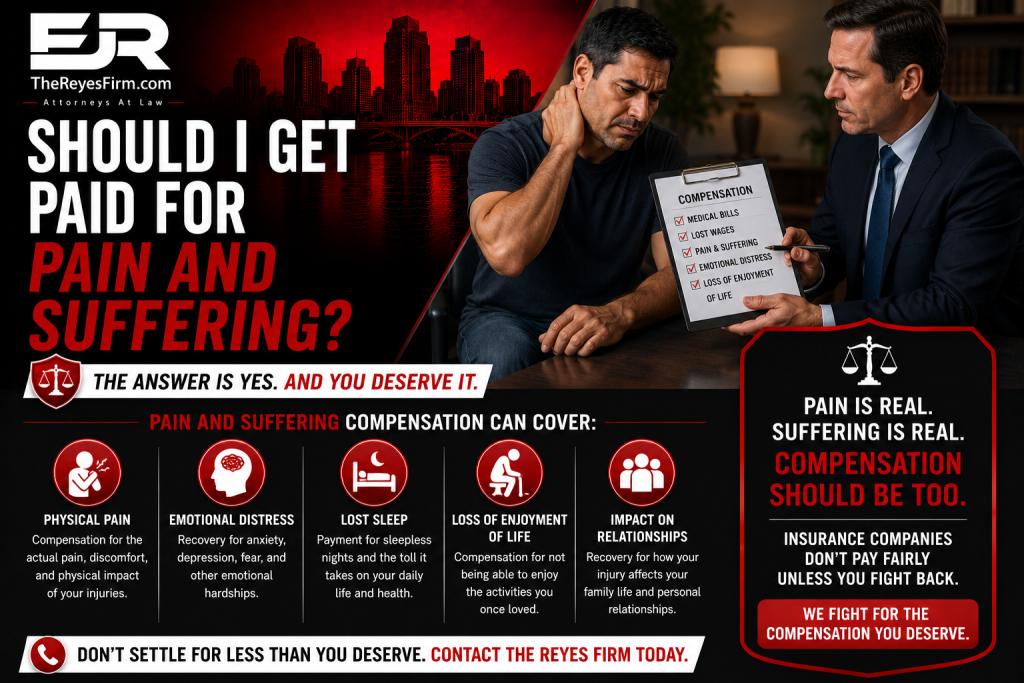
Should I Get Paid for Pain and Suffering? | Tampa, FL
You’re in real pain. The medical bills are only part of it — you can’t sleep, you can’t do the things you used to love, and a car accident you didn’t cause turned your daily life upside down. So can you actually be paid for that suffering, not just your bills? Here’s how pain and suffering compensation works in Florida. TL;DR — QUICK SUMMARY Yes, you can recover money for pain and suffering after a Florida crash that wasn’t your fault, but only if your injuries clear Florida’s serious-injury threshold. Pain and suffering is a type of non-economic damage. It covers physical pain, mental anguish, loss of enjoyment of life, and inconvenience, on top of your medical bills and lost wages. Florida’s no-fault system means your own PIP pays your first $10,000 in bills regardless of fault, but pain and suffering generally comes from the at-fault driver once you meet the injury threshold under Florida Statute § 627.737. There’s no fixed formula. The value depends on the severity and permanence of your injuries, your treatment, and how the crash has changed your life. You have two years from the date of your crash to file a personal injury lawsuit under Florida Statute § 95.11(3)(a). Uninsured/underinsured motorist coverage can also be a source of recovery if the at-fault driver has no insurance. The Reyes Firm Hurt and in Pain After a Tampa Crash? Find out what your pain and suffering claim may be worth. Had a bad day? Contact Us Now 2 Years Florida statute of limitations Fla. Stat. § 95.11(3)(a) $10,000 Florida PIP minimum coverage Fla. Stat. § 627.736 4 Ways To meet FL injury threshold Fla. Stat. § 627.737(2) 50% Fault bar to recovery in FL Fla. Stat. § 768.81 Can you get paid for pain and suffering after a Florida car accident? Yes, you can be compensated for pain and suffering, as long as the crash wasn’t your fault and your injuries are serious enough to clear Florida’s threshold. Whether it actually happens depends on the facts: how badly you were hurt, whether the at-fault driver had insurance, and whether they have assets to reach if they didn’t. If you’re in genuine pain, you should be able to recover for that pain, for the loss of enjoyment of life, for time you couldn’t work, and for the damage to your vehicle. That’s the principle. In practice, it doesn’t happen automatically, which is why how you handle your claim matters so much. One of the biggest obstacles is uninsured drivers. Florida has a high number of people driving without adequate coverage, which is exactly why carrying uninsured/underinsured motorist coverage on your own policy is one of the smartest protections you can have. ⚠️ Deadline Warning: Under Florida Statute § 95.11(3)(a), you have two years from the date of your crash to file a personal injury lawsuit. Wait too long and you can lose the right to recover anything for your pain and suffering, no matter how badly you were hurt. Don’t let the clock run out. What counts as pain and suffering in a Florida injury claim? Pain and suffering is a category of non-economic damages, meaning losses that don’t come with a receipt. Unlike a medical bill or a paycheck stub, these harms are real but harder to put a dollar figure on, which is exactly why insurers fight them. In a Florida injury claim, pain and suffering can include physical pain from your injuries, mental anguish and emotional distress, loss of enjoyment of life, inconvenience and disruption to your routine, and the lasting effect of scarring or disfigurement. A serious back or neck injury that limits you for years carries very different value than a sprain that heals in weeks. These damages sit on top of your economic damages, which cover medical bills, future treatment, lost wages, and lost earning capacity. Together they make up the full value of your claim. Watch: Should you get paid for pain and suffering in Tampa? In this short video, Tampa personal injury attorney Edward Reyes explains when you can recover for pain and suffering after a Florida crash and what factors affect it. If you’re hurting and unsure whether your injuries qualify, The Reyes Firm offers a free case review to walk you through where you stand. How does Florida’s injury threshold affect pain and suffering? Florida’s injury threshold is the gateway to recovering pain and suffering from an at-fault driver. Because Florida is a no-fault state, your own Personal Injury Protection (PIP) coverage pays your first medical bills regardless of who caused the crash, but PIP does not pay for pain and suffering. To step outside no-fault and pursue non-economic damages from the at-fault driver, your injury generally has to meet the serious-injury threshold in Florida Statute § 627.737. That statute recognizes injuries involving significant and permanent loss of an important bodily function, permanent injury within a reasonable degree of medical probability, significant and permanent scarring or disfigurement, or death. Whether your injury clears that threshold is often the central fight in a Florida case. Strong medical documentation and the right expert opinions are what move an injury from “soft tissue” in the insurer’s eyes to a permanent, compensable harm. 💡 Did You Know? Florida’s PIP system pays up to $10,000 in medical bills and lost wages no matter who caused the crash under Fla. Stat. § 627.736 — but PIP never pays for pain and suffering. Those damages only become available once your injury meets the threshold in Fla. Stat. § 627.737. How is pain and suffering calculated in Florida? There is no fixed formula for pain and suffering in Florida. Two cases with similar bills can settle for very different amounts depending on how the injuries affect each person’s life, which is why a number pulled from an online calculator means little. In practice, the value turns on factors like the severity and permanence of your injuries, the length and intensity of your treatment, whether you’ll