
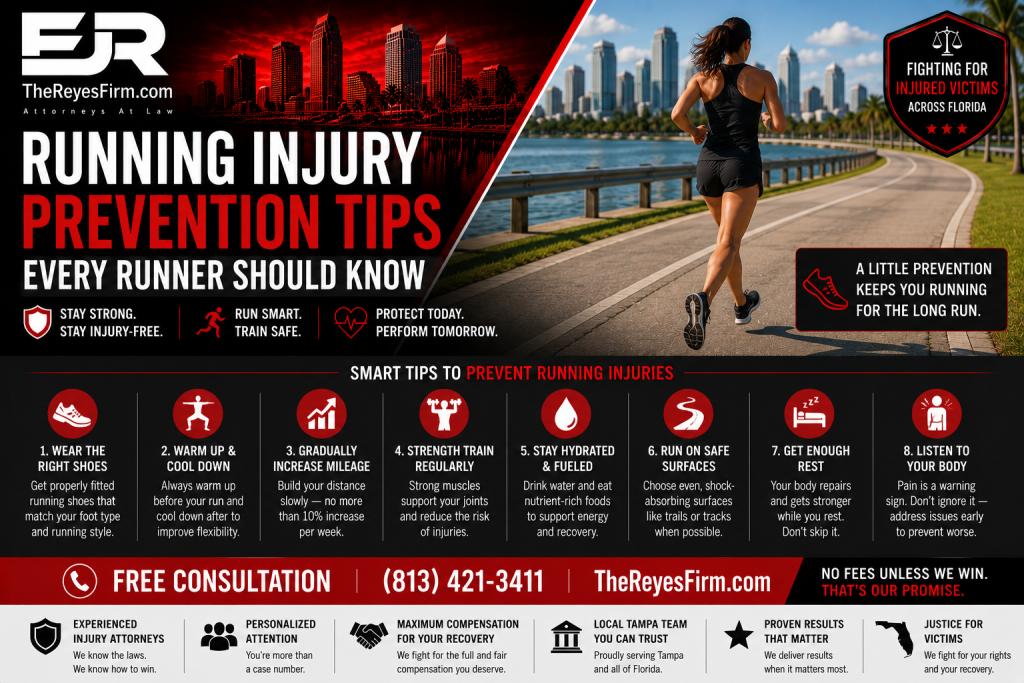
Running Injury Prevention Tips Every Runner Should Know
Few things derail a runner faster than an injury, and most of them build quietly from small mistakes in training. The good news is that the vast majority of running injuries are preventable with the right habits. And on the rare occasion your injury is caused by someone else, a careless driver, a hazardous path, or defective gear, you have options. Here is what every runner should know about both. The Reyes Firm Injured on a Run Because of Someone Else? A hazard, a driver, or defective gear? Know your rights. Had a bad day? Contact Us Now 2 Years Deadline to file an injury claim Fla. Stat. § 95.11(3)(a) 50% Fault share that bars recovery Fla. Stat. § 768.81 3 Years Notice deadline for government claims Fla. Stat. § 768.28 $200K Cap on a government injury claim Fla. Stat. § 768.28 Running rewards consistency, and nothing interrupts consistency like an injury. Most running injuries are preventable, so this guide starts with how to stay healthy on the road, then covers what to do in the less common situation where someone else’s negligence, not your training, is what put you on the sidelines. What are the most common running injuries? Most running injuries come from overuse, improper technique, or inadequate preparation rather than a single dramatic moment. The most common include: Runner’s knee. Pain around or behind the kneecap, often from muscle imbalance, tightness, or repetitive overuse. Shin splints. Sharp or throbbing pain along the inner shinbone, usually from ramping up activity too quickly. Plantar fasciitis. Heel pain that is worst in the morning, caused by inflammation of the tissue that supports the arch. Achilles tendinitis. Pain and stiffness in the Achilles tendon from overuse, poor footwear, or sudden increases in mileage. Ankle sprains, calf cramps, and hip injuries. Often triggered by twists, dehydration, electrolyte imbalances, or repetitive impact. The biggest risk factors are ramping up mileage too quickly, running in worn-out shoes, training on hard or uneven surfaces, and poor form or muscle imbalances. Recognizing these gives you the power to prevent most injuries before they start. For a deeper look at symptoms and treatment, WebMD’s running injury guide is a helpful resource. How can you prevent running injuries? Preventing injuries comes down to preparation, technique, and recovery working together. Build these habits into your routine: Warm up and cool down. Start with dynamic stretches like leg swings and high knees to boost blood flow, and finish with static stretches for your hamstrings, calves, and hip flexors. Run with proper form. Stand tall with a slight forward lean, take shorter and quicker strides to avoid overstriding, and aim for a midfoot strike to reduce joint impact. Strength train. Squats, lunges, planks, hip thrusts, and calf raises build the muscles that stabilize your joints and reduce strain. Cross-train. Low-impact activities like swimming, cycling, and yoga build fitness while giving your body a break from repetitive impact. Progress gradually. Follow the 10% rule and increase your weekly mileage by no more than 10% so your body has time to adapt. Rest and recovery are just as important as the miles you log. Prioritize quality sleep, stay hydrated, eat a balanced diet, and use active recovery like foam rolling and gentle stretching to help your body repair. Recovery is not time off from training, it is part of it. How do you choose the right shoes and know when to rest? The right shoes are one of your best defenses against injury. Choose footwear that matches your foot type and running style, prioritize cushioning, stability, and flexibility, and replace your shoes every 300 to 500 miles, since worn-out shoes lose support and invite injury. If you plan to explore new running routes, factor the terrain into the shoes you choose. Just as important is listening to your body. Persistent or sharp pain, swelling, and stiffness are red flags that should not be ignored, and powering through them is how a minor issue becomes a serious one. When warning signs appear, rest and adjust your plan, and if pain or discomfort persists, see a healthcare professional or physical therapist who can diagnose the problem and build a treatment plan for you. When can a running injury lead to a legal claim in Florida? Most running injuries are simply part of the sport, but some are caused by circumstances that make another party legally responsible. When that happens, you may have grounds to pursue compensation for your medical bills, lost wages, and pain and suffering. The three most common situations are a hazardous condition on a path or property, defective running gear, and a crash caused by a negligent driver. Knowing the difference between an ordinary training injury and one caused by negligence is the first step. The sections below explain each scenario and the Florida rules that apply. ⚠️ Deadline Warning: Under Florida Statute § 95.11(3)(a), you generally have two years from the date of your injury to file a personal injury lawsuit. If a government entity is responsible for a hazardous public path, an even earlier written notice is required, so do not wait to speak with a lawyer. What if a hazard on a public path or trail injures you? If a dangerous condition on a path causes your injury, the party responsible for maintaining that path may be liable. Hazards like potholes, uneven pavement, poor lighting, or broken equipment can support a premises liability claim when the owner failed to keep the area reasonably safe. On private property, that means the property owner. On a public trail or sidewalk, it often means a city or county. Claims against a government entity follow special rules under Florida Statute § 768.28. You must provide written notice of the claim within a strict deadline, and Florida law caps what you can recover from a government entity. These requirements are easy to miss and can bar an otherwise valid claim, which is why early legal advice matters so much for path and trail