Few things derail a runner faster than an injury, and most of them build quietly from small mistakes in training. The good news is that the vast majority of running injuries are preventable with the right habits. And on the rare occasion your injury is caused by someone else, a careless driver, a hazardous path, or defective gear, you have options. Here is what every runner should know about both.
The Reyes Firm
Injured on a Run Because of Someone Else?
A hazard, a driver, or defective gear? Know your rights. Had a bad day?
Running rewards consistency, and nothing interrupts consistency like an injury. Most running injuries are preventable, so this guide starts with how to stay healthy on the road, then covers what to do in the less common situation where someone else’s negligence, not your training, is what put you on the sidelines.
What are the most common running injuries?
Most running injuries come from overuse, improper technique, or inadequate preparation rather than a single dramatic moment. The most common include:
- Runner’s knee. Pain around or behind the kneecap, often from muscle imbalance, tightness, or repetitive overuse.
- Shin splints. Sharp or throbbing pain along the inner shinbone, usually from ramping up activity too quickly.
- Plantar fasciitis. Heel pain that is worst in the morning, caused by inflammation of the tissue that supports the arch.
- Achilles tendinitis. Pain and stiffness in the Achilles tendon from overuse, poor footwear, or sudden increases in mileage.
- Ankle sprains, calf cramps, and hip injuries. Often triggered by twists, dehydration, electrolyte imbalances, or repetitive impact.
The biggest risk factors are ramping up mileage too quickly, running in worn-out shoes, training on hard or uneven surfaces, and poor form or muscle imbalances. Recognizing these gives you the power to prevent most injuries before they start. For a deeper look at symptoms and treatment, WebMD’s running injury guide is a helpful resource.
How can you prevent running injuries?
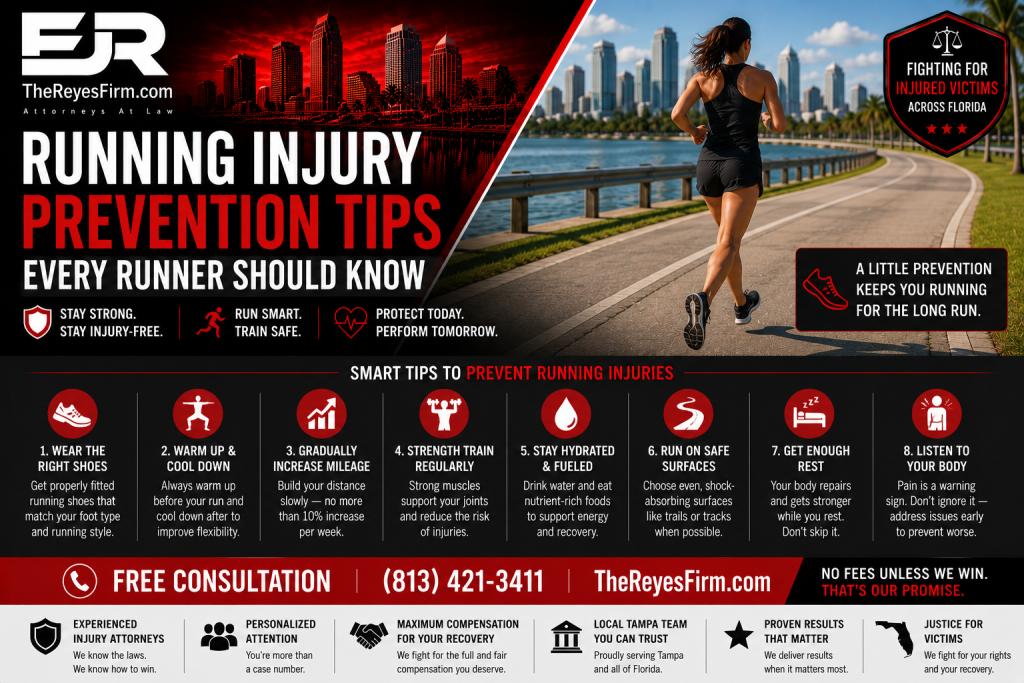
Preventing injuries comes down to preparation, technique, and recovery working together. Build these habits into your routine:
- Warm up and cool down. Start with dynamic stretches like leg swings and high knees to boost blood flow, and finish with static stretches for your hamstrings, calves, and hip flexors.
- Run with proper form. Stand tall with a slight forward lean, take shorter and quicker strides to avoid overstriding, and aim for a midfoot strike to reduce joint impact.
- Strength train. Squats, lunges, planks, hip thrusts, and calf raises build the muscles that stabilize your joints and reduce strain.
- Cross-train. Low-impact activities like swimming, cycling, and yoga build fitness while giving your body a break from repetitive impact.
- Progress gradually. Follow the 10% rule and increase your weekly mileage by no more than 10% so your body has time to adapt.
Rest and recovery are just as important as the miles you log. Prioritize quality sleep, stay hydrated, eat a balanced diet, and use active recovery like foam rolling and gentle stretching to help your body repair. Recovery is not time off from training, it is part of it.
How do you choose the right shoes and know when to rest?
The right shoes are one of your best defenses against injury. Choose footwear that matches your foot type and running style, prioritize cushioning, stability, and flexibility, and replace your shoes every 300 to 500 miles, since worn-out shoes lose support and invite injury. If you plan to explore new running routes, factor the terrain into the shoes you choose.
Just as important is listening to your body. Persistent or sharp pain, swelling, and stiffness are red flags that should not be ignored, and powering through them is how a minor issue becomes a serious one. When warning signs appear, rest and adjust your plan, and if pain or discomfort persists, see a healthcare professional or physical therapist who can diagnose the problem and build a treatment plan for you.
When can a running injury lead to a legal claim in Florida?
Most running injuries are simply part of the sport, but some are caused by circumstances that make another party legally responsible. When that happens, you may have grounds to pursue compensation for your medical bills, lost wages, and pain and suffering. The three most common situations are a hazardous condition on a path or property, defective running gear, and a crash caused by a negligent driver.
Knowing the difference between an ordinary training injury and one caused by negligence is the first step. The sections below explain each scenario and the Florida rules that apply.
⚠️ Deadline Warning: Under Florida Statute § 95.11(3)(a), you generally have two years from the date of your injury to file a personal injury lawsuit. If a government entity is responsible for a hazardous public path, an even earlier written notice is required, so do not wait to speak with a lawyer.
What if a hazard on a public path or trail injures you?

If a dangerous condition on a path causes your injury, the party responsible for maintaining that path may be liable. Hazards like potholes, uneven pavement, poor lighting, or broken equipment can support a premises liability claim when the owner failed to keep the area reasonably safe. On private property, that means the property owner. On a public trail or sidewalk, it often means a city or county.
Claims against a government entity follow special rules under Florida Statute § 768.28. You must provide written notice of the claim within a strict deadline, and Florida law caps what you can recover from a government entity. These requirements are easy to miss and can bar an otherwise valid claim, which is why early legal advice matters so much for path and trail injuries.
💡 Did You Know? Injuries on a government-owned path come with special rules. Before you can sue a city or county in Florida, you must file a written notice of your claim within a set deadline as a condition of the lawsuit, and Florida law caps recovery from a government entity at $200,000 per person. Miss the notice step, and even a strong claim can be lost. Source: Fla. Stat. § 768.28.
What if a car hits you, or defective gear injures you?
If a negligent driver strikes you while you are running, you have the right to pursue compensation from that driver. Runners are entitled to use roads and crosswalks safely, and a driver who is speeding, distracted, or fails to yield can be held responsible. Because these collisions often cause severe harm, including a traumatic brain injury, the stakes are high.
A different but equally valid claim can arise from defective running gear. If poorly designed or defective equipment, such as shoes that fail or faulty gear, causes your injury, you may have a product liability claim against the manufacturer or retailer, even though you never dealt with them directly. In both situations, an experienced attorney can identify who is responsible and pursue the compensation you are owed.
🛡️ Your Rights Under Florida Law: Under Florida Statute § 768.81, your compensation is reduced by your share of fault, and you may be barred from recovery if you are found greater than 50% responsible. Insurers often try to blame an injured runner, and an experienced Tampa injury lawyer works to protect the facts and keep your assigned fault as low as the evidence allows.
What are the 5 steps to take if you’re injured while running in Tampa?
If someone else’s negligence caused your running injury, these steps protect both your health and your legal case. The order matters.
- Seek medical attention right away. Put your health first, and get prompt care that also creates a medical record connecting your injury to what happened.
- Document the scene. Photograph the hazard, vehicle, or defective gear that caused your injury, along with the location and conditions.
- Gather witness information. If anyone saw what happened, collect their names and contact details, since their accounts can strengthen your case.
- Preserve the evidence. Keep any defective gear, save your medical and incident records, and note who owns or maintains the property where you were hurt.
- Contact The Reyes Firm. The sooner you have representation, the more an attorney can do to protect your rights and meet critical deadlines. Call 833-4 BAD DAY for a free consultation.
The Reyes Firm
4730 N. Habana Ave., Suite 201, Tampa, FL 33614
Phone: 833-4 BAD DAY | thereyesfirm.com
How The Reyes Firm handles your running injury case
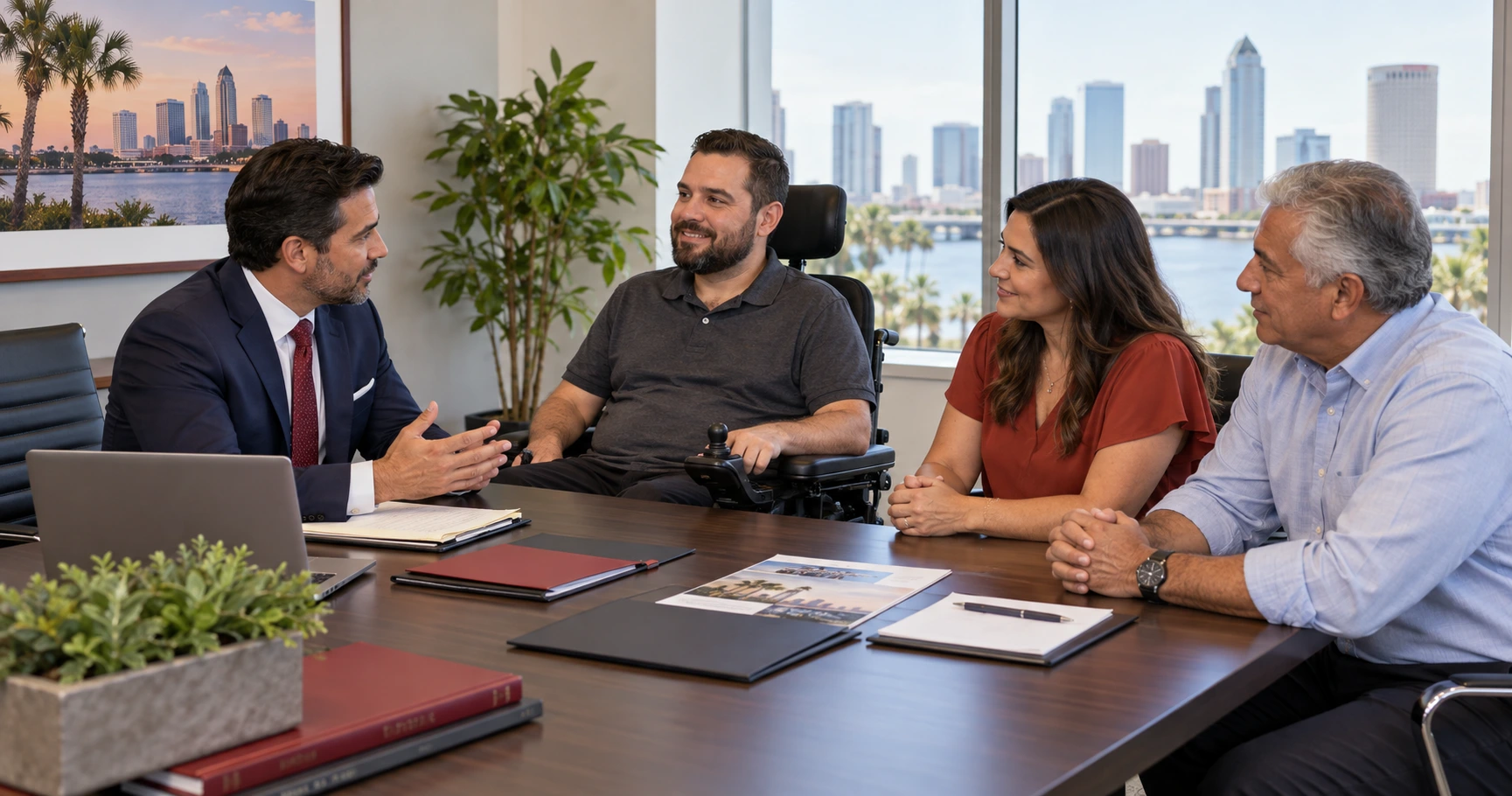
When a run ends in an injury that was not your fault, the last thing you should have to fight is an insurance company or a government agency. We handle that for you, throughout Tampa and Hillsborough County, whether you were hurt by a hazardous path, a defective product, or a careless driver.
When we take on a running injury case, we typically:
- Evaluate the circumstances of your injury and explain your options clearly, so you know whether you have a claim and what it may be worth
- Investigate and gather evidence, collaborating with experts to collect medical records, incident reports, witness statements, and the defective product itself when relevant
- Identify every responsible party and insurance policy, from a property owner or government entity to a product manufacturer or an at-fault driver
- Handle the special rules that apply to claims against government entities, including strict notice deadlines that can otherwise bar a valid claim
- Negotiate with the insurance companies to pursue a fair settlement, countering attempts to blame you or undervalue your claim
- Represent you in court if a fair settlement cannot be reached, fighting for the compensation you deserve
No lawyer can promise an outcome. What we can promise is that we treat your case seriously, explain every step in plain language, and let you focus on recovery while we manage the legal details.
Frequently asked questions about running injuries
How can I prevent running injuries?
To avoid running injuries, incorporate a proper warm-up and cool-down, maintain good running form, increase your mileage gradually, cross-train, and listen to your body. Rest and recovery are essential, so give yourself time off when you feel pain or fatigue.
What is the most common running injury?
One of the most common is runner’s knee, marked by pain around or behind the kneecap. It is often caused by overuse, muscle imbalance, or improper footwear, and it usually responds well to rest, strengthening, and better shoes.
How do I start running again after an injury?
Consult a healthcare professional to build a gradual return-to-running plan. Begin with low-impact activities like walking or swimming, then slowly increase your running distance and intensity so you do not re-injure yourself.
Can I sue if I am injured on a poorly maintained public path?
Possibly. If a dangerous condition on a path caused your injury, you may have a premises liability claim against the property owner, or a claim against the government entity that controls it. Claims against a city or county require a written notice under Fla. Stat. § 768.28, so prompt legal advice is important.
What if a car hits me while running?
As a pedestrian, you have the right to pursue compensation from a negligent driver who causes a crash. Get medical care, document the scene and any witnesses, and avoid giving a recorded statement to the driver’s insurer before speaking with a lawyer.
Can I file a claim for an injury caused by defective running gear?
Yes, potentially. If poorly designed or defective gear causes your injury, you may have a product liability claim against the manufacturer or retailer. Keep the defective item and your medical records, since they are important evidence in these cases.
How long do I have to file an injury claim in Florida?
Under Fla. Stat. § 95.11(3)(a), you generally have two years from the date of your injury to file a personal injury lawsuit. Claims involving a government entity can carry earlier notice deadlines, which is one more reason to act quickly.
What are five precautions to stay safe while running?
Run in well-lit areas, especially at night, wear reflective clothing to stay visible, stay hydrated before, during, and after your run, choose safe routes away from heavy traffic and hazards, and listen to your body and rest when you need to.

Edward Reyes, Esq. is a Florida Bar-admitted personal injury attorney and the founder of The Reyes Firm in Tampa, Florida. He represents people injured by the negligence of others in cases involving pedestrian accidents, unsafe property conditions, defective products, and vehicle crashes throughout Tampa and the surrounding counties. Edward Reyes, Esq. handles personal injury claims on a contingency fee basis, meaning clients pay nothing unless the firm recovers compensation for them.
Read more about Edward Reyes.
How Can The Reyes Firm Help You?
If you’ve had a bad day, whether a car accident, a slip and fall, a trucking crash, or any injury that wasn’t your fault, The Reyes Firm is in your corner. Our Tampa personal injury attorneys offer free consultations and work on a contingency fee basis, which means you pay us nothing unless we win your case.
You shouldn’t have to fight the insurance companies alone. Let us fight for you.
📍 Address: 4730 N. Habana Ave., Suite 201, Tampa, FL 33614
📞 Phone: 833-4 BAD DAY
🌐 Website: Schedule your free consultation today at thereyesfirm.com
Had a bad day? Call The Reyes Firm. We’ll handle the rest.
The information in this blog post is for general informational purposes only and does not constitute legal advice. Reading this article does not create an attorney-client relationship with The Reyes Firm. Every case is unique. If you have been injured in an accident that wasn’t your fault, consult a licensed Florida personal injury attorney about your specific situation.