
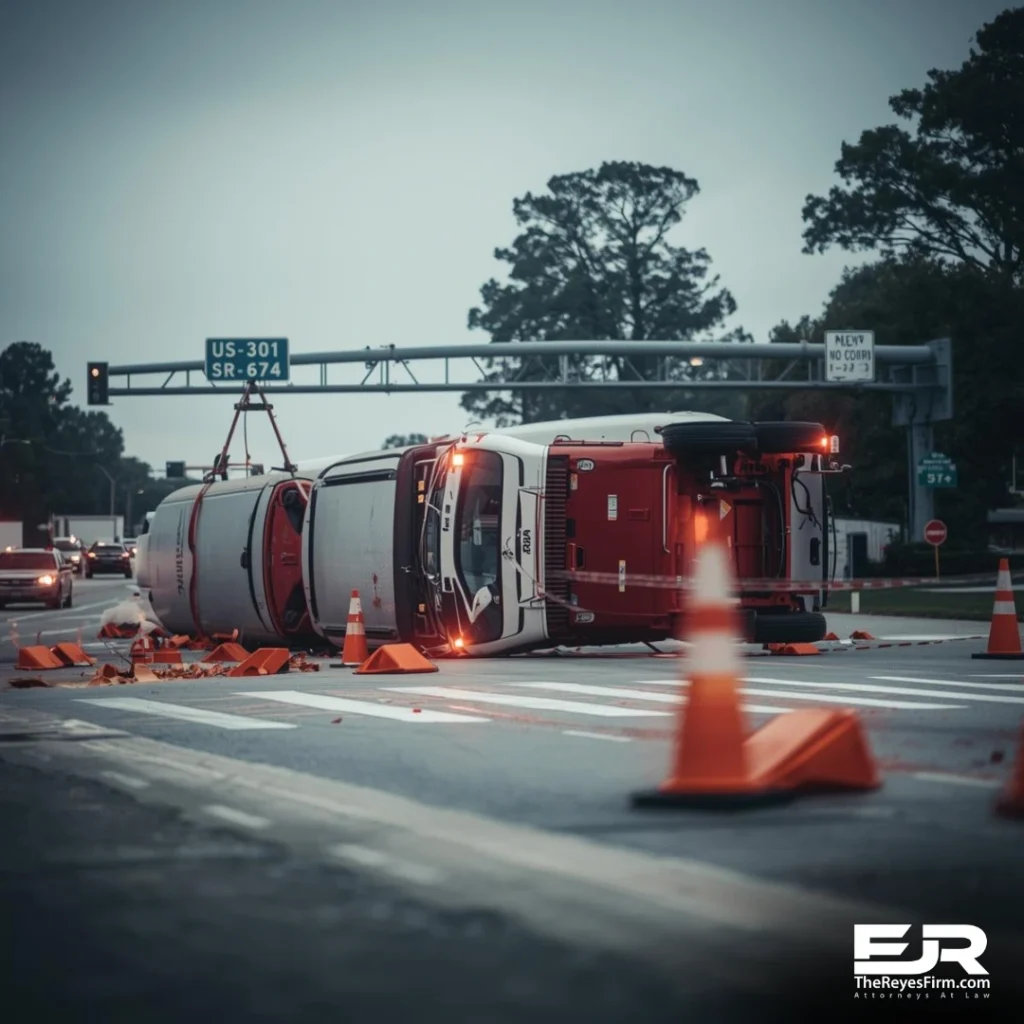
Overturned Semi Truck on US-301 and SR-674 in Wimauma: What to Do Next
A semi-truck rollover is the kind of crash that makes people’s stomachs drop. One moment, it is a normal drive through Hillsborough County, and the next, there are flashing lights, blocked lanes, and the feeling that something truly dangerous just happened. That is why the overturned semi-truck incident on US-301 SR-674 in Wimauma is more than a headline. For anyone who was hit, forced off the road, or injured in the traffic backup, the next few days matter a lot. The steps taken early can protect health, protect evidence, and protect the right to fair compensation. This guide explains what was reported about the crash and, in plain English, what injured people should do next to protect their Florida personal injury claim. Quick Answer: What should you do after the overturned semi-truck crash on US-301 and SR-674? If you were injured near the overturned semi-truck crash at US-301 and SR-674 in Wimauma, your first steps should be to get medical care, document what happened, report the crash, avoid giving detailed statements to insurance adjusters, and preserve evidence quickly. Truck accident claims can involve more than one responsible party, including the driver, trucking company, cargo loader, maintenance company, or another business connected to the truck. Because key evidence can disappear fast, it is important to speak with a Wimauma truck accident lawyer as soon as possible. News summary: What happened in the overturned semi-truck crash on US-301 and SR-674 in Wimauma? Local reporting states that a tractor-trailer overturned Thursday afternoon, December 26, 2024, around 2:40 p.m., at the intersection of U.S. 301 and State Road 674 in Wimauma. The report states the truck was traveling west when its load shifted during a left turn, causing the semi to overturn and come to rest on its passenger side. The crash reportedly blocked the northbound lanes of U.S. 301 for several hours, and the driver was reported as uninjured. Even if the truck driver is not injured, a rollover can still harm others. Drivers can be injured by flying debris, spilled cargo, sudden braking, or a secondary crash in the traffic line behind the scene. Who may have a claim after the Wimauma semi-truck rollover? A person may have a truck accident claim if the rollover caused or contributed to their injuries. This may include: A driver hit by the semi-truck, trailer, cargo, or debris A passenger was injured in a nearby vehicle A driver who crashed while trying to avoid the overturned truck Someone was injured in a rear-end or chain-reaction crash caused by the traffic backup A pedestrian, bicyclist, or worker near the crash scene You do not always have to be directly hit by the truck to have a possible claim. If the rollover created a dangerous situation that led to your injury, the facts should be reviewed carefully. Why a semi-truck can roll over at intersections like US-301 and SR-674 A tractor-trailer is taller, heavier, and harder to control than a standard car, especially during turns. A rollover often happens when the truck’s weight shifts outside the “balance zone” of the tires. This can happen quickly during a left turn, when forces push the trailer sideways. In this incident, the report mentions a load shift. That detail matters because cargo movement can destabilize the truck. Federal cargo regulations require cargo to be secured to prevent shifting that could affect the vehicle’s stability or maneuverability. Other common reasons semi-truck rollovers happen include: Turning too fast for the load. A speed that seems normal can still be unsafe if the trailer is top-heavy or unevenly loaded. Improper cargo loading or weight distribution. If the truck is heavier on one side, it is more likely to tip during a turn. Driver fatigue. Federal hours-of-service rules limit driving time to reduce fatigue-related crashes. Equipment issues. Tire failures, brake problems, and suspension issues can cause loss of control. Road and traffic conditions. Congestion and tight turning movements can lead drivers to make quick decisions. A truck rollover usually means something went wrong. A strong injury claim is built by figuring out what went wrong and proving it with evidence. Who may be responsible if shifting cargo caused the truck to overturn? When cargo shifts and causes a semi-truck to roll over, the truck driver is not always the only party responsible. A full investigation may look at: Whether the driver inspected the load before driving Whether the trucking company followed safety policies Whether a cargo loading company secured the load properly Whether the trailer was overloaded or unevenly loaded Whether maintenance problems made the truck harder to control Whether dispatch pressure or delivery deadlines contributed to unsafe driving This matters because truck accident cases often involve multiple insurance policies and multiple companies. Identifying every responsible party can make a major difference in the injured person’s recovery. Watch this YouTube video: Key dangers of driving beside semi-trucks After an overturned semi-truck on US-301 SR-674 in Wimauma, many drivers ask the same question: “How do I stay safer around big rigs?” In this YouTube video, The Reyes Firm explains common hazards drivers face when traveling beside semi-trucks and why spacing, visibility, and quick decisions matter around large commercial vehicles. Step 1: Get medical care right away, even if the injury seems minor After a semi-crash, many people feel “fine” at first. That does not mean they are fine. Adrenaline can mask pain, and some injuries may not present until later. For safety and for claim protection, an injured person should: Call 911 or accept help at the scene. Get checked by EMS. Get follow-up care quickly if symptoms appear later. Common delayed symptoms after a truck crash include headaches, dizziness, neck and back pain, tingling or numbness, and trouble concentrating. Seeking medical care early creates a clear medical record linking the injury to the crash, which matters when insurance companies begin to ask questions. Step 2: Make sure law enforcement documents the crash clearly A police report is not perfect, but it is important. It