
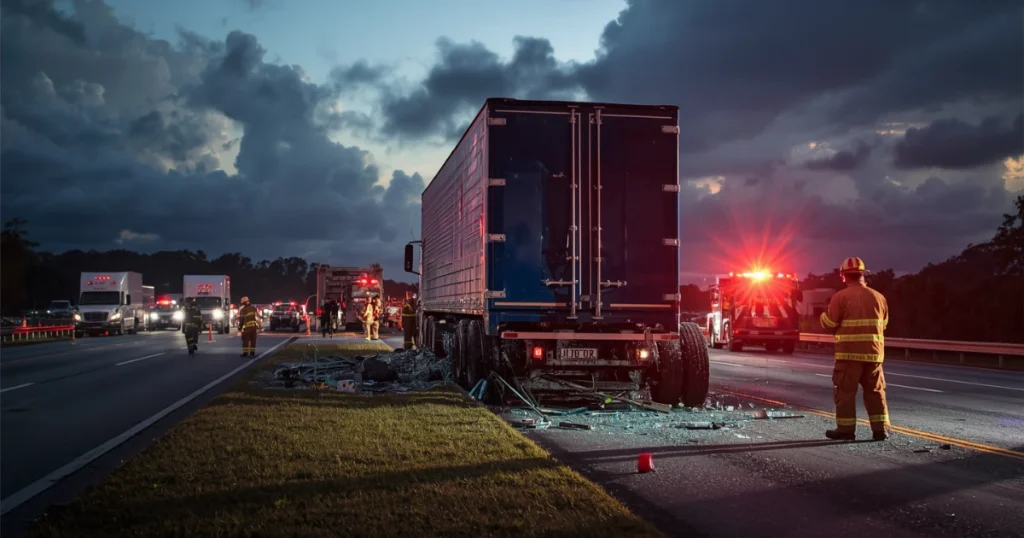
Commercial Vehicle Accidents in Tampa: Know Your Rights & Essential Steps
Commercial vehicle crashes are not like your typical fender bender. Semi‑trucks and cargo vans dwarf passenger cars, so even low‑speed collisions can cause catastrophic injuries. These claims are also governed by complex federal and state regulations and often involve multiple defendants—from the driver and the trucking company to a cargo shipper, broker or maintenance shop. Understanding your rights after a commercial vehicle accident can make the difference between a fair recovery and walking away with nothing. Know your rights after a commercial vehicle accident – you don’t have to face the process alone. Quick Summary Commercial vehicle accidents often involve multiple parties—including the driver, trucking company, shippers, brokers and maintenance providers—so identifying every liable defendant is key. Critical evidence includes driver logs, black‑box data, dispatch schedules, maintenance records, camera footage and medical evaluations. Seek medical care immediately, even if injuries seem minor—adrenaline can mask serious conditions. Be wary of early contact from insurers; recorded statements can be used against you. Why commercial vehicle claims are unique Commercial vehicles weigh far more than passenger cars and are subject to special regulations on driver training, hours of service and maintenance. Because of their size, they take longer to stop and have larger blind spots, making crashes particularly severe. Multiple parties may be responsible—from the driver and trucking company to a cargo shipper, broker, maintenance shop or manufacturer. Identifying every defendant is critical to obtaining full compensation. Large trucks require more space and have wide blind spots, leading to unique hazards on city streets. Your rights after a commercial vehicle accident After a crash with a commercial vehicle, you have certain rights: the right to seek immediate medical care, the right to compensation for your injuries and losses, and the right to consult an attorney before speaking with insurers. You are not required to give a recorded statement to an insurance adjuster, and you should never sign a quick settlement or medical authorization without legal advice. In serious cases, you may also pursue a claim against multiple defendants to recover all available damages. What evidence matters To prove a commercial vehicle claim, you need evidence that shows what happened and who was responsible. Important evidence includes: Driver logs and electronic logging devices that document hours of service and rest breaks Dispatch records that reveal delivery schedules and pressure to meet deadlines Maintenance and inspection records showing whether the vehicle was roadworthy Camera footage from traffic lights, dash cams, businesses or on‑board systems Medical evaluations and treatment notes documenting your injuries A preservation letter to secure black‑box data before it’s overwritten Beware of early insurance contact Insurance adjusters often call within days of a crash, hoping to get a recorded statement or offer a quick settlement. Florida’s modified comparative negligence law reduces your compensation if you share fault—and if you are found more than 50 percent at fault you may recover nothing. An attorney can speak to insurers on your behalf, preserve evidence and protect your claim. Rules and deadlines to know Florida imposes strict rules for commercial vehicle claims. Missing a deadline can weaken or destroy your case. Key rules include: PIP 14‑day requirement: You must seek initial medical treatment within 14 days to qualify for personal injury protection benefits. (statute) Serious injury threshold: You may recover for pain and suffering only if you have a permanent injury, significant scarring or disfigurement, or death. (statute) Two‑year statute of limitations: Most negligence claims must be filed within two years of the crash. (statute) Modified comparative fault: If you are more than 50% at fault, you cannot recover damages. (statute) Crash report privilege: Statements made to complete crash reports are privileged and cannot be used against you. (statute) Federal safety regulations: Commercial vehicles must comply with drug testing, hours of service and maintenance rules in 49 C.F.R. parts 382–386 and 390–397. (statute) Information point: Florida recently shortened the statute of limitations for most negligence actions from four years to two—contact a lawyer right away to protect your claim. Hidden injuries & medical care After a crash, adrenaline and shock can mask symptoms. Concussions, whiplash, internal bleeding and other injuries may not show up until days later. Always see a doctor immediately and follow up even if you feel fine. Prompt treatment not only protects your health but also documents your injuries for the claim. Essential steps after a commercial vehicle accident Call 911 and cooperate with law enforcement. Seek medical attention immediately and within 14 days to preserve PIP benefits. Photograph and video the scene, vehicle damage, road conditions and any visible injuries. Collect the truck driver’s name, employer, insurance information, license plate and USDOT number. Get contact information for witnesses. Request a copy of the police report when available. Save all medical records, bills and receipts. Send a spoliation letter to the trucking company to preserve black‑box data and other evidence. Avoid giving recorded statements or signing releases without legal advice. Consult an experienced truck accident attorney as soon as possible. Watch this quick video for step‑by‑step guidance on what to do after a commercial vehicle accident: Watch: Step-by-step guide on what to do after a commercial vehicle accident in Tampa, FL How The Reyes Firm can help you Our legal team understands the regulatory landscape and the tactics used by trucking and insurance companies. We will conduct a detailed investigation, send preservation letters to secure key evidence, identify every liable party and negotiate aggressively on your behalf. You pay no fees unless we win. Call us at (813) 303-1201 or visit our contact page for a free consultation. Frequently asked questions Should I call 911 after a commercial vehicle accident even if the damage seems minor? Yes. An official police report documents the accident and may reveal hidden damage or injuries. What information should I collect from the truck driver? Gather the driver’s name, contact details, employer, insurance information, license plate number and USDOT number. Should I give a recorded statement to the trucking company’s insurer? No. Adjusters often use recorded statements