
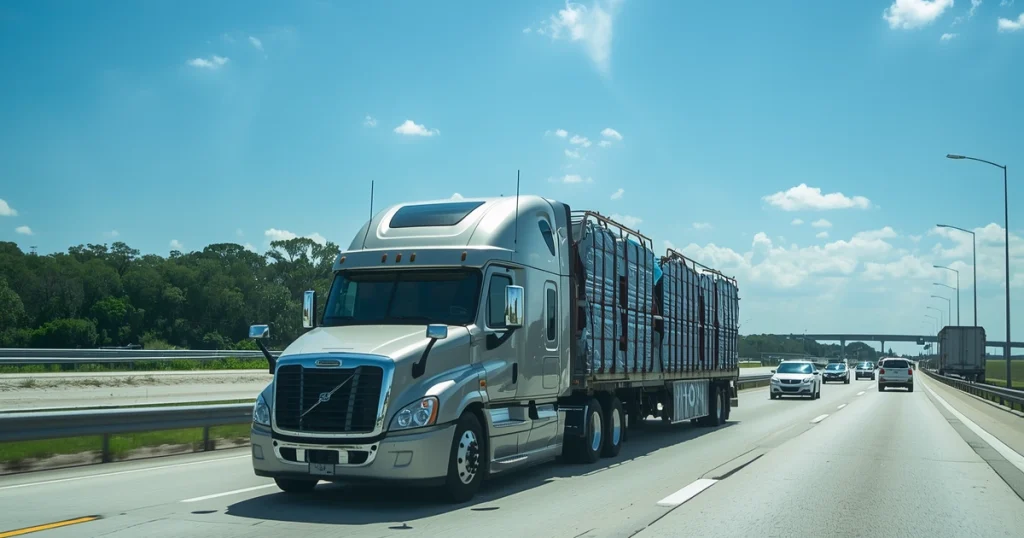
Overloaded Truck Crash Lawsuits in Tampa: Deadline, Proof, and Liability
Florida generally gives you two years from the crash date to file a negligence lawsuit after an overloaded truck accident. A lawyer can use weigh station records, cargo manifests, bills of lading, onboard data, and crash reconstruction to prove excess weight, link it to the collision, and identify every party that may be liable. You never saw it coming. One moment, you were driving home on I-275 or sitting at a light on a Hillsborough County road. Next, a massive overloaded truck lost control, couldn’t stop in time, or rolled over right into your lane. Now you’re in pain. The insurance company is calling. And nobody at the trucking company is telling you what was actually in that trailer or how much it weighed. Here is what you need to know. When a commercial truck in Tampa, Florida, carries more weight than the law allows, that violation is not just a fine. It is evidence. It can show who caused your crash, why the truck behaved the way it did, and who owes you compensation for what you’ve been through. This article explains how Florida’s truck weight laws connect directly to your injury claim, who can be held responsible, and what a lawyer can actually do to prove it. Quick Summary When a truck carries more weight than Florida law allows, the trucking company, the cargo loader, and others can all be held responsible for your injuries. Florida law gives you 2 years from the date of your crash to file a personal injury lawsuit under Florida Florida Statute § 95.11(5)(a). That clock starts the day of the crash. Hillsborough County records approximately 59 commercial truck crash injuries per 100,000 residents, the highest per-capita rate in Florida, according to FLHSMV data. Call a Tampa truck accident attorney as soon as possible. Weight violation evidence disappears fast, including weigh station records, cargo manifests, and onboard computer data. An overloaded truck claim usually involves preserving cargo and weight records, identifying every responsible party and insurance policy, documenting your losses, and filing a lawsuit if a fair settlement is not reached before the deadline. The Reyes Firm Injured in a Tampa Overloaded Truck Crash? Cargo records, weigh station logs, and onboard data may not last forever. Speak with The Reyes Firm today. Talk to The Reyes Firm What Does It Mean When a Truck Is “Overloaded” Under Florida Law? A truck is overloaded under Florida law when it carries more weight than Florida Statute § 316.535 allows: a maximum gross weight of 80,000 pounds and 20,000 pounds per single axle. That limit exists specifically to protect people on the road. When a truck blows past it, the laws of physics change in ways that can kill you. An overloaded truck does not just weigh more. It behaves differently in every situation a driver faces: It takes much longer to stop. A fully loaded 80,000-pound truck already needs up to 525 feet to stop at highway speed. Add 15,000 illegal pounds, and that distance grows even further. Its brakes overheat faster. Braking systems are rated for specific loads. Excess weight causes brake fade, sometimes within a single long downgrade on I-75 or I-4. Its tires blow out more easily. Each tire carries a rated load. Overloading pushes tires past that rating, and a blowout on a loaded semi at highway speed is catastrophic. It rolls over more readily. Extra weight raises the truck’s center of gravity. On curves, ramps, and emergency maneuvers, that means rollovers. Its cargo can shift. Weight not properly distributed across the axles shifts during braking and turning, throwing the truck sideways. ⚠️ Warning: Florida Statute § 95.11(5)(a) gives most injury victims 2 years from the date of their crash to file a personal injury lawsuit. This deadline applies to truck accidents, including crashes caused by overloaded or overweight commercial vehicles. Florida reduced this deadline from 4 years in March 2023. If your crash happened after March 24, 2023, the 2-year clock applies to you. Missing it means losing your right to compensation entirely. Call The Reyes Firm at 833-4 BAD DAY before that window closes. Source:Florida Statute § 95.11(5)(a). Who Is Liable When a Truck Is Carrying Too Much Weight and Causes a Crash? Multiple parties can be responsible when an overloaded truck causes a crash in Florida, not just the driver. This is one of the most important things to understand about commercial truck cases. The person behind the wheel is often the last person who made the decision that hurt you. Here is who an attorney investigates in an overloaded truck case: The trucking company. Carriers set the schedules, own or lease the trucks, and control dispatch. If the company pressured a driver into taking an overweight load to meet a deadline, it would be liable. Under federal law, commercial carriers must also maintain minimum insurance of $750,000 for general freight under 49 CFR Part 387. In practice, policies are often far higher. The cargo loader or shipper. The company that packed and loaded the trailer controls how the weight is distributed across axles. If they overloaded the trailer or improperly distributed weight, they can be held responsible even if they never drove the truck or directly caused the crash. The cargo broker. Brokers arrange shipments between shippers and carriers. When a broker pushes a carrier to move a load that exceeds legal limits or arranges a shipment with impossible delivery windows that incentivize overloading, they can share liability. The driver. Commercial drivers are required to inspect their own loads under FMCSA regulations. A driver who signs off on a weigh ticket or skips a weigh station bears personal responsibility as well. The Reyes Firm investigates all of these parties. We never assume it is just the driver. Can a Lawyer Prove the Truck’s Cargo Weight Violated Safety Laws? Yes. A truck accident attorney can prove a weight violation using multiple categories of evidence, many of which are in the trucking company’s own records. The challenge is getting