
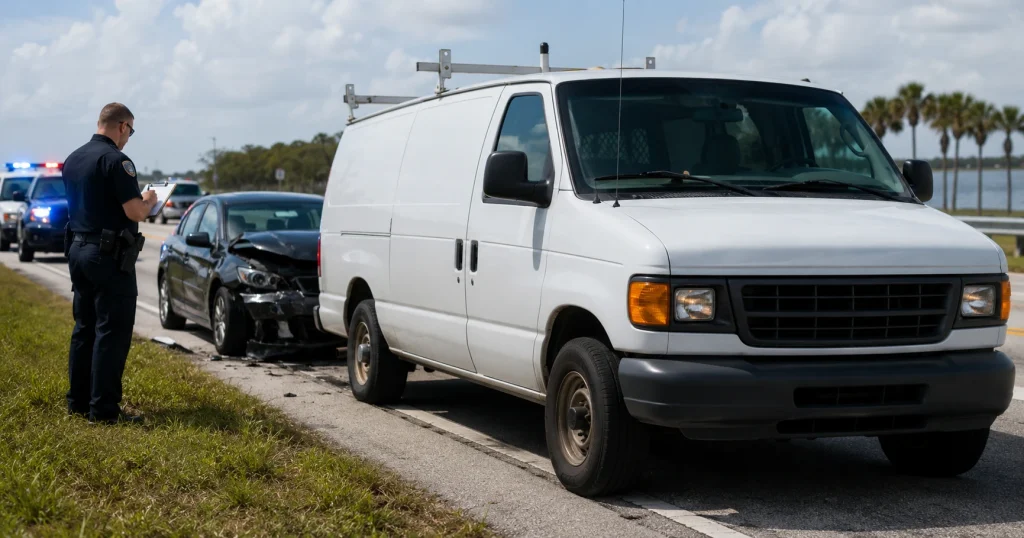
When the Company Vehicle That Hit You Has No Logo: How to Trace Employer Liability in Florida
What You Need to Know A company vehicle does not need a logo for a Florida employer to be looked into. Liability means legal responsibility, and it may depend on ownership, permission, business use, insurance, and driver status. The license plate, VIN, crash report, GPS data, work orders, and photos can help trace the employer. Florida deadlines and fault rules can affect your right to recover compensation. The Reyes Firm helps injured people in Tampa identify who may be responsible after serious vehicle crashes. Had a bad day? Call The Reyes Firm at 833-4 BAD DAY. Company vehicle no logo employer liability Florida means a business may still be legally responsible for a crash, even when the car, van, or truck has no visible branding. Liability means legal responsibility. The problem is proof. The company may deny the vehicle was used for work. The insurer may blame only the driver. At The Reyes Firm, we help injured people in Tampa look past the missing logo. We trace the vehicle, the driver, the employer, and the applicable insurance. Does a Company Vehicle Need a Logo for Employer Liability in Florida? No. A Florida company vehicle does not need a business logo to face liability after a crash. The key questions are who owned or controlled the vehicle, who allowed the driver to use it, and if the driver was serving a work purpose. A logo is not the proof that controls the claim. A logo can help identify a company. But no logo does not end the case. Florida claims often focus on: The vehicle owner. The driver’s employer. The driver’s job task. The driver’s permission to use the vehicle. The insurance policy covering the vehicle. The company’s control over the driver or route. Logo vs No Logo Liability Matrix Crash fact Does the logo decide liability? What matters more The company owns the vehicle No Title, registration, permission, and insurance The driver was making a delivery No Route, dispatch records, app data, and work orders The driver was going to a jobsite No Work schedule, job location, and employer instructions The driver was using a personal car for work No Reimbursement, job purpose, and employer control The company removed its logo No Ownership, use, permission, and evidence The vehicle had tools or cargo No Photos, witness statements, and business records That is why the next step is tracing who owned the vehicle and why it was on the road. How Do You Trace the Employer Behind an Unmarked Company Vehicle? You trace an unmarked company vehicle by connecting the plate, VIN, insurance card, crash report, driver identity, route, cargo, tools, uniform, dispatch records, GPS data, and job records. The sooner this proof is saved, the harder it is for a company or insurer to deny the work link. The license plate and VIN can help identify the vehicle owner. Start with what you can safely gather at the scene. Take photos of the vehicle from all sides. Take a photo of the license plate. Ask for the driver’s license and insurance information. Look for tools, equipment, cargo, labels, uniforms, badges, or delivery items. Get witness names and phone numbers. Save dashcam, doorbell, or business camera leads. Write down anything the driver said about work, a route, or a customer. FLHSMV is Florida’s official source for crash records. Crash reports may take up to 10 days to become available. FLHSMV says some crashes must be reported to law enforcement. This includes crashes with injury, death, hit-and-run, DUI, wrecker removal, a commercial motor vehicle, or apparent damage of at least $500. Evidence Map for an Unmarked Company Vehicle Accident Evidence Why it matters Who may have it License plate Helps trace registration and ownership Police, FLHSMV, insurer VIN Confirms the exact vehicle Vehicle, report, repair records Insurance card May reveal a commercial policy Driver, insurer Crash report Lists drivers, vehicles, witnesses, and insurers Law enforcement, FLHSMV GPS data Shows route, speed, stops, and timing Employer, fleet vendor Dispatch records Shows the driver was on a work task Employer, app, contractor Work orders Connects the trip to a job Employer, customer Tools or cargo Supports business use Photos, witnesses Uniform or badge Links driver to a company Photos, witnesses Texts or calls May show employer direction Driver, employer Once you know what to save, the next issue is how Florida law treats the claim. What Florida Laws Affect an Unmarked Company Vehicle Crash Claim? Florida law can affect your claim through filing deadlines, fault rules, PIP benefits, commercial vehicle definitions, and insurance rules. PIP means personal injury protection. It is the first layer of car insurance benefits in many Florida crashes. Florida deadlines and fault rules can change the value of your case. Florida Rules People Often Confuse Rule Plain-English meaning Why it matters Two-year deadline Negligence and wrongful death actions generally must be filed within two years Waiting can hurt your right to sue 14-day PIP rule Initial medical care is generally needed within 14 days for PIP medical benefits Delayed care can affect benefits Greater than 50% fault rule A party greater than 50% at fault generally cannot recover damages Insurance companies may try to shift blame Commercial vehicle definition Some vehicles are commercial based on use, weight, passengers, or hazardous material A plain vehicle may still be commercial Commercial insurance minimums Heavier commercial vehicles may need higher liability coverage More coverage may be available ⚠️ Warning Box: Florida Deadline: Florida Statute § 95.11 gives a two-year deadline for actions based on negligence and wrongful death. Do not wait for the company or insurance carrier to finish looking into the crash before you protect your claim. Florida’s PIP law provides up to $10,000 in medical and disability benefits. It also requires initial care within 14 days of the crash to qualify for medical benefits. Florida defines certain commercial motor vehicles by use, weight, passengers, or hazardous material. This can include vehicles used in commerce to move people or cargo.