
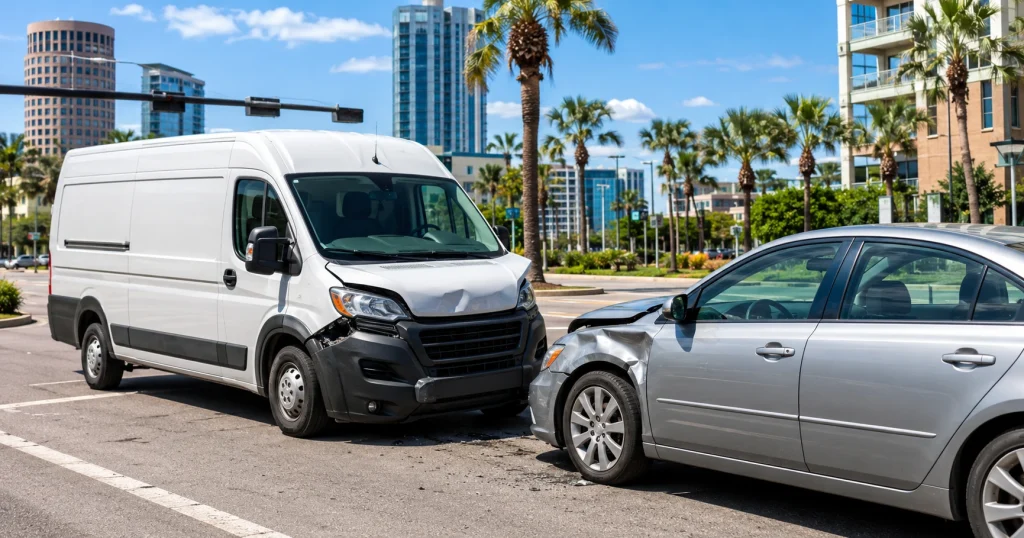
Amazon Delivery Accident Liability: Who Pays When a Driver Hits You?
What You Need to Know The Amazon name on a van or package does not always tell you who is legally responsible for the crash. A driver may work for an Amazon Delivery Service Partner, drive through Amazon Flex, or work for another company involved in the delivery. Different delivery arrangements can mean different insurance policies and responsible parties. Photos, delivery records, app data, GPS information, video, contracts, and insurance records can help show who should pay. The sooner the crash is investigated, the easier it may be to preserve evidence that can disappear or be overwritten. Had a bad day? Call The Reyes Firm at 833-4 BAD DAY. An Amazon delivery vehicle hit you. You are hurt, your car is damaged, and now you are trying to figure out who is supposed to pay. That question may be harder than it looks. The driver may not actually work for Amazon. The van may belong to another company. A personal insurance policy, commercial policy, delivery company, vehicle owner, or other business may be involved. An Amazon truck accident liability attorney can investigate those relationships and find out which companies and insurance policies may be responsible for your losses. If your crash happened in Tampa or elsewhere in Hillsborough County, the first step is not guessing who is liable. It is finding out exactly who the driver worked for, what type of delivery they were making, and which insurance covered the trip. Our guide from an Amazon delivery truck accident attorney explains why these cases can involve more moving parts than a typical car accident. Who Can Be Responsible After an Amazon Delivery Crash? More than one person or company may be responsible after an Amazon delivery crash. The driver may be at fault for careless driving, but the investigation may also lead to the driver’s employer, a delivery company, the vehicle owner, an insurer, or another business connected to the trip. The Amazon logo alone does not answer the question. After a crash, we may need to determine: Who was driving the vehicle Who hired or employed the driver Who owned or leased the vehicle Which Amazon delivery program was being used What the driver was doing at the time of the crash Which insurance policies were active If another company helped cause the collision For example, a driver who runs a red light may be personally responsible for causing the crash. If that driver was working for a delivery company at the time, the company and its insurance may also need to be investigated. If poor vehicle maintenance contributed to the crash, the vehicle owner or maintenance company could also become part of the case. The right answer comes from the evidence. What should you do at the scene? If you can do so safely: Take photos of the delivery vehicle and your vehicle Photograph company markings and the license plate Get the driver’s name and insurance information Ask who employs the driver Get witness names and contact information Save any dashcam or phone video Get the police report number You should also get medical care if you are hurt. Florida’s PIP law generally requires a person to receive initial medical services and care within 14 days of a motor vehicle crash to qualify for certain PIP medical benefits under Florida Statute § 627.736. ⚠️ Warning: Florida deadlines can affect your claim Florida Statute § 95.11(5)(a) generally gives you two years to file a negligence lawsuit. PIP also has a separate 14-day rule for certain medical benefits. Other deadlines can apply depending on the claim and the parties involved, so waiting can put important rights and evidence at risk. Watch: Who Pays After an Amazon Delivery Truck Accident? A delivery truck crash can involve more than the driver alone. In this short video, Edward Reyes explains why accidents involving Amazon and other delivery vehicles may involve commercial insurance, company responsibility, and additional questions about who should pay for your injuries and losses. Edward Reyes, Esq. explains why delivery truck accident claims can involve questions about the driver, the company, and available insurance coverage. Does It Matter If the Driver Works for a DSP or Amazon Flex? Yes. The driver’s delivery arrangement can change the entire insurance and liability investigation. A DSP driver usually works for a separate delivery company. An Amazon Flex driver normally uses a personal vehicle. Each setup creates different questions about employment, insurance, vehicle ownership, and company responsibility. Amazon Delivery Service Partner drivers Amazon’s Delivery Service Partner program uses independently operated delivery businesses. Those businesses generally hire and manage their own drivers. A DSP driver may be operating a branded delivery van, but that does not mean Amazon directly employs the driver. In a DSP crash, important questions may include: Which DSP employed the driver? Who owned or leased the van? Which commercial insurance covered the vehicle? Was the driver making deliveries at the time? Did the company properly train the driver? Were there safety problems before the crash? Was the vehicle properly maintained? Records from the DSP can become very important. Amazon Flex drivers Amazon Flex works differently. Flex drivers generally use their own vehicles to make deliveries. That can make the insurance investigation more complicated because a personal auto policy may be involved along with coverage connected to Amazon Flex. An Amazon Flex accident lawyer may look closely at: The driver’s delivery block App activity GPS information Package scans Route records Personal auto insurance Commercial coverage connected to the delivery The timing matters. A driver who was actively delivering packages may create different insurance questions than a driver who had already finished a delivery block. A simple comparison Delivery setup Vehicle Main question DSP driver Often a branded delivery van Which delivery company and commercial policy covered the trip? Amazon Flex Usually the driver’s personal vehicle What was the driver’s delivery status, and which insurance policies were active? Other contractor Varies Who hired the driver, owned the vehicle, and insured the work? That