After a crash with a company car, delivery van, work truck, or other business vehicle, most people are not thinking about legal terms. They are thinking about pain, medical bills, lost work time, damage to the car, and whether the vehicle’s manufacturer will take responsibility. In Florida, those worries are not theoretical. FLHSMV reports 381,210 codable traffic crashes and 3,184 traffic deaths in Florida in 2024, and its preliminary 2024 figures include 46,651 commercial motor vehicle crashes and 315 fatalities involving commercial motor vehicles.
That is one reason these cases feel different. A crash involving a business vehicle often means multiple insurance policies, more records, and more people trying to control the story early. It can also mean more serious injuries, especially when the vehicle is larger, heavier, or being operated under work pressure. At the national level, NHTSA reported 40,901 traffic deaths in 2023, even though the overall fatality rate declined from 2022.
This guide explains what a commercial vehicle accident lawyer in Florida does, what injured people should do right away, which Florida laws matter most, and why these cases are often more complicated than a regular car accident claim.
Quick Summary
- Florida’s preliminary 2024 crash data shows 46,651 commercial motor vehicle crashes and 315 fatalities involving commercial motor vehicles.
- Florida PIP rules generally require a person to receive initial medical services within 14 days of the crash to protect eligibility for medical benefits.
- In Florida, a person usually must show a qualifying serious injury to recover pain and suffering damages in a motor vehicle case.
- Florida now uses a modified comparative negligence rule. If the injured person is found more than 50% at fault, they generally cannot recover damages in a negligence action.
- A negligence case is generally subject to a two-year statute of limitations in Florida.
After a crash with a company vehicle in Florida, the smartest first steps are simple: call 911, get medical care fast, document everything, and do not let the insurance process get ahead of the facts.
What counts as a commercial vehicle in Florida?
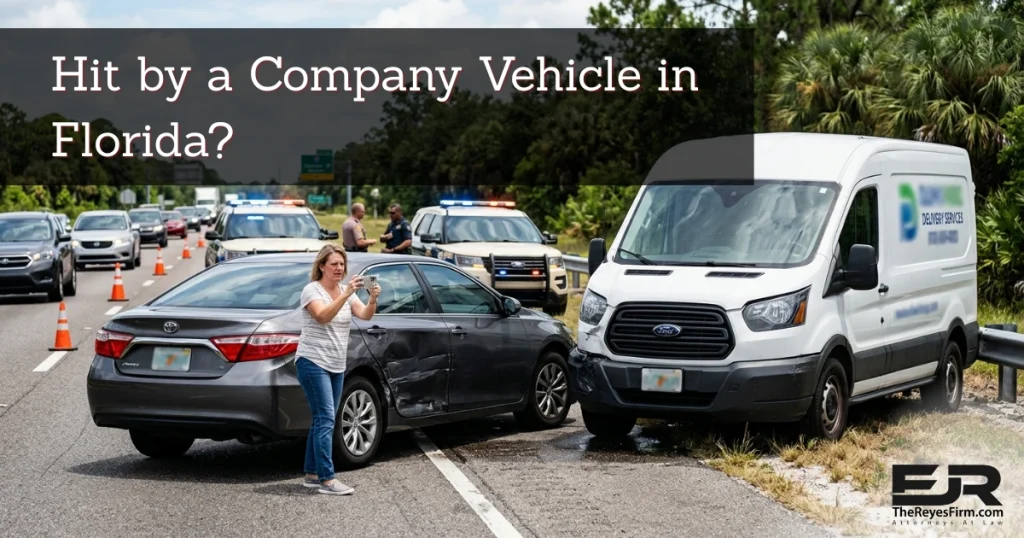
In everyday injury cases, a commercial vehicle is not just an 18-wheeler. It can include a company car, delivery van, contractor truck, utility vehicle, fleet pickup, service van, or any other vehicle used for work at the time of the crash. Florida crash reporting rules also separately recognize crashes involving commercial motor vehicles.
That matters because once a vehicle is tied to a business, the case can become larger than just the driver. There may be an employer, a commercial insurance carrier, maintenance records, dispatch records, and other evidence that do not exist in a normal two-car crash.
Why are commercial vehicle accident cases often more complicated?
They are more complicated because the crash is only part of the story. The real questions often include whether the driver was working, whether the company maintained the vehicle properly, whether there was schedule pressure, and whether important records were created before the crash and preserved after it. Florida law specifically subjects commercial motor vehicles in interstate commerce to applicable safety regulations.
These cases can also involve more serious damage. Larger vehicles require greater stopping distance, generate greater impact forces, and can cause catastrophic injuries even in crashes that appear moderate in a photo. That is part of why claims involving work trucks, fleet vehicles, and delivery vans often need more investigation than a typical rear-end collision. NHTSA also notes that speeding remained a factor in 29% of all traffic fatalities in 2023, and distracted driving killed 3,275 people in 2023, both of which are common issues in work-related driving cases.
What should someone do right after a commercial vehicle crash in Florida?
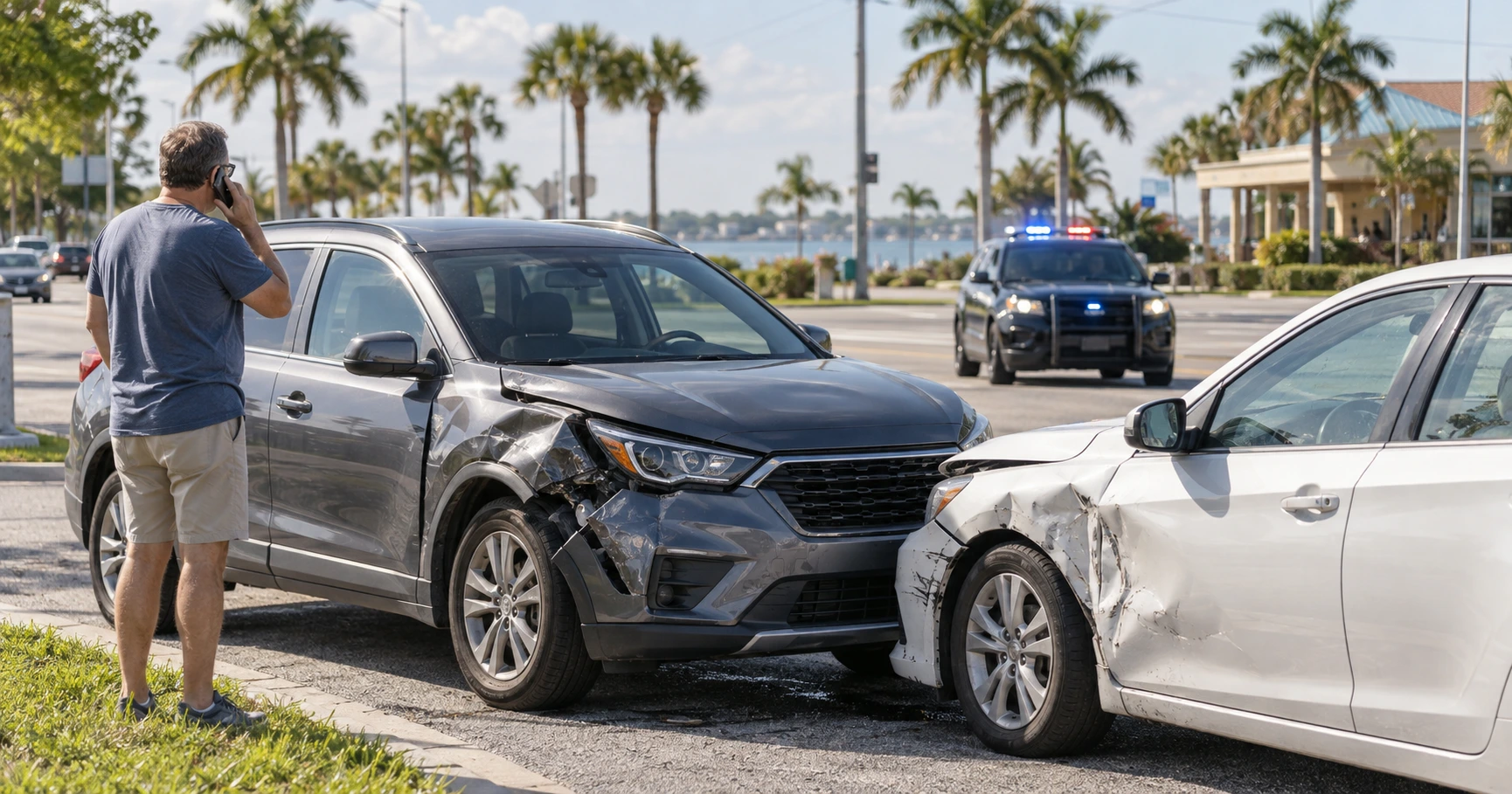
The first priority is safety. Call 911, move to a safer location if possible, and accept medical help if there is any sign of injury. Florida law requires a long-form crash report when law enforcement investigates certain crashes, including those involving injury, death, a vehicle requiring a wrecker, or a commercial motor vehicle.
After that, the next priority is documentation. If it is safe, take photos and video of:
- vehicle positions
- all visible damage
- skid marks
- debris
- road and weather conditions
- business logos and markings on the vehicle
- license plates
- nearby cameras
- visible injuries
Those details can become important very quickly if the company later disputes fault or tries to minimize what happened. FLHSMV is the official repository for Florida crash records, and crash reports often become a starting point, not the whole story.
What information should be exchanged at the scene?
The drivers involved should exchange basic identifying and vehicle information. Florida’s crash statutes require drivers in qualifying crashes to provide identifying information and cooperate with reporting duties.
For a company vehicle crash, the injured person should try to collect:
- the driver’s name and phone number
- employer or company name
- insurance information
- plate number
- vehicle or unit number
- DOT number if visible
- witness names and contact information
The key is to gather facts, not argue. It is wise to avoid statements like “I’m sorry” or “I didn’t see you,” because those words can later be twisted into an admission of fault.
When should someone get medical care after the crash?
As soon as possible. In Florida, the PIP statute generally requires the injured person to receive initial services and care within 14 days after the motor vehicle accident to access those medical benefits.
This is one of the most important rules in any Florida vehicle crash case. Even if another driver or company clearly caused the collision, waiting too long to get checked out can create an insurance problem and give the defense an argument that the injuries were not serious or were caused by something else.
Common injuries in commercial vehicle crashes include:
- whiplash
- neck and back injuries
- fractures
- head injuries
- concussions
- traumatic brain injuries
- herniated discs
- spinal injuries
- internal injuries
A person does not need to feel dramatic pain at the scene to be hurt. Adrenaline often masks symptoms in the first hours after a crash.
Who pays after a commercial vehicle accident in Florida?
The answer depends on the facts. In many cases in Florida, the first layer of payment is the injured person’s own PIP coverage if the statutory requirements are met. After that, there may be claims against the at-fault driver, the employer, the company’s commercial auto insurer, or other responsible parties.
This is where commercial cases begin to separate from ordinary car accidents. A company vehicle may be covered by a business auto policy, excess coverage, umbrella coverage, or layered insurance. A crash may also involve a dispute over whether the driver was acting within the scope of work at the time. Those issues can affect who pays and how hard the claim becomes to resolve.
Who can be legally responsible for a crash involving a company vehicle?
Sometimes it is only the driver. In many cases, it is more than that.
Possible liable parties may include:
- the company driver
- the employer
- the owner of the vehicle
- a maintenance or repair company
- a manufacturer of a defective part
- another driver who contributed to the crash
Employer liability matters most when the driver was performing job duties at the time of the wreck or when the company’s own conduct helped cause it. That might include poor maintenance, bad supervision, unsafe scheduling, or failure to address known safety problems. Florida’s commercial motor vehicle statute and related enforcement framework reflect that business-operated vehicles are subject to safety rules for a reason.
What evidence matters most in these cases?
The best evidence usually comes from the earliest hours and days after the crash. That includes scene photos, witness names, medical records, and the crash report. But commercial vehicle cases may also involve business records and safety records that do not exist in a normal car accident claim.
Important evidence may include:
- crash report
- body camera or dashcam footage
- surveillance video
- photos of the scene
- witness statements
- company vehicle inspection records
- repair and maintenance records
- driver qualification or work records
- dispatch or route records
- phone records were relevant
- onboard data where available
- medical records and imaging
The reason early action matters is simple. Evidence can disappear, get overwritten, or become harder to connect to the crash if nobody moves quickly to preserve it.
When can an injured person recover pain and suffering damages in Florida?
Not every Florida crash case automatically includes pain and suffering damages. Under Florida Statute § 627.737, a person generally must show a qualifying injury such as:
- significant and permanent loss of an important bodily function
- permanent injury within a reasonable degree of medical probability
- significant and permanent scarring or disfigurement
- death
This matters because many commercial vehicle crashes cause injuries that go beyond short-term soreness. A fracture, spinal injury, traumatic brain injury, or permanent impairment may place the case into a much more serious legal category.
How does Florida’s 51% fault rule affect the case?
Florida uses a modified comparative negligence system. Under Florida Statute § 768.81(6), a party found to be greater than 50% at fault for their own harm generally may not recover damages in a negligence action.
That means fault fights matter. Insurance companies may argue the injured person was speeding, distracted, following too closely, or should have avoided the crash. In a commercial vehicle case, strong evidence can make a major difference, as the other side may move quickly to frame the injured person as the primary cause.
How long does someone have to file a lawsuit?
In general, Florida Statute § 95.11 provides a two-year limitations period for an action founded on negligence.
Even though that sounds like a long time, it can disappear quickly in a serious injury case. Medical treatment takes time. Evidence needs to be gathered. Witnesses become harder to locate. Video can be lost. The practical deadline for building a strong case is often much sooner than the legal deadline for filing suit.
What mistakes can hurt a commercial vehicle accident claim?
The most common mistakes happen early, when the injured person is overwhelmed and trying to be helpful.
Common mistakes include:
- waiting too long to get medical care
- missing the 14-day PIP window
- failing to call the police
- not photographing the scene
- Giving a recorded statement too soon
- admitting fault
- posting about the crash on social media
- Taking a quick settlement before the injuries are understood
- assuming the company will handle things fairly without resistance
None of these mistakes automatically destroys a claim, but each one can make it easier for the other side to argue that the case is weaker than it really is.
Why does this topic matter so much in Florida?
Florida roads are busy, fast-moving, and full of commercial traffic. FLHSMV’s preliminary 2024 numbers show 46,651 commercial motor vehicle crashes in the state, with 315 fatalities tied to those crashes. That is a reminder that this is not a rare issue.
For people in Tampa, Riverview, Ruskin, Wimauma, Brandon, and nearby areas, these crashes often happen on the same roads people use every day for commuting, deliveries, and local business traffic. The legal rules are statewide, but the practical reality is local. The crash may happen close to home, close to work, and right in the middle of everyday life.
When should someone talk to a lawyer?
As soon as there is a serious injury, disputed fault, pressure from insurers, or any sign that the crash involves a company vehicle, business records may matter.
A lawyer can help when:
- Injuries may be permanent
- The employer denies responsibility
- The crash report seems incomplete or wrong
- More than one vehicle is involved
- There may be surveillance or onboard data
- The insurer wants a fast statement or release
- Lost wages are already adding up
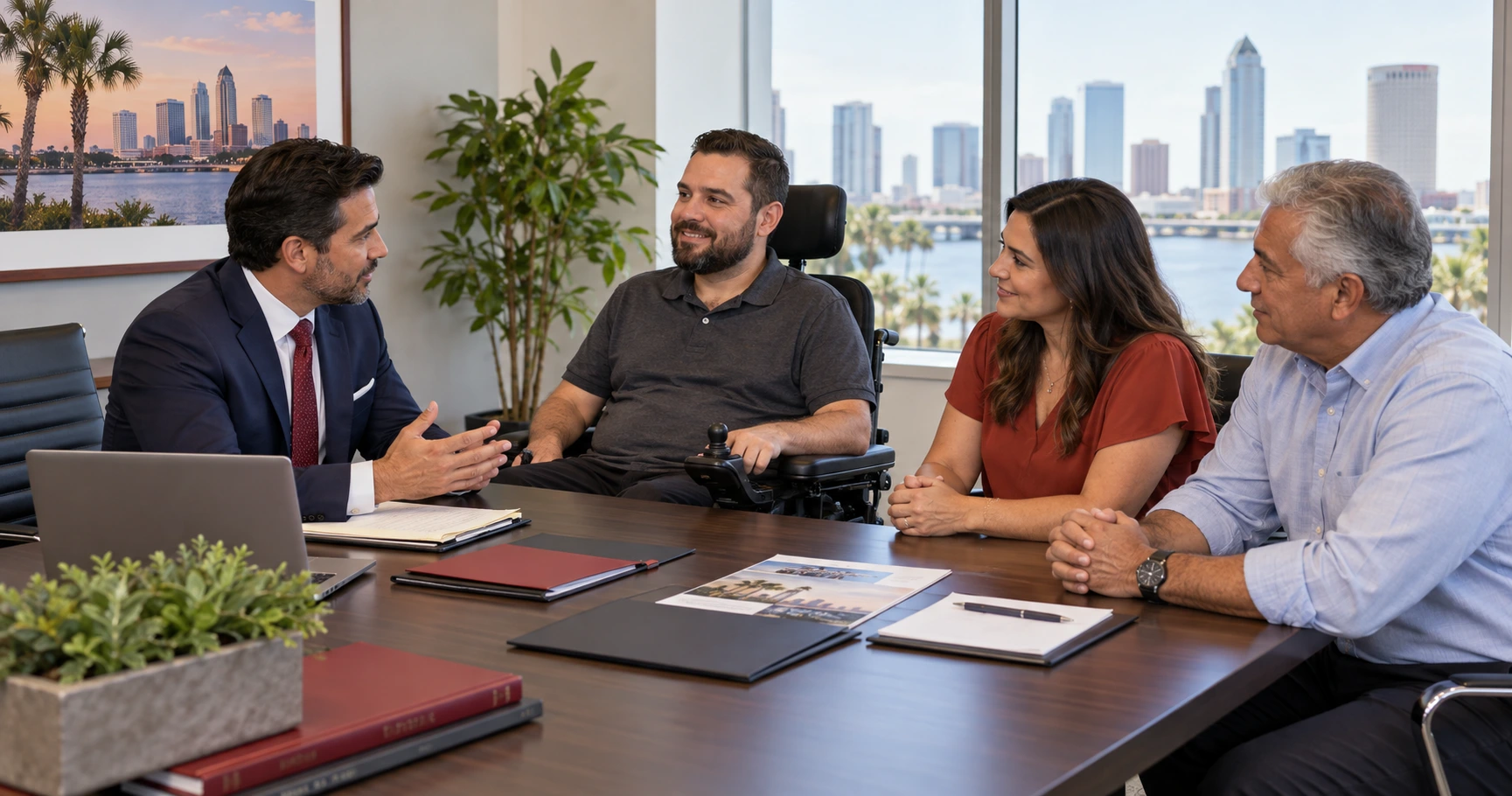
The job of a commercial vehicle accident lawyer is not just to file paperwork. It is to protect the evidence, identify the right defendants, understand the insurance structure, and keep the injured person from being pushed into a smaller claim than the facts support.
How Can The Reyes Firm Help You
A serious crash with a company vehicle can leave a person feeling outnumbered fast. The driver may have an employer behind them. The employer may have a commercial insurance carrier behind it. Meanwhile, the injured person is trying to heal, keep up with bills, and make sense of what happens next.
The Reyes Firm helps injured people across Florida investigate crashes involving company cars, delivery vans, work trucks, fleet vehicles, and other commercial vehicles. That includes examining the crash itself, the company’s role, the available insurance, and any evidence that may prove what really happened.
The firm also understands the early steps that protect a case:
- Getting medical care quickly
- protecting PIP eligibility
- preserving photos, video, and witness information
- avoiding damaging recorded statements
- building the claim before the evidence fades
When appropriate, The Reyes Firm handles these cases on a contingency-fee basis, meaning no fee unless the firm wins.
The Reyes Firm
4730 N. Habana Ave., Suite 201
Tampa, FL 33614
Phone: 833-4-BAD-DAY
Had a bad day? Call 833-4-BAD-DAY.

Local attorney Edward Reyes is the founder and managing attorney of The Reyes Firm. He brings experience from both the medical and legal sides of personal injury and built the firm to help injured people get clear answers after serious crashes.
Read more about Edward Reyes.