You were hurt in a car accident that wasn’t your fault. The other driver got cited, maybe even arrested for DUI, and an officer mentioned “probable cause.” Now you’re wondering what that phrase actually means for you, and whether it helps your injury claim. Here’s what probable cause is, and how it can shape what you recover.
TL;DR — QUICK SUMMARY
- Probable cause is the legal standard police need to arrest someone or get a warrant: a reasonable, fact-based belief that a crime occurred, not just a hunch.
- After a crash, an officer with probable cause can cite or arrest the at-fault driver, including for DUI, which can support your injury claim.
- A ticket alone does not automatically prove fault, and Florida’s accident report privilege keeps the crash report itself out of civil court.
- The evidence behind the arrest, like breath or blood test results, independent witnesses, and physical evidence, often can be used, and a DUI conviction generally can too.
- A DUI or other reckless conduct may open the door to punitive damages on top of your regular compensation.
The Reyes Firm
Hurt by a Cited or Arrested Driver in Tampa?
Find out how the other driver’s citation or DUI affects your claim. Had a bad day?
What does probable cause mean in Florida?
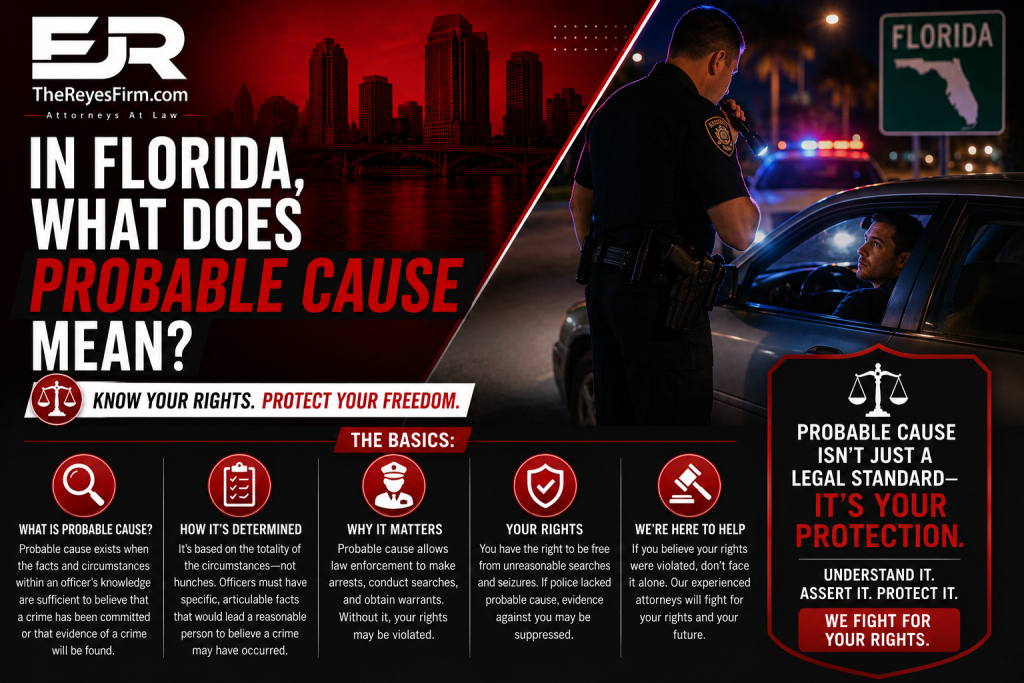
Probable cause is the legal standard police must meet before they can arrest someone or obtain a warrant to search or seize. It means there are enough facts and circumstances for a reasonable person to believe a crime has been committed. It’s more than a hunch or a gut feeling, but less than the “beyond a reasonable doubt” proof needed to convict someone at trial.
The protection comes from the Fourth Amendment, which guards against unreasonable searches and seizures. In plain terms, an officer generally can’t arrest a driver or search a vehicle on a whim. They need a reasonable, fact-based justification. After a car accident, that standard is exactly what an officer relies on when deciding whether to cite or arrest the driver who hurt you.
⚠️ Deadline Warning: Under Florida Statute § 95.11(3)(a), you generally have two years from the date of your crash to file a personal injury lawsuit, even if the other driver is facing criminal charges. The criminal case and your civil claim are separate. Don’t wait on one to protect the other.
How does probable cause come up after a car accident?
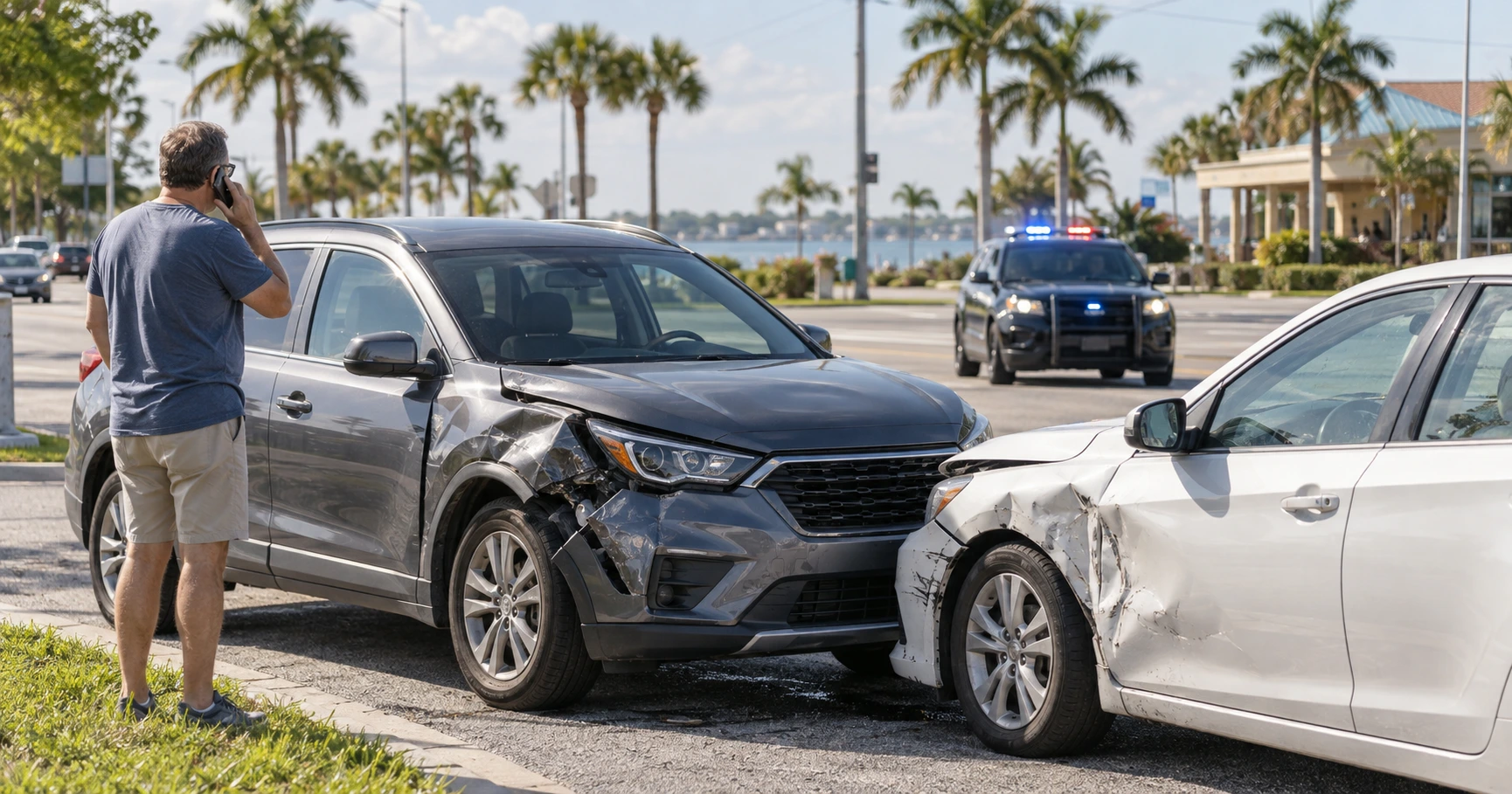
It comes up the moment an officer responds to your crash and starts piecing together what happened. If the facts give the officer probable cause that the other driver broke the law, the officer can issue a citation or make an arrest. This is most common in serious cases: running a red light, reckless driving, or driving under the influence.
DUI is the clearest example. To arrest a driver for DUI, an officer needs probable cause, often built from observations like erratic driving, the smell of alcohol, slurred speech, or field sobriety results. When that arrest happens after a crash that injured you, it can become an important part of your civil case. A serious or catastrophic crash caused by an impaired driver is exactly the kind of case where these details matter.
Does a ticket or arrest of the other driver prove they were at fault for my injuries?
Not by itself. This is where many people get the wrong impression. A traffic citation is not automatic proof of fault, and you are not bound by an officer’s findings, which can be incomplete or simply wrong. On top of that, Florida’s accident report privilege under Fla. Stat. § 316.066(4) keeps the crash report itself, and the statements drivers make to the officer for that report, out of evidence in civil court.
So what actually helps your case? The evidence underneath the arrest. Breath, blood, and urine test results are not covered by the privilege and can be admissible. Independent witnesses who weren’t involved in the crash can testify. Physical evidence like skid marks, vehicle damage, and scene photos can be used. And if the at-fault driver is convicted, that conviction generally can come into your civil case. The arrest is a signpost. The admissible evidence behind it is what carries weight.
💡 Did You Know? Under Fla. Stat. § 316.066(4), the crash report and the statements you make to the officer for it generally can’t be used as evidence in a civil or criminal trial. But chemical test results, independent witness accounts, and physical evidence from the scene are not shielded by the privilege, which is why a thorough independent investigation matters so much. Source: Fla. Stat. § 316.066(4).
How can a DUI arrest affect my injury claim?
A DUI arrest can strengthen your case in a real way. Your civil injury claim is separate from the criminal case and uses a lower standard of proof. A criminal conviction requires proof beyond a reasonable doubt, while your civil claim only requires showing the other driver was more likely than not negligent. That means you can win compensation even if the criminal case resolves differently than you’d expect.
There’s another important consequence. When a driver causes a crash through drunk driving or similarly reckless conduct, Florida law may allow punitive damages, which are meant to punish and deter, on top of compensation for your medical bills, lost wages, and pain. Not every case qualifies, but impaired driving is one of the situations where that possibility is real. When a drunk driver causes a death, our Tampa wrongful death attorneys handle those claims with particular care.
What if the police blamed me or gave me a citation too?
A citation against you is not the end of your claim. Just as the other driver’s ticket doesn’t automatically prove their fault, a ticket against you doesn’t automatically prove yours. Florida uses a modified comparative fault system, so even if you share part of the blame, you can still recover, with your compensation reduced by your percentage of fault. If you’re found more than 50% responsible, recovery may be barred.
Officers make judgment calls at chaotic scenes, and those calls aren’t always right. A careful, independent investigation often tells a different story than the initial roadside impression, which is why it’s worth having a lawyer review the evidence before you accept anyone’s version of events.
🛡️ Your Rights Under Florida Law: Under Florida Statute § 768.81, your compensation is reduced by your share of fault, and you may be barred from recovery if you are found greater than 50% responsible for your own harm. An experienced Tampa accident lawyer works to protect the facts, challenge unfair blame, and keep your percentage of fault as low as the evidence allows.
What steps should you take after a crash involving a citation or DUI?
These steps protect your health and your legal case. The order matters.
- Get medical care immediately. See a doctor the same day, even if you feel okay. Adrenaline hides injuries, and prompt treatment ties your harm to the crash.
- Document the scene if you safely can. Photograph the vehicles, the road, any visible signs of impairment, and your injuries. Get the names and numbers of independent witnesses.
- Note the citation or arrest, but don’t rely on it alone. Write down what the officer said and any charges, then understand that the real evidence is the test results, witnesses, and physical proof behind them.
- Don’t admit fault or give a recorded statement to the other insurer. Adjusters are trained to get you to say things that reduce your payout. You don’t have to give a recorded statement before talking to a lawyer.
- Call The Reyes Firm before signing anything. We investigate independently, gather the admissible evidence, and protect your claim. Call 833-4 BAD DAY for a free consultation.
The Reyes Firm
4730 N. Habana Ave., Suite 201, Tampa, FL 33614
Phone: 833-4 BAD DAY | thereyesfirm.com
How The Reyes Firm handles your case
When the driver who hurt you was cited or arrested, it’s tempting to assume your case is open and shut. It rarely is. The citation can help, but insurance companies know the crash report is privileged and a ticket isn’t proof, so they push back hard. We make sure the evidence that actually matters gets gathered and preserved.
When we take on your case, we typically:
- Investigate independently, going beyond the crash report to secure chemical test results, witness statements, scene evidence, and any available video
- Track the criminal case, watching for a citation, plea, or conviction that can support your civil claim while keeping your separate two-year deadline protected
- Build the fault picture, using physical evidence and reconstruction rather than relying on a roadside judgment call that may be wrong
- Pursue punitive damages where the law allows, especially in cases of drunk or reckless driving, on top of your compensatory damages
- Push back on unfair blame, protecting your recovery under Florida’s comparative fault rules if the other side tries to point the finger at you
- Handle the insurance companies for you, so you can focus on recovering while we deal with the adjusters
No lawyer can promise an outcome. What we can promise is that we treat the evidence seriously and don’t let an insurer hide behind the privilege to shortchange you. You can read more about the deadlines that protect your right to file in our guide to Florida’s statute of limitations, and we explain every step in plain language along the way.
Frequently asked questions about probable cause and your injury claim
What does probable cause mean in Florida?
Probable cause is the standard police need before arresting someone or getting a warrant. It means the facts would lead a reasonable person to believe a crime was committed. It’s protected by the Fourth Amendment and is more than a hunch but less than the proof needed to convict at trial.
How is probable cause connected to my car accident claim?
After a crash, an officer with probable cause can cite or arrest the at-fault driver, including for DUI. That citation or arrest can point your civil attorney toward important evidence and may support a claim for additional damages, even though the criminal and civil cases are separate.
Does the other driver’s ticket prove they caused my injuries?
No, not on its own. A citation is not automatic proof of fault, and you aren’t bound by an officer’s findings. What helps your case is the admissible evidence behind the ticket, like test results, independent witnesses, and physical evidence, plus any conviction that results.
Is the police crash report admissible in my injury case?
Generally no. Under Fla. Stat. § 316.066(4), the crash report and statements made to the officer for it can’t be used as evidence in civil court. However, chemical test results, independent witness testimony, and physical evidence from the scene are not covered by that privilege and often can be used.
Can I still recover if the other driver was arrested for DUI?
Yes. Your civil claim is separate from the criminal case and uses a lower standard of proof. You only need to show the other driver was more likely than not negligent, so you can recover compensation regardless of how the criminal case turns out.
What if the police gave me a citation too, or said I was at fault?
You can still pursue a claim. A ticket against you isn’t proof of your fault any more than one against the other driver proves theirs. Under Florida’s comparative fault law, your recovery is reduced by your share of fault and only barred if you’re found more than 50% responsible.
Does a DUI make my injury claim worth more?
It can. When a crash is caused by drunk or reckless driving, Florida law may allow punitive damages on top of compensation for your medical bills, lost wages, and pain. Not every case qualifies, but impaired driving is one of the clearest situations where that possibility exists.
How long do I have to file an injury claim after a DUI crash?
For most injury claims, the deadline is two years from the date of the crash under Fla. Stat. § 95.11(3)(a). This civil deadline runs independently of the criminal case, so you shouldn’t wait for the criminal matter to resolve before protecting your own claim.
How much does it cost to hire a Tampa accident attorney?
The Reyes Firm works on a contingency fee basis, which means you pay nothing upfront and nothing at all unless the firm recovers compensation for you. The consultation is free. Call 833-4 BAD DAY to talk through what happened.

Edward Reyes, Esq. is a Florida Bar-admitted personal injury attorney and the founder of The Reyes Firm in Tampa, Florida. His practice focuses on serious injury and wrongful death cases arising from car, truck, and commercial vehicle crashes, including collisions caused by impaired and reckless drivers. Edward Reyes, Esq. represents injured Floridians in Tampa and throughout Hillsborough County on a contingency fee basis, meaning clients pay nothing unless the firm recovers compensation for them.
Read more about Edward Reyes.
How Can The Reyes Firm Help You?
If you’ve had a bad day — a car accident, a slip and fall, a trucking crash, or any injury that wasn’t your fault — The Reyes Firm is in your corner. Our Tampa personal injury attorneys offer free consultations and work on a contingency fee basis, which means you pay us nothing unless we win your case.
You shouldn’t have to fight the insurance companies alone. Let us fight for you.
📍 Address: 4730 N. Habana Ave., Suite 201, Tampa, FL 33614
📞 Phone: 833-4 BAD DAY
🌐 Website: Schedule your free consultation today at thereyesfirm.com
Had a bad day? Call The Reyes Firm. We’ll handle the rest.