Author name: Edward Reyes, Esq

A stressed driver holding his head in pain after a traumatic brain injury from a Florida truck accident on a rainy highway, serving as a featured image for Tampa personal injury firm The Reyes Firm.
Blog, Catastrophic Injury, Traumatic injury, Truck Accidents

Traumatic Brain Injury Claims After a Florida Truck Crash

What You Need to Know Truck crashes can cause traumatic brain injuries even without a direct blow to the head. Florida PIP coverage is usually limited to $10,000, which can disappear fast in a TBI case. A brain injury victim may need to prove a permanent injury under Florida Statute 627.737. Most Florida negligence lawsuits must be filed within two years under Florida Statute 95.11. A strong case may require black-box data, medical evidence, expert testimony, and a life care plan. Had a bad day? Call The Reyes Firm at 833-4 BAD DAY. A crash with a semi-truck, 18-wheeler, delivery truck, or commercial vehicle can change your life before you understand what happened. The impact may leave you with headaches, confusion, memory loss, dizziness, mood changes, or symptoms that do not appear until days later. If you are searching for help with traumatic brain injury claims after a Florida truck crash, you are probably worried about medical bills, work, family, and what the trucking company will do next. At The Reyes Firm, we help injured people in Tampa and the South Shore communities take quick, focused action after serious truck crashes. Quick Answer: Truck crashes cause severe traumatic brain injuries because large commercial vehicles create violent forces that can shift the brain inside the skull. Florida PIP benefits are usually capped at $10,000, so serious TBI cases often require a no-fault insurance claim. To pursue full damages, the injured person may need to prove a permanent injury under Florida Statute 627.737. Most Florida negligence lawsuits must be filed within two years under Florida Statute 95.11. The Reyes Firm is located at 4730 N. Habana Ave., Suite 201, Tampa, FL 33614. We are serving Tampa, Riverview, Brandon, Plant City, and communities across Hillsborough County. Why Do Truck Crashes Cause Complex Traumatic Brain Injuries? Truck crashes cause complex brain injuries because commercial vehicles are large, heavy, and harder to stop. The crash force can throw the head forward, backward, or sideways. That motion can injure the brain even when there is no skull fracture, bleeding wound, or visible cut. NHTSA’s crash research focuses on how vehicle forces affect the head, brain, and body in collisions. A traumatic brain injury, or TBI, happens when force disrupts normal brain function. In a Florida truck crash, that force may come from: The head striking a window, airbag, dashboard, or steering wheel A violent whiplash motion A side impact that rotates the head and neck A rollover crash An underride crash A sudden stop after impact Cargo or debris entering the vehicle A coup-contrecoup injury can happen when the brain hits one side of the skull, then rebounds and hits the other side. This can happen even if you never lose consciousness. These crashes are common on high-speed, high-volume Tampa roads such as I-4, I-75, I-275, the Selmon Expressway, and commercial routes throughout Hillsborough County. Signs of Delayed TBI Symptoms to Watch For Delayed TBI symptoms can appear hours, days, or even weeks after a truck crash. You should get medical care fast if you notice severe headaches, confusion, dizziness, memory gaps, nausea, mood swings, sleep changes, vision problems, or trouble focusing. Brain injuries can be hidden, but the damage can still be serious. Watch for these symptoms: Headaches that worsen Confusion or brain fog Memory gaps about the crash Dizziness or balance problems Light or noise sensitivity Nausea or vomiting Mood swings, anger, anxiety, or depression Trouble sleeping or sleeping too much Slurred speech Trouble concentrating Seizures Brief loss of consciousness Prompt medical care matters. It protects your health and creates a record that connects your symptoms to the crash. ⚠️ Warning: Florida PIP benefits require that initial medical care be obtained within 14 days of a motor vehicle crash. Florida Statute § 627.736 provides up to $10,000 in medical and disability benefits, but reimbursement may be limited to $2,500 if no emergency medical condition is found. How Do You Break Through Florida’s No-Fault Insurance Barriers? Florida’s no-fault system means your own PIP coverage usually pays first after a crash. But PIP is limited, and a brain injury can use up that money almost immediately. A truck crash TBI claim may need to move beyond PIP when the injury meets Florida’s serious injury threshold. Florida PIP may cover part of: Medical bills Disability benefits Certain lost income Death benefits in fatal cases But PIP is not built for a serious brain injury. A TBI may require emergency care, imaging, neurologists, medication, therapy, neuropsychological testing, cognitive rehab, and future care planning. The Serious Injury Threshold Under Florida Statute 627.737 Florida Statute 627.737 allows an injured person to pursue pain-and-suffering damages outside the no-fault system if the injury meets the serious-injury threshold. This includes significant and permanent loss of an important bodily function, permanent injury within reasonable medical probability, significant scarring, disfigurement, or death. For a TBI claim, the key issues are often: Threshold issue What it means in plain English Permanent injury A doctor finds the brain injury is lasting Loss of function The injury affects memory, speech, balance, mood, or thinking Significant impact The injury changes work, family life, or daily function Death A fatal crash may support a wrongful death claim The trucking company may argue that your symptoms are mild, temporary, or unrelated. That is why your medical records, scans, specialist visits, and symptom history matter. What Deadlines and Fault Rules Apply Under Florida Law? Florida truck crash TBI claims have strict deadlines and fault rules. Most negligence lawsuits must be filed within two years. Florida also applies a modified comparative negligence rule. That means the trucking company may try to blame you to reduce or block your recovery. The Two-Year Statute of Limitations Under Florida Statute 95.11 Florida Statute 95.11 gives most negligence victims two years to file a lawsuit. This deadline applies to many truck crash injury claims after Florida tort reform. If the deadline passes, you may lose the right to bring the claim in court. You should not
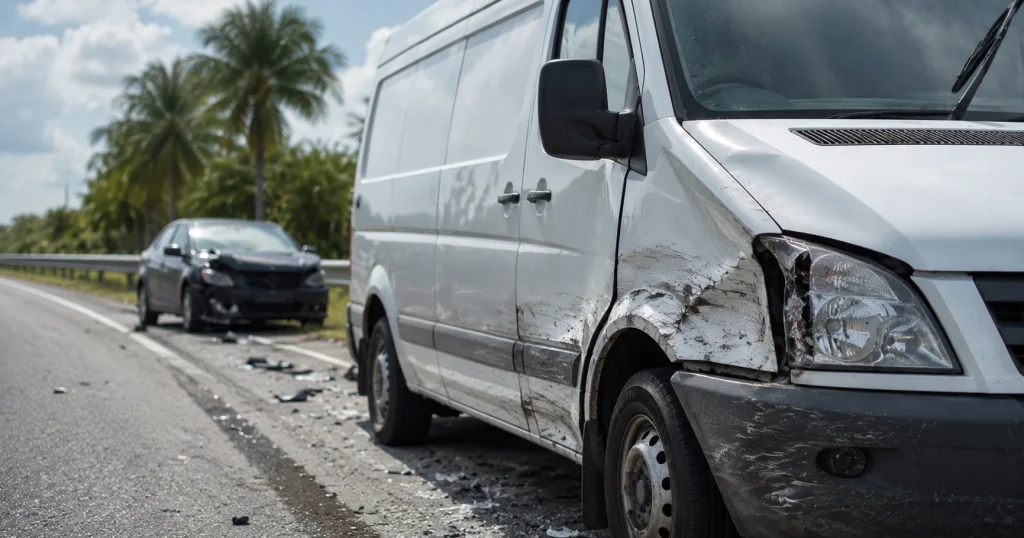
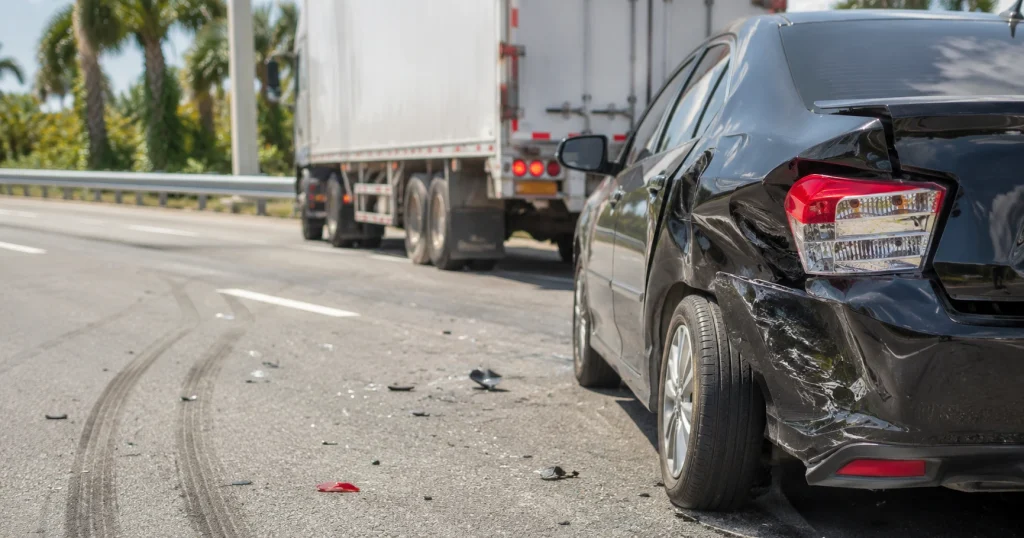
vehicle with a logo accident lawyer Tampa, company vehicle accident lawyer Tampa, Tampa commercial vehicle accident lawyer, Florida logo vehicle accident claim, work vehicle accident attorney Tampa
Blog, Commercial Vehicles, Company-Caused Car Accidents

Hit by a Company Vehicle With a Logo in Tampa? Here Is What To Do

What You Need to Know A crash with a company vehicle is not the same as a regular car accident. The driver, employer, vehicle owner, maintenance company, or another business may share fault. Some commercial vehicle cases involve federal and Florida safety rules. Evidence can disappear fast, including dashcam footage, driver records, GPS data, and repair logs. You should get medical care, report the crash, and speak with a lawyer before the insurance company controls the story. Had a bad day? Call The Reyes Firm at 833-4 BAD DAY. A company vehicle accident lawyer Tampa residents trust can help when a crash involves a work truck, delivery van, service vehicle, rideshare car, or any vehicle with a business logo. These cases often move fast because the company and its insurer may start protecting themselves right away. You may be in pain. You may not know who owns the vehicle. You may only remember the logo, color, or company name on the door. That detail matters. The Reyes Firm helps injured people in Tampa and the South Shore communities understand what to do after a crash with a business vehicle. Our office is located at 4730 N. Habana Ave., Suite 201, Tampa, FL 33614, and we serve Tampa, Riverview, Brandon, Plant City, and communities across Hillsborough County. Why Is a Company Vehicle Accident Different From a Regular Car Crash? A company vehicle crash can involve more parties, more insurance coverage, and more evidence than a regular car accident. The driver may have been working, the company may own the vehicle, and business records may show what really happened before the crash. A logo on the vehicle is a clue. It may show that the driver was acting on behalf of a business at the time of the wreck. Common company vehicles include: Delivery vans Plumbing, HVAC, or electrical trucks Landscaping trucks Construction vehicles Food service vehicles Box trucks Cargo vans Rideshare or fleet vehicles Branded pickup trucks Company vehicle crashes need careful investigation from the start. These cases may involve business insurance, driver records, vehicle maintenance logs, GPS data, and other evidence that can disappear quickly. 📊 Did you know? FLHSMV’s preliminary 2024 data reported 46,651 commercial motor vehicle crashes in Florida, with 315 fatalities. These are not minor insurance claims. Many involve serious injuries, lost work, and complex fault issues. What Should You Do After a Crash With a Logo Vehicle? After a crash with a company vehicle, protect your health first. Call 911, get medical care, take photos, save the company name, and avoid giving a recorded statement before you understand your rights. The company may already have adjusters working on the claim. Try to collect: What to Save Why It Matters Company name or logo Helps identify the business or vehicle owner License plate Helps confirm the vehicle Driver name Helps connect the driver to the company Photos of the vehicle Shows branding, damage, and road position Witness names Helps prove what happened Police report number Helps track the official crash record Your medical records Connects your injuries to the crash Do not rely only on what the driver says at the scene. Some drivers may claim they were “off the clock.” Others may say the vehicle was personal. A lawyer can review employment records, dispatch logs, GPS data, and insurance coverage. Who Can Be Responsible for a Company Vehicle Accident in Florida? More than one person or company may be responsible for a crash involving a company vehicle. The driver may be at fault, but the employer, vehicle owner, maintenance provider, cargo loader, or contractor may also be involved, depending on the facts. Possible responsible parties include: The company driver The driver’s employer The vehicle owner A leasing company A maintenance or repair company A company that loaded cargo A dispatch or logistics company Another negligent driver This matters because crashes involving company vehicles often involve business insurance, fleet policies, and corporate defense teams. The insurance company may try to limit the case to the driver only. That can leave out important parties. What Evidence Needs To Be Preserved Right Away? Company vehicle cases require rapid evidence preservation because key evidence may be deleted, overwritten, repaired, or lost. A lawyer can send preservation letters that require the company to retain records related to the crash, the driver, and the vehicle. Important evidence may include: Dashcam video GPS or route data Driver logs Delivery app records Dispatch records Maintenance logs Inspection reports Hiring and training files Cell phone records Vehicle repair records Insurance policies Prior safety complaints ⚠️ Warning: Florida law generally gives injured people two years to file a negligence lawsuit. Some deadlines can be shorter, especially when government vehicles or special claims rules are involved. Do not wait to protect your case. How Do Federal and Florida Rules Affect a Commercial Vehicle Accident? Federal and Florida safety rules may apply when a crash involves a commercial motor vehicle, a large truck, an interstate carrier, hazardous materials, or certain regulated business vehicles. Florida Statute § 316.302 applies federal motor carrier rules to many commercial motor vehicles operating in Florida. That can affect the case because the company may have duties tied to: Driver qualifications Hours of service Vehicle inspections Maintenance Cargo securement Drug and alcohol testing Safety records Driver supervision Not every logo vehicle is a federally regulated truck. A small local business car may be handled differently than a box truck or tractor-trailer. Still, the business connection can change the investigation and insurance strategy. NHTSA’s 2024 overview reported 5,340 people killed in crashes involving large trucks nationwide, and most of those deaths involved people outside the large truck. That is one reason serious commercial vehicle cases require detailed crash investigation. 🛡️ Your rights: Florida uses modified comparative negligence. Under Florida Statute § 768.81, your recovery can be reduced by your percentage of fault, and a person found more than 50% at fault may not recover damages in most negligence cases. Evidence matters because insurers often

Auto dañado después de un accidente con un camión comercial en una carretera de Florida, con escombros y marcas de frenado en el pavimento, for illustrative purposes only.
Blog, Spanish, Truck Accidents

Cómo saber si tu caso de accidente de camión en Tampa vale más que la oferta del seguro

Lo que necesitas saber La primera oferta del seguro puede no incluir tu atención médica futura, pérdida de ingresos, dolor o necesidades de lesión a largo plazo. Una oferta del seguro por un accidente de camión en Tampa puede ser demasiado baja cuando los registros de la empresa de camiones no han sido revisados. Los datos de la caja negra, las bitácoras del conductor, los archivos de mantenimiento, los registros de carga y las políticas de seguridad de la empresa pueden cambiar el valor de tu caso. La ley de Florida puede afectar tu reclamo, especialmente si la compañía de seguros intenta culparte del choque. ¿Tuviste un mal día? Llama a The Reyes Firm al 833-4 BAD DAY. Un accidente de camión puede voltear tu vida al revés en segundos. Un momento estás conduciendo por Tampa, y al siguiente estás lidiando con dolor, facturas médicas, trabajo perdido y llamadas de un ajustador de seguros. Si recibiste una oferta del seguro por un accidente de camión en Tampa, puede que sientas presión de aceptarla y seguir adelante. Pero una oferta temprana puede no mostrar lo que tu caso realmente vale, especialmente cuando un camión comercial, un vehículo de reparto, un camión de 18 ruedas o un vehículo de empresa causó el choque. En The Reyes Firm, ayudamos a personas lesionadas en Tampa y las comunidades de South Shore a entender qué puede estar omitiendo la compañía de seguros. Nuestra oficina está ubicada en 4730 N. Habana Ave., Suite 201, Tampa, FL 33614, y nuestro equipo maneja casos de camiones y vehículos comerciales en Tampa, Riverview, Brandon, Plant City y comunidades de todo el Condado de Hillsborough. Respuesta Rápida: Un caso de accidente de camión en Tampa puede valer más que la oferta del seguro si la oferta no incluye atención médica futura, pérdida de ingresos, negligencia de la empresa de camiones, datos de la caja negra, bitácoras del conductor o costos de lesión a largo plazo. Antes de firmar cualquier cosa, haz que un abogado de accidentes de camiones en Tampa revise la oferta. ¿Por qué la oferta del seguro podría ser más baja que lo que vale tu caso de accidente de camión? Una oferta del seguro por un accidente de camión puede ser más baja que lo que vale tu caso porque la aseguradora puede no haber contado tus necesidades médicas completas, la atención futura, la pérdida de ingresos, el dolor o la evidencia de camiones comerciales. Las ofertas tempranas frecuentemente llegan antes de que el panorama completo de la lesión esté claro y antes de que los registros clave de la empresa sean asegurados. Los reclamos por accidentes de camiones son diferentes a los reclamos por accidentes de autos regulares. Un choque en la I-4, I-75 o I-275 puede involucrar a un conductor, empresa de camiones, empresa de carga, proveedor de mantenimiento, contratista de reparto o múltiples pólizas de seguro. La compañía de seguros puede mirar solo las primeras facturas médicas. Eso puede omitir el impacto real del choque. Tu caso puede valer más si tienes: Dolor continuo Recomendaciones de cirugía Trabajo perdido Capacidad de ingresos reducida Lesión permanente Estrés emocional Necesidades de tratamiento futuro Una falla de seguridad de la empresa de camiones Florida tuvo 381,210 choques de tráfico registrables en 2024, según el informe Por los Números 2024 del FLHSMV. El mismo informe establece que los agentes de la Patrulla de Carreteras de Florida trabajaron en 1.649 de los 2.962 choques fatales del estado ese año. 📊 ¿Sabías que? La Guía de Bolsillo 2024 de la FMCSA reportó 5,476 choques fatales que involucraron camiones grandes y autobuses en 2022. La FMCSA también reportó 114,000 choques con lesiones que involucraron camiones grandes ese mismo año. ¿Cuáles son las 7 señales de que tu oferta del seguro por accidente de camión en Tampa puede ser demasiado baja? Tu oferta por el accidente de camión puede ser demasiado baja si fue hecha rápidamente, ignora la atención futura, te presiona a firmar una exención o no incluye evidencia de la empresa de camiones. En los casos de accidentes de camiones en Tampa, la primera oferta puede proteger más a la aseguradora que a tu recuperación. Aquí están las 7 señales de advertencia. 1. Aún necesitas tratamiento médico. Debes tener cuidado con cualquier oferta hecha antes de que tu tratamiento esté completo. Puede que aún necesites imágenes, inyecciones, terapia, cirugía o atención de seguimiento. Una vez que llegas a un acuerdo, generalmente no puedes volver después para pedir más dinero. 2. La oferta solo cubre las facturas actuales. Un acuerdo justo por un accidente de camión debe mirar más allá de las facturas de hoy. También debe considerar el tratamiento futuro, la pérdida de capacidad de ingresos, el dolor a largo plazo y el impacto de la lesión en la vida diaria. Una oferta baja frecuentemente mira solo lo que ya se ha facturado. 3. El ajustador te está presionando a llegar a un acuerdo rápidamente. La presión rápida es una señal de alerta. La compañía de seguros puede querer que llegues a un acuerdo antes de que hables con un abogado de accidentes de camiones en Tampa. No tienes que firmar nada antes de entender tus derechos. 4. Los registros de la empresa de camiones no han sido revisados Los casos de camiones frecuentemente necesitan más evidencia que los casos de accidentes de autos. Las bitácoras del conductor, los registros de inspección, los datos de la caja negra y los archivos de mantenimiento pueden mostrar lo que realmente ocurrió. Si esos registros no han sido revisados, la oferta puede estar omitiendo hechos importantes. 5. El choque involucró un vehículo comercial Un semirremolque, camión de caja, camión volquete, camioneta de reparto, vehículo de viaje compartido o camión de empresa puede involucrar a más de una parte responsable. Eso puede aumentar el seguro disponible y el valor del reclamo. La aseguradora puede no explicar eso claramente. 6. Te culpan sin pruebas Las compañías de seguros pueden argumentar que ibas a exceso

Rainy Florida highway scene with a commercial semi-truck and debris after a crash, representing Riverview truck accident liability, for illustrative purposes only.
Blog, Truck Accidents

Who Can Be Liable in a Riverview Truck Accident?

What You Need to Know More than one person or company may be liable after a Riverview truck accident. The driver, trucking company, truck owner, cargo loader, broker, maintenance company, or manufacturer may share fault. Truck accident cases are more complex because they often involve company records, safety rules, and multiple insurers. Knowing what to do after a truck accident in Riverview can help protect your health and your claim. A Riverview truck accident lawyer can move fast to preserve evidence before it disappears. Had a bad day? Call The Reyes Firm at 833-4 BAD DAY. The Reyes Firm Unsure Who Is Liable After a Riverview Truck Accident? The driver may not be the only responsible party. Get clear next steps after a serious truck crash. Had a bad day? Schedule a Free Consultation After a serious truck crash, you may be asking who can be held liable and why the insurance process already feels so confusing. You may be hurt. Your car may be totaled. The trucking company may already have people investigating the crash. That can feel unfair. You should not have to figure out the driver, carrier, cargo company, broker, and insurance issues on your own while trying to heal. The Reyes Firm helps injured people in Tampa and the South Shore communities after serious truck and commercial vehicle crashes. Our office is located at 4730 N. Habana Ave., Suite 201, Tampa, FL 33614, and we are serving Tampa, Riverview, Brandon, Plant City, and communities across Hillsborough County. Who can be liable in a truck accident in Riverview? Several parties may be liable in a truck accident, including the truck driver, motor carrier, truck owner, maintenance company, cargo loader, broker, parts manufacturer, or another driver. A Riverview truck accident lawyer looks beyond the crash report to find who controlled the truck, driver, cargo, route, and safety decisions. Truck crashes in Riverview can occur on I-75, US-301, Gibsonton Drive, Boyette Road, Bloomingdale Avenue, and nearby roads used by delivery, dump, box, and tractor-trailers. Here are the parties that may need to be investigated. Potential liable party How they may be responsible Truck driver Speeding, fatigue, distraction, unsafe turns, following too closely Trucking company or motor carrier Unsafe hiring, poor training, skipped maintenance, pressure to meet deadlines Truck owner Allowing an unsafe truck or trailer on the road Maintenance company Bad brake work, missed tire problems, faulty repairs Cargo loader Overloaded cargo, unsecured cargo, unsafe weight balance Freight broker or shipper Unsafe carrier selection in some cases Parts manufacturer Defective brakes, tires, steering parts, lights, or safety systems Another driver Cutting off the truck, causing a chain reaction, or forcing evasive action Government entity or road contractor Unsafe road work, missing signs, or dangerous road conditions in limited cases Watch: Who May Be Liable in a Truck Accident? In this video, The Reyes Firm explains why truck accident cases often involve more than the driver. The trucking company, trailer owner, cargo loader, maintenance company, and dispatch company may also need to be investigated after a serious crash. This video is for general information only. Liability depends on the facts, evidence, and companies involved in the truck crash. ⚠️ Warning: Florida Statutes § 95.11 gives most people two years to file a negligence lawsuit after an injury crash. If evidence is lost or the deadline passes, your claim can become much harder or impossible to bring. Why are truck accident cases more complex than car accident cases? Truck accident cases are more complex because they often involve more evidence, more companies, larger insurance policies, and commercial safety rules. A simple car crash may involve two drivers. A truck crash may involve the driver, carrier, trailer owner, cargo loader, repair shop, broker, and manufacturer. That is why liability is not always clear at first. The truck driver may have made a mistake, but the company may have created the danger before the driver ever got on the road. A loaded trailer may have been unsafe. Brakes may have been ignored. A delivery schedule may have pushed the driver to keep going while tired. A truck case may involve: Driver qualification files Commercial driver’s license records Hours-of-service records Electronic logging device data Truck black box data GPS and dispatch records Maintenance and inspection files Cargo loading records Company safety policies Prior crash or violation history Florida sees thousands of commercial vehicle crashes each year. FLHSMV’s 2024 By the Numbers report listed 46,651 commercial motor vehicle crashes and 315 commercial motor vehicle fatalities in Florida. That is one reason truck accident cases need fast investigation. The sooner evidence is preserved, the easier it may be to identify every person or company that played a role. What should you do after a truck accident in Riverview? After a truck accident in Riverview, call 911, get medical care, take photos, save witness information, avoid recorded statements, and contact a lawyer before key evidence disappears. Trucking companies and insurers may move quickly after a crash, so you should protect yourself as soon as possible. Here is what to do after a truck accident in Riverview: Call 911. Ask for police and emergency medical help. Report pain right away. Tell the officer and paramedics about any pain, even if it feels minor at first. Take photos and videos. Capture the truck, trailer, license plate, company name, road, debris, injuries, and vehicle damage. Get witness names. A witness may be hard to find later. Do not give a recorded statement. The trucking insurer may use your words against you. Save every document. Keep medical bills, discharge papers, repair estimates, insurance letters, and photos. Call a Riverview truck accident lawyer. A lawyer can send preservation letters before records are deleted, changed, or lost. Florida Statutes § 316.066 requires a long-form crash report for crashes involving injury, death, a vehicle requiring a wrecker, or a commercial motor vehicle. That report can be one helpful piece of the case, but it may not identify every liable party. Can the trucking company

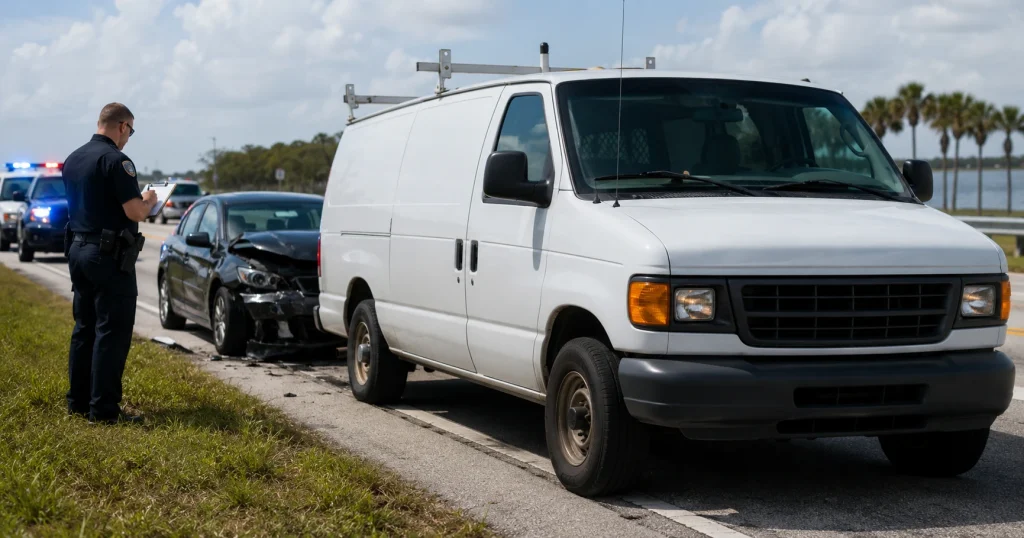
Unmarked white work van involved in a Florida roadside crash investigation with police at the scene, for illustrative purposes only.
Blog, Commercial Vehicles, Company-Caused Car Accidents

When the Company Vehicle That Hit You Has No Logo: How to Trace Employer Liability in Florida

What You Need to Know A company vehicle does not need a logo for a Florida employer to be looked into.  Liability means legal responsibility, and it may depend on ownership, permission, business use, insurance, and driver status.  The license plate, VIN, crash report, GPS data, work orders, and photos can help trace the employer. Florida deadlines and fault rules can affect your right to recover compensation. The Reyes Firm helps injured people in Tampa identify who may be responsible after serious vehicle crashes. Had a bad day? Call The Reyes Firm at 833-4 BAD DAY. Company vehicle no logo employer liability Florida means a business may still be legally responsible for a crash, even when the car, van, or truck has no visible branding. Liability means legal responsibility. The problem is proof. The company may deny the vehicle was used for work. The insurer may blame only the driver.  At The Reyes Firm, we help injured people in Tampa look past the missing logo. We trace the vehicle, the driver, the employer, and the applicable insurance.  Does a Company Vehicle Need a Logo for Employer Liability in Florida? No. A Florida company vehicle does not need a business logo to face liability after a crash. The key questions are who owned or controlled the vehicle, who allowed the driver to use it, and if the driver was serving a work purpose. A logo is not the proof that controls the claim.  A logo can help identify a company. But no logo does not end the case. Florida claims often focus on: The vehicle owner. The driver’s employer. The driver’s job task. The driver’s permission to use the vehicle. The insurance policy covering the vehicle. The company’s control over the driver or route. Logo vs No Logo Liability Matrix Crash fact Does the logo decide liability? What matters more The company owns the vehicle No Title, registration, permission, and insurance The driver was making a delivery No Route, dispatch records, app data, and work orders The driver was going to a jobsite No Work schedule, job location, and employer instructions The driver was using a personal car for work No Reimbursement, job purpose, and employer control The company removed its logo No Ownership, use, permission, and evidence The vehicle had tools or cargo No Photos, witness statements, and business records That is why the next step is tracing who owned the vehicle and why it was on the road. How Do You Trace the Employer Behind an Unmarked Company Vehicle? You trace an unmarked company vehicle by connecting the plate, VIN, insurance card, crash report, driver identity, route, cargo, tools, uniform, dispatch records, GPS data, and job records. The sooner this proof is saved, the harder it is for a company or insurer to deny the work link.  The license plate and VIN can help identify the vehicle owner.  Start with what you can safely gather at the scene. Take photos of the vehicle from all sides. Take a photo of the license plate. Ask for the driver’s license and insurance information. Look for tools, equipment, cargo, labels, uniforms, badges, or delivery items. Get witness names and phone numbers. Save dashcam, doorbell, or business camera leads. Write down anything the driver said about work, a route, or a customer. FLHSMV is Florida’s official source for crash records. Crash reports may take up to 10 days to become available. FLHSMV says some crashes must be reported to law enforcement. This includes crashes with injury, death, hit-and-run, DUI, wrecker removal, a commercial motor vehicle, or apparent damage of at least $500.  Evidence Map for an Unmarked Company Vehicle Accident Evidence Why it matters Who may have it License plate Helps trace registration and ownership Police, FLHSMV, insurer VIN Confirms the exact vehicle Vehicle, report, repair records Insurance card May reveal a commercial policy Driver, insurer Crash report Lists drivers, vehicles, witnesses, and insurers Law enforcement, FLHSMV GPS data Shows route, speed, stops, and timing Employer, fleet vendor Dispatch records Shows the driver was on a work task Employer, app, contractor Work orders Connects the trip to a job Employer, customer Tools or cargo Supports business use Photos, witnesses Uniform or badge Links driver to a company Photos, witnesses Texts or calls May show employer direction Driver, employer Once you know what to save, the next issue is how Florida law treats the claim.  What Florida Laws Affect an Unmarked Company Vehicle Crash Claim? Florida law can affect your claim through filing deadlines, fault rules, PIP benefits, commercial vehicle definitions, and insurance rules. PIP means personal injury protection. It is the first layer of car insurance benefits in many Florida crashes. Florida deadlines and fault rules can change the value of your case.  Florida Rules People Often Confuse Rule Plain-English meaning Why it matters Two-year deadline Negligence and wrongful death actions generally must be filed within two years Waiting can hurt your right to sue 14-day PIP rule Initial medical care is generally needed within 14 days for PIP medical benefits Delayed care can affect benefits Greater than 50% fault rule A party greater than 50% at fault generally cannot recover damages Insurance companies may try to shift blame Commercial vehicle definition Some vehicles are commercial based on use, weight, passengers, or hazardous material A plain vehicle may still be commercial Commercial insurance minimums Heavier commercial vehicles may need higher liability coverage More coverage may be available   ⚠️ Warning Box: Florida Deadline: Florida Statute § 95.11 gives a two-year deadline for actions based on negligence and wrongful death. Do not wait for the company or insurance carrier to finish looking into the crash before you protect your claim. Florida’s PIP law provides up to $10,000 in medical and disability benefits. It also requires initial care within 14 days of the crash to qualify for medical benefits.  Florida defines certain commercial motor vehicles by use, weight, passengers, or hazardous material. This can include vehicles used in commerce to move people or cargo. 

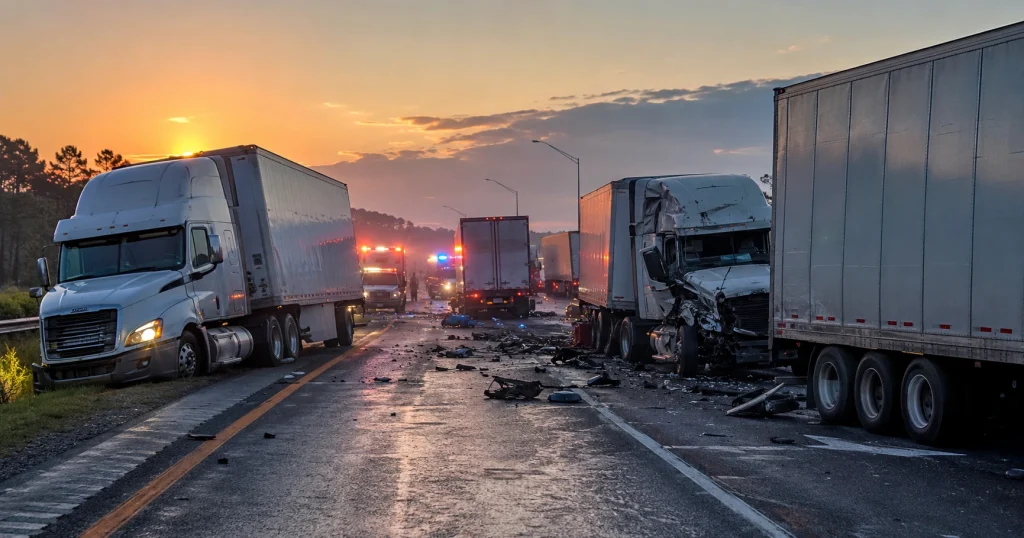
Choque de semirremolques en una autopista de Florida cerca de Leesburg, para fines ilustrativos únicamente.
Blog, News

Choque de Semirremolques en Leesburg: Lo Que las Familias Deben Saber

Resumen Rápido Se reportó un choque que involucró múltiples semirremolques en los carriles en sentido sur de la Autopista de Florida en Leesburg, justo antes de la salida a U.S. 27 en el Condado de Lake. Según WESH, la Patrulla de Carreteras de Florida reportó que dos personas fueron llevadas al hospital, incluyendo una persona con lesiones graves, y el choque sigue bajo investigación. Los primeros informes no siempre explican la causa completa de un choque, especialmente cuando están involucrados múltiples vehículos comerciales, escombros en la vía y cierres de carriles. Para las familias, este tipo de choque importa porque los casos de vehículos comerciales pueden involucrar más evidencia que los que involucran choques típicos de vehículos de pasajeros. Dependiendo de la evidencia, los investigadores pueden revisar las acciones del conductor, el movimiento del vehículo, los datos electrónicos, los registros de mantenimiento, las prácticas de seguridad de la empresa y las condiciones de la vía. ¿Qué Ocurrió en el Choque en la Autopista de Florida en Leesburg? Según WESH, un choque que involucró múltiples semirremolques bloqueó carriles en la Autopista de Florida en Leesburg la madrugada del jueves 28 de mayo de 2026. El choque se reportó en los carriles en sentido sur justo antes de la salida a U.S. 27 en el Condado de Lake. WESH reportó que la Patrulla de Carreteras de Florida dijo que un semirremolque que estaba en el acotamiento intentó incorporarse al carril exterior cuando se desplazó hacia el camino directo de otro semirremolque. La FHP dijo que los dos semirremolques chocaron, y dos semirremolques adicionales posteriormente golpearon escombros del choque. Dos personas fueron llevadas al hospital, incluyendo una persona que sufrió lesiones graves, según el informe. El choque bloqueó dos carriles del lado derecho en sentido sur durante varias horas antes de que se despejara el bloqueo. WESH reportó que el choque sigue bajo investigación. En esta etapa, este artículo no asume culpa ni hace ninguna conclusión legal final. Los hechos pueden cambiar a medida que los investigadores revisen la escena, las declaraciones de testigos, los datos del vehículo y otra evidencia. Ubicación del Choque: Autopista de Florida en Sentido Sur Cerca de U.S. 27 en Leesburg El choque fue reportado en la Autopista de Florida en sentido sur cerca de la salida a U.S. 27 en Leesburg, Condado de Lake, Florida. ¿Qué Sabemos Sobre el Choque? Con base en el informe publicado, sabemos lo siguiente: El choque ocurrió en la Autopista de Florida en sentido sur en Leesburg. La ubicación fue reportada justo antes de la salida a U.S. 27 en el Condado de Lake. Múltiples semirremolques estuvieron involucrados. La FHP reportó que un semirremolque se desplazaba desde el acotamiento hacia el carril exterior. La FHP reportó que dos semirremolques chocaron. Dos semirremolques adicionales supuestamente golpearon escombros del choque. Dos personas fueron llevadas al hospital. Una persona supuestamente sufrió lesiones graves. El choque seguía bajo investigación. Lo que no sabemos del informe inicial es igualmente importante. El informe no proporciona conclusiones finales sobre responsabilidad, velocidad del conductor, distancia de seguimiento, condición mecánica, visibilidad, fatiga, mantenimiento, políticas de la empresa, ni si se violó alguna regulación de seguridad. Por eso el lenguaje cuidadoso importa. Los primeros informes pueden describir lo que se observó o se reportó inicialmente, pero no siempre explican la causa completa. ¿Por Qué Este Tipo de Choque Puede Ser Tan Grave? Los choques que involucran semirremolques pueden ser especialmente graves debido al tamaño y peso de estos vehículos. Cuando múltiples camiones están involucrados, el peligro puede aumentar rápidamente porque una sola colisión puede crear escombros, bloqueos repentinos de carriles, impactos secundarios y espacio limitado para que otros conductores reaccionen. En este choque reportado, WESH afirmó que dos semirremolques adicionales golpearon escombros después de la primera colisión. Ese detalle importa porque los campos de escombros pueden crear una cadena de eventos que los investigadores pueden necesitar reconstruir cuidadosamente. Una investigación de un choque con camión puede considerar: Dónde estaba posicionado cada camión antes del impacto Si un vehículo estaba detenido, en movimiento, incorporándose o cambiando de carril Si se usaron luces de emergencia o dispositivos de advertencia Si los conductores tuvieron suficiente tiempo y distancia para reaccionar Si el tráfico, el clima, la iluminación o las condiciones de la vía jugaron un papel Si algún problema mecánico o de mantenimiento contribuyó Si los escombros eran evitables bajo las circunstancias Cada una de estas preguntas depende de la evidencia. No es suficiente asumir lo que ocurrió a partir del primer informe de noticias. ¿Qué Hace que un Choque con un Camión o Vehículo Comercial Sea Diferente? Un choque con un camión comercial puede ser diferente a un choque regular de auto porque pueden estar involucradas más partes, registros y reglas de seguridad. En un choque de vehículos de pasajeros, la investigación puede enfocarse principalmente en los conductores y los vehículos. En un choque con un semirremolque, la investigación también puede involucrar a la empresa de camiones, los registros de calificación del conductor, los datos de registro electrónico, el historial de mantenimiento, los registros de despacho, los registros de carga y las prácticas de seguridad de la empresa. Las reglas federales también requieren que ciertos conductores comerciales y transportistas mantengan registros de horas de servicio. Los dispositivos de registro electrónico, frecuentemente llamados ELD, se sincronizan con el motor del vehículo para registrar el tiempo de conducción y ayudar a rastrear los datos de horas de servicio, según la Administración Federal de Seguridad de Transportistas Motorizados. Bajo las regulaciones federales, los ELD registran automáticamente datos como fecha, hora, información de ubicación del vehículo motorizado comercial, horas del motor y millas del vehículo. Ese tipo de información puede importar después de un choque grave porque puede ayudar a los investigadores a entender el movimiento del vehículo, la actividad del conductor y el tiempo. No prueba automáticamente la culpa, pero puede ayudar a responder preguntas importantes. Video Relacionado: ¿Qué Debes Hacer Después de un Accidente con un Semirremolque? Los accidentes de camiones rara vez son simples.

FedEx-style delivery truck near a damaged car on a Florida roadway after a commercial vehicle crash, for illustrative purposes only.
Blog, Commercial Vehicles

Can You Sue FedEx After an Accident in Florida?

What You Need to Know You may be able to sue FedEx or another FedEx-connected party after a Florida crash. The right defendant may be the driver, FedEx, a contractor, the vehicle owner, or another company. FedEx delivery crashes often involve commercial insurance, route records, GPS data, and contractor agreements. Florida law gives most injury victims two years to file a negligence lawsuit. Do not give a recorded statement before you understand your rights. Had a bad day? Call The Reyes Firm at 833-4 BAD DAY. If a FedEx truck hit you in Florida, do not wait to figure out who pays. If you are asking whether you can sue FedEx after an accident in Florida, the answer is yes, but the right claim may not be straightforward. A FedEx crash can involve a driver, a route contractor, a commercial policy, a delivery company, and fast-moving insurance teams. The Reyes Firm helps injured people in Tampa understand what happened, preserve key evidence, and take the next step. Call The Reyes Firm at 833-4 BAD DAY if you were hurt in a FedEx truck accident in Tampa, on I-4, I-75, I-275, or anywhere in Florida. The Reyes Firm Hit by a FedEx Truck in Florida? Get clear next steps after a delivery truck crash. Had a bad day? Contact Us Now Can you sue FedEx after a crash in Florida? Yes, you may be able to sue FedEx or a FedEx-affiliated party after a crash in Florida if the driver, route contractor, vehicle owner, maintenance provider, or delivery company caused your injuries. The key is identifying who controlled the driver, who owned the vehicle, and which insurance policy applies. A FedEx logo on the vehicle matters, but it does not answer every legal question. Some FedEx routes involve service providers that handle pickups and deliveries, drivers, vehicles, and day-to-day operations. FedEx’s own contractor information states that service providers may employ their own personnel and use their own vehicles. Your case may involve claims against: The FedEx driver A local FedEx service provider or contractor Federal Express or another FedEx entity The vehicle owner A maintenance company Another driver who contributed to the crash The claim turns on control, conduct, insurance, and evidence. That is why a FedEx truck accident in Tampa should be investigated fast. ⚠️ Warning: Florida lawsuit deadline: Under Florida Statute § 95.11, most negligence-based personal injury lawsuits must be filed within two years. Waiting can also allow FedEx route data, dashcam footage, driver logs, and vehicle records to disappear. Why are FedEx accident cases different from regular car accidents? FedEx accident cases can involve multiple companies because many FedEx-branded delivery routes are handled by service providers. That means the driver, a local contractor, FedEx, a fleet owner, or a maintenance company may all need to be investigated before anyone accepts blame. This is different from a typical two-car crash. A delivery truck case may involve: Issue Why it matters Driver status The driver may be an employee or a contractor. Route records Delivery deadlines, stops, and GPS data may show pressure or unsafe driving. Vehicle ownership The truck may be owned by FedEx, a contractor, or another company. Maintenance history Poor brakes, tires, lights, or mirrors may support your claim. Insurance layers Commercial policies may apply in addition to basic auto insurance. FedEx and its insurers may know the business structure before you do. They may also contact you early. Do not guess. Do not sign a release. Do not give a recorded statement before speaking with a Florida personal injury attorney. Watch: Why FedEx Delivery Truck Accident Claims Are Different A crash with a FedEx, Amazon, or other delivery truck is not handled like a normal car accident. Commercial policies, contractor relationships, and company insurance teams can complicate these cases. In this video, The Reyes Firm explains what injured people in Tampa should know after a delivery truck crash. If you were hurt in a delivery truck accident in Tampa, call The Reyes Firm at 833-4 BAD DAY for a free consultation. What evidence matters after a FedEx delivery truck crash? The most important evidence includes the crash report, photos, medical records, witness information, driver identity, vehicle number, route data, GPS records, dashcam footage, inspection records, and maintenance records. Many of these records are controlled by companies, not injured people, so quick preservation matters. Try to collect what you safely can at the scene: Photos of the FedEx vehicle, logo, plate, and truck number Photos of your car, injuries, debris, skid marks, and road conditions The driver’s name, employer, and insurance information Witness names and phone numbers The exact crash location Names of responding law enforcement officers Any nearby cameras from stores, homes, or traffic systems Florida crash reports can also help identify insurance information and involved parties. Florida Statute §316.066 requires that certain crash reports be completed and submitted after qualifying crashes, including those involving injury, death, DUI, hit-and-run, disabled vehicles, or commercial motor vehicles. 💡 Did you know? FLHSMV’s preliminary 2024 crash snapshot listed 46,651 commercial motor vehicle crashes in Florida, with 315 fatalities. That includes more than FedEx trucks, but it shows how serious commercial vehicle crashes are across Florida. How does Florida insurance law affect a FedEx accident claim? Florida no-fault insurance may cover some of your first medical bills and lost wages through your own Personal Injury Protection coverage. But serious FedEx crash injuries may also support a claim against the at-fault driver, contractor, FedEx-related entity, or another responsible party. Florida Statute §627.736 governs required PIP benefits. PIP can help after many vehicle crashes, but it does not always cover the full harm caused by a serious commercial vehicle crash. In a FedEx accident claim, damages may include: Emergency care Hospital bills Surgery Physical therapy Lost income Loss of earning capacity Pain and suffering Future medical care Wrongful death damages for surviving family members 🛡️ Your Rights: Comparative fault in Florida: Florida Statute § 768.81 allows fault to be divided among parties.

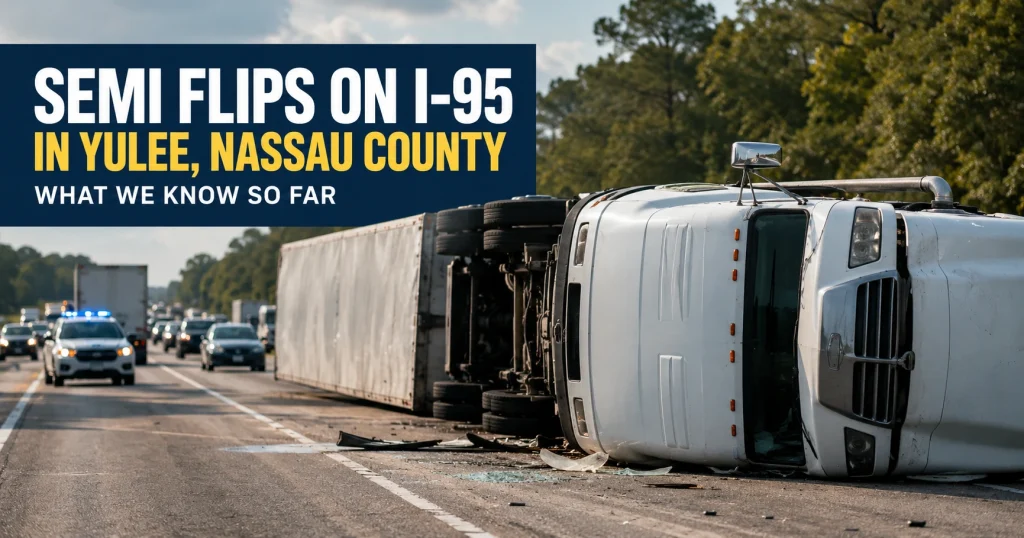
Overturned semi-truck on a Florida interstate with emergency vehicles and traffic in the background, representing the reported I-95 South semi crash in Yulee, Nassau County, for illustrative purposes only.
Blog, News, Truck Accidents

I-95 Nassau County Semi Crash: What Florida Families Should Know

Quick Summary A tractor-trailer reportedly flipped onto its side on I-95 South in Yulee, Nassau County. News4JAX reported that the crash blocked the two right lanes and caused backups. Florida Highway Patrol said the crash involved injuries. Early reports did not say how severe the injuries were. Families may have legal options, depending on the evidence and Florida law. Had a bad day? Call The Reyes Firm at 833-4 BAD DAY. Traffic slowed on I-95 South in Yulee after a tractor-trailer flipped onto its side. The I-95 Nassau County semi crash blocked two right lanes and involved injuries, according to News4JAX.  For families, early news can raise difficult questions. What happened? How serious were the injuries? What evidence will matter later?  Early reports do not always explain the full cause. A truck crash investigation may review the road, vehicle, driver, cargo, and records before fault is clear.  What Do We Know About the Crash? The verified report says a tractor-trailer flipped onto its side on I-95 South in Yulee, Nassau County. The crash blocked the two right lanes and caused traffic backups. Florida Highway Patrol said injuries were involved, but the early report did not specify their severity. The early report did not assign fault. At this stage, the public report does not say what caused the tractor-trailer to overturn. It does not identify any final fault finding. It also does not state that any driver, company, or other party caused the crash. Known reported facts: Detail Reported information Location I-95 South in Yulee, Nassau County Vehicle Tractor-trailer Incident Semi flipped onto its side Traffic impact Two right lanes blocked Injuries Reported by FHP, severity unclear Fault Not stated in early report That careful wording matters because truck crash cases depend on evidence, not guesses.  Why Can This Type of Crash Be So Serious? A semi-truck rollover can be serious because large commercial vehicles are heavy, long, and hard to stop quickly. Even a single-truck crash can block lanes, increase the risk of secondary crashes, spill cargo, and put nearby drivers in danger. A rollover can create risk beyond the first impact. Florida traffic data shows why commercial vehicle crashes deserve close review. FLHSMV reported 46,651 commercial motor vehicle crashes and 315 fatalities in Florida in 2024. 💡 Did you know? FLHSMV reported 46,651 commercial motor vehicle crashes in Florida in 2024, with 315 fatalities. That does not explain this Nassau County crash. It shows why commercial vehicle safety matters across Florida. For people in Tampa, Riverview, Brandon, Plant City, and communities across Hillsborough County, truck crashes can raise similar questions. That can include crashes on I-4, I-75, I-275, and other major roads. The next question is what makes these cases different from a regular car crash.  What Makes a Truck or Commercial Vehicle Crash Different? A truck or commercial vehicle crash can involve more evidence and more parties than a regular car crash. Depending on the evidence, investigators may review the driver, carrier, maintenance company, cargo loader, owner, broker, or another business. More records may exist in a truck crash.  Truck cases may involve: Driver qualification records Hours-of-service logs Electronic logging device data Engine control module data Maintenance and inspection records Cargo loading documents Dashcam or traffic camera footage Insurance policies and company safety records FMCSA explains that hours-of-service rules limit driving and work time. The goal is to help drivers stay awake and alert. FMCSA lists key limits for property-carrying drivers, including an 11-hour driving limit after 10 straight hours off duty and a 14-hour work window. NHTSA reported that deaths in crashes involving large trucks decreased 2.5 percent from 2023 to 2024.  Key safety questions may include: Did the truck driver have enough rest? Was the truck inspected before the trip? Were the brakes, tires, and lights in safe condition? Was the cargo loaded and secured properly? Was any camera or electronic data saved? Still have questions? Call The Reyes Firm at 833-4 BAD DAY. The consultation is free, and there’s no obligation.  Watch: Why Commercial Truck Crashes Near Tampa Can Be So Serious Commercial trucks move through busy Florida roads every day, including areas near the Port of Tampa. This video explains why heavy truck traffic, tight roads, delivery pressure, and commercial routes can create serious risks when something goes wrong. Note: This video is provided for general education. It does not describe the exact I-95 Nassau County semi crash discussed in this article. Those records can help families understand what happened after the first report fades from the news.  What Should Families Do After a Fatal Crash in Florida? Families should focus first on medical care, safety, and documents. After a serious truck crash, the investigation may move quickly. Key evidence can disappear. If a death occurs, Florida law may also set strict deadlines. Families should protect evidence early.  Practical steps may include: Get medical care and follow treatment instructions. Save photos, videos, names, and witness details. Keep all crash-related paperwork. Avoid recorded statements without legal guidance. Do not post crash details online. Ask about saving truck data, camera footage, and maintenance records. ⚠️ Warning: Florida Statute § 95.11 generally provides a 2-year statute of limitations for negligence and wrongful death actions. Missing a deadline can harm a case. Families should speak with a Florida attorney as soon as they can. This does not mean every crash leads to a claim. It means injured people and families should understand the timeline before proof becomes harder to find. Once the timeline is clear, the next step is looking at who may be legally responsible.  Who May Be Liable After This Type of Crash? Possible liable parties may include a driver, a trucking company, a vehicle owner, a maintenance contractor, a cargo loader, or another party. That answer depends on the evidence. No one should assume fault from an early news report alone. Fault must be proven with evidence.  The investigation may consider: Speed and braking Lane position Driver fatigue Distraction Vehicle defects Tire or brake

Personal car and commercial van involved in a Florida crash, illustrating commercial vs personal insurance issues after an accident.
Blog, Commercial Vehicles

Commercial vs. Personal Insurance After a Florida Crash: Who Pays?

What You Need to Know Quick answer: In a Florida crash involving commercial vs. personal insurance, your own PIP coverage may help with initial medical bills while the responsible insurer is identified. If the other driver was working, driving a company vehicle, or making a delivery, a commercial policy may also apply. Florida generally requires drivers with four-wheel vehicles to carry Personal Injury Protection (PIP) and Property Damage Liability (PDL) coverage. Your own PIP may cover part of your medical bills no matter who caused the crash. A commercial policy may apply if the at-fault driver was working, delivering goods, or transporting goods, or was driving a business-owned vehicle. Florida’s 14-day PIP rule matters. If you wait too long to get medical care, you may lose important benefits. More than one insurance company may be responsible, which is why identifying all applicable policies matters after a serious crash. The Reyes Firm Had a Bad Day? Was There a Logo on the Vehicle? A company logo, DOT number, delivery app, or work-related trip can help determine whether commercial insurance may apply after a crash in Florida. Schedule Your Free Consultation You’re Hurt and the Insurance Picture Already Feels Like a Mess You were hit in Tampa, and now the insurance situation feels confusing. The driver handed you a personal insurance card, but the vehicle had a company logo. Or maybe the driver said they were “just running an errand,” but they were actually making a delivery. That confusion is common after a commercial vs personal insurance Florida crash. It also matters because the applicable policy can affect how medical bills, lost income, property damage, and future care are handled. The Reyes Firm helps injured people in Tampa and across Hillsborough County navigate complex insurance issues after serious crashes. Our office is located at 4730 N. Habana Ave., Suite 201, Tampa, FL 33614, and we serve Tampa, Riverview, Brandon, Plant City, and nearby communities along I-4, I-75, and I-275. Who Pays After a Commercial vs Personal Insurance Florida Crash? In Florida, your own PIP coverage may help pay initial medical benefits after a crash, no matter who caused it. FLHSMV explains that PIP covers 80% of necessary and reasonable medical expenses up to $10,000 for a covered injury, while PDL pays for damage to another person’s property caused by the insured driver or someone driving the insured vehicle. After that, the bigger question is liability. If the other driver was using the vehicle for personal reasons, their personal auto policy may be the main liability policy. But if the driver was working, making deliveries, driving a company vehicle, hauling equipment, transporting goods, or acting within the scope of employment, a commercial policy may also apply. That can change the entire claim. A commercial vehicle accident claim may involve: The individual driver’s personal auto policy The employer’s commercial auto policy A business owner’s general liability or umbrella policy A delivery company or rideshare platform policy The vehicle owner’s insurance A contractor, subcontractor, or logistics company policy Your own uninsured/underinsured motorist coverage, if available The key point is simple: the insurance card handed to you at the crash scene may not tell the whole story. If your crash involved a company car, delivery van, work truck, or other business vehicle, our guide on commercial vehicle accident lawyer Florida explains how these claims are investigated and why identifying every possible policy matters. What Is the Difference Between Personal and Commercial Auto Insurance in Florida? Personal auto insurance usually covers ordinary personal driving. Commercial auto insurance usually covers vehicles used for work or business. That sounds simple, but real crashes are often more complicated. A pickup truck may be personally owned but used for a work errand. A delivery driver may use a personal vehicle while logged into an app. A company vehicle may be driven after hours. Each fact can affect which insurer must respond. Insurance Type Usually Applies When Common Examples Personal auto insurance The driver used the car for personal reasons Grocery run, school pickup, commuting, personal errands Commercial auto insurance The vehicle was used for business Company van, box truck, contractor vehicle, delivery truck Mixed-use situation A personal vehicle was used for work Food delivery, rideshare, job-site travel, employee errand Multiple-policy situation More than one party may be connected to the trip Employer, vehicle owner, platform, contractor, motor carrier Florida also has added insurance requirements for certain commercial motor vehicles. Under Florida Statute § 627.7415, covered commercial motor vehicles must carry higher combined bodily injury and property damage coverage based on vehicle weight: $50,000, $100,000, or $300,000 per occurrence depending on the gross vehicle weight category. Federal rules can require even higher limits for certain motor carriers. Under 49 CFR Part 387, covered for-hire interstate property carriers and hazardous-material carriers must maintain minimum levels of financial responsibility. FMCSA regulations include minimum public liability limits that may reach $750,000, $1,000,000, or $5,000,000 depending on the type of carriage and cargo. That is why “commercial vs personal insurance” is not just a technical detail. It can affect whether there is enough coverage for hospital bills, surgery, future treatment, lost income, and long-term disability. What If the Driver Used a Personal Car for Work? A personal car can still trigger a commercial insurance question if the driver was working at the time of the crash. This happens often with food delivery drivers, rideshare drivers, contractors, and employees running errands between job sites. The vehicle’s title does not decide the case. What the driver was doing at the time of the crash matters. In some cases, the driver’s personal insurer may deny or limit the claim because the car was being used for work. In others, an employer, delivery platform, or commercial policy may provide separate coverage that applies on top of the personal policy. When a worker causes a crash while performing job duties, the case may involve employer liability for a company car accident. The key questions often include whether the driver was

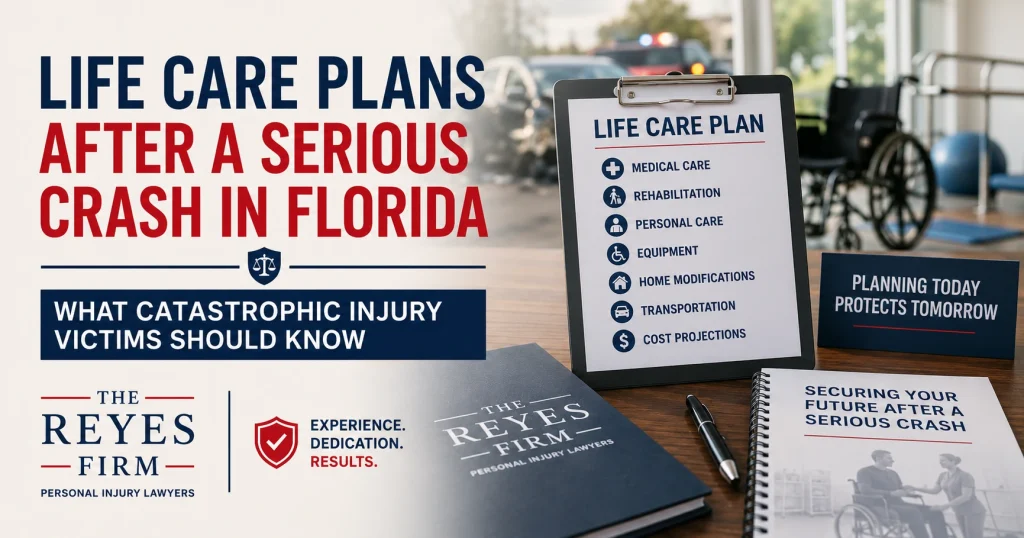
Featured image for a blog about life care plans after catastrophic injuries in Florida, showing a life care planning checklist, rehabilitation setting, and The Reyes Firm branding.
Blog, Catastrophic Injury

Life Care Plans After a Catastrophic Injury in Florida

A life care plan explains the future medical care, support, equipment, and costs an injured person may need after a catastrophic injury in Florida. A strong life care plan in a Florida truck accident claim can help prove the full cost of long-term medical needs when a crash causes life-changing harm. Key Takeaways Future care needs proof. Truck crashes can cause lifelong harm. PIP rarely covers catastrophic care. Early legal help protects evidence. ⚠️ Important: Do not settle a catastrophic injury claim before future medical needs are clear. Once a case settles, the insurance company usually does not pay more later if new surgeries, therapy, home care, or long-term support become necessary. What Is a Life Care Plan After a Catastrophic Injury in Florida? A life care plan is a detailed roadmap for future care. It explains what an injured person may need after a catastrophic injury. The plan may include medical treatment, therapy, medication, equipment, home care, and home changes. It also estimates the cost of those needs. After a truck accident, treatment may not end after the first hospital visit. Some people need years of medical support. In our experience handling catastrophic injury cases in Florida, this planning can be critical. It helps show the difference between current bills and future reality. Why Does a Life Care Plan Matter in a Catastrophic Injury Claim? A life care plan matters because future care may be expensive. It helps prove those costs with medical evidence. Insurance companies often focus on current bills. That can leave out future surgeries, therapy, nursing care, and daily support. A life care plan may help document: Future medical treatment Rehabilitation needs Long-term medication Home health support Mobility equipment Transportation limits Home accessibility needs Ongoing specialist care A strong plan gives the claim structure. It also helps explain why a life care plan Florida truck accident case may involve much more than emergency room bills. When Is a Life Care Plan Needed After a Catastrophic Injury? A life care plan is often needed when injuries are severe, permanent, or medically complex. It is especially useful when care may continue for years. Catastrophic injuries can happen in truck accidents, car crashes, motorcycle crashes, pedestrian accidents, falls, and other serious incidents. These injuries can change a person’s life in seconds. A plan may be helpful after: Traumatic brain injuries Spinal cord injuries Amputations Severe burns Multiple fractures Paralysis Chronic pain Organ damage Serious orthopedic injuries If the injury affects work, mobility, memory, independence, or daily care, future planning matters. Our legal team at The Reyes Firm looks beyond the first medical bill. For broader legal guidance, victims may benefit from speaking with a catastrophic injury lawyer Florida families trust after serious accidents. What Does a Life Care Plan Usually Include? A life care plan usually includes medical care, support services, equipment, and projected costs. Each item should connect to the crash-related injury. Life Care Plan Category Common Examples Medical care Future surgeries, specialist visits, follow-up exams Rehabilitation Physical, occupational, and speech therapy Medication Pain medicine, nerve medication, medical supplies Equipment Wheelchairs, braces, walkers, hospital beds Home support Nursing care, aides, personal care help Home changes Ramps, bathroom changes, wider doorways Transportation Modified vehicle needs, medical transport Care coordination Case management and long-term planning The goal is clarity. The plan should show what care is needed, why it is needed, and what it may cost. Who Creates a Life Care Plan? A trained life care planner usually creates the plan. This person often has nursing, rehabilitation, or case management experience. The life care planner may review: Emergency records Hospital records Surgical reports Therapy notes Imaging reports Medication lists Specialist opinions Daily living limitations The planner may also speak with treating doctors. This helps connect future care needs to medical evidence. In major injury cases, lawyers may also involve economists. An economist can help calculate future costs over time. How Does a Life Care Plan Help Prove Future Medical Expenses? A life care plan helps prove future medical expenses by making them specific. It explains the expected care, frequency, duration, and cost. A general statement is often weak. For example, “the victim may need therapy” does not explain much. A stronger plan may explain the type of therapy, number of visits, expected duration, and medical reason. That makes the future cost easier to understand. This can matter during settlement talks. It can also matter if the case goes to trial. What Florida Laws Affect Life Care Plan Claims? Florida law affects deadlines, fault, insurance benefits, and medical expense evidence. These rules can shape the value of a serious crash claim. Florida Statute § 95.11 gives many negligence claims a two-year filing deadline. This makes timing important after a serious truck accident.  Florida Statute § 768.81 follows modified comparative negligence. In many negligence cases, a party found greater than 50 percent at fault may not recover damages.  Florida Statute § 627.736 governs personal injury protection, also called PIP. PIP benefits are limited and often do not cover catastrophic future care.  Florida Statute § 768.0427 addresses evidence used to prove past and future medical expenses in personal injury and wrongful death cases. This makes careful medical documentation important.  Can PIP Cover a Full Life Care Plan? No, PIP usually cannot cover a full life care plan. Serious truck crash injuries often exceed basic PIP benefits. PIP may help with early medical bills. But it is not designed to fund lifelong care. That is why a serious injury claim may look beyond PIP. Other responsible parties may include: The truck driver The trucking company A vehicle owner A maintenance company A cargo loading company Another negligent driver A life care plan can help show why the claim involves more than early treatment. How Are Life Care Plans Different in Truck Accident Cases? Truck accident life care plans are often more complex because the injuries are often severe. The legal case may also involve several companies and insurance policies. The injury side may

Scroll to Top