Author name: Edward Reyes, Esq

Tampa burn injury lawyer meeting with a survivor after a serious accident, for illustrative purposes only.
Blog, Catastrophic Injury

Tampa Burn Injury Lawyer: Help After a Serious Burn Accident

A serious burn can change your life in seconds. You may be facing intense pain, surgery, permanent scars, missed work, and questions about how your family will afford long-term care. A burn injury lawyer can investigate what caused the accident, identify every responsible party, and document the full effect of your injuries. At The Reyes Firm, we help people in Tampa and the South Shore communities understand their rights after life-changing injuries caused by negligence. What You Need to Know Severe burns may require skin grafts, reconstructive surgery, rehabilitation, and years of medical care. A negligent driver, trucking company, property owner, contractor, or another business may be responsible. Compensation may address medical treatment, lost income, future care, scarring, disability, and pain. Evidence can disappear quickly after a fire, explosion, vehicle crash, or unsafe-property incident. Most Florida negligence lawsuits must be filed within two years. Had a bad day? Call The Reyes Firm at 833-4 BAD DAY. When Is a Burn Considered a Catastrophic Injury? A burn may be catastrophic when it causes permanent scarring, disfigurement, nerve damage, limited movement, organ damage, or a need for long-term care. The legal claim should account for how the injury affects your health, work, independence, relationships, and daily life, not only the treatment you have already received. Burn injuries are commonly described by degree: First-degree burns affect the outer layer of skin. Second-degree burns damage deeper layers and may cause blisters and severe pain. Third-degree burns destroy the full thickness of the skin and may damage nearby tissue. Fourth-degree burns may extend into muscle, tendons, or bone. Burns can also be classified by their cause: Thermal burns from flames, hot surfaces, steam, or heated liquid Chemical burns from acids, industrial chemicals, or other dangerous substances Electrical burns caused by exposed wiring or electrical equipment Friction burns caused by contact with the road or another rough surface Inhalation injuries caused by smoke, heat, or toxic fumes Burn degree is only one part of the medical picture. Doctors may also consider its location, the percentage of the body affected, the patient’s age, infection risk, and damage to muscles, nerves, lungs, or other organs. Burns involving the face, hands, joints, airway, or a large area of the body can have lasting consequences. Severe injuries may require treatment from burn specialists, surgeons, physical therapists, occupational therapists, and mental health professionals. A catastrophic injury attorney in Tampa can help determine how those long-term effects should be documented in an injury claim. 🔥 Did You Know? The U.S. Fire Administration reports that an estimated 13,350 people suffered civilian fire injuries in 2023. That equals 39.9 fire injuries per one million people. The agency also states that someone in the United States suffers a burn serious enough to require treatment approximately every 60 seconds. Review the U.S. Fire Administration’s fire injury data. Who May Be Liable for a Serious Burn Injury in Tampa? Responsibility depends on how the burn happened and who caused or failed to correct the danger. A negligent driver, trucking company, property owner, maintenance contractor, construction contractor, or another business may be liable. Some cases involve several responsible parties and more than one insurance policy. A careful investigation should begin with the source of the fire, heat, electricity, or chemical exposure. Cause of the burn Potentially responsible parties Evidence that may help Car or motorcycle fire Negligent driver or vehicle owner Crash report, photographs, videos, vehicle inspection Commercial truck fire Driver, carrier, maintenance provider, cargo company Driver records, electronic data, maintenance and cargo records Fire on unsafe property Property owner, landlord, manager, maintenance company Inspection records, repair history, video, fire report Construction-site fire or explosion Contractor, subcontractor, equipment owner, another third party Contracts, safety records, incident reports, witness statements Electrical accident Property owner, electrical contractor, maintenance provider Wiring inspections, repair records, code reports Chemical exposure Business controlling, storing, or handling the chemical Safety data, storage records, training records, incident report Vehicle fires and serious crashes A high-impact collision can rupture a fuel system, damage electrical components, trap an occupant, or cause a vehicle to catch fire. The evidence may show that another driver’s speeding, distraction, impairment, or unsafe maneuver caused the crash. Commercial vehicle cases require a broader review. The driver may not be the only responsible party. The motor carrier, maintenance provider, cargo-loading company, or another business may have contributed to the danger. When a truck fire, fuel spill, or hazardous cargo causes burns, a Tampa truck and commercial vehicle accident attorney can investigate the companies and insurance policies connected to the vehicle. NHTSA allows vehicle owners and investigators to search for safety recalls and report suspected safety defects. Recall information does not prove liability by itself, but it can be relevant to the investigation of a vehicle fire. Search NHTSA vehicle recall information. Fires and electrical hazards on unsafe property Landlords and business owners may be responsible for maintaining reasonably safe property conditions. A fire claim may involve exposed wiring, blocked exits, missing safety equipment, poor maintenance, or a known hazard that was not repaired. The exact duty depends on the property, the injured person’s status, and the facts that existed before the fire. Inspection reports, maintenance requests, emails, photographs, surveillance footage, and witness statements may help establish what the owner knew. Construction-site burns involving third parties Construction sites may contain electrical systems, hot materials, fuel, chemicals, and pressurized equipment. A worker or visitor may suffer burns when a contractor, subcontractor, equipment owner, or another outside company fails to follow safe procedures. The Tampa construction accident attorney page explains how third-party responsibility may arise after a construction-site injury. A third-party injury claim is different from a workers’ compensation claim and requires a separate legal review. ⚠️ Deadline Warning: Florida Statute § 95.11 generally gives you two years to file an action based on negligence. Special deadlines and notice requirements may apply to government defendants. Waiting can also allow video, vehicles, maintenance records, and physical evidence to disappear. What Compensation Can a Florida Burn Injury Claim

Dump Truck Through the City Construction Zone (1)
Blog, Commercial Vehicles, Truck Accidents

Who Is Liable After a Construction Truck Accident in Tampa?

What You Need to Know A construction truck driver may not be the only person responsible for your crash. The driver’s employer, truck owner, contractor, loader, maintenance provider, or parts manufacturer may also be liable. Driver logs, electronic truck data, inspection records, contracts, and jobsite records can disappear or be overwritten. Florida generally gives you two years to file a negligence lawsuit, but some cases have shorter notice requirements. This guide covers roadway crashes involving construction vehicles, not workers’ compensation claims for injuries inside a jobsite. Had a bad day? Call The Reyes Firm at 833-4 BAD DAY. A crash with a dump truck, cement mixer, flatbed, or equipment hauler can leave you badly hurt and unsure which company is responsible. The logo on the door may not tell the full story. Several contractors, owners, and insurers may be connected to the same vehicle. A construction truck accident lawyer can investigate those relationships, preserve evidence, and identify every available insurance policy. At The Reyes Firm, we help injured people understand their options and take action before important records disappear. For help with a serious commercial vehicle claim, visit our Tampa truck and commercial vehicle accident attorney page or call 833-4 BAD DAY. The Reyes Firm is located at 4730 N. Habana Ave., Suite 201, Tampa, FL 33614. Who Can Be Held Liable for a Construction Truck Accident? The construction truck driver, employer, truck owner, general contractor, subcontractor, cargo loader, maintenance company, or parts manufacturer may be liable. Liability depends on the driver’s work assignment, vehicle ownership, contracts, safety records, cargo handling, and the act that caused the crash. More than one insurance policy may apply. The driver A driver may be responsible for speeding, following too closely, distracted driving, unsafe lane changes, fatigue, impairment, or failing to inspect the truck. A citation can be useful evidence, but a citation is not required to bring an injury claim. The driver’s employer An employer may be responsible for a driver’s negligence when the driver was acting within the scope of the job. The company may also face direct claims for unsafe hiring, poor training, weak supervision, or keeping a dangerous driver on the road. The truck owner or leasing company Construction vehicles are often rented, leased, or owned by a company other than the driver’s employer. Before deciding who should be included in the claim, examine maintenance responsibilities and control over the vehicle. Contractors and subcontractors A general contractor may hire a hauling company to move soil, concrete, debris, steel, or equipment. Contracts, dispatch messages, delivery tickets, and site-entry records can show which business controlled the work and created the unsafe condition. Cargo loaders and maintenance providers An improperly loaded truck may spill materials, roll over, or take longer to stop. A separate maintenance provider may be responsible for failed brakes, worn tires, broken lights, or other unsafe equipment. Vehicle and parts manufacturers A defective tire, brake component, steering system, coupling device, or warning system may support a product liability claim. Protect the truck and damaged parts from alteration or disposal so qualified experts can inspect them. ⚠️ Warning: Florida’s filing deadline can expire quickly Florida generally allows two years to file a lawsuit based on negligence under Florida Statute § 95.11(5)(a). A government vehicle, public road project, death, or other special circumstance may create different deadlines or notice rules. Do not wait until the deadline is close. What Makes Construction Truck Crashes Different From Ordinary Car Accidents? Construction truck crashes often involve heavier vehicles, specialized equipment, commercial safety rules, layered contracts, and several insurers. Dump trucks, cement mixers, flatbeds, utility trucks, and equipment haulers also have large blind spots and longer stopping distances. Their records can reveal safety failures that an ordinary police report may not show. Construction vehicles may carry loose gravel, sand, concrete, steel, machinery, or demolition debris. Shifting or falling material can cause a collision even when the truck never touches another vehicle. Florida applies commercial vehicle safety requirements through Florida Statute § 316.302. The exact state and federal rules that apply depend on the truck, its weight, cargo, route, and business operation. Common construction vehicle crashes include: Dump truck rollovers Rear-end crashes involving loaded trucks Cement mixer crashes Flatbed cargo spills Wide-turn and blind-spot collisions Equipment trailer separations Work-zone collisions Our guide to the types of truck accidents in Florida explains how the crash type can point to its cause. Cargo records and weight data may be especially important after an overloaded truck accident. 💡 Did You Know? In 2022, 29% of fatal crashes in work zones and 12% of injury crashes in work zones involved at least one large truck, according to the Federal Motor Carrier Safety Administration. FMCSA also tracks large-truck crashes by roadway type, lighting, weather, road surface, and other conditions. These factors can become important when investigating a construction truck crash and determining what contributed to it. Source: FMCSA Large Truck and Bus Crash Facts 2022. What Evidence Can Prove Who Caused the Crash? Strong construction truck cases rely on evidence from the roadway, the truck, the driver, the companies, the project, and medical treatment. A prompt preservation letter can require businesses to keep records and physical evidence. The investigation should begin before electronic data is overwritten, surveillance is deleted, or the truck is repaired and returned to service. Important evidence may include: Police reports, photographs, video, and witness statements Electronic logging device and engine control module data Dash camera, nearby business, traffic, and jobsite footage Driver qualification, training, and disciplinary records Hours-of-service, dispatch, GPS, and phone records Pre-trip inspection and maintenance records Load tickets, weigh records, delivery receipts, and cargo documents Contracts between contractors, subcontractors, owners, and haulers Site-entry logs and project schedules The truck, trailer, tie-downs, tires, brakes, and damaged parts Medical records, bills, wage records, and injury photographs The police report is only a starting point. It may identify vehicles and witnesses, but it rarely contains every contract, electronic record, or safety document needed to establish company liability. The

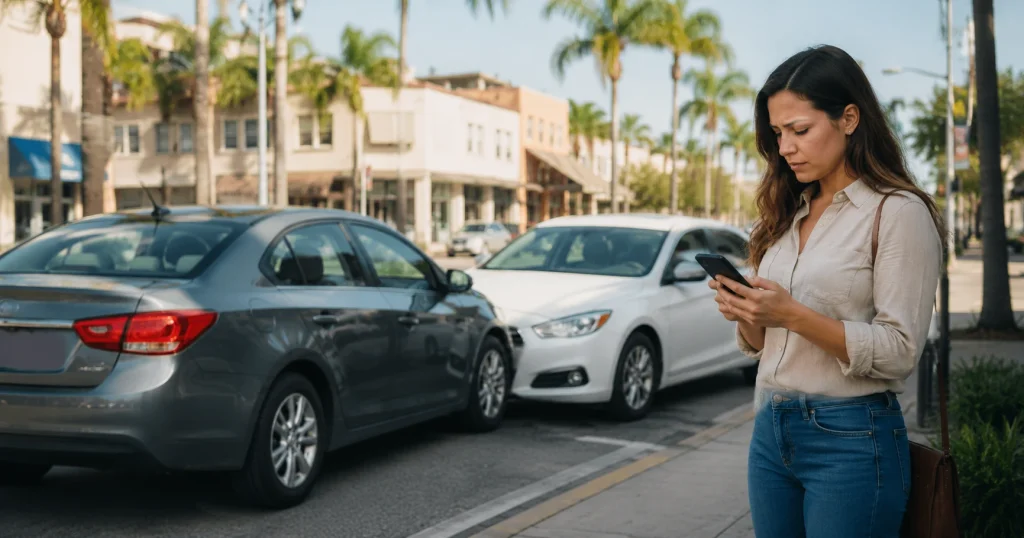
Uber Eats delivery driver accident involving two vehicles in Tampa, Florida, for illustrative purposes only.
Blog, Commercial Vehicles

Uber Eats Accident Claims in Florida: Who Pays After a Crash?

What You Need to Know Uber Eats accident claims may involve the delivery driver, another negligent motorist, and several insurance policies. The driver’s app and delivery status can affect which coverage applies. An Uber Eats delivery is not automatically covered by the same Florida insurance rules as an Uber passenger trip. App records, order details, GPS data, photographs, and witness information can help prove the driver was making a delivery. Florida’s 14-day PIP treatment rule and two-year negligence deadline may affect your claim. Had a bad day? Call The Reyes Firm at 833-4 BAD DAY. An Uber Eats driver hit your car. Now you are hurt, your vehicle needs repairs, and the insurance card you received may not tell the whole story. Uber Eats accident claims can be more complicated than ordinary car accident claims. The driver may have been using a personal vehicle for paid delivery work. That can raise questions about business-use exclusions, app-based coverage, and which company must respond. You don’t have to answer those questions alone. First, get medical care, document the crash, and preserve proof of the driver’s delivery activity. Who Can File an Uber Eats Accident Claim in Florida? People injured by a negligent Uber Eats driver may have the right to bring a claim in Florida. This may include occupants of another vehicle, pedestrians, cyclists, and other road users. An Uber Eats driver injured by another motorist may also have a claim against the person who caused the collision. Possible claimants include: A driver whose vehicle was hit by an Uber Eats driver A passenger riding in another vehicle A pedestrian or cyclist struck during a delivery An Uber Eats driver injured by another negligent motorist A family pursuing a wrongful death claim What types of Uber Eats accidents happen in Tampa? Delivery drivers often travel through busy intersections, restaurant parking lots, neighborhoods, and apartment complexes. They may rely on navigation, order notifications, and delivery instructions while trying to meet a customer’s requested delivery time. Common crashes include: Rear-end collisions Unsafe lane changes Failure-to-yield crashes Red-light and stop-sign collisions Pedestrian and bicycle accidents Parking lot crashes Accidents caused by speeding or distraction These crashes may happen across Tampa, including Downtown Tampa, Ybor City, South Tampa, Brandon, Riverview, and Plant City. Heavy traffic on I-4, I-75, and I-275 can also increase the risk when a delivery driver travels between pickup and drop-off locations. 💡 Did You Know? FLHSMV reports that one in seven Florida crashes involves a distracted driver. NHTSA also warns that reading or sending a text takes a driver’s eyes off the road for about five seconds. At 55 mph, that is like driving the length of a football field without looking at the road. These statistics cover distracted driving generally and are not specific to Uber Eats drivers. Review FLHSMV’s distracted-driving guidance and NHTSA’s distracted-driving data. Delivery work alone does not prove that a driver was distracted or negligent. Evidence must show what the driver did and how that conduct contributed to the crash. Who Pays After an Uber Eats Driver Causes an Accident? Payment may come from your PIP coverage, the delivery driver’s personal insurer, insurance maintained through Uber, another at-fault driver’s policy, or uninsured motorist coverage. No single policy applies to every Uber Eats accident. The answer requires the actual policies, the driver’s delivery status, and evidence showing who caused the crash. Potential source When it may apply Your Personal Injury Protection coverage Initial medical expenses and part of your lost income, subject to Florida law and policy terms The delivery driver’s personal auto policy If the policy covers the loss and no delivery or business-use exclusion applies Insurance maintained through Uber During qualifying delivery activity, subject to the current policy, coverage period, exclusions, and Florida requirements Another driver’s liability coverage When a motorist other than the Uber Eats driver caused or contributed to the crash Uninsured or underinsured motorist coverage When an at-fault driver has no bodily injury coverage or too little coverage Optional injury protection When an eligible delivery driver purchased the coverage, and the loss falls within its terms Uber states that it maintains auto insurance on behalf of drivers and delivery people during certain covered activity. Uber also advises drivers and people involved in a crash to report it through its claims process. Those statements do not establish that a specific claim is covered. The policy and the facts still control. Review Uber’s insurance information. Why does the driver’s delivery status matter? The insurance investigation should establish what the driver was doing at the exact time of impact: Was the driver offline? Was the driver logged in and waiting for an order? Had the driver accepted an order? Was the driver traveling to a restaurant? Had the food been picked up? Was the driver traveling to the customer? Had the delivery just ended? A screenshot, customer receipt, restaurant pickup record, app notification, or GPS record may help answer these questions. Is Uber Eats insurance the same as Uber rideshare insurance? No. Food delivery and passenger transportation are different activities. Florida Statute §627.748 establishes insurance rules for transportation network company drivers who use an app to arrange passenger rides. An Uber Eats delivery does not automatically qualify as a prearranged passenger ride under that statute. Florida also regulates agreements between food delivery platforms and food service establishments. Florida Statute §509.103 requires certain agreements to identify insurance requirements for delivery partners and who pays the cost. It does not create one universal liability limit for every Uber Eats crash. This distinction is why you should not assume that the $1 million coverage commonly discussed in Uber passenger cases applies to your food delivery accident. ⚠️ Warning: Get Medical Care Within 14 Days. Florida Statute § 627.736 generally requires you to receive initial medical services and care within 14 days of a motor vehicle crash to qualify for PIP medical benefits. Waiting longer can prevent you from receiving those benefits. Read Florida Statute § 627.736. Can You

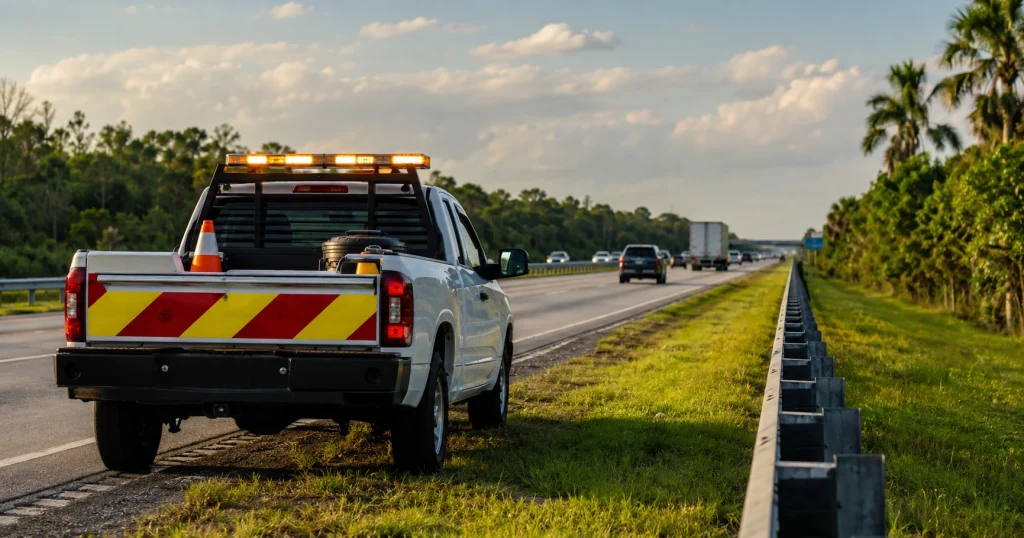
Unbranded roadside assistance vehicle with amber emergency lights beside I-75 in Florida, for illustrative purposes only.
Legal

Florida Move Over Law After Fatal I-75 Road Ranger Crash

What You Need to Know A 24-year-old FDOT Road Ranger was killed while setting up a lane closure on I-75 in Pasco County. Florida Highway Patrol arrested the driver accused of striking him on a DUI manslaughter charge. Florida’s Move Over Law requires drivers to change lanes or slow down near qualifying stopped vehicles. A criminal prosecution and a civil wrongful death claim are separate legal proceedings. The reported facts are preliminary, and the accused driver is presumed innocent unless proven guilty. Had a bad day? Call The Reyes Firm at 833-4 BAD DAY. A fatal crash on I-75 has brought renewed attention to Florida’s Move Over Law and the risks faced by Road Rangers, emergency responders, tow truck operators, and other roadside workers. According to FOX 13, a 24-year-old FDOT Road Ranger was struck and killed while helping establish a lane closure in Pasco County on July 12, 2026. Florida Highway Patrol arrested the driver accused of striking him on a DUI manslaughter charge. Based on the information available, The Reyes Firm does not represent anyone involved in this incident. This article discusses the reported crash and the Florida laws that may apply to similar cases. What Happened in the Pasco County Road Ranger Crash? A Road Ranger was reportedly assisting at an existing crash scene on I-75 near mile marker 274 when an Acura MDX traveled between two Road Ranger vehicles. The SUV struck one vehicle and then hit the Road Ranger, who was outside setting up a lane closure. Incident Location The fatal Road Ranger crash was reported on southbound I-75 near mile marker 274 in Pasco County, near Wesley Chapel and Lutz, Florida. The map is provided for general location reference only. It does not show the exact point of impact or the vehicles’ positions. The crash happened shortly before 8:30 p.m. near Wesley Chapel and Lutz. According to FOX 13’s report, both Road Ranger trucks had their emergency lights activated. The 24-year-old Road Ranger from Brandon died from his injuries. FHP arrested the 40-year-old Acura driver on a DUI manslaughter charge. FOX 13 reported that investigators obtained a breath alcohol reading of 0.334. A charge is an accusation. The driver remains presumed innocent unless proven guilty in court. ⚠️ Warning: Criminal charges do not automatically provide compensation. A DUI manslaughter prosecution is brought by the government to address an alleged crime. It does not automatically pay funeral expenses, replace lost support, or compensate surviving family members. A separate civil claim may be required. What Does Florida’s Move Over Law Require? Florida drivers approaching certain stopped roadside vehicles must move out of the closest lane when they can do so safely. If changing lanes isn’t possible, drivers must reduce speed as required by law and proceed carefully past the scene. Florida Statute § 316.126 applies to qualifying emergency, sanitation, utility, recovery, maintenance, construction, and disabled vehicles. On a road with at least two lanes traveling in the same direction, drivers must change lanes to the lane closest to the stopped vehicle when safe. When a driver cannot change lanes safely: On a road with a speed limit of 25 mph or higher, the driver must slow to 20 mph below the posted limit. On a road with a speed limit of 20 mph, the driver must travel at 5 mph. Drivers should watch for workers, equipment, debris, lane closures, and approaching emergency vehicles. Florida expanded the law on January 1, 2025, to include any vehicle stopped along the roadside with hazard lights, emergency displays, flares, visible emergency signs, or people visibly present. The FLHSMV Move Over guidance explains the current requirements. 💡 Did You Know? The Florida Department of Highway Safety and Motor Vehicles reports that Florida recorded 205 Move Over-related crashes and issued more than 17,500 citations for Move Over violations in 2024. These incidents show how quickly a roadside stop can place workers, drivers, and passengers in danger. Can a DUI Criminal Case and a Civil Claim Happen at the Same Time? Yes. A criminal DUI case and a civil injury or wrongful death claim can arise from the same collision, but they serve different purposes. Prosecutors handle the criminal charge, while the injured person or a deceased person’s estate may pursue compensation through the civil court system. The criminal case may result in penalties such as incarceration, fines, probation, or license consequences. The civil case focuses on the financial and personal losses caused by the collision. A civil investigation may examine: The driver’s actions before the collision Breath, blood, or field sobriety test evidence Vehicle data and mobile phone records Road Ranger vehicle cameras or nearby traffic cameras Witness statements and emergency response records Insurance coverage and vehicle ownership Prior events that may show how the driver reached the crash scene A family does not necessarily need to wait for the criminal case to end before speaking with an attorney. However, the two proceedings can affect one another, so they must handle evidence carefully. NHTSA reports that 11,904 people died in alcohol-impaired driving crashes in 2024. Those deaths represented about 30% of all U.S. traffic fatalities that year. What Compensation May Be Available After a Fatal DUI Crash? Florida’s Wrongful Death Act may allow eligible survivors and the deceased person’s estate to seek compensation when another party’s wrongful act, negligence, or breach of duty causes a death. Available damages depend on family relationships, financial losses, evidence, and the facts of the case. Under Florida Statute § 768.21, recoverable losses may include: Lost financial support and services Medical expenses connected to the final injury Funeral and burial expenses Loss of companionship and protection Mental pain and suffering for qualifying survivors Lost earnings and other losses suffered by the estate The personal representative of the deceased person’s estate generally brings the wrongful death action. The complaint identifies the survivors who may benefit from the claim. Punitive damages may also arise in some impaired-driving cases. They are designed to punish especially harmful conduct rather than

Attorney reviewing medical and financial records for an average spinal cord injury settlement in Tampa, Florida, for illustrative purposes only.
Blog, Catastrophic Injury

What Is the Average Settlement for a Spinal Cord Injury in Florida?

What You Need to Know No single average settlement can predict the value of your spinal cord injury claim. The injury’s severity and permanence can significantly affect compensation. Your claim may include current expenses and losses expected throughout your life. Medical evidence, fault, insurance coverage, and daily limitations all influence value. Settling too early could leave future medical and personal care costs unpaid. Had a bad day? Call The Reyes Firm at 833-4 BAD DAY. A spinal cord injury can change your health, independence, career, and family life in seconds. As medical bills grow, you may be asking how much compensation you could receive and if it will be enough to support your future. There is no single average settlement for a spinal cord injury that applies to every Florida case. The value depends on the extent of the injury, the cost of future care, the effect on your ability to work, fault, and the available insurance coverage. A Tampa spinal cord injury attorney can document how the injury affects your health, work, independence, and future expenses. Is There an Average Settlement for a Spinal Cord Injury? There is no reliable average settlement for a spinal cord injury because every injury creates different medical and financial needs. A person who regains some function may face different costs from someone with permanent paralysis, breathing problems, or a lifelong need for personal care. Insurance coverage and proof of fault also affect the result. Online spinal injury settlement amounts can be misleading. They may come from cases involving different states, injuries, insurance policies, and legal issues. A settlement is also different from a verdict. A settlement is an agreement reached by the parties. A verdict is decided in court. Neither can predict the outcome of a new claim. Factors that make these cases different include: The location of the spinal cord damage Complete or incomplete loss of function Paraplegia or quadriplegia Expected medical recovery Need for future assistance Ability to return to work Available insurance and assets Strength of the liability evidence Past settlements and verdicts may help explain how damages are evaluated. They should not be treated as a promise of what your case will recover. ⚠️ Warning: Florida Has a Filing Deadline: Under Florida Statute § 95.11, many negligence lawsuits must be filed within two years. A different deadline or additional notice requirement may apply in claims involving government agencies, medical negligence, wrongful death, or other special circumstances. Waiting can also cause video, physical evidence, records, and witness memories to disappear. Speak with an attorney promptly about the deadline that applies to your case. What Affects Spinal Injury Settlement Amounts? Spinal injury settlement amounts depend on the severity and permanence of the injury, the expected cost of care, the effect on employment, proof of fault, and available insurance. A strong claim connects every requested amount to medical records, financial documents, expert opinions, and clear evidence showing how the injury changed the person’s daily life. Severity and permanence of the injury The location and extent of the spinal cord damage can shape the person’s medical needs. An incomplete injury may leave some movement or sensation. A complete injury can cause total loss of function below the affected area. Permanent paralysis, breathing complications, chronic pain, loss of bladder or bowel control, pressure injuries, and repeated infections can increase the need for long-term care. Medical treatment and rehabilitation A spinal cord injury claim may involve emergency treatment, surgery, hospitalization, physical therapy, occupational therapy, medication, and follow-up care. The claim should consider the care already received and the treatment medical providers reasonably expect the person to need. Ability to work Some injured people cannot return to their former jobs. Others can work only fewer hours or in a lower-paying role. The claim may include lost wages and reduced earning capacity. Reduced earning capacity means the income and benefits the person is reasonably expected to lose over time because of the injury. Fault for the accident The injured person must generally prove that another party’s negligence caused the injury. Insurance companies may dispute fault or argue that a prior condition caused some of the symptoms. Evidence may include: Crash or incident reports Photographs and video Witness statements Medical records and imaging Safety or maintenance records Employment records Expert analysis Insurance and responsible parties Insurance coverage may limit the amount available through a particular policy. Some cases involve more than one responsible party or policy. For example, a serious crash could involve a negligent driver, an employer, a vehicle owner, a contractor, or a company responsible for defective equipment. Factor How it may affect the claim Permanent paralysis May increase future care and non-economic damages Reduced earning ability May support lost earning-capacity damages Shared fault May reduce or prevent recovery Multiple responsible parties May provide additional sources of coverage Strong medical evidence Helps connect the accident to the claimed losses 📊 Did You Know? According to the 2025 Traumatic Spinal Cord Injury Facts and Figures report, estimated first-year health care and living expenses range from $460,224 to more than $1.4 million, depending on the severity of the injury. For someone injured at age 25, estimated lifetime expenses range from approximately $2.1 million to $6.3 million. These figures do not include lost wages, benefits, or productivity, which averaged an additional $95,309 per year in 2024 dollars. These national estimates do not determine the value of an individual Florida claim. They show why future medical care, personal assistance, lost earning capacity, and long-term equipment needs must be carefully documented before a spinal cord injury case is settled. What Costs Should a Spinal Cord Injury Settlement Cover? A spinal cord injury settlement should consider more than the first hospital bills. Depending on the evidence, compensation may include future treatment, rehabilitation, assistive equipment, home care, lost earning capacity, and the physical and emotional effects of permanent limitations. Every requested cost must connect to the accident and be supported by reliable evidence. Understanding catastrophic injury compensation in Florida can help you

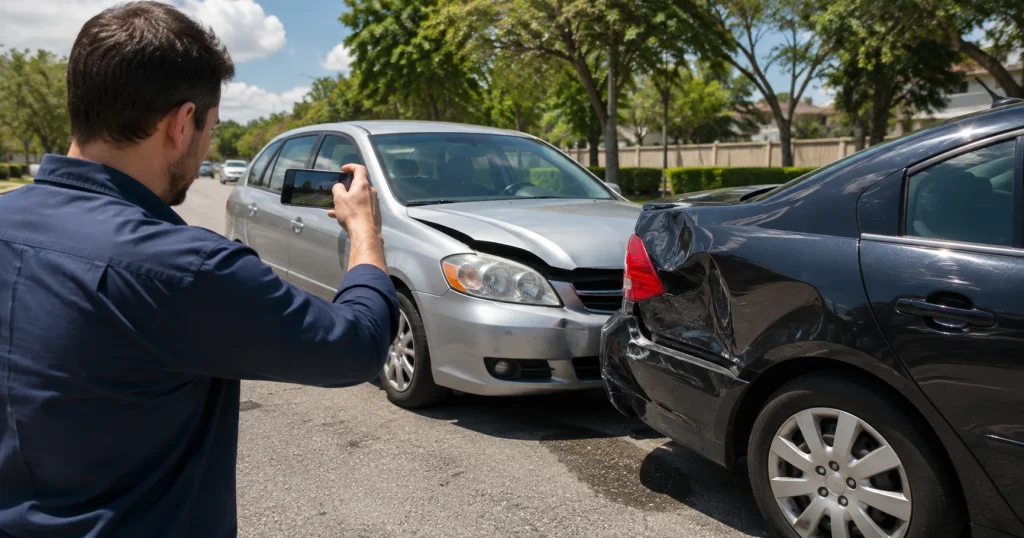
Driver documenting vehicle damage after a car accident in Riverview, FL, for illustrative purposes only.
Blog, Car accident

Riverview FL Car Accident Checklist: What to Do After a Crash

What You Need to Know Get somewhere safe, check for injuries, and call 911 if you need emergency help. Florida law requires you to report certain crashes, including those involving injuries, death, or apparent property damage of at least $500. Florida PIP generally requires initial medical services and care within 14 days after a crash. Take photos, exchange information, get witness contact details, and keep every document connected to the accident. Be careful when discussing fault, injuries, or settlement offers before you know the full impact of the crash. Had a bad day? Call The Reyes Firm at 833-4 BAD DAY. A car accident can leave you shaken long after the vehicles stop moving. One minute you are driving through Riverview. The next, you are trying to figure out whether everyone is okay, where your car will go, what to tell the police, and how you’ll deal with the insurance company. You do not need to know every Florida law at the side of the road. This Riverview FL car accident checklist focuses on the things that matter most after a crash: your safety, your medical care, the evidence around you, and the records you may need later. Here is what to do after a car accident in Riverview, FL. What Should You Do Immediately After a Car Accident in Riverview? Start with safety. Check yourself and your passengers for injuries. Call 911 if someone needs emergency help. If you can safely move away from active traffic, do so. Then exchange information with the other driver and document what you can without putting yourself or anyone else in danger. A crash on U.S. 301, Big Bend Road, Boyette Road, I-75, or a neighborhood street can be confusing. You may feel nervous, angry, or unsure about what just happened. Focus on the basics first. Check yourself and your passengers Look for injuries and ask your passengers how they feel. Call 911 if anyone appears seriously hurt, has severe pain, is bleeding heavily, is having trouble breathing, feels confused, or needs immediate medical attention. Do not try to move an injured person unless leaving them where they are creates an immediate danger. Get away from moving traffic when you can Turn on your hazard lights. If your car is drivable and you can move it safely, get out of the normal flow of traffic. Do not stand in a traffic lane to inspect damage or take pictures. Your safety matters more than getting the perfect photograph. Exchange information with the other driver Get: Full name Phone number Driver’s license information Insurance company and policy information License plate number Vehicle make and model Taking a clear photo of the driver’s insurance card can make it easier to avoid mistakes when copying information. Stay calm and stick to what you know You can explain what happened without guessing about fault. If you are not sure how fast another car was moving, do not estimate. If you did not see something happen, do not fill in the missing details. Give responding officers the facts you remember. You can review fault later using statements, photographs, witness accounts, vehicle damage, video, and other evidence. Do You Need to Report a Riverview Car Accident to Police? Florida law requires immediate notice of a crash that causes injury, death, or apparent damage of at least $500 to a vehicle or other property. Outside a municipality, Florida Statute § 316.065 directs notice to the county sheriff or the nearest Florida Highway Patrol office or station. You may not know at the scene how much the vehicle damage will cost to repair. You may also feel okay at first and notice pain later. For those reasons, getting law enforcement involved can help create a record of what happened. An officer may document information such as: Where and when the crash happened The vehicles involved Driver and passenger information Insurance information Witnesses Visible vehicle damage Other circumstances observed at the scene A crash report does not automatically decide who wins an insurance claim. It can still be an important starting point for reconstructing what happened. The Reyes Firm has a separate guide explaining why getting a police report after a car accident can help. 💡 Did You Know? FLHSMV recorded 26,269 traffic crashes in Hillsborough County in 2024, compared with 27,474 in 2023. Crash data also exists closer to Riverview. Plan Hillsborough identified 910 crashes from 2018 through 2022 along Gibsonton Drive between Fern Hill Drive and U.S. 301, a corridor about 0.95 miles long. The study found crash rates above the statewide average for similar roadways. These numbers do not tell you what caused any individual Riverview crash. They do show that crashes are a real concern on roads local families use every day. When Should You Get Medical Care After a Riverview Car Accident? Get emergency care right away when you have symptoms that need immediate attention. If you leave the scene and pain or other symptoms develop later, contact an appropriate medical provider. Florida’s PIP law also creates a 14-day window for receiving qualifying initial medical services and care after a motor vehicle accident. It is common to focus on the car first. You may be thinking about towing, repairs, getting home, picking up your children, or making it to work the next day. Your health still needs attention. If something does not feel right, do not ignore it simply because you were able to walk away from the crash. Depending on the injury, symptoms can include: Neck or back pain Headaches Dizziness Numbness or tingling Swelling Limited movement Abdominal pain Trouble concentrating Pain that gets worse after the initial shock wears off A medical provider can evaluate your symptoms and decide what care is appropriate. Keep track of your treatment Save: Emergency room records Urgent care records Doctor’s notes Imaging reports Prescriptions Referral paperwork Medical bills Appointment information Follow your medical provider’s instructions. If you miss an appointment, reschedule when appropriate and keep a record of what happened.

Uber passenger reviewing rideshare trip information after a car accident in Tampa, Florida, for illustrative purposes only.
Blog, Ride Sharing

I Was a Passenger in an Uber Accident: Who Pays for My Injuries?

What You Need to Know If you were hurt as an Uber passenger, the insurance that pays usually depends on which driver caused the crash and which policies apply. Florida requires at least $1 million in primary automobile liability coverage while a rideshare driver is engaged in a prearranged ride. Your Uber trip record can help prove you were a passenger and show that rideshare coverage was active. Medical bills, lost income, future care, and other losses may be part of an Uber passenger accident claim. Florida has important medical and lawsuit deadlines, so getting help early can protect both your health and your evidence. Had a bad day? Call The Reyes Firm at 833-4 BAD DAY. If you are thinking, “I was a passenger in an Uber accident. Who is supposed to pay for this?”, you are probably already dealing with more than the crash itself. You may have medical bills, missed work, insurance calls, and no clear answer about which company should handle your claim. An Uber passenger accident in Tampa can involve the rideshare driver’s coverage, another driver’s insurance, personal injury protection, and other available policies. The good news is that you weren’t controlling either vehicle. Your job now is to protect the evidence showing what happened and how the crash injured you. The Reyes Firm helps injured rideshare passengers in Tampa, FL understand the insurance issues and their legal options. You do not have to sort through several insurance companies while you are trying to recover. Who Pays If You Are a Passenger in an Uber Accident? If you are injured while riding in an Uber, payment may come from the insurance covering the Uber trip, the insurance of another driver who caused the crash, or other available coverage. Florida law treats the time you are being transported as a prearranged rideshare trip, which carries specific insurance requirements. Florida defines a prearranged ride as beginning when the rideshare driver accepts the request and continuing until the last rider exits the vehicle. During that period, state law requires at least $1 million in primary automobile liability coverage for death, bodily injury, and property damage. That does not mean every injured passenger receives $1 million. The policy limit is not a guaranteed payout. The amount available to you depends on fault, your injuries, your losses, other claims arising from the crash, and the insurance policies involved. A passenger claim may look like this: What Happened Insurance That May Need Review The Uber driver caused the crash Primary rideshare liability coverage Another driver caused the crash The other driver’s liability insurance and other available coverage Both drivers contributed Policies covering each responsible driver The at-fault driver had little or no insurance Available uninsured or underinsured motorist coverage may become important For a broader explanation of the different rideshare insurance periods, read our guide to who pays after an Uber crash. If you still need to handle the immediate steps after the collision, our guide on what to do after an Uber crash in Tampa explains what evidence to save and what to do next. 🛡️ Your Rights: Florida Law Gives You Access to Important Rideshare Information Under Florida Statute § 627.748, a rideshare driver involved in a crash must provide required insurance information to a directly involved party and disclose, upon request, if the driver was logged into the rideshare network or engaged in a prearranged ride. During a coverage investigation, the transportation network company must also provide precise driver log-on and log-off times for the 12 hours before and after the crash when properly requested. What Insurance Covers an Injured Uber Passenger in Florida? An injured Uber passenger may have access to several insurance benefits, but the active rideshare trip is especially important. Florida requires primary liability coverage of at least $1 million while the driver is engaged in a prearranged ride, along with required personal injury protection and uninsured or underinsured motorist coverage under applicable Florida law. For a passenger, the timing is usually easier to establish than it is for someone hit by an Uber driver who was waiting for a ride request. If you were sitting in the Uber during the crash, there should be a digital record showing: The driver’s name The vehicle and license plate Your pickup location Your destination The trip time The route Your electronic receipt Florida law requires rideshare companies to provide riders with an electronic receipt after the trip that includes the origin, destination, total time and distance, and fare. Save that information. Screenshot it if you still have access to the trip. Does Florida PIP apply to an Uber passenger? Personal injury protection, or PIP, may help pay certain early medical and disability benefits after a Florida motor vehicle crash. Florida’s rideshare law requires PIP coverage during a prearranged ride, but determining priority among available PIP policies may require reviewing your insurance and the policies tied to the Uber vehicle. PIP is also separate from a liability claim against the person who caused the collision. A Florida rideshare accident lawyer can review the trip status, crash report, insurance policies, and medical records to identify applicable coverage. What If Your Uber Driver Caused the Crash? If your Uber driver caused the collision while transporting you, Florida’s active-trip insurance requirements become a major part of the claim. Evidence still matters because an insurer may dispute how the crash happened, the seriousness of your injuries, or the amount of your losses even when the rideshare trip itself is easy to prove. Watch: Can an Uber Passenger Make a Claim After an Accident? In this short video, Edward Reyes, Esq. explains how fault can affect an Uber passenger accident claim. If the rideshare driver caused the crash, you may have a negligence claim. If another driver caused the collision, the claim may instead focus on that driver’s responsibility and available insurance. This video provides general educational information about Uber and rideshare accident claims. The insurance and liability issues in each Florida

Tampa accident victim reviewing traumatic brain injury medical evidence and cognitive testing with a healthcare professional, for illustrative purposes only.
Blog, Catastrophic Injury, Traumatic injury

How Do You Prove a Traumatic Brain Injury After a Tampa Accident?

What You Need to Know Medical records help connect the accident, your symptoms, your diagnosis, and your treatment. Neurological and cognitive testing may document problems with memory, concentration, learning, and problem-solving. Family members, coworkers, and friends can describe specific changes they noticed after the accident. Accident evidence helps connect the force or event that caused the injury to your traumatic brain injury. Work records and qualified experts may help document lost income, reduced earning ability, future care, and long-term limitations. Had a bad day? Call The Reyes Firm at 833-4 BAD DAY. If you are trying to prove a traumatic brain injury after an accident in Tampa, you may be dealing with an injury other people cannot easily see. You may have headaches, memory problems, trouble focusing, personality changes, fatigue, or difficulty doing work that once felt routine. A serious TBI claim usually cannot rest on one medical note or one test. You need a clear record showing what happened, when symptoms began, how doctors evaluated you, and how your life changed after the accident. A Tampa traumatic brain injury lawyer can help organize that evidence and identify gaps before an insurance company uses them to challenge your claim. What Medical Evidence Can Prove a Traumatic Brain Injury? Medical records are usually the foundation of a TBI claim because they connect the accident, symptoms, diagnosis, treatment, and future limits over time. Strong proof may include emergency records, follow-up visits, specialist notes, imaging when ordered, medication history, rehabilitation records, and clear documentation of changes in memory, balance, mood, sleep, or concentration. The goal is to build a medical timeline. Depending on your care, useful records may include: Emergency room or urgent care records Primary care and specialist notes Neurology or rehabilitation evaluations CT, MRI, or other imaging reports when ordered Physical, occupational, or speech therapy records Prescription and medication records Records documenting ongoing symptoms and restrictions Consistency matters. A record that follows your symptoms from the accident through treatment can help explain how the injury developed and how it continues to affect you. Your medical history also matters. If you had a prior concussion, migraine condition, memory issue, or other neurological problem, that history should be addressed rather than ignored. The question is what changed after this accident. ⚠️ Warning: Florida Deadlines Can Affect Your TBI Case Florida Statute § 95.11 generally gives a person two years to file an action founded on negligence. Different deadlines or notice rules can apply to medical negligence, government claims, wrongful death, and other situations. The lawsuit deadline also does not stop video, witness memories, or other evidence from disappearing sooner. See Florida Statute § 95.11. Can Neurological and Cognitive Testing Help Prove a TBI? Neurological, neuropsychological, and neurocognitive testing can help document how a brain injury affects thinking, memory, concentration, problem-solving, and daily function. These tests do not replace a doctor’s diagnosis, but they can add structure to symptoms that may be hard to see from the outside, especially when cognitive changes affect work or independence. The CDC explains that healthcare providers may evaluate learning, memory, concentration, and problem-solving after a mild TBI. Neuropsychological or neurocognitive tests may help identify the injury’s effects. Testing may help document problems involving: Short-term or long-term memory Attention and concentration Processing speed Learning new information Problem solving Planning and organization View test results alongside the rest of the medical record. A TBI claim should not be reduced to one score. Doctors may also compare test findings with your education, work history, prior medical history, reported symptoms, and daily functioning. That broader picture can be especially useful when your main problems involve thinking, communication, or behavior rather than an obvious physical injury. How Can Family, Friends, and Coworkers Help Prove a Brain Injury? Family members, friends, coworkers, and supervisors can help show what changed after the accident. Their observations may document memory lapses, slower thinking, mood changes, missed responsibilities, fatigue, confusion, or new work problems. This testimony is strongest when it gives specific before-and-after examples and matches the medical and employment record. Someone who lives with you may notice changes that never appear during a short medical appointment. Useful observations may include: Forgetting appointments, conversations, or familiar tasks Getting confused while driving or following directions Needing more help with bills, meals, or household responsibilities Becoming unusually irritable, withdrawn, or emotionally reactive Struggling to follow conversations or complete several steps in order Sleeping much more or much less than before the accident Specific examples are more useful than general statements. Saying, “He changed after the crash,” tells only part of the story. Explaining that you handled the family finances before the accident but now forget payments, repeat transactions, or need another person to review the accounts gives a much clearer picture of functional change. Coworkers can provide similar evidence. A supervisor may notice slower work, repeated instructions, missed deadlines, or duties you can no longer perform safely. What Accident Evidence Connects a TBI to a Tampa Accident? Accident evidence helps connect the TBI to the event that caused it. Depending on the case, useful proof may include crash reports, photos, video, witness statements, vehicle damage, event data, property records, incident reports, or other physical evidence. The goal is to show how the accident happened and why the injury is linked to it. Not every traumatic brain injury comes from a motor vehicle crash. TBIs can also follow falls and other serious incidents. For a Tampa vehicle collision, evidence may include: Crash scene photographs Vehicle damage photographs Dashcam or surveillance video Witness statements Police or Florida crash reports Electronic vehicle information when available Records showing the timing of emergency medical care A serious crash on I-275, I-4, or another Tampa roadway may involve evidence held by drivers, businesses, government agencies, or vehicle owners. Some records can become harder to obtain as time passes. 💡 Did You Know?In 2024, Florida recorded an age-adjusted traumatic brain injury death rate of 19.7 per 100,000 people, according to the Florida Department of Health. This

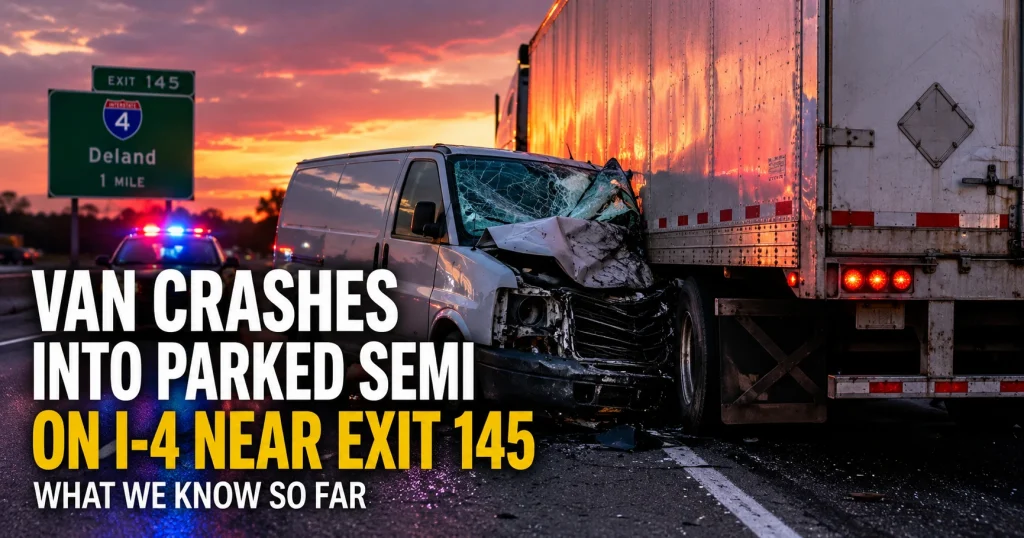
White van near a semi-truck stopped on a Florida interstate shoulder after a collision, for illustrative purposes only.
Blog, News, Truck Accidents

Van Hits Parked Semi on I-4: Who Could Be Liable in a Florida Shoulder Crash?

What You Need to Know A sprinter van struck a semi-truck parked on the right shoulder of I-4 in Volusia County on June 25, 2026. FHP cited the van driver for careless driving and not wearing a seat belt. The published report did not identify a violation by the truck driver. Florida law restricts parking on limited-access highway shoulders but provides exceptions for disabled vehicles and certain other situations. Commercial trucks may also have state and federal duties involving hazard lights and roadside warning devices. Fault in a similar crash can depend on driver conduct, the reason for the truck’s stop, vehicle position, warning devices, and physical evidence. Had a bad day? Call The Reyes Firm at 833-4 BAD DAY. A crash involving a semi-truck parked on an interstate shoulder may look simple at first. One vehicle was moving. The other was stopped. But if you were hurt in a similar crash, a Tampa truck accident lawyer may need to examine much more than which vehicle was moving at impact. Florida has rules about stopping on highway shoulders. Commercial trucks can also face additional warning-device requirements. At the same time, every driver has a duty to stay in control of the vehicle and use reasonable care. That makes the facts critical. What Happened When the Van Hit the Parked Semi-Truck on I-4? Florida Highway Patrol said a 27-year-old Jacksonville man driving a sprinter van abruptly left I-4 and struck the side of a semi-truck parked on the right shoulder near Exit 145 in Volusia County. The June 25, 2026 crash badly damaged the van, but officials reported no deaths or serious injuries. Where Did the I-4 Semi-Truck Crash Happen? The crash was reported on Interstate 4 near Exit 145 in Volusia County, Florida. Map shows the general area of the reported crash and is provided for informational purposes only. FOX 35 Orlando reported that the crash happened during the evening rush hour. FHP said: The van left the roadway before impact. The van struck the side of the parked semi-truck. The van driver was taken to a hospital and is expected to survive. The van driver received citations for careless driving and not wearing a seat belt. The truck driver was standing outside the semi and was not injured. The published report does not explain why the semi-truck had stopped on the shoulder. It also does not report that FHP cited the truck driver. Those missing facts matter when discussing liability. This article does not claim that the semi-truck driver or trucking company caused or contributed to this crash. It explains issues that may arise in a similar Florida shoulder collision. 💡 Did You Know? FLHSMV’s final 2024 Florida Traffic Crash Facts report lists 46,677 crashes involving commercial motor vehicles and 304 CMV fatalities statewide. Those final figures replace FLHSMV’s earlier preliminary 2024 totals. The seat belt issue reported in the I-4 crash is also significant from a safety standpoint. NHTSA reports that 48% of passenger vehicle occupants killed in crashes in 2024 were unrestrained among cases with known restraint use. Who Could Be Liable When a Vehicle Hits a Semi Parked on the Shoulder? The moving driver may carry significant responsibility after hitting a parked semi, but a stopped truck is not automatically removed from the liability analysis. Investigators may examine why the truck stopped, where it was positioned, how visible it was, what warning devices were used, and the actions that caused the other vehicle to leave its lane. In the reported Volusia County crash, FHP cited the van driver for careless driving. That is an important fact. But similar crashes can involve different circumstances. Questions may include: Issue What Investigators May Examine Moving driver’s conduct Speed, distraction, fatigue, lane departure, impairment, medical issues, or loss of control Reason for the truck’s stop Breakdown, mechanical failure, crash, emergency, traffic condition, or another reason Truck position How far the truck was from the travel lane and how it was positioned on the shoulder Visibility Lighting, weather, road geometry, reflective materials, and sight distance Hazard lights If required warning lights were operating Warning devices If triangles, reflectors, or other devices were required and properly placed Time stopped How long the commercial vehicle had been on the shoulder A police citation can matter, but civil fault may require a separate investigation. Our guide to who is liable in a truck accident in Florida explains how more than one person or company can become part of that investigation. 🛡️ Your Rights Under Florida Law: Florida Statute § 768.81 uses modified comparative negligence in covered negligence cases. A person’s damages can be reduced based on that person’s percentage of fault. A party found more than 50% at fault for his or her own harm generally cannot recover damages in a negligence action covered by the statute. Can a Semi-Truck Legally Park on an Interstate Shoulder in Florida? Florida generally restricts stopping, standing, or parking on the roadway or shoulder of a limited-access highway. However, the law provides exceptions. A vehicle disabled by a mechanical failure or crash may remain on the shoulder for up to six hours. Other lawful stops may also fall within exceptions stated in Florida law. Florida Statute § 316.1945 specifically addresses stopping and parking on limited-access facilities. The law generally prohibits parking on the roadway or shoulder but allows a vehicle that is disabled or unsafe to drive because of mechanical failure or a crash to remain there for no more than six hours. That means seeing a semi on the shoulder does not, by itself, tell you whether the stop was lawful. What Warning Lights Are Required? Florida Statute § 316.301 applies to certain trucks, buses, tractor-trailers, semitrailers, and other large vehicles. For covered vehicles stopped on a roadway or adjacent shoulder, the driver generally must immediately activate hazard-warning lights. The statute also contains additional warning-device requirements in specified circumstances, including some vehicles disabled or stopped for more than 10 minutes. Federal commercial vehicle rules can apply

Amazon delivery van and passenger vehicle after a crash in Tampa, Florida, for illustrative purposes only.
Blog, Commercial Vehicles, Company-Caused Car Accidents

Amazon Delivery Accident Liability: Who Pays When a Driver Hits You?

What You Need to Know The Amazon name on a van or package does not always tell you who is legally responsible for the crash. A driver may work for an Amazon Delivery Service Partner, drive through Amazon Flex, or work for another company involved in the delivery. Different delivery arrangements can mean different insurance policies and responsible parties. Photos, delivery records, app data, GPS information, video, contracts, and insurance records can help show who should pay. The sooner the crash is investigated, the easier it may be to preserve evidence that can disappear or be overwritten. Had a bad day? Call The Reyes Firm at 833-4 BAD DAY. An Amazon delivery vehicle hit you. You are hurt, your car is damaged, and now you are trying to figure out who is supposed to pay. That question may be harder than it looks. The driver may not actually work for Amazon. The van may belong to another company. A personal insurance policy, commercial policy, delivery company, vehicle owner, or other business may be involved. An Amazon truck accident liability attorney can investigate those relationships and find out which companies and insurance policies may be responsible for your losses. If your crash happened in Tampa or elsewhere in Hillsborough County, the first step is not guessing who is liable. It is finding out exactly who the driver worked for, what type of delivery they were making, and which insurance covered the trip. Our guide from an Amazon delivery truck accident attorney explains why these cases can involve more moving parts than a typical car accident. Who Can Be Responsible After an Amazon Delivery Crash? More than one person or company may be responsible after an Amazon delivery crash. The driver may be at fault for careless driving, but the investigation may also lead to the driver’s employer, a delivery company, the vehicle owner, an insurer, or another business connected to the trip. The Amazon logo alone does not answer the question. After a crash, we may need to determine: Who was driving the vehicle Who hired or employed the driver Who owned or leased the vehicle Which Amazon delivery program was being used What the driver was doing at the time of the crash Which insurance policies were active If another company helped cause the collision For example, a driver who runs a red light may be personally responsible for causing the crash. If that driver was working for a delivery company at the time, the company and its insurance may also need to be investigated. If poor vehicle maintenance contributed to the crash, the vehicle owner or maintenance company could also become part of the case. The right answer comes from the evidence. What should you do at the scene? If you can do so safely: Take photos of the delivery vehicle and your vehicle Photograph company markings and the license plate Get the driver’s name and insurance information Ask who employs the driver Get witness names and contact information Save any dashcam or phone video Get the police report number You should also get medical care if you are hurt. Florida’s PIP law generally requires a person to receive initial medical services and care within 14 days of a motor vehicle crash to qualify for certain PIP medical benefits under Florida Statute § 627.736. ⚠️ Warning: Florida deadlines can affect your claim Florida Statute § 95.11(5)(a) generally gives you two years to file a negligence lawsuit. PIP also has a separate 14-day rule for certain medical benefits. Other deadlines can apply depending on the claim and the parties involved, so waiting can put important rights and evidence at risk. Watch: Who Pays After an Amazon Delivery Truck Accident? A delivery truck crash can involve more than the driver alone. In this short video, Edward Reyes explains why accidents involving Amazon and other delivery vehicles may involve commercial insurance, company responsibility, and additional questions about who should pay for your injuries and losses. Edward Reyes, Esq. explains why delivery truck accident claims can involve questions about the driver, the company, and available insurance coverage. Does It Matter If the Driver Works for a DSP or Amazon Flex? Yes. The driver’s delivery arrangement can change the entire insurance and liability investigation. A DSP driver usually works for a separate delivery company. An Amazon Flex driver normally uses a personal vehicle. Each setup creates different questions about employment, insurance, vehicle ownership, and company responsibility. Amazon Delivery Service Partner drivers Amazon’s Delivery Service Partner program uses independently operated delivery businesses. Those businesses generally hire and manage their own drivers. A DSP driver may be operating a branded delivery van, but that does not mean Amazon directly employs the driver. In a DSP crash, important questions may include: Which DSP employed the driver? Who owned or leased the van? Which commercial insurance covered the vehicle? Was the driver making deliveries at the time? Did the company properly train the driver? Were there safety problems before the crash? Was the vehicle properly maintained? Records from the DSP can become very important. Amazon Flex drivers Amazon Flex works differently. Flex drivers generally use their own vehicles to make deliveries. That can make the insurance investigation more complicated because a personal auto policy may be involved along with coverage connected to Amazon Flex. An Amazon Flex accident lawyer may look closely at: The driver’s delivery block App activity GPS information Package scans Route records Personal auto insurance Commercial coverage connected to the delivery The timing matters. A driver who was actively delivering packages may create different insurance questions than a driver who had already finished a delivery block. A simple comparison Delivery setup Vehicle Main question DSP driver Often a branded delivery van Which delivery company and commercial policy covered the trip? Amazon Flex Usually the driver’s personal vehicle What was the driver’s delivery status, and which insurance policies were active? Other contractor Varies Who hired the driver, owned the vehicle, and insured the work? That

Scroll to Top