What You Need to Know
- In Florida, you may be able to sue a company if its driver hit you, but the answer depends on the driver’s job status, what the driver was doing, and who owned or controlled the vehicle.
- If the driver was an employee acting within the scope of employment, the company may be liable under Florida’s respondeat superior doctrine.
- If the driver was labeled an independent contractor, that label does not always end the case. Florida courts may look at the company’s actual control.
- Florida’s Dangerous Instrumentality Doctrine may create a separate path to vehicle-owner liability when a company allows someone to drive its vehicle. Limits and exceptions can apply.
- Florida is a no-fault state. Your PIP coverage generally pays first. Injury claims beyond PIP may depend on whether your injuries meet Florida’s serious injury threshold.
- For most Florida negligence-based car accident claims arising on or after March 24, 2023, the lawsuit deadline is generally two years, not four years.
- Florida’s modified comparative negligence rule can bar recovery if you are found more than 50% at fault.
- Had a bad day? Call The Reyes Firm: 833-4 BAD DAY
Use the sections below to see how each rule may affect your case.
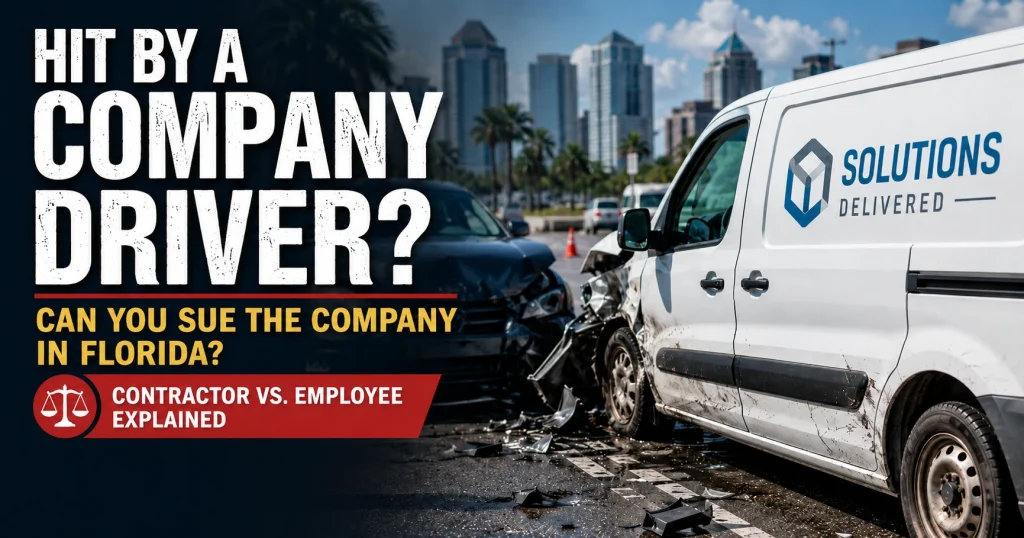
If you are asking, “Can I sue a company if their driver hit me in Florida?” you are probably dealing with pain, bills, and confusing insurance calls. A crash involving a company vehicle can feel different from a regular car accident because more than one person or business may be involved.
The hard part is knowing who may be responsible. Was the driver an employee? A contractor? Was the driver working at the time? Did the company own the vehicle?
This guide explains how Florida law treats company driver accidents, contractor vs. employee status, PIP insurance, and company liability. It also explains why rapid evidence preservation matters in Tampa company-vehicle accident cases.
Can I Sue a Company If Their Driver Hit Me in Florida?
Yes, you may be able to sue a company if their driver hit you in Florida, but the answer depends on several facts.
The key questions are:
- Was the driver an employee or an independent contractor?
- Was the driver working at the time of the crash?
- Did the company own, lease, or control the vehicle?
- Did the company negligently hire, supervise, or entrust the vehicle to the driver?
- Do your injuries allow you to step outside Florida’s no-fault PIP system?
Florida is a no-fault insurance state. After many crashes, your own Personal Injury Protection coverage pays first, no matter who caused the crash. Florida PIP generally covers 80% of reasonable medical expenses and 60% of lost income, subject to policy limits and other legal rules.
To pursue certain damages against the at-fault driver or company, your injuries may need to meet Florida’s serious injury threshold. This threshold may include permanent injury, major scarring, or loss of an important body function.
⚠️ Deadline Alert: For most negligence-based Florida personal injury claims arising on or after March 24, 2023, the deadline is generally two years. The prior four-year deadline should not be used for most modern Florida car accident negligence claims. Evidence such as GPS data, dashcam footage, dispatch records, app logs, and driver history files can disappear quickly. That is why early legal action matters. Source: Florida Statute § 95.11.
Once you know PIP is only the first layer, the driver’s work status becomes the next issue.
What Is the Difference Between an Employee and an Independent Contractor in a Florida Accident?
In a Florida company vehicle accident case, the distinction between an employee and an independent contractor can affect the company’s liability.
If the driver was an employee acting within the scope of employment, the company may be liable under the doctrine of respondeat superior. That legal phrase means an employer may be responsible when an employee causes harm while doing job-related work.
If the driver was an independent contractor, the company may argue it is not responsible. But that label is not always the final answer.
A company can call someone a “1099 contractor,” but Florida courts may still look at the actual working relationship. The more control the company had over the driver’s work, the stronger the argument that the driver was acting as an employee.
Employee vs. Contractor Factors in Florida Accident Cases
| Factor | Points Toward Employee | Points Toward Contractor |
| Control over work | The company directs how the job is done | The worker decides how to complete the job |
| Vehicle ownership | The company owns or leases the vehicle | The worker uses their own vehicle |
| Schedule | The company sets hours, routes, or shifts | Workers control their own schedule |
| Supervision | The company monitors daily performance | The worker operates independently |
| Branding | Vehicle, uniform, or app strongly identifies the company | The worker operates under their own business identity |
| Payment | Hourly, salary, or fixed route pay | Per project, per job, or per delivery |
| Exclusivity | Works mainly for one company | Works for multiple businesses |
| Duration | Ongoing relationship | Short-term or project-based work |
No single factor decides the case. Florida courts consider the full relationship, including the contract, company control, driver autonomy, and crash facts.
If the company claims the driver was a contractor, the next step is to test that claim against the evidence.
What If the Company Says the Driver Was an Independent Contractor?
If the company says the driver was an independent contractor, do not assume that ends your claim.
That may be true in some cases. But in others, the company may still face liability based on control, ownership, or negligent conduct.
Legal Theories That May Apply
Misclassification or actual control.
If the company controlled the driver’s routes, schedule, appearance, app activity, or delivery process, the driver may have acted more like an employee.
Negligent hiring or retention.
A company may face liability if it hired or kept a driver despite warning signs. These signs may include a history of dangerous driving, license issues, or prior crashes.
Negligent supervision.
If the company knew the driver was unsafe and failed to act, negligent supervision may become part of the claim.
Negligent entrustment.
A company or vehicle owner may be liable if it allowed an unsafe or unqualified driver to use a vehicle.
Retained control.
Even in a contractor relationship, a company may be responsible when it controls the details of the work.
Vehicle ownership and permissive use.
If the company owned the vehicle and gave the driver permission to use it, Florida’s Dangerous Instrumentality Doctrine may apply. Limits and exceptions may still matter.
💡 Did You Know? FLHSMV’s 2024 report listed 46,651 commercial motor vehicle crashes in Florida. It also listed thousands of out-of-service violations involving commercial vehicles and drivers. These numbers show why company vehicle cases often need a fast review of driver, safety, dispatch, and maintenance records. Source: FLHSMV 2024 By the Numbers.
A contractor label may be the company’s defense, but vehicle ownership can create a different path.
Still have questions? Call The Reyes Firm at 833-4 BAD DAY. The consultation is free, and there’s no obligation.
What Is the Dangerous Instrumentality Doctrine in Florida?
Florida’s Dangerous Instrumentality Doctrine is a rule about vehicle-owner responsibility. It can make a vehicle owner responsible when the owner lets someone drive the vehicle, and that person causes a crash.
In company vehicle cases, this rule can matter when the company owns, leases, or controls the vehicle involved in the crash. If a company authorizes a driver to use a vehicle for business, the owner’s liability may need to be reviewed.
However, this rule should not be overstated. Florida Statute § 324.021(9)(b) includes specific rules, caps, and exceptions for certain owners, lessors, rental vehicles, and commercial-use cases.
What this means for your case:
- Who owned the vehicle matters.
- Who gave the driver permission matters.
- How the vehicle was used matters.
- Lease, rental, and business-use facts may change the analysis.
In plain English: who owned the vehicle matters. So does permission, business use, and the vehicle’s role in the company’s work.
Ownership is important, but the driver’s exact activity at the time of the crash can change everything.
What Was the Driver Doing When They Hit You?
Even if the driver was an employee, the company is usually liable only if the driver was acting within the scope of employment.
A driver may be within the scope of employment if they were:
- Making a delivery
- Driving between job sites
- Responding to a service call
- Running an errand for the employer
- Transporting tools, supplies, passengers, or company materials
- Following the company dispatch or app instructions
A driver may be outside the scope of employment if they were on a personal errand, commuting, or using the vehicle without permission. These issues are often disputed.
Florida company vehicle cases often require evidence such as:
- GPS records
- Dashcam footage
- Dispatch logs
- Company text messages
- App activity
- Fuel card records
- Driver schedules
That evidence can make the difference between a claim against only the driver and a claim that also reaches the company.
Once the driver’s work purpose is clear, the next question is who should be named in the claim.
Should I Sue the Company, the Driver, or Both?
In many Florida company vehicle accident cases, both the driver and the company should be reviewed as potential defendants.
The driver may be liable because they caused the crash. The company may be liable if the driver was working, if the company owned the vehicle, or if the company acted negligently. That negligence may involve hiring, supervision, retention, or entrustment.
This matters because commercial insurance coverage may be higher than a private driver’s personal auto policy. When federal motor carrier rules apply, some for-hire property carriers must carry at least $750,000 in liability coverage. Some passenger or hazardous materials carriers may need higher coverage.
That does not mean every company vehicle crash has high insurance coverage. It means the insurance structure must be investigated carefully.
The answer may change again when the driver is working through an app or rideshare platform.
What If the Driver Was Working for Uber, Lyft, DoorDash, Amazon Flex, or Another App?
Gig economy and rideshare cases require a separate analysis.
Florida has a specific Transportation Network Company statute for rideshare companies, including Uber and Lyft. That law includes insurance rules and limits some vicarious liability claims when statutory conditions are met. Vicarious liability means one party may be responsible for another party’s actions.
In 2025, Florida’s Third District Court of Appeal affirmed summary judgment for Lyft in a case involving vicarious liability and negligent hiring claims. That ruling applied Florida’s TNC statute and makes rideshare cases different from many company vehicle cases.
Delivery app cases may involve a different review. The answer can depend on the company, the app status, the vehicle, the contract, and the company’s control.
Key app-based facts to review include:
- Was the driver logged into the app?
- Was the driver waiting for a ride or a delivery?
- Was the driver actively transporting a passenger or an order?
- Did the app control the route, timing, or delivery steps?
- What insurance policy applied at that moment?
Do not accept the company’s classification of the driver as final without a legal review of the facts.
Even when the company may be liable, Florida’s fault rules can still affect the value of the case.
How Does Florida’s Modified Comparative Negligence Rule Affect Company Vehicle Claims?
Florida uses a modified comparative negligence system. That means your recovery may be reduced if you share fault for the crash.
If you are partly at fault, your recovery may be reduced by your percentage of fault. If you are found more than 50% at fault, you may be barred from recovering damages in most negligence cases.
This matters in company vehicle cases because insurers may argue that you were speeding, distracted, following too closely, or changed lanes unsafely. Even when a company driver made a mistake, fault allocation can still become a major issue.
Fault allocation can decide whether you recover damages at all.
That is why early evidence preservation is important. Photos, videos, crash reports, witness statements, and vehicle location records can help show what happened.
Because fault arguments start early, getting legal help early can protect the evidence before it disappears.
How Can The Reyes Firm Help After a Company Driver Accident in Tampa?
When a company driver causes a crash, the company and its insurer may begin protecting their interests right away. The injured person should not have to figure out company liability, insurance coverage, driver status, and Florida PIP rules alone.
The Reyes Firm helps injured people in Tampa and throughout Hillsborough County by investigating claims involving company vehicle accidents.
Our team can:
- Identify every potentially responsible party
- Determine whether the driver was an employee, contractor, agent, or permissive user
- Review vehicle ownership, leasing, rental, and insurance information
- Send preservation letters for GPS data, dashcam footage, dispatch logs, app records, and driver files
- Investigate negligent hiring, supervision, retention, or entrustment issues
- Review whether Florida’s Dangerous Instrumentality Doctrine applies
- Handle communications with insurance companies
- Prepare the claim for settlement talks or litigation when appropriate
The goal is not to accept the company’s label at face value. The goal is to test that label against the evidence.
📍 The Reyes Firm
4730 N. Habana Ave., Suite 201
Tampa, FL 33614
📞 833-4 BAD DAY
The questions below cover the issues injured people often ask first.
Frequently Asked Questions
Can I sue a company if their driver hit me in Florida, even if the driver was labeled a contractor?
Yes, you may still be able to sue the company in some situations. Florida courts may look beyond the contractor label and examine the actual working relationship. If the company controlled the driver’s work, owned the vehicle, or negligently entrusted the vehicle, the company may still face liability.
Do I sue the company or the driver who hit me?
In many serious company vehicle accident cases, both the driver and the company should be reviewed as potential defendants. The driver may be directly liable for causing the crash. The company may be liable through employment, vehicle ownership, negligent supervision, negligent entrustment, or another legal theory.
What is respondeat superior in a Florida car accident case?
Respondeat superior means an employer may be responsible for an employee’s negligent conduct during work. In a Tampa car accident case, this may apply if the driver was making deliveries, driving between job sites, or performing another work task.
What is the Dangerous Instrumentality Doctrine in Florida?
Florida’s Dangerous Instrumentality Doctrine may hold a vehicle owner responsible when the owner gives someone permission to drive the vehicle. In company vehicle cases, this can matter when the company owns or controls the vehicle. Florida law also includes limits and exceptions that must be reviewed carefully.
What if the vehicle owner is different from the company the driver worked for?
That is common in delivery, logistics, rental, leasing, and staffing arrangements. You may have separate claims involving the driver, the driver’s employer, the vehicle owner, a leasing company, or another business. Identifying each party early is important because each may have separate insurance coverage and separate defenses.
How long do I have to sue after a company driver accident in Florida?
For most Florida negligence-based car accident claims arising on or after March 24, 2023, the deadline is generally two years. Some claims may have different deadlines, so speak with an attorney as soon as possible. Waiting can also make it harder to preserve GPS data, dashcam footage, app records, and witness information.
What if the driver was a gig economy driver, like an Amazon Flex, DoorDash, Uber, or Lyft driver?
Gig economy cases depend on the company, the app, the driver’s status, the vehicle, and the driver’s activity at the time. Rideshare companies such as Uber and Lyft are governed by Florida’s Transportation Network Company statute. Delivery app cases may require a different review.
What should I do immediately after being hit by a company vehicle in Tampa?
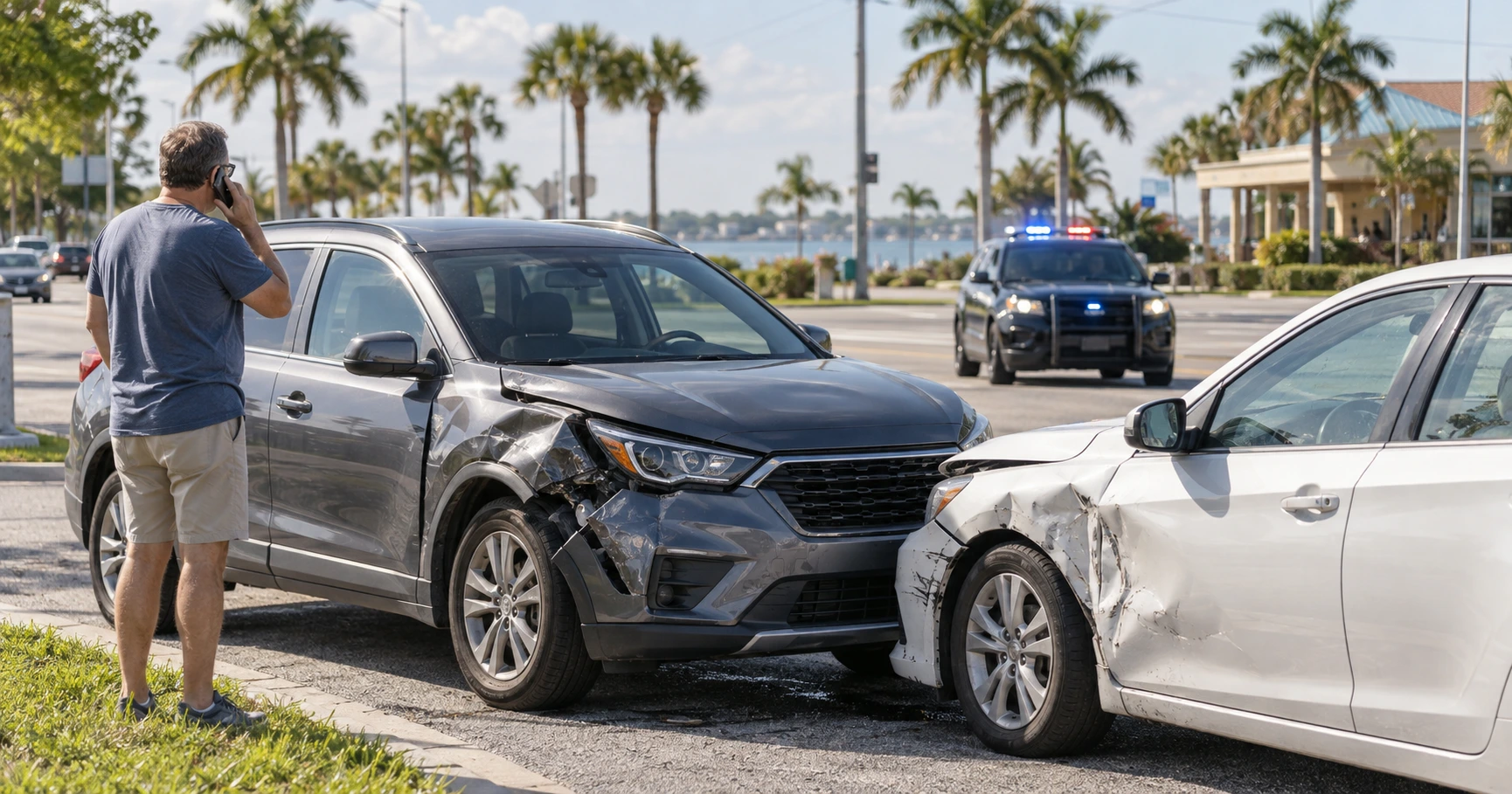
Call 911 and make sure a crash report is filed. Take photos of the scene, vehicle, license plate, company logos, driver information, and visible damage. Get medical care as soon as possible, even if symptoms seem minor at first. Avoid giving recorded statements to the company’s insurance adjuster before getting legal advice. Then speak with a Florida personal injury attorney who can help preserve company records before they are lost or destroyed.
The most important first step is protecting the evidence before the company controls the story.
After the common questions, here is who prepared this guide.

This article was written by Edward Reyes, Esq., a Florida Bar-admitted personal injury attorney and founder of The Reyes Firm in Tampa, Florida. Edward represents injured clients in personal injury cases involving car accidents, commercial vehicles, trucking crashes, employer liability, and company vehicle accidents across Tampa, Hillsborough County, and surrounding Florida communities.
The firm’s contact information is below for readers who want to discuss their situation.
Read more about Edward Reyes.
How Can The Reyes Firm Help You?
If you had a bad day because of a car accident, trucking crash, slip and fall, or another injury that was not your fault, The Reyes Firm is ready to help you understand your options.
The firm offers free consultations and works on a contingency fee basis. That means there are no attorneys’ fees unless compensation is recovered for you. Case costs and expenses are handled in accordance with the written fee agreement.
You should not have to deal with the insurance company alone.
📍 Address: 4730 N. Habana Ave., Suite 201, Tampa, FL 33614
📞 Phone: 833-4 BAD DAY
🌐 Website: Schedule your free consultation today at thereyesfirm.com
Had a bad day? Call The Reyes Firm. We can help you take the next step.
Please review the disclaimer below before relying on this article as legal information.
Legal Disclaimer: The information in this article is provided for general informational purposes only and does not constitute legal advice. Reading this article does not create an attorney-client relationship with The Reyes Firm or Edward Reyes, Esq. Every case is fact-specific, and outcomes depend on the individual facts of each situation.
Florida law is subject to change. If you were injured in a crash involving a company vehicle, commercial driver, contractor, or rideshare driver, speak with a licensed Florida personal injury attorney about your specific situation. Past results do not guarantee future outcomes. This article is attorney advertising.
This article is informational only and is not a substitute for legal advice.