News

US 27 highway sign at night with police lights in the distance, representing a three-vehicle pickup truck crash in Marion County, Florida.
Blog, News, Personal Injury, personal injury attorney, Truck Accidents

Three-Vehicle Pickup Truck Crash on US 27 in Marion County: What Injured Drivers Should Do Next

Driving on U.S. Highway 27 in Ocala is more than just a trip to the store. It is a drive on a road with a dark history. For decades, locals have called this stretch of highway “Bloody 27.” It earned that scary name because of how many serious accidents happen on it every year. While the road has been widened over time, the danger has not gone away. Just recently, the community in Marion County saw this firsthand when a terrible crash involving three pickup trucks happened near Northwest 90th Avenue. This recent accident was a tragedy that took the life of a 25-year-old and sent others to the hospital. The crash was severe enough to close the road for several hours. One person who lives right next to the highway told reporters at WCJB News that “people land in my pastures constantly.” This shows that for people in Ocala, “Bloody 27” is not just a historical nickname. It is a daily reality. When three big, heavy pickup trucks crash into each other, the results are catastrophic. If someone was hurt in a US 27 crash in Ocala, they are likely dealing with pain, medical bills, and a lot of questions. The Reyes Firm wants injured drivers and families to know they do not have to handle the insurance companies alone. This guide explains what happens after a serious crash and how to protect legal rights. Why “Bloody 27” Is Still So Dangerous Today A road with a nickname like “Bloody 27” should have become safer by now. The problem is a mix of high speeds and heavy traffic. US 27 is a major route through the “Backbone of Florida,” carrying everything from family cars to massive semi-trucks and heavy construction pickups. For more on how serious commercial crashes can be, see The Reyes Firm’s guide to semi-truck accidents in Florida. In a three-vehicle pickup crash, vehicle weight plays a significant role. Pickup trucks are heavier and taller than many standard cars. When heavy vehicles collide, the impact is greater, and injuries are often more severe. Many wrecks on this corridor happen during stop-and-go driving. One vehicle slows down to turn into a side road, driveway, or farm entrance, and the driver behind does not react in time. Heavy vehicles require more distance to stop, especially when the driver is distracted, fatigued, or speeding. The “Pasture” Danger: Why Rural Crashes Can Be Worse When a crash happens on a city street, curbs and buildings can limit where vehicles go. But on US 27 in Marion County, the road is surrounded by open fields and horse pastures. When vehicles leave the roadway at highway speeds, the crash can become even more dangerous. Rollovers: Pickup trucks are tall. If they slide into a ditch or soft ground, they are more likely to tip or flip. Secondary impacts: A vehicle may survive the initial impact and then crash into a fence, tree, or other off-road object. Delayed help: In rural areas, longer response times increase the risk of catastrophic injuries. Common Injuries After a Major Pickup Truck Crash The Reyes Firm often sees injuries that do not seem severe at first but become painful days later. In a multi-vehicle collision, a body can be thrown forward, sideways, or backward within a split second. Hidden brain injuries Even without a direct head strike, the brain can move inside the skull during a violent stop. This can cause a concussion or traumatic brain injury (TBI). Warning signs can include headache, nausea, dizziness, confusion, and light sensitivity. Anyone with symptoms should seek medical care right away. Neck and back damage High-impact forces can injure the spine, including the discs and soft tissues. Symptoms may include neck stiffness, back pain, numbness, tingling, or radiating pain into the arms or legs. Early evaluation and consistent care are essential. The 14-Day Rule: Do Not Lose PIP Benefits Florida’s no-fault system often starts with Personal Injury Protection (PIP). Under Florida’s PIP statute, initial medical services must be received within 14 days of the crash to qualify for PIP medical benefits. Florida Statutes § 627.736 (PIP) If someone waits too long, believing the soreness will fade, the insurer may deny PIP benefits. Even mild symptoms should be documented. Florida drivers can also review official guidance here: FLHSMV: Involved in a Crash? The Nightmare of the “Middle Vehicle” In a three-vehicle crash, the middle driver is often squeezed between two other vehicles. The rear driver may claim the middle driver stopped too fast. The front driver may state that the middle vehicle struck them before the rear impact occurred. Insurance companies can argue for months about who should pay. Florida’s comparative fault rule can be harsh. In many negligence cases, a party found to be greater than 50% at fault may not recover damages. Florida Statutes § 768.81 (comparative fault) This is one reason local legal help matters. A truck accident lawyer in Marion County can push for the evidence needed to place fault where it belongs. Preserving the “Black Box” Evidence (EDR and Truck Data) Many modern vehicles have an Event Data Recorder (EDR), sometimes called a “black box.” NHTSA explains that EDRs may record items such as pre-crash vehicle dynamics, driver inputs, crash forces, and restraint use. NHTSA: Event Data Recorder (EDR) In a severe incident such as a US 27 crash in Ocala, EDR data can help confirm what happened and support or challenge a driver’s account. But this evidence can disappear fast if the vehicle is repaired, sold, or sent to a junkyard too soon. If the crash involves a work truck or a commercial vehicle accident, the investigation can go even deeper. Company vehicles and semi-trucks may also include GPS data, dashcam footage, maintenance records, and other electronic data. That is why acting quickly matters. The Reyes Firm can send preservation letters and take legal steps to help protect vehicles and key records before they are altered, overwritten, or destroyed. Video: Why severe truck crash cases require

Semi-truck driving on I-75 under dark storm clouds, representing a fatal truck crash near Weston, Florida.
Blog, News, Truck Accidents, Wrongful Death

What Families Need to Know After the Fatal I-75 Truck Crash in Weston

A typical Sunday morning drive can turn into a nightmare in the blink of an eye. For the people driving near Weston on July 13, 2025, that nightmare became real. A tragic accident involving a large Amazon semi-truck stopped traffic and changed lives forever. When a big truck hits a person or a small car, the damage is often terrible, and families are left with broken hearts and many questions. The crash happened on I-75 near the I-595 interchange in Weston. Police reports say an Amazon semi-truck hit and killed a pedestrian. The accident caused a massive traffic jam that lasted for hours. While the traffic eventually cleared up, the pain for the victim’s family is just beginning. When a commercial truck is involved in a death, it is not just a simple car accident. It becomes a complicated legal situation involving big companies and insurance policies. Families often feel lost after such a tragedy. They don’t know who to hold accountable or how to cover the unexpected costs. The Reyes Firm understands that this is a confusing and scary time. This article explains what families need to know about the I-75 fatal truck crash in Weston and how the law in Florida works to protect them. What Happened on I-75 in Weston? On the morning of July 13, drivers on I-75 saw flashing lights and yellow tape. A pedestrian was struck by a massive delivery truck owned or operated by Amazon. Emergency workers arrived quickly, but sadly, the person died at the scene. Accidents like this are very different from a fender-bender in a parking lot. Semi-trucks are enormous and heavy. They take a long time to stop. If a driver is not paying attention or a truck component malfunctions, people can be seriously injured. In this case, investigators are examining why the truck struck the person. Was the driver speeding? Was the driver tired? These are questions that truck accident lawyers at The Reyes Firm ask to find the truth. Approximate location of the I-75 fatal truck crash in Weston at the I-595 interchange. Who Is Responsible for the Crash? When a car crash happens, it is usually just two drivers blaming each other. But in a truck crash, multiple parties may be responsible. This is called “liability.” For the I-75 fatal truck crash in Weston, a lawyer will look at a few different groups: The Truck Driver: Did they make a mistake? Were they looking at a phone or driving too fast? The Trucking Company: Did they hire a driver with a bad record? Did they require the driver to work excessive hours without sleep? The Maintenance Crew: Was the truck broken? If the brakes failed or a tire blew out, the company that repairs the trucks might be to blame. The Cargo Loaders: Sometimes, if boxes are packed incorrectly, the truck can tip over or be hard to steer. Video: Who is Liable in an Amazon Truck Accident? In this short video, Attorney Edward Reyes explains the complex layers of insurance and ownership that come into play when an Amazon delivery vehicle is involved in a crash. Learn more about how our investigators at The Reyes Firm look at drivers, owners, and distribution centers to find the truth. Why Amazon Truck Accidents Are Different You see Amazon trucks everywhere. But suing Amazon is not easy. Amazon is a large company with significant capital and a large legal team. They often use a special trick to protect themselves. They hire “independent contractors” instead of regular employees. This means that even if the truck says “Amazon” on the side, Amazon might say, “That driver doesn’t work for us directly. We aren’t responsible.” This makes it difficult for families to receive the compensation they deserve. However, skilled Amazon truck accident lawyers know how to fight this. If Amazon controlled the driver’s schedule, told them where to drive, and required them to wear an Amazon uniform, a lawyer could argue that Amazon would be responsible. This is a key part of the investigation for the I-75 fatal truck crash in Weston. What Is a Wrongful Death Claim? When someone dies because of another person’s mistake, the law calls it “wrongful death.” In Florida, the family cannot simply sue on their own. They must open an “estate” for the person who died. A “Personal Representative” is chosen to handle the lawsuit. This lawsuit is filed to help the family members who are left behind. This usually includes: The husband or wife. Children. Parents. Any blood relative who relied on the person for money or support. The goal of this claim is to get justice. It tells the trucking company that they cannot be careless with human lives. What Can Families Get Help With? No amount of money can bring a loved one back. However, the law allows families to receive financial assistance to help with the economic burden of the loss. This money is called “damages.” After a tragedy like the I-75 fatal truck crash in Weston, families can ask for payment for: Medical Bills: The cost of the ambulance or hospital before the person passed away. Funeral Costs: Paying for the burial and service. Lost Wages: The money the person would have earned at their job if they had lived. This helps the family cover future food, rent, and bills. Pain and Suffering: Money to make up for the sadness and loss of companionship. If the driver committed a serious offense, such as driving under the influence, the court may also require the company to pay additional penalties. The Time Limit to File a Lawsuit There is a stringent rule in Florida called the “Statute of Limitations.” This is a legal time limit that acts like a countdown clock. If a family waits too long and the statute of limitations expires, they lose their right to sue, regardless of how much evidence they have or how severe the accident was. According to Florida Statute § 95.11, the family generally

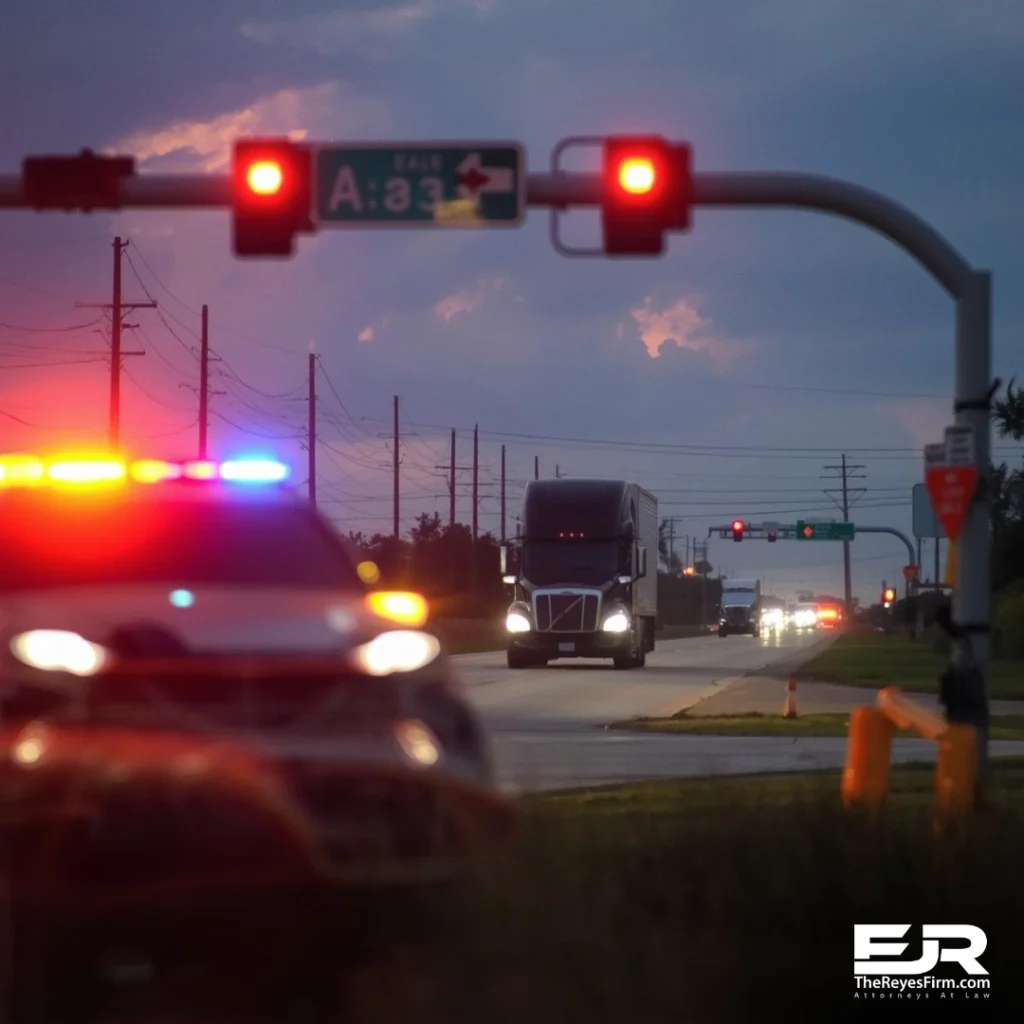
Police lights at a US-1 intersection with a semi-truck in the distance, representing a fatal pedestrian crash in Port St. Lucie, Florida.
Blog, News, Pedestrian Accident, Truck Accidents, Wrongful Death

Port St. Lucie Pedestrian Killed in Semi-Truck Crash on US-1: What Families Should Do Next

A family can be living a typical day when everything changes in seconds. That is the reality of a Port St. Lucie semi-truck pedestrian accident. These crashes are sudden and violent, often leaving loved ones searching for answers that do not come easily. The problem is that families are forced to make crucial decisions while still in shock. After a fatal Port St. Lucie pedestrian accident, evidence can disappear fast, and insurance companies may start calling before the family has even had time to breathe. What a family does in the first few days can affect what they can prove later. This issue matters because its impact is not only emotional. A Port St. Lucie fatal crash can also create immediate financial strain, especially when the person who died supported the household. Families deserve clear, plain-English guidance about what comes next, how Florida wrongful death claims work, and how to avoid common mistakes. Summary of the recent news report It was reported that Port St. Lucie Police were investigating after a 67-year-old man was killed in a collision involving a pedestrian and a flatbed semi-truck. The report said the crash happened before noon near SE Veterans Memorial Parkway and South U.S. Highway 1, and the victim was taken to HCA Florida St. Lucie Hospital, where he was pronounced dead. Authorities had not released the man’s identity at the time of publication, and police asked witnesses or anyone with video to contact Officer B. Thompson at (772) 871-5000. Incident Location: SE Veterans Memorial Pkwy & US-1 (Port St. Lucie) Open the incident location in Google Maps The directions map below shows the route from the crash location to The Reyes Firm’s Tampa office for families who want to meet with a lawyer in person. Directions: Incident Location to The Reyes Firm (Tampa Office) Open directions in Google Maps What makes a Port St. Lucie semi truck accident involving a pedestrian so serious? A Port St. Lucie semi truck accident is different from a typical car crash because a commercial truck is heavier, longer, and harder to stop. A pedestrian has almost no protection, so even a low-speed impact can be fatal. Truck crashes are also more complex. There may be multiple companies involved, such as: The trucking company (the employer) The owner of the truck or trailer A shipping or loading company (especially with flatbeds) A maintenance vendor This is one reason families often look for a Port St. Lucie truck accident lawyer quickly. A commercial case can turn into a paperwork battle if the proper steps are not taken early. For a deeper overview of how commercial truck cases work in Florida, including common causes and what evidence matters, read The Reyes Firm’s guide to semi-truck accidents in Florida. Where did the crash happen, and why do “US 1 accident Port St. Lucie” searches matter? When a tragedy happens on a major road, people often search by location. A family might type “US 1 accident, Port St. Lucie,” or “SE Veterans Memorial Parkway accident” to match what they heard with the reported details. Location matters because it can point investigators to: Nearby businesses with cameras Possible traffic cameras Lighting conditions and crosswalk placement Road design issues that affect visibility or turning Early posts may refer to it as a Port St. Lucie incident or a Port St. Lucie traffic accident while details are still being confirmed. That is normal. The legal questions are answered by evidence, not headlines. What should a family do first after a pedestrian is hit by a truck in Port St. Lucie? Families cannot fix what happened, but they can protect the truth. The Reyes Firm often recommends focusing on a simple, practical plan. What information should the family document immediately? A short notes page on a phone helps more than people expect. The family can write down: Date and approximate time Exact location, if known Investigating agency Names and numbers of anyone who says they saw the crash Nearby businesses that might have video Even small details can help later. How can families protect evidence before it disappears? Video is often overwritten quickly. The same applies to some trucking records. If the family knows the area, they can identify possible sources of footage, such as gas stations, restaurants, and storefronts near the intersection. This matters when the defense later claims the pedestrian was “not visible” or “appeared suddenly.” Should families contact their insurance provider right away? Families should be careful about early calls, especially when dealing with a Florida trucking company insurance claim. Adjusters may sound kind and calm, then ask for a recorded statement. A recorded statement can be used later to shift blame or reduce the claim. Many families are better protected when a truck accident lawyer handles communication. Should families accept a fast settlement offer? A quick offer can feel like relief. But early offers are often made before: The full evidence is gathered The full financial impact is understood. All responsible parties are identified. A rushed decision can close the door on better options later. How to get a Port St. Lucie police report after a fatal crash Families often search for how to get a Port St. Lucie police report because the crash report is one of the first official documents describing what happened. In many cases, the report can be requested through the investigating agency’s records process or, when available, through Florida’s crash report system. A lawyer can also help request additional materials connected to the report, such as: Diagrams and measurements Supplemental narratives Witness lists Photos collected by investigators Families should know that the first report is usually a starting point. A full investigation often requires more. What causes a Port St. Lucie pedestrian accident with a commercial truck? Every crash is different, but specific causes recur in severe trucking cases. Was the driver distracted or fatigued? Distraction can include looking at a phone, checking a GPS, or even looking away for a moment. Fatigue can be

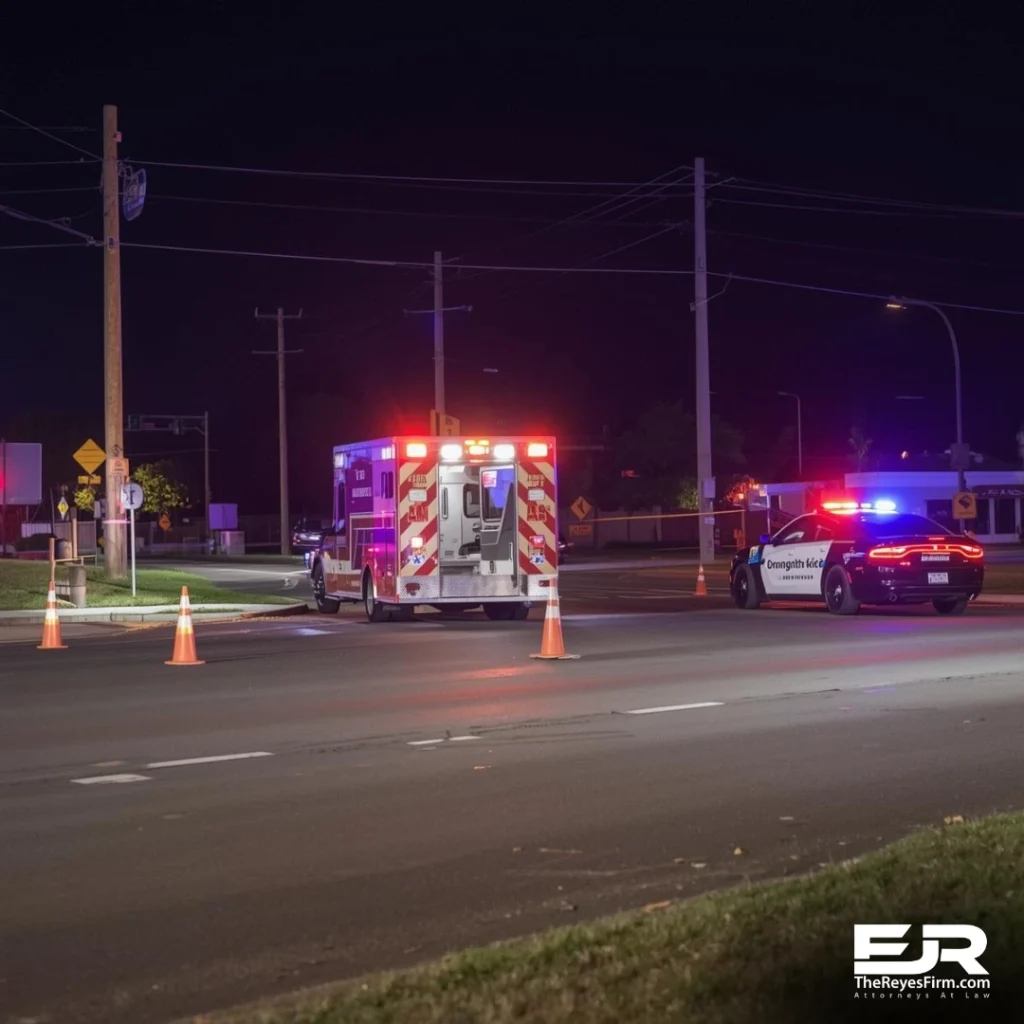
Ambulance and police car with flashing lights at a nighttime intersection, representing an ambulance crash in Haines City, Polk County, Florida.
Blog, Car accident, News

Polk County Ambulance Crash in Haines City: What Injured Victims Need to Know About Their Legal Rights

Sirens, flashing lights, and speeding vehicles usually mean help is on the way. But in a Polk County ambulance crash, the very vehicle that is intended to save lives can suddenly become the cause of serious harm. When a Polk County Fire Rescue ambulance crashes at a busy intersection in Haines City or anywhere in Central Florida, patients, paramedics, and everyday drivers can all be put in danger. News about a Haines City ambulance crash or a “Haines City car accident today” is never just a headline. Behind every story are real people dealing with sudden injuries, hospital visits, and the stress of determining who will pay medical bills and lost wages. Ambulance collisions are more complex than regular car wrecks because special rules apply to emergency vehicles, and multiple parties may share responsibility. This article explains, in clear and straightforward terms, what injured people and their families should know after an ambulance accident in Polk County. It covers the recent crash, how Florida’s rules for emergency vehicles apply, who is liable in an ambulance crash, victims’ rights, and steps to take after an emergency vehicle accident in Florida. It also explains how a Polk County personal injury lawyer at The Reyes Firm can help. News Summary: Polk County Ambulance Crash in Haines City According to local news reports, a Polk County ambulance crash happened just after 8:30 p.m. at a busy intersection near Haines City. A Polk County Fire Rescue ambulance was traveling from Haines City toward a nearby hospital, with a patient already inside, when it entered an intersection with emergency lights activated. At the same time, a pickup truck towing a trailer entered the intersection and struck the ambulance’s side, pushing it off the roadway. Four people were taken to local hospitals: the patient and a paramedic in the back suffered critical injuries. At the same time, the ambulance driver and the pickup driver were also hurt but are expected to recover. Deputies shut down part of the highway for several hours while investigators examined the crash scene. Polk County Ambulance Crash Location and Directions to The Reyes Firm Directions from the Haines City ambulance crash area to The Reyes Firm: If you or a loved one were involved in an ambulance crash near the intersection of US Highway 27 and Lucerne Park Road in Haines City, you can travel west toward Tampa and follow I-4 West. From there, follow the signs into Tampa and head toward North Habana Avenue. The Reyes Firm’s Tampa office is located at 4730 N. Habana Ave., Suite 201, Tampa, FL 33614, near the intersection of N. Habana Ave. and W. Cayuga Street. For turn-by-turn directions from the crash area or from anywhere in Polk County, you can open Google Maps and search for “The Reyes Firm, 4730 N. Habana Ave., Suite 201, Tampa, FL 33614”. Why Ambulance Crashes Are So Serious An ambulance accident in Polk County is often more dangerous than a typical crash for several reasons, and understanding these helps explain why injuries can be so severe. Speed and urgency Ambulances respond to emergencies and often travel faster than other vehicles. They may need to go through red lights or stop signs when they believe it is safe. High speeds combined with intersections and cross-traffic increase the risk of serious collisions, especially when other drivers are not paying attention. Size and weight An ambulance is larger and heavier than most passenger vehicles. In a collision, the smaller car usually takes more damage, and the people inside that car are more likely to suffer serious injuries like broken bones, head injuries, and spinal problems. Even at moderate speeds, the impact can be catastrophic. Vulnerable patients and crew Inside the ambulance, the patient is often already injured, sick, or unable to move. They may be strapped to a stretcher and cannot brace for a crash. Paramedics in the back are focused on medical care, not seat belts, and may also be thrown around in a collision. A Polk County ambulance crash can turn an already serious medical situation into a true emergency for everyone involved. Complex insurance and responsibility In a Polk County ambulance accident, several insurance companies may be involved. Polk County Fire Rescue, a private ambulance company, or a hospital system might own the ambulance. Another driver on the road might share fault. This mix of government entities, private companies, and multiple policies makes these cases more complex than a simple two-car crash. Florida Emergency Vehicle Right-of-Way Laws Explained Many people assume that emergency vehicles can ignore all traffic rules, but that is not true. Florida emergency vehicle right-of-way laws grant ambulances certain privileges but also impose duties on both ambulance drivers and other drivers. Duties of regular drivers When drivers in Florida see or hear an ambulance with lights and sirens: They must safely move over to the right side of the road when possible. They should slow down and, if necessary, stop until the ambulance passes. They should avoid blocking intersections or turning directly in front of the ambulance. If a driver fails to yield and causes or contributes to a crash involving a Polk County ambulance, that driver can be held responsible for the resulting injuries. Duties of ambulance drivers Emergency drivers must still exercise caution, even in an emergency. They are expected to: Use lights and sirens when responding to an emergency call. Slow down when approaching red lights, stop signs, and intersections. Ensure an intersection is reasonably clear before entering. Drive with “due regard” for the safety of other drivers, cyclists, and pedestrians. Obey standard traffic rules when not responding to an emergency. If an ambulance driver speeds through an intersection without checking cross-traffic, fails to use lights and sirens, or otherwise drives carelessly, that behavior can be considered negligence. When negligence causes a Polk County Fire Rescue ambulance to crash, the driver and the ambulance’s owner may be legally responsible. Who Is Liable in an Ambulance Crash? After a serious Polk County

Semi-truck driving on a wet Florida highway, illustrative image for truck crash safety content
Blog, News, Truck Accidents

Top Dangerous Highways for Semi-Truck Crashes in Florida (I-95, I-75, Turnpike)

A typical day on a Florida interstate can change in an instant. One bad decision by a truck driver, one sudden lane change, or one moment of distraction can turn a busy highway into a chain-reaction crash that leaves families in the hospital, and traffic backed up for miles. Crash data from Florida Highway Safety and Motor Vehicles (FLHSMV) shows just how serious the problem is. In 2023, more than 3,000 crashes involving commercial motor vehicles resulted in hundreds of injuries and several deaths. A newer FLHSMV summary for 2024 reports tens of thousands of commercial-vehicle crashes statewide and hundreds of fatalities, almost one in ten of all traffic deaths in Florida. These numbers confirm that specific routes are among the most dangerous for semi-truck accidents in Florida. This issue matters deeply to injured victims. A single semi-truck crash can lead to surgery, long-term medical care, and months or years away from work. By understanding which roads are the most dangerous for semi truck traffic, why these crashes occur, and what legal options exist, families can make safer choices on the road and stronger choices after a collision. TL;DR: Dangerous Highways for Semi-Truck Accidents in Florida Florida’s busiest freight routes, I-95, I-75, the Florida Turnpike, and I-4, are some of the most dangerous roads for semi truck accidents in the state. Massive trucks are sharing the highway with tourists who don’t know where they’re going and local commuters just trying to get to work. Crash data from FLHSMV shows thousands of commercial-vehicle crashes and hundreds of deaths each year, with hot spots in Hillsborough (Tampa), Miami-Dade, Broward, Palm Beach, Lee, and Collier Counties. The most significant causes of these crashes are speeding, tailgating, distracted driving, fatigue, bad weather, and poor truck maintenance, which often lead to multi-vehicle pileups, jackknifes, and underride crashes. After a truck crash, victims should seek medical care, report the collision, preserve evidence, and avoid giving recorded statements before speaking with a truck accident lawyer. A Tampa truck accident attorney at The Reyes Firm can investigate the wreck, deal with insurers, and pursue compensation for medical bills, lost wages, pain and suffering, and long-term needs. Why Are Florida Highways So Dangerous for Semi Trucks? Florida’s highways carry a heavy mix of freight, tourism, and daily commuting. Several factors combine to make many Florida roads risky for both truckers and regular drivers. How Do Traffic and Tourism Increase Crash Risk? Major routes such as I-95, I-75, I-4, and the Florida Turnpike serve both freight corridors and tourist routes. Semi trucks move goods between ports, warehouses, and other states, while rental cars, local drivers, and out-of-state visitors all share the same lanes. On these roads, heavy traffic means: Less space between vehicles Constant merging and lane changes More chances for rear-end and side-swipe crashes Because of this, several of these corridors are repeatedly listed among Florida’s most dangerous roads in safety articles and legal resources. How Do Weather and Road Design Play a Role? Florida’s weather can flip from sunshine to storms within minutes. Heavy rain, fog, and standing water reduce visibility and traction. A fully loaded semi-truck needs a long distance to stop, and wet pavement makes that distance even longer. At the same time, some highways have: Tight curves and limited shoulders Short on-ramps and exit ramps Work zones that squeeze traffic into narrow lanes These design issues, combined with bad weather, help explain why drivers often ask, “What is the deadliest highway in Florida?” or “Which highway has the most accidents?” Video: Why High-Speed Highways and Light Rain Are So Dangerous In this short clip, Attorney Edward Reyes explains why fatal accidents are more likely on high-speed interstates and how light rain on wet Florida highways can create deadly conditions. How Does Driver Behavior Add to the Danger? Human choices are a significant part of the problem. Common causes of semi-truck accidents include: Speeding and aggressive lane changes Following too closely in heavy traffic Distracted driving, such as texting or using in-cab screens Driving while tired, especially on long overnight runs When these behaviors happen on busy interstates or toll roads, serious truck driver accidents become much more likely. Hot-Spot Counties and Local Crash Burden FLHSMV and legal resource summaries show that certain counties experience exceptionally high levels of truck crashes. Hillsborough County (Tampa area) – One report notes that Hillsborough has one of the highest per-person truck-injury rates in Florida, with roughly fifty-plus truck-crash injuries per 100,000 residents. That rate is higher than even Miami-Dade’s, which already has heavy traffic. Palm Beach County – Recent data attributes more than three thousand truck crashes, hundreds of injuries, and over a dozen deaths in a single year. The county sits on both I-95 and I-75, with a mix of freight and tourism traffic. Lee and Collier Counties (Fort Myers and Naples / Alligator Alley area) – These counties together report hundreds of commercial-vehicle crashes and multiple fatalities each year along I-75 and nearby routes. These numbers confirm what injured drivers already feel: many Florida dangerous highways run directly through communities where people live, work, and commute every day. When Do Semi-Truck Crashes Happen Most Often? Time and season also affect crash risk. FLHSMV summaries show that more than half of fatal crashes happen during the day, between about 6 a.m. and 7 p.m. Peaks often occur during morning and evening rush hours, when commuters and trucks crowd the same lanes. Fridays, especially late in the afternoon, tend to have the highest crash counts. Some reports also note that December often has more truck crashes, while spring and early summer months may see fewer. For everyday drivers, this means that busy weekday commutes on interstates are among the most dangerous times to be near large trucks. Is I-95 One of the Deadliest Highways for Truckers in Florida? Many safety articles and legal analyses point to I-95 as the most dangerous road in Florida, especially for heavy trucks. What Makes I-95 So Dangerous for Semi Trucks? I-95 runs along Florida’s

Semi-truck and cars slowed in traffic on I-75 near Ocala, Florida, representing multiple crashes and lane delays.
Blog, News, Truck Accidents

Ocala I-75 Semi-Truck Accidents With Multiple Crashes: A Local Guide for Injured Drivers

When a semi-truck slams into slowed traffic on I-75 near Ocala and several vehicles are caught in the middle, life can change in seconds. A typical drive turns into a chain reaction of crashes, smoke, and sirens. Many families walk away from these scenes scared, confused, and unsure what to do next. The problem is that Ocala I-75 semi-truck accidents with multiple crashes are not simple fender benders. They often involve several trucks, many cars, different insurance companies, and serious questions about who is really responsible. While injured people are in the hospital, trucking companies and insurers may already be working to protect themselves and limit their liability. This issue matters because crash victims are dealing with pain, medical bills, missed paychecks, and significant changes in daily life. Without clear information and strong legal support from an Ocala truck accident lawyer or Marion County truck accident attorney, they can be pushed into unfair settlements or miss important Florida deadlines. A straightforward guide helps injured drivers protect their rights after a semi-truck pileup on I-75 in Florida. What Makes Ocala I-75 Semi-Truck Crashes So Dangerous? I-75 through Ocala and Marion County carries heavy traffic every day, including a high volume of commercial trucks. When something goes wrong there, the damage can be devastating. In a simple two-car crash, fault and damage are often easier to see. In a serious I-75 truck crash near Ocala, there may be: Multiple semi-trucks and many passenger vehicles High speeds and heavy congestion Vehicles pushed into each other like a line of dominoes. Fires, rollovers, or a jackknife tractor-trailer blocking several lanes Because a loaded semi-truck can weigh up to 80,000 pounds, smaller vehicles usually suffer the worst damage. This is why injuries in these crashes are often severe. Real-World Example: Multiple Semi-Truck Crashes on I-75 in Ocala   A July 2023 news report showed how quickly things can spiral on I-75 in Ocala when several crashes happen close together. In just a few hours, three separate wrecks near exits 352–354 involved a pickup hauling a moving trailer, a semitruck that damaged a guardrail and blocked a lane, and another semitruck that jackknifed while a pickup flipped onto its roof on the Highway 27 overpass.   According to Fire Rescue, the pickup driver in the final crash was thrown from the vehicle and rushed to the hospital, while the semitruck driver was not hurt. All southbound lanes were shut down, causing delays in both directions and forcing drivers to find alternate routes. For anyone injured in a crash like this, knowing what to do in the minutes and hours after impact, as outlined in the next section, can make a real difference in their safety, recovery, and legal rights. How Do Multi-Vehicle Pileups Happen on I-75 Near Ocala? Most pileups start with one bad moment. That moment might be: A semi-truck failing to slow down for stopped traffic A car cuts in front of a truck with almost no space. Sudden fog or heavy rain reduces visibility. Debris or spilled cargo on the road Once the first impact happens, drivers behind have almost no time to react. A single rear-end truck accident in Ocala can quickly escalate into multiple connected collisions as other vehicles slam on their brakes and crash. What Injuries Are Common After a Semi-Truck Pileup? People involved in Ocala I-75 semi-truck accidents with multiple crashes often suffer: Broken bones and fractures Neck and back injuries, including herniated discs Concussions and other brain injuries Internal bleeding and organ damage Severe cuts, bruises, and soft-tissue injuries Some injuries show up immediately. Others, like concussions or back problems, may appear hours or days later. This is why medical care is so critical, even when someone feels “just sore” at first. What Causes Ocala I-75 Semi-Truck Accidents With Multiple Crashes? These crashes are rarely “just bad luck.” They usually involve preventable safety failures. How Do Fatigue and Hours-of-Service Violations in Florida Lead to Crashes? Truck drivers must follow federal Hours-of-Service rules that limit how long they can drive before resting. When these rules are ignored, fatigue and Hours-of-Service violations in Florida can put everyone at risk. A tired driver may: React slowly to slowing or stopped traffic Drift between lanes on I-75 Misjudge speed or following distance Fall asleep at the wheel, even for a moment. In a semi-truck pileup on Florida’s I-75, a drowsy driver who fails to brake in time can easily trigger a chain reaction involving many vehicles. Attorneys often review logs, electronic logging device (ELD) data, and dispatch records to see if fatigue played a role. How Florida’s Hours-of-Service Rules Help Prove Driver Fatigue Florida has specific Hours-of-Service rules for truck drivers that limit how long they can stay on the road without proper rest. In many intrastate cases, a driver may drive up to 12 hours only after 10 straight hours off duty, cannot drive past the 16th hour after coming on duty, and cannot stay on duty more than 70–80 hours over 7–8 days without taking at least 34 straight hours off. When a serious I-75 truck crash happens near Ocala, a lawyer can compare these rules with the driver’s logs, electronic logging device (ELD) data, and dispatch records. Suppose the driver exceeded these limits or the company pushed unsafe schedules, resulting in fatigue and Hours-of-Service violations in Florida. In that case, it can be strong evidence that negligence played a significant role in the semi-truck pileup. What Are Cargo Securement Violations and Why Do They Matter? Cargo must be loaded and tied down correctly. When that does not happen, cargo securement violations in Florida can create hazardous situations. Poorly secured cargo can cause: A jackknife tractor-trailer in Ocala, when the trailer swings out Trailers to roll over and crush nearby vehicles Debris and freight were scattered across I-75 lanes. In major crashes, lawyers may review load manifests, inspection reports, and photos from the scene to determine whether shifting or falling cargo contributed to the pileup. Can Speeding and Bad Weather Turn

Motorcycle and helmet on a Tampa roadside at night with police lights in the background, representing a DUI motorcycle crash near County Line Road.
Blog, DUI/DWI, Motorcycles, News, Wrongful Death

Tampa Motorcycle Accident Lawyer: Legal Guide After the Deadly County Line Road DUI Crash

Motorcycle riders in Tampa know how quickly a regular ride can turn into a tragedy. The recent County Line Road motorcycle crash shows how one unsafe turn, especially by an impaired driver, can take a life in seconds. Crashes like this leave families grieving, confused, and unsure where to turn for help. The problem is that motorcyclists have little protection. They rely on other drivers to pay attention, follow traffic laws, and respect their right-of-way. When a driver fails to look, misjudges distance, or decides to drive under the influence, the motorcyclist usually suffers the most catastrophic injuries. This issue matters because families affected by a fatal crash often do not know their legal rights, how Florida handles DUI manslaughter cases, or how long they have to file a claim. This guide from The Reyes Firm offers clear answers using everyday language, so families understand what comes next and how to protect themselves. What Happened in the County Line Road Motorcycle Crash? According to a report, the crash happened around 2:30 a.m. on County Line Road East near Grand Hampton Drive in Tampa. Police say a motorcyclist riding eastbound on County Line Road had the right-of-way when a westbound SUV tried to turn south onto Grand Hampton Drive and crossed into the rider’s path. The motorcycle hit the front left of the SUV, and the rider was rushed to a local hospital, where he later died from his injuries. Investigators with the Tampa Police Department said the SUV driver stayed at the scene, showed signs of impairment, and was arrested for DUI manslaughter after officers determined the vehicle violated the motorcyclist’s right-of-way. People searching for updates on this tragedy may look for phrases like “County Line Road accident today” or “Tampa motorcycle crash.” Still, the deeper issues involve fault, potential criminal penalties, and the civil rights of the rider’s family. What Does “DUI Manslaughter” Mean in Florida? Families often ask: “What is DUI manslaughter in Florida?” Under Florida law, DUI manslaughter happens when: A driver is impaired by alcohol or drugs, That impairment causes or contributes to a crash, and Someone dies as a result.  Penalties for DUI Manslaughter in Florida Under Florida Statutes § 316.193(3)(c)3, DUI manslaughter is usually a second-degree felony, punishable under Florida’s general felony sentencing laws. In simple terms, this means: A mandatory minimum sentence of 4 years in prison, Up to 15 years in state prison, Fines that can be as high as $10,000, A permanent felony record, and Permanent revocation of the driver’s license under Florida’s license revocation laws. In some situations, such as leaving the scene of the crash or having certain prior convictions, DUI manslaughter can be treated as a first-degree felony, which carries even higher possible penalties.  Criminal charges are about punishment and public safety. Civil claims are separate; they focus on helping families recover medical bills, funeral costs, lost income, and other losses caused by the crash. Who Is Usually at Fault When a Car Turns Left Into a Motorcycle? Many people ask: “Who is at fault in a motorcycle accident in Florida when a car turns left?” In most cases, the turning driver is at fault. Motorcycle right-of-way laws in Florida require drivers making left turns to yield to oncoming traffic, including motorcyclists. In the motorcycle accident on County Line Road, the driver’s left turn and suspected impairment likely made them responsible for the crash. Even if insurance companies try to blame the rider, Florida law is clear that drivers must watch for motorcycles and yield before turning. Why Are Motorcycle Crashes Often So Severe? Motorcycles do not have seatbelts, airbags, or a protective metal frame. Even a small mistake by another driver can cause: Traumatic brain injuries Spinal cord damage Internal bleeding Severe fractures Fatal trauma Because of this, crashes like the Tampa motorcycle crash on County Line Road often lead to catastrophic or fatal injuries. Riders can do everything right and still be badly hurt because of another driver’s poor decision. This is one reason families turn to an experienced Tampa catastrophic motorcycle accident lawyer after a severe collision. They need someone who understands both the legal issues and the human toll of these crashes. What Should Someone Do After a Motorcycle Crash in Florida? People often ask: “What should I do after a motorcycle accident in Florida?” Here are the most important steps: 1. Call 911 Right Away A police report and immediate medical evaluation are critical. The report can help prove what happened, and medical records show the extent of injuries. 2. Collect Evidence if It’s Safe Take photos or videos of the scene, vehicle damage, skid marks, traffic signals, and visible injuries. Ask for the names and contact information of any witnesses. 3. Get Medical Care Immediately Even if someone feels “okay,” they should still see a doctor. Some injuries, like internal bleeding or concussions, may not show symptoms right away. 4. Speak With a Lawyer Before Talking to Insurance Adjusters Insurance companies may act friendly, but their goal is to pay as little as possible. Contacting a law firm such as The Reyes Firm before giving a recorded statement can help protect the claim and prevent misunderstandings. For families dealing with a fatal crash like the County Line Road motorcycle crash, contacting a Tampa motorcycle accident attorney quickly also helps preserve vital evidence. Can Families File a Wrongful Death Claim After a Fatal Motorcycle Crash? Yes. When a rider passes away, certain family members may pursue a motorcycle accident wrongful death claim. This lawsuit is separate from any criminal case and is focused on helping the family recover financially and emotionally. Through a wrongful death claim, families may seek: Funeral and burial expenses Medical bills related to the final injury Loss of the rider’s income and financial support Loss of companionship, guidance, and protection Emotional pain and suffering Even if the at-fault driver faces DUI manslaughter Tampa charges, the wrongful death claim is handled in civil court and follows a different process

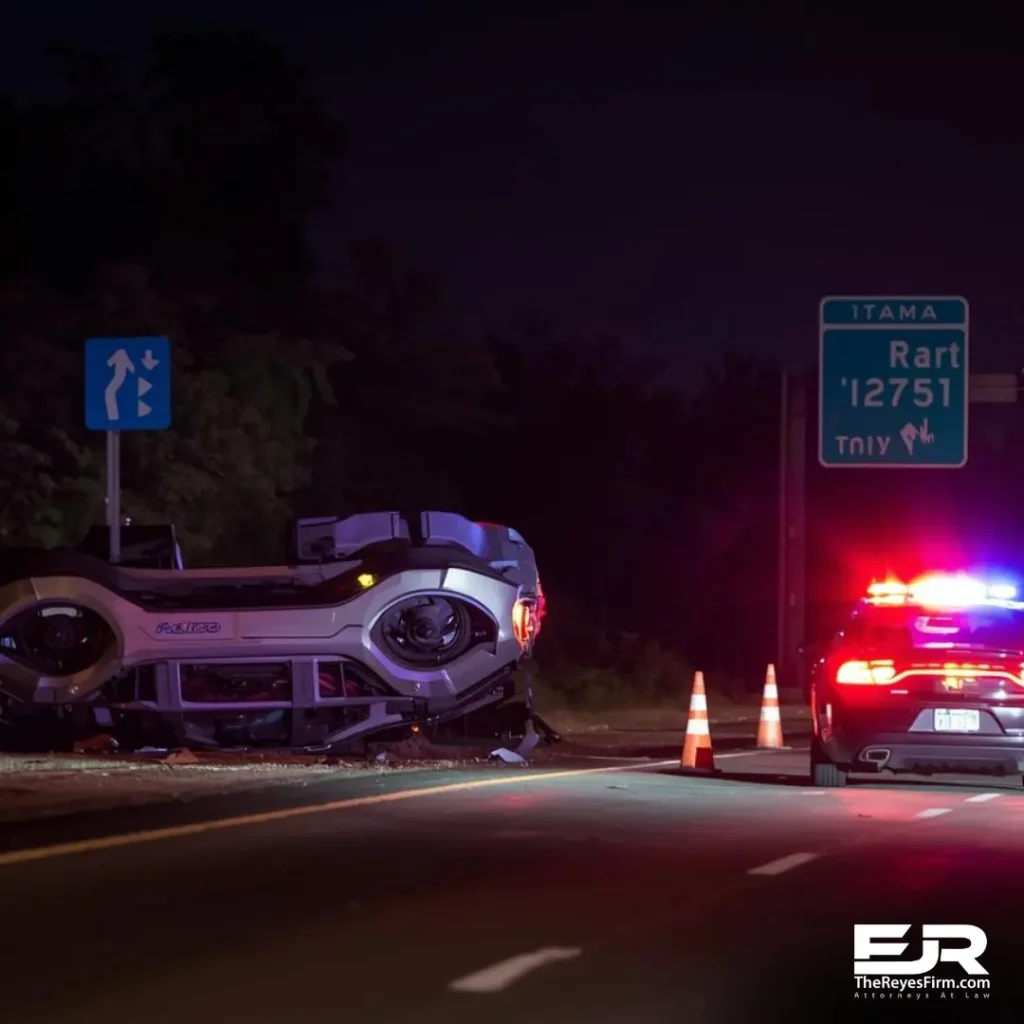
Overturned SUV at night with police lights on a Tampa highway, representing a DUI rollover crash on I-275.
Blog, Car accident, DUI/DWI, News

Tampa DUI Driver Flips SUV on I-275: What Injured Victims Need to Know About Their Rights

When a Tampa DUI driver flips an SUV on I-275, it is not just breaking news. It is a catastrophic event for the people in those vehicles and their families. In a few seconds, a typical drive can turn into a rollover crash, flashing lights, blocked lanes, and a rush to the hospital. The problem is that DUI rollover crashes on busy roads like I-275 are rarely minor. High speed, heavy traffic, and an impaired driver create a perfect storm for serious injuries. Victims often face ambulances, emergency room visits, surgery, and weeks or months away from work. At the same time, they may be getting calls from insurance companies trying to settle the case quickly and cheaply. This issue matters because anyone injured by a drunk driver in Tampa has necessary rights under Florida law. With the right help, they can seek full compensation after a DUI crash in Tampa for their medical bills, lost income, and pain. This article explains what usually happens after a DUI rollover SUV accident in Tampa, how Florida DUI car accident laws work, and how a Tampa DUI accident lawyer at The Reyes Firm can support injured victims and their families. Recent News: Tampa DUI Driver Flips SUV on I-275 Near I-4 According to a recent news report, a Tampa DUI driver flipped an SUV in a crash that happened on southbound I-275 near the I-4 interchange on Thanksgiving night. Troopers say a 29-year-old Tampa woman driving a Honda CR-V changed lanes and hit a Subaru Outback driven by a 25-year-old Tampa woman.  The impact caused the CR-V to spin out of control and flip, while the Subaru was pushed off the road into a concrete barrier, according to WFLA’s report. Troopers say the SUV driver gave a breath sample of about 0.205 — more than twice Florida’s legal DUI limit of 0.08 for drivers 21 and over, as outlined by the Florida Highway Safety and Motor Vehicles (FLHSMV) — and she was arrested on a DUI charge. Thankfully, early reports said the Subaru driver was not physically injured. Still, the crash is a clear reminder of how quickly an I-275 DUI crash in Tampa can turn into a rollover and how dangerous an over-the-legal-limit DUI crash can be for everyone on the road.  According to the Florida Department of Highway Safety and Motor Vehicles (FLHSMV) Crash Dashboard, preliminary data from January 1, 2025, through November 20, 2025, shows how severe drunk driving still is on Florida’s roads. In that time, there were 3,873 impaired driving crashes involving alcohol only statewide, causing 141 deaths and 2,224 injuries, the same kind of preventable harm seen when a Tampa DUI driver flips an SUV on I-275. What Happens When a Tampa DUI Driver Flips an SUV on I-275? A rollover crash on I-275 usually starts with a bad decision behind the wheel. A drunk or drugged driver might: Drift out of a lane Speed in heavy traffic Misjudge a curve or exit. Overcorrect the steering when they realize they are off course. On a fast, crowded interstate, one mistake can quickly lead to a disaster. When a Tampa DUI driver flips an SUV, the vehicle can: Roll across multiple lanes Hit guardrails, medians, or other cars. Shed debris that hits vehicles behind it. In high-traffic areas such as the southbound I-275 near the I-4 crash zone, other drivers may slam their brakes or swerve, causing additional collisions. The scene can turn into a pileup involving several vehicles and many injured people. What injuries are common in a DUI rollover SUV accident in Tampa? A Tampa rollover accident injury lawyer often sees serious, sometimes permanent injuries after a DUI rollover SUV accident in Tampa, including: Traumatic brain injuries (TBI) Concussions and other brain injuries can cause headaches, confusion, memory loss, and mood changes. Neck and back injuries Whiplash and herniated discs can lead to long-term pain and limited movement. Spinal cord injuries In severe cases, damage to the spinal cord can result in partial or total paralysis. Broken bones Arms, legs, ribs, and facial bones can break during the violent rolling of an SUV. Internal injuries Damage to organs like the liver, lungs, or spleen can be life-threatening. Emotional trauma Many victims experience anxiety, nightmares, and fear of driving after an I-275 DUI crash in Tampa. Some injuries show up right away. Others appear hours or days later. That is why prompt medical care and follow-up visits are so important. How Do Florida DUI Car Accident Laws Apply After a Crash on I-275? When a Tampa DUI driver flips an SUV on I-275, the legal response usually has two parts: A criminal DUI case against the impaired driver A civil personal injury claim by the people who were hurt These are separate processes with different goals. What happens in a criminal DUI case? Under Florida DUI car accident laws, a driver can face DUI charges if they are: Over the legal alcohol limit, or Impaired by alcohol or drugs, even if the exact level is still being tested After an over-the-legal-limit DUI crash, police and the Florida Highway Patrol DUI investigation team may: Take breath or blood samples Photograph and measure the crash scene Collect witness statements Review dashcam or traffic camera footage. Note signs of impairment, such as slurred speech or stumbling If the evidence is strong, prosecutors may file DUI charges. If someone is seriously injured or killed, the charges are usually more serious. The criminal case focuses on punishment and public safety, not on paying victims’ bills. How is a Hillsborough County DUI accident claim different? A Hillsborough County DUI accident claim is a civil case. Its goal is to get the injured person compensated for their losses. A civil claim can move forward even if: The driver is acquitted of DUI The driver pleads guilty to a lesser offense. Prosecutors decide not to continue the criminal case The main questions in a civil case are: Was the driver negligent or reckless?

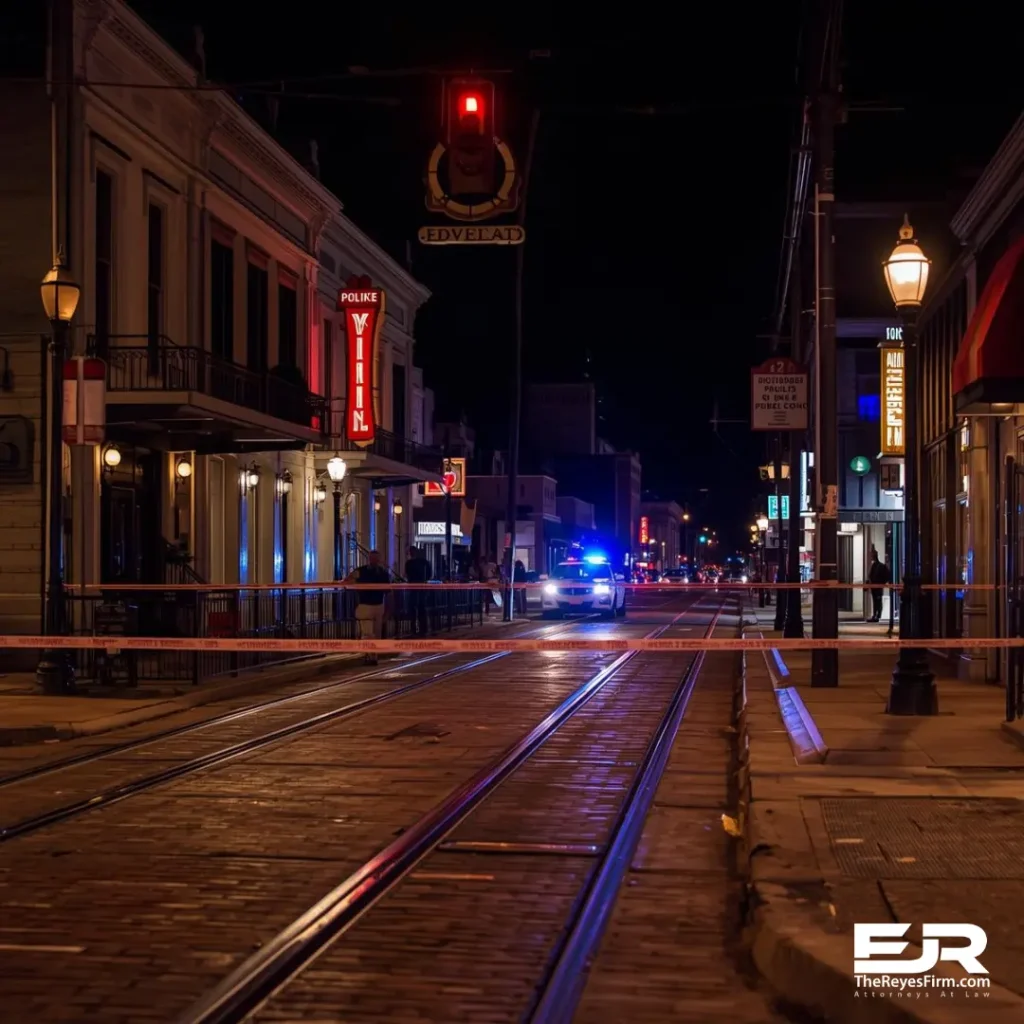
Nighttime street scene with police lights and caution tape in Ybor City, representing a pedestrian crash on E 7th Avenue in Tampa.
Blog, News, Pedestrian Accident, Wrongful Death

Ybor City 7th Avenue Pedestrian Crash: 4 Killed, 13 Injured in Tampa — Key Facts for Families

A tragic pedestrian crash shook Ybor City in the early hours of Saturday, November 8, 2025. A speeding car lost control and slammed into a crowd outside a popular bar, killing four adults and injuring at least 13 others. This Ybor City pedestrian crash has left families grieving and a community searching for answers. If you or someone you love was affected by this crash or if you’re trying to understand your rights after a similar tragedy, this guide will walk you through the legal steps, Florida laws, and how The Reyes Firm supports victims in times like these. What Is a Pedestrian Crash and Why Are They So Serious? A pedestrian crash occurs when a pedestrian is struck by a motor vehicle. These crashes are especially dangerous because pedestrians have no protection from impact. They often result in catastrophic injuries or death. In busy areas like Ybor City, where foot traffic, nightlife, and high-speed roads intersect, these types of crashes are sadly not uncommon and demand immediate legal attention. Florida Laws That Affect Your Pedestrian Crash/Ybor City Pedestrian Accident Claim 📰 News Integration On Saturday, November 8, 2025, around 12:30 a.m., a speeding driver lost control of his vehicle and crashed into a patio crowd at Bradley’s on 7th in the 1500 block of E 7th Avenue, Ybor City. According to FOX 13 News: Four adults were killed—three died at the scene, and one died at the hospital. At least 13 others were injured, with two reported in critical condition, seven in stable condition, and several walk-ins at local hospitals. The vehicle had been tracked earlier by TPD and FHP after officers saw two cars racing near Hanna Avenue & Nebraska Avenue. The car involved in the crash fled west on Hillsborough Avenue, went southbound on I-275, and was pursued until FHP attempted a PIT maneuver near Nebraska & Palm Ave. The car ultimately crashed into the crowd in Ybor. The driver, Silas Sampson, 22, of Dade City, was arrested and charged with: 4 counts of vehicular homicide 4 counts of aggravated fleeing to elude with serious bodily injury Authorities noted no evidence that the crash was targeted at anyone or any business. E 7th Avenue from 15th to 18th Streets was closed for hours while the investigation continued. From a legal perspective, this type of case may involve multiple civil claims, including: Wrongful death Catastrophic injury Negligent pursuit (if government liability applies) Uninsured/underinsured motorist coverage (if victims had it) The Reyes Firm encourages all affected families to speak with an experienced Tampa wrongful death lawyer or Tampa pedestrian accident lawyer as soon as possible to understand their rights and potential compensation. 📜 Florida Legal Framework Statute of Limitations In Florida, families have 2 years to file a wrongful death claim or injury lawsuit involving negligence (§95.11, Fla. Stat.). It’s crucial to act quickly while evidence is still available. Personal Injury Protection (PIP) PIP benefits under Florida law (§627.736, Fla. Stat.) provide up to $10,000 in immediate medical coverage, but only apply if the injured person owns an insured vehicle. Pedestrians without PIP may have to rely on the driver’s insurance or their own uninsured/underinsured motorist (UM/UIM) policy. Comparative Fault Florida’s modified comparative negligence rule (§768.81, Fla. Stat.) says injured parties can recover damages as long as they are not more than 50% at fault. In this crash, the driver appears solely responsible. Changes in 2023 Florida’s 2023 tort reform reduced the statute of limitations for negligence from 4 years to 2 years. This affects all cases moving forward, including this one. 📍 Tampa Location Details & Emergency Responders This fatal crash took place in Ybor City, a vibrant neighborhood known for bars and nightlife. Specific streets and intersections involved: E 7th Avenue (1500 block, crash site) N 15th–18th Street (scene closed for investigation) Nebraska Avenue & Hanna Avenue (initial street racing) Hillsborough Avenue I-275 southbound Nebraska & Palm Avenue (attempted PIT maneuver) Local responders included: Tampa Police Department (TPD) Florida Highway Patrol (FHP) Tampa Fire Rescue likely assisted. While the specific hospitals were not confirmed, many Tampa crash victims are treated at nearby trauma centers such as Tampa General Hospital or St. Joseph’s Hospital. Map of Ybor City, Tampa — crash occurred near the 1500 block of E 7th Ave Directions from Ybor City to The Reyes Firm — 4730 N. Habana Ave., Suite 201, Tampa, FL 33614 Florida Crash Data In 2022, Florida saw 10,013 pedestrian-related crashes and 765 fatalities, reflecting year-over-year improvements of 5% and 8%, respectively.   As of November 6, 2025, Hillsborough County has reported: 543 pedestrian crashes 39 pedestrian fatalities 469 pedestrian injuries This data shows that Hillsborough remains a high-risk area for walkers, particularly in busy districts like Ybor City. Most investigations were led by local police departments (54.7%), with the sheriff’s office and Florida Highway Patrol handling the rest. What to Do After the Ybor City Pedestrian Crash If you or a loved one was affected by a crash like this, here’s what to do: Call 911 immediately First responders can provide medical aid and secure the area. Get medical care, even if you feel okay. Some injuries (like internal bleeding or brain trauma) don’t show symptoms right away. Gather evidence at the scene. If safe, take photos, collect witness info, and save any available surveillance footage. Don’t speak with insurance adjusters alone.ow Their job is to minimize payouts. Speak to a lawyer first. Contact a personal injury or wrongful death attorney ASAP. A lawyer can help protect your rights, gather evidence, and maximize your compensation.  Watch: What Pedestrians Should Know After a Crash in Florida Suppose you were injured as a pedestrian in Tampa or anywhere in Florida. In that case, this video explains your legal rights and what insurance coverage might apply even if you don’t own a car. What Tampa Families Are Asking After a Crash Q: What criteria should I use to find a top-rated accident lawyer in the Ybor City area?  A: Focus on firms

Attorney analyzing truck crash evidence with a semi-truck model on documents, representing a fatal I-595 crash in Davie, Florida.
Blog, News, Truck Accidents

Fatal Truck Crash Near I-595 in Davie: Legal Options After a Severe Loss

Free Consultation in Tampa Call: 833-4 BAD DAY Address: 4730 N. Habana Ave., Suite 201, Tampa, FL 33614 Had a bad day? ¿Tuviste un mal día? Consulta gratis en Tampa. Llámanos: 833-4 BAD DAY. A tragic car vs. semi-truck collision on Florida’s Turnpike near I-595 in Davie left one person dead and many questions unanswered. If you or a loved one were affected, or if you simply want to understand your rights after a crash like this, keep reading. We’ll break it down in plain language. This guide walks you through how Florida law treats serious truck accidents, what families need to do next, and how The Reyes Firm helps protect your legal rights after a devastating loss. What counts as a truck crash and why it’s often more serious A crash involving a semi-truck or any commercial vehicle is very different from a standard car accident. These vehicles can weigh over 80,000 pounds when fully loaded. When they roll over, like in the Davie crash, the impact can be deadly for the people in smaller cars. Video: Why Truck Accidents Are Different In this short clip, Attorney Reyes explains why truck crashes require a different legal approach than regular car accidents, including higher safety duties and federal rules that affect liability. Have questions about a truck crash near I-595 or Florida’s Turnpike? Call 833-4 BAD DAY for a free consultation. Florida Laws That Affect Your Truck Accident / Davie Fatal Semi-Truck Accident Claim What Happened Near I-595? According to NBC Miami, a man died after his vehicle collided with a semi-truck on the northbound lanes of Florida’s Turnpike near the I-595 exit ramp in Davie. The truck overturned, blocking traffic for hours. From a legal standpoint, this is where timing, investigation, and preserving evidence matter most. In truck crashes, there could be multiple responsible parties. The truck driver, the trucking company, their insurance providers, and even third-party maintenance crews may be liable depending on the facts. At The Reyes Firm, we take immediate steps to collect black box data, get witness statements, request dashcam footage, and ensure critical evidence is not lost. Legal Deadlines: How Long Do You Have to File? In 2023, Florida shortened the legal window to file a personal injury lawsuit. If your crash happened after March 24, 2023, you typically have just two years to take legal action. That includes: Truck accident injury claims: 2 years Wrongful death cases: 2 years from the date of death These time limits are strict. Once they pass, your case may be dismissed. (See Fla. Stat. § 95.11) What About PIP Insurance? Florida drivers are required to carry Personal Injury Protection (PIP), which covers certain expenses regardless of who caused the crash. However, PIP has limits and does not apply to every situation involving commercial trucks. PIP may cover: 80% of medical expenses 60% of lost wages Up to $10,000 in most cases It does not cover non-economic damages or provide full compensation if another party was clearly at fault. You will likely need to pursue a claim against the truck driver or company. (See Fla. Stat. § 627.736) Florida’s New 51 Percent Fault Rule Florida now uses a modified comparative negligence system. If you’re found more than 50 percent responsible for the crash, you cannot recover damages. If you’re 50 percent or less at fault, your compensation will be reduced by your percentage of fault. This means every detail matters. If the trucking company tries to shift the blame to you, we push back with strong evidence, expert testimony, and, if needed, accident reconstruction. (See Fla. Stat. § 768.81) Why Location Matters in Broward County This crash happened in a busy traffic zone on Florida’s Turnpike near I-595 in Davie. Broward County is one of the most active areas for commercial vehicle traffic in the state. As of October 30, 2025, Broward County reported nearly 30,000 crashes, including 176 fatalities and over 18,000 injuries, according to FLHSMV data. While not all involved commercial vehicles, the high volume of serious crashes in the area makes professional legal support essential after a truck-related accident. Nearby emergency and medical providers include: Davie Fire Rescue Broward Health Medical Center (Fort Lauderdale) Memorial Regional Hospital (Hollywood) Florida Highway Patrol These local resources may play a role in both emergency response and evidence gathering. Why You Need a Truck Accident Lawyer After a Crash in Davie After a major crash involving a commercial truck, having an experienced truck accident lawyer on your side can make all the difference. Trucking companies and their insurers often move fast to protect themselves, and victims can lose key evidence if they wait too long. A skilled Davie truck accident lawyer understands how to gather black box data, work with crash reconstruction experts, and negotiate for the compensation you deserve. What to Do After a Truck Accident in Davie If you or a loved one is ever involved in a crash like this, here’s what to do immediately: Call 911 and report the crash. Seek medical attention, even if you feel okay. Document the scene with photos and videos. Avoid giving any recorded statements to insurers. Contact The Reyes Firm as soon as possible. What Davie Drivers Ask After a Serious Truck Accident Who is the best accident lawyer near I-595 in Davie? The best lawyer for a case like this is someone with experience in serious truck crash cases and a track record of fighting for families. The Reyes Firm offers free consultations and fast support. How long do I have to file a claim in Florida? You have two years to file a personal injury or wrongful death claim in Florida for accidents that occurred after March 24, 2023. Does PIP cover truck crashes? PIP may cover your initial medical bills and some lost wages, but for most truck accidents, you’ll need to pursue compensation from the at-fault driver or trucking company. Can I still recover if I was partly at fault? Yes, but only if

Scroll to Top