News

Emergency vehicles at a roadway intersection, representing a Lecanto Highway garbage truck crash affecting Hernando County drivers.
Blog, News, Truck Accidents

Lecanto Highway Garbage Truck Crash: What Hernando County Victims Should Do

A crash involving two work trucks can change an ordinary morning into a scene of flashing lights, smoke, and confusion. People may be driving nearby, sitting at home, or simply passing through, only to suddenly face damage, fear, and questions they never expected. That is why the Lecanto Highway garbage truck crash deserves attention. When a commercial vehicle collision is strong enough to push a garbage truck into a mobile home, it is a reminder that these crashes can harm more than drivers. They can disrupt entire households in seconds. Even when early news reports say someone had “minor injuries” or that others were “not injured,” it is still smart to take the situation seriously. Pain and symptoms can appear later, property damage can create immediate safety risks, and insurance companies may move quickly to protect their own interests. What happened in the Lecanto Highway garbage truck crash? The Florida Highway Patrol reported a crash on Lecanto Highway near North Paradise Point in Hernando County. According to the report, a garbage truck slowed down to make a left turn. A single-unit pumping truck rear-ended the garbage truck, pushing it forward into a nearby mobile home. Reports stated the pumping truck overturned and caught fire, and its driver was taken to a hospital with minor injuries. The garbage truck driver and the two adults inside the mobile home were reported to be uninjured. Even when injuries are described as minor, the force involved in a truck crash can still cause harm that is not immediately apparent. The shock can also create serious stress for anyone who lived in the home or saw the crash happen. Why a crash that hits a home is a bigger problem than a normal wreck Most people think of car accidents as something that happens on the road. But when a truck crash reaches a residence, the situation changes in several important ways. A home strike can create injuries without direct impact A person can be hurt even if a vehicle never touches them. The force of a crash can cause someone to fall, hit furniture, or get struck by debris. A loud impact can also trigger panic, chest tightness, or shortness of breath, especially for children or older adults. Property damage can create immediate safety and housing concerns If a mobile home is hit, the structure may be unsafe until it is inspected. Damage to walls, supports, plumbing, or electrical systems can create hazards. Families may need temporary housing, repairs, cleanup, and replacement of personal property. The insurance process can be more complicated Commercial truck crashes often involve multiple insurance policies and multiple responsible parties. That can lead to delays, finger-pointing, and pressure to settle fast. Victims should not assume the process will be as simple as a standard car claim. What victims should do right away in Hernando County When people feel overwhelmed, they tend to freeze or rush. A simple plan helps. These steps are designed to protect health first and then protect legal rights. 1) Get medical care as soon as possible Some injuries do not show up immediately. Adrenaline can hide pain. Common delayed symptoms after a violent truck crash include: Headaches or dizziness Neck and back pain Numbness or tingling Trouble sleeping Nausea or light sensitivity Mood changes or irritability Florida also has a time-sensitive rule that can affect many crash victims who use auto insurance benefits. Under Florida’s PIP law (Florida Statute 627.736), the injured person generally needs initial medical services and care within 14 days of the accident for PIP benefits to apply. That does not mean someone should panic. It means they should not wait weeks, hoping the symptoms will disappear. 2) Call 911 and make sure the crash is officially documented In a crash involving fire, heavy trucks, and home damage, law enforcement and first responders play a major role. A report creates a starting point for what happened, where it happened, and who was involved. Victims should ask for the report number or how to obtain it later. They should also save any incident details they receive from officers at the scene. 3) Take photos and video if it is safe to do so Evidence after a truck crash can disappear quickly once vehicles are towed and debris is cleared. If it is safe, victims should photograph: Vehicle damage from multiple angles Skid marks or debris Road conditions and signage The intersection or turning area Damage to the mobile home inside and outside Any visible injuries If the home is unsafe to enter, safety comes first. Photos can be taken from a safe distance until professionals confirm the property is stable. 4) Start a simple folder for paperwork and receipts A claim is built on proof. Victims should keep: Medical records and discharge papers Bills and receipts for medication Tow invoices, repair estimates, and rental car costs Hotel stays and meal costs if displaced A list of damaged personal items Time missed from work and pay stubs, when available Even small purchases add up, especially when a family is forced out of their home for repairs. 5) Keep a short daily symptom and impact journal Insurance companies often argue that an injury is “not that bad.” A journal helps show real-life impact. Victims can write down: Pain level and location Activities they cannot do Missed work or missed school Sleep problems Anxiety, fear, or stress symptoms Time spent dealing with repairs and calls This is not about being dramatic. It is about being accurate. What victims should NOT do after a commercial truck crash People sometimes make honest mistakes that later cause big problems. These are some common ones. Do not give a recorded statement to the other insurance company right away Commercial insurers may quickly request a recorded statement. They may sound polite, but their job is to reduce their payments. A victim can accidentally guess, miss details, or say something that gets twisted later. It is usually safer to provide only basic
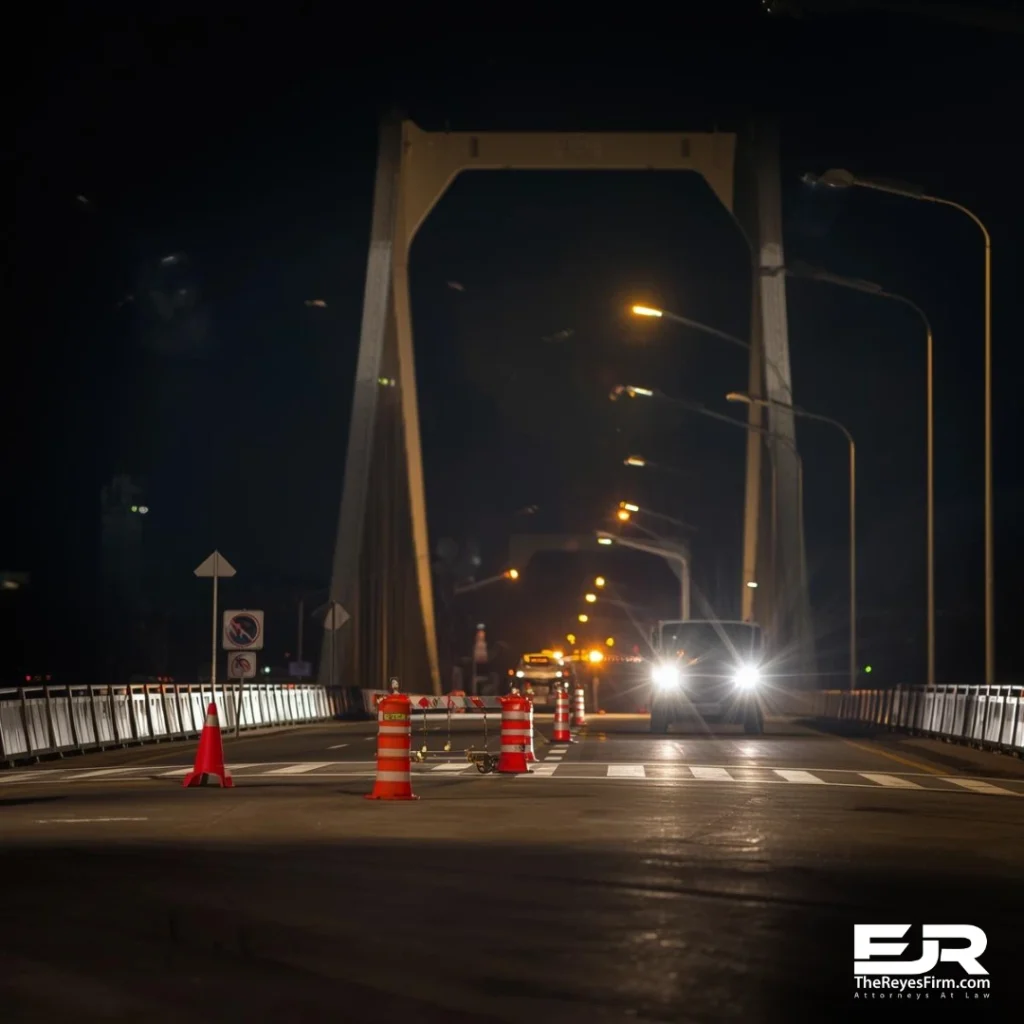
Nighttime view of the Howard Frankland Bridge with construction barrels and traffic cones, representing a work zone truck collision in Tampa Bay.
Blog, Car accident, News, Truck Accidents

Howard Frankland Bridge Construction Zone Crash: What Injured Drivers Should Do After a Work Zone Truck Collision

A crash in a construction zone can feel like the road changed rules without warning. One second, the lane is open; the next, cones and barrels squeeze traffic into a narrow path, and a small mistake turns into a serious impact. That is why a Howard Frankland Bridge construction zone crash is more than “just another accident.” The Howard Frankland Bridge on I-275 connects Tampa and St. Petersburg and stays busy. When crews are working, the space to react gets smaller, and the risks go up. If someone gets hurt in a work zone truck collision, the next few hours and days matter. The right steps can protect medical care, preserve evidence, and prevent the insurance company from twisting the story later. What happened on the Howard Frankland Bridge Local reports citing the Florida Highway Patrol say a 37-year-old man from Musella, Georgia, was driving southbound on the Howard Frankland Bridge shortly before 10 p.m. Monday night. Troopers say he did not yield to construction workers, entered a closed lane in an active construction zone, and crashed into a Ford F-550 driven by a 45-year-old Tampa man who was working in the construction zone. The Ford F-550 driver and two construction workers riding in the truck were taken to the hospital with non-life-threatening injuries. Debris also struck a Nissan Titan driven by an 18-year-old Largo man, who was not injured. This kind of incident is a reminder that closed lanes in active work zones are not suggestions. They are there because workers and work vehicles are in that space. Why work zone truck crashes are so dangerous on I-275 and the Howard Frankland Bridge Construction zones change the “normal flow” of driving. In a regular lane, a driver has shoulders, wider lanes, and clearer sight lines. On the Howard Frankland Bridge during construction, space and visibility can be limited, especially at night. Here are the most common reasons injuries are worse in work zones: Narrow lanes and barriers: A vehicle has fewer places to move to avoid a collision. Even a small drift can cause a sideswipe or pin a car against a barrier. Sudden traffic slowdowns: Work zones often create stop-and-go traffic. That can lead to high-force rear-end crashes, especially when a driver is distracted. Work vehicles and heavy equipment: A collision with a work truck is often more damaging than a collision between two passenger vehicles because of weight and height differences. More visual noise: Cones, arrow boards, signs, and flashing lights can overwhelm drivers who are tired or speeding. That increases late reactions. FDOT has also made safety improvements in these project areas, including lowering the speed limit to 55 mph in work zones along the Howard Frankland Bridge corridor. What should injured drivers do right away after a work zone truck collision? After a Howard Frankland Bridge construction zone crash, the goal is simple: protect health first, then protect proof. Call 911 and ask for medical help Even if the injury seems minor, it is safer to get checked. Neck injuries, concussions, and internal injuries can show up later, after adrenaline fades. A medical record also helps connect the injuries to the crash. Stay safe and follow law enforcement instructions On a bridge, safety comes first. If the vehicle is in a dangerous spot, follow directions from law enforcement or crews. Turn on hazard lights. If it is safe to move to a safer location, do so only when directed to do so. Take photos and video as soon as possible Work zone evidence can change quickly because crews may move barrels, reopen lanes, or clear debris. If the injured person can safely take photos (or ask a passenger to do it), capture: The closed lane markings and cone layout Any signs or arrow boards leading into the work zone Where each vehicle ended up Damage to every vehicle involved Debris, skid marks, and scraped barriers The work truck and any company markings These photos help show what the work zone looked like at the moment of impact. Get witness information Independent witnesses matter. If someone stopped, get a name and phone number. A short neutral statement like “I saw the vehicle enter the closed lane” can be powerful later. Be careful with what is said at the scene People often apologize out of shock. In Florida, fault can be disputed later, and statements can be taken out of context. The safest approach is to focus on safety, give law enforcement basic facts, and avoid guessing. Florida laws that often come up in construction zone crash cases Work zone cases are not only about “who hit who.” They are also about whether a driver followed Florida safety laws designed to protect road workers and the public. Duty to yield to highway construction workers Florida law requires drivers to yield the right-of-way to a highway construction worker and flagperson when the driver is reasonably and lawfully notified by a flagperson and a warning sign or device. In real terms, if workers and warning devices are present, a driver has a legal duty to slow down, follow the traffic pattern, and yield as directed. Florida’s Move Over law can matter near work vehicles Florida’s Move Over law requires drivers, when safe, to vacate the lane closest to certain stopped roadside vehicles, including road and bridge maintenance or construction vehicles displaying warning lights. If a lane change cannot be made safely, the driver must slow down as required by the statute. This law is often discussed when a crash involves a work vehicle on or near the roadside or shoulder. Who can be responsible in a Howard Frankland Bridge construction zone crash? In a work-zone truck collision, liability may involve more than one party. If you are wondering who is liable in a truck accident, a proper investigation looks beyond the obvious and follows the evidence. A driver who entered a closed lane or failed to yield In the reported crash, troopers said the driver entered a closed

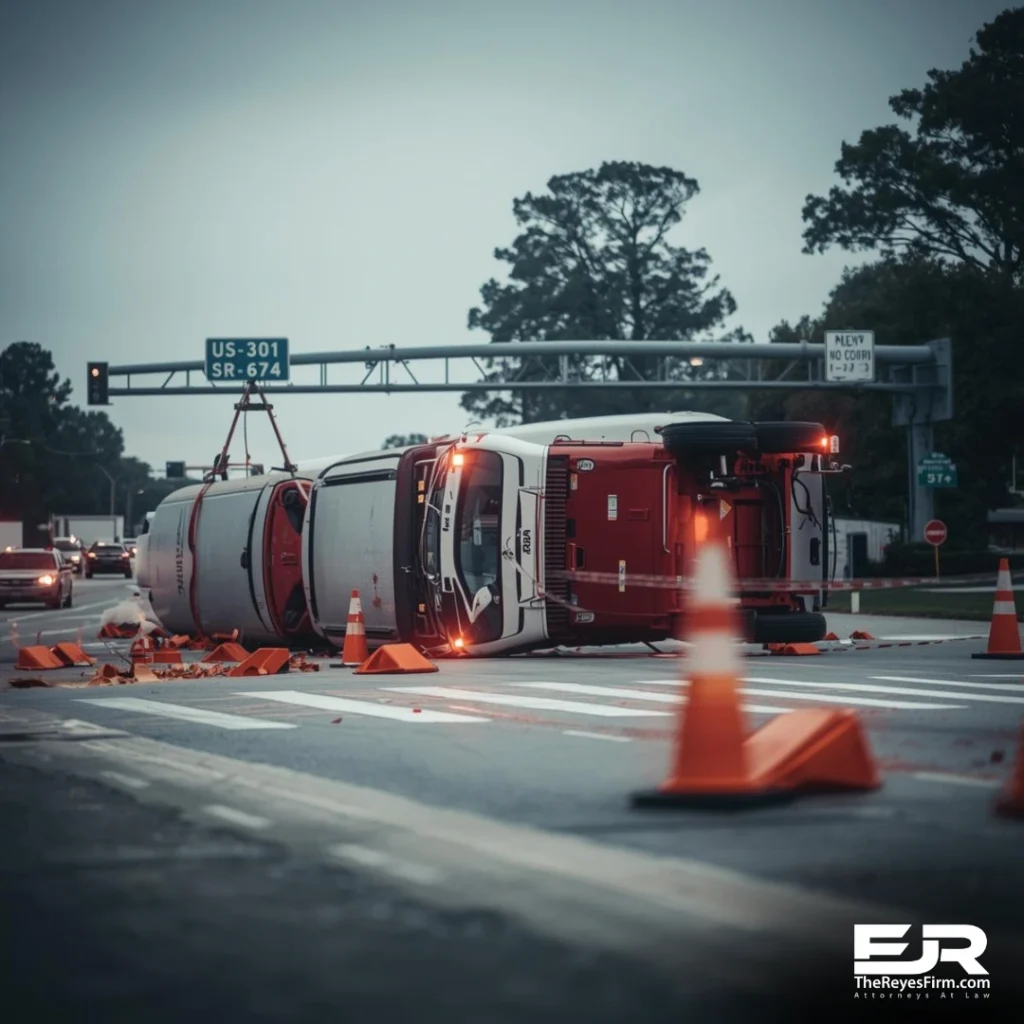
Overturned semi-truck with traffic cones near US-301 and SR-674 in Wimauma, Florida, representing steps that protect your injury claim.
Blog, News, Tractor Trailer Accidents, Truck Accidents

Overturned Semi Truck on US-301 and SR-674 in Wimauma: What to Do Next

A semi-truck rollover is the kind of crash that makes people’s stomachs drop. One moment, it is a normal drive through Hillsborough County, and the next, there are flashing lights, blocked lanes, and the feeling that something truly dangerous just happened. That is why the overturned semi-truck incident on US-301 SR-674 in Wimauma is more than a headline. For anyone who was hit, forced off the road, or injured in the traffic backup, the next few days matter a lot. The steps taken early can protect health, protect evidence, and protect the right to fair compensation. This guide explains what was reported about the crash and, in plain English, what injured people should do next to protect their Florida personal injury claim. Quick Answer: What should you do after the overturned semi-truck crash on US-301 and SR-674? If you were injured near the overturned semi-truck crash at US-301 and SR-674 in Wimauma, your first steps should be to get medical care, document what happened, report the crash, avoid giving detailed statements to insurance adjusters, and preserve evidence quickly. Truck accident claims can involve more than one responsible party, including the driver, trucking company, cargo loader, maintenance company, or another business connected to the truck. Because key evidence can disappear fast, it is important to speak with a Wimauma truck accident lawyer as soon as possible. News summary: What happened in the overturned semi-truck crash on US-301 and SR-674 in Wimauma? Local reporting states that a tractor-trailer overturned Thursday afternoon, December 26, 2024, around 2:40 p.m., at the intersection of U.S. 301 and State Road 674 in Wimauma. The report states the truck was traveling west when its load shifted during a left turn, causing the semi to overturn and come to rest on its passenger side. The crash reportedly blocked the northbound lanes of U.S. 301 for several hours, and the driver was reported as uninjured. Even if the truck driver is not injured, a rollover can still harm others. Drivers can be injured by flying debris, spilled cargo, sudden braking, or a secondary crash in the traffic line behind the scene.  Who may have a claim after the Wimauma semi-truck rollover? A person may have a truck accident claim if the rollover caused or contributed to their injuries. This may include: A driver hit by the semi-truck, trailer, cargo, or debris A passenger was injured in a nearby vehicle A driver who crashed while trying to avoid the overturned truck Someone was injured in a rear-end or chain-reaction crash caused by the traffic backup A pedestrian, bicyclist, or worker near the crash scene You do not always have to be directly hit by the truck to have a possible claim. If the rollover created a dangerous situation that led to your injury, the facts should be reviewed carefully. Why a semi-truck can roll over at intersections like US-301 and SR-674 A tractor-trailer is taller, heavier, and harder to control than a standard car, especially during turns. A rollover often happens when the truck’s weight shifts outside the “balance zone” of the tires. This can happen quickly during a left turn, when forces push the trailer sideways. In this incident, the report mentions a load shift. That detail matters because cargo movement can destabilize the truck. Federal cargo regulations require cargo to be secured to prevent shifting that could affect the vehicle’s stability or maneuverability. Other common reasons semi-truck rollovers happen include: Turning too fast for the load. A speed that seems normal can still be unsafe if the trailer is top-heavy or unevenly loaded. Improper cargo loading or weight distribution. If the truck is heavier on one side, it is more likely to tip during a turn. Driver fatigue. Federal hours-of-service rules limit driving time to reduce fatigue-related crashes. Equipment issues. Tire failures, brake problems, and suspension issues can cause loss of control. Road and traffic conditions. Congestion and tight turning movements can lead drivers to make quick decisions. A truck rollover usually means something went wrong. A strong injury claim is built by figuring out what went wrong and proving it with evidence. Who may be responsible if shifting cargo caused the truck to overturn? When cargo shifts and causes a semi-truck to roll over, the truck driver is not always the only party responsible. A full investigation may look at: Whether the driver inspected the load before driving Whether the trucking company followed safety policies Whether a cargo loading company secured the load properly Whether the trailer was overloaded or unevenly loaded Whether maintenance problems made the truck harder to control Whether dispatch pressure or delivery deadlines contributed to unsafe driving This matters because truck accident cases often involve multiple insurance policies and multiple companies. Identifying every responsible party can make a major difference in the injured person’s recovery. Watch this YouTube video: Key dangers of driving beside semi-trucks After an overturned semi-truck on US-301 SR-674 in Wimauma, many drivers ask the same question: “How do I stay safer around big rigs?” In this YouTube video, The Reyes Firm explains common hazards drivers face when traveling beside semi-trucks and why spacing, visibility, and quick decisions matter around large commercial vehicles. Step 1: Get medical care right away, even if the injury seems minor After a semi-crash, many people feel “fine” at first. That does not mean they are fine. Adrenaline can mask pain, and some injuries may not present until later. For safety and for claim protection, an injured person should: Call 911 or accept help at the scene. Get checked by EMS. Get follow-up care quickly if symptoms appear later. Common delayed symptoms after a truck crash include headaches, dizziness, neck and back pain, tingling or numbness, and trouble concentrating. Seeking medical care early creates a clear medical record linking the injury to the crash, which matters when insurance companies begin to ask questions. Step 2: Make sure law enforcement documents the crash clearly A police report is not perfect, but it is important. It

Lake County road sign with blurred emergency lights in the background, representing a multi-vehicle semi-truck crash in Lake County, Florida.
Blog, News, Truck Accidents

Multi-Vehicle Crash Involving a Semi-Truck in Lake County: What Injured Drivers Should Do Next

A chain-reaction crash does not just damage vehicles. It can flip a person’s whole day upside down in seconds. One moment, traffic is moving on Florida’s Turnpike, and the next moment, everything stops too fast, too close, and too violently. After a multi-vehicle crash involving a semi-truck in Lake County, many injured drivers feel pressure to act “normal” right away. They may try to call a tow truck, update family, and get to work the next day. But the body often does not cooperate. Pain, headaches, dizziness, and back stiffness may not appear for hours, sometimes until the next morning. While the injured person is still trying to understand what happened, insurance companies often begin working immediately. They look for early statements, treatment gaps, and ways to shift blame. That is why the right next steps matter, especially when a commercial truck is involved. What happened in the Lake County semi-truck crash It was reported that a crash involving a semi-truck and four other vehicles occurred on Florida’s Turnpike North in Lake County. The crash happened just before Exit 282, and traffic backed up through Exit 278 near Minneola. One person was taken to the hospital with non-life-threatening injuries, and the Florida Highway Patrol was still investigating at the time of the report. Even when a report says “non-life-threatening,” that does not mean “minor.” Many serious injuries are not life-threatening. They can still cause weeks or months of pain, time off work, and expensive care. Map: Florida’s Turnpike Near Minneola (Lake County) This map highlights the general incident area on Florida’s Turnpike near Exit 278 (Hancock Rd) in Minneola, Lake County. Note: This map shows the general area referenced in reports, not an exact pin of every vehicle position. Why this matters in Florida Florida is a high-traffic state, and serious crashes happen every day. FLHSMV’s “By the Numbers 2024” report lists 381,210 codable traffic crashes and 3,184 deaths in vehicle crashes in 2024 (noted as preliminary in the report). The same report also lists 46,651 commercial motor vehicle crashes and 315 fatalities associated with them. Those numbers help explain why a multi-vehicle crash involving a semi-truck in Lake County should be treated as a serious legal and medical event. Commercial vehicle collisions can involve higher forces, greater injury severity, and more complex insurance disputes. Why semi-truck pileups are different from regular car crashes A two-car crash can be stressful. A semi-truck chain-reaction crash is often more complex. In a multi-vehicle crash involving a semi-truck in Lake County, there may be: More than one impact. A driver may be hit from behind, pushed forward, and struck again. Each hit can cause different injuries. More drivers are pointing fingers. People remember events differently, especially when they are scared or hurt. More insurance companies are involved. Each vehicle may have a different insurer, in addition to the trucking company’s insurer. More evidence that needs to be preserved quickly. Trucks can carry electronic data and, in some cases, video. Some data can be lost if no one acts fast. This is why injured drivers should not treat a truck pileup like a simple claim. It often needs a careful, organized response. What an injured driver should do in the first hour Safety comes first. If a person is injured, they should focus on health and emergency response. If they can document the scene safely, that documentation will help later. Call 911 and get medical help if needed A person should call 911 if they experience pain, bleeding, dizziness, confusion, weakness, or difficulty moving. Some injuries become worse if someone tries to “push through” without evaluation. Take photos and short videos if it is safe In a chain-reaction crash, photos help show what happened before the vehicles are moved. If safe, the injured driver should capture: The position of vehicles (wide shots first) Damage on all sides (close-ups) Debris, skid marks, and lane layout Exit signs and mile markers Weather and visibility The semi-truck’s company name and identifying markings (when visible) Get witness contact information Neutral witnesses can be powerful in a multi-vehicle case. They can help confirm whether traffic was stopped, whether a truck had room to slow, or whether another driver made a sudden, unsafe maneuver. Avoid guessing about the fault at the scene It is fine to be polite. It is not wise to guess what caused the crash. In multi-vehicle wrecks, a statement like “I did not see them” can be repeated later as an admission. What to do in the first 14 days after the crash Many injuries are not obvious at the scene. That is especially true for concussions, neck injuries, and back injuries. During the first two weeks, the injured person should focus on two goals: protect health Build a clear medical record that connects symptoms to the crash A practical plan looks like this: Get checked by a medical provider as soon as possible Follow up if symptoms change or worsen Follow referrals for imaging or specialists if recommended Keep copies of discharge notes and visit summaries Save receipts for prescriptions and medical supplies Track missed work and reduced hours A simple symptom journal also helps. A person can record pain levels, headaches, sleep issues, dizziness, and limitations in daily tasks. This can help doctors and also help show the real impact of the injury. Common injuries after a semi-truck chain reaction crash A multi-vehicle crash involving a semi-truck in Lake County can cause catastrophic injuries even if the person walks away at first. Common injuries include: Neck strain and whiplash Herniated discs and lower back injuries Concussions and traumatic brain injuries Shoulder injuries from bracing during impact Knee injuries from hitting the dashboard Rib and chest pain from seatbelt force Numbness or tingling in arms or legs Anxiety, panic symptoms, and fear of driving A key point is simple. “Non-life-threatening” does not mean “not serious.” If pain worsens, headaches persist, or dizziness or numbness occurs, the person should be evaluated promptly. Who may be

Truck hauling covered cargo with traffic cones on a Florida roadway, representing a loose cargo accident risk in Tampa.
Blog, News, Truck Accidents

Loose Cargo Accident Tampa: What to Do When a Truck Drops a Container or Debris

Loose cargo crashes do not feel like a “normal” accident. They feel like something falling out of the sky. A driver is moving with traffic on Causeway Boulevard or I-275 when suddenly a ladder slides across lanes, a mattress bounces, or a pile of metal scrapes the road. There is no warning and no time to plan. In Tampa, this risk is even greater during the morning rush hour. One loose strap or one sharp turn can turn a truck’s load into a flying hazard. Drivers slam brakes. Cars swerve. Motorcyclists have almost nowhere to go. A recent local example illustrates how quickly an unsecured load can disrupt a major intersection, as in the Causeway Boulevard loose shipping container incident. That is why a loose cargo accident Tampa drivers experience should be treated as a serious legal and safety matter, even if the truck appears to drive away. The right steps in the first hour can protect someone’s health, preserve evidence, and prevent an insurance company from turning the story around later. Incident Location in Tampa This map shows the intersection of 50th Street and Causeway Boulevard in Tampa. What Is a Loose Cargo Accident in Tampa? A loose cargo accident in Tampa occurs when cargo carried by a truck or work vehicle is not properly secured, creating a hazard on the road. This can happen in two main ways: 1) Direct impact The cargo hits a vehicle, a cyclist, a pedestrian, or a motorcyclist. Examples include: A box or toolbox falling and striking a windshield Metal pipes sliding off a trailer into traffic A shipping container shifting during a turn and crashing into nearby cars or road equipment 2) Crash while avoiding debris The debris does not hit the person’s vehicle, yet it still causes the crash. Examples include: A driver swerves to miss debris and hits a guardrail A sudden brake causes a rear-end crash A motorcyclist loses control because debris is in the lane This second type is very common in Tampa because traffic is tight and fast on roads like: I-275 I-4 Selmon Expressway Dale Mabry Highway Adamo Drive Causeway Boulevard and areas near major intersections For more context on truck accidents involving lost loads and how they happen, readers can review this related guide. Why Do Trucks Drop Debris or Containers? Loose cargo is usually not a mystery. It often comes down to preventable issues, such as: Poor securement Loads must be secured to prevent shifting or falling. Loose straps, worn chains, or missing securement devices can allow a load to shift during turns or stops. Unsafe turns and speed A truck making a tight turn too fast can cause cargo to shift. This is especially true for heavy loads, tall items, or containers. Bad loading and weight balance Even if straps exist, loading matters. If the weight is uneven, cargo can shift during turns, especially at ramps and intersections. Equipment problems Sometimes the problem is hardware. A latch, strap mechanism, trailer door, or container locking device may fail. Rushed schedules Some commercial drivers are under pressure to deliver on time. When people rush, safety checks get skipped. That is when problems happen. What To Do Right Away After a Loose Cargo Accident Tampa Drivers Experience When debris is present, the road can remain dangerous even after the initial impact. The goal is safety first, then proof. Step 1: Get to a safe spot If the vehicle can move safely: Pull off the road to a shoulder or nearby parking lot Turn on hazard lights Stay alert for secondary crashes If the vehicle cannot move: Stay buckled if traffic is still moving around the vehicle Keep hazard lights on Call for help Step 2: Call 911 A loose cargo crash is not just a “minor incident.” Debris can cause more wrecks. Calling 911 is important when: Someone is hurt The debris is still in a lane A traffic signal or sign is damaged The truck left the scene There is heavy congestion, and drivers are taking risks to get around the debris The police report can become key evidence later. Step 3: Take pictures and video, but only if it is safe If a person can safely use a phone, they should capture: The truck (if present) Company name on the door or trailer DOT numbers License plates Trailer number Any markings on the container or load The debris Close-up shots of the object Where it landed Scrape marks, broken pieces, or straps nearby The scene Wide shots showing lane layout Traffic signs and intersection signals Skid marks or debris field The exact location, using street signs as landmarks In Tampa, a crash can be cleared quickly. Photos can become the only record of what actually happened. Step 4: Get witness contact info Witnesses are critical in loose-cargo cases because the truck may deny responsibility for the debris. Helpful witness info includes: Name and phone number Short statement of what they saw Whether they have dash cam footage If someone says, “I saw it fall off that trailer,” that can be very important later. What If the Traffic Light Is Out After the Crash? Sometimes debris or a container hits road equipment, such as a signal box or a pole. When that happens, the intersection becomes dangerous fast. In Florida, when traffic lights are not working, drivers must stop and treat the intersection as a stop sign, then yield to the right-of-way rules. This matters for two reasons: It prevents more crashes. It affects fault arguments later. Insurance companies often claim someone “failed to stop” or “failed to yield” during an outage. If a person crashes at an intersection with an outage, they should photograph: The dead signal Any police directing traffic The layout of the intersection Any warning signs or cones Common Injuries After a Loose Cargo Accident Loose cargo crashes can look small at first, but injuries can be serious. Common injuries include: Neck and back injuries Whiplash Muscle strain Disc injuries that cause numbness or shooting pain

Semi-truck driving on a Florida highway, representing trucking safety risks discussed by a Tampa truck accident lawyer.
Blog, News, Truck Accidents

Tampa Truck Accident Lawyer Explains the USPS Non-Domiciled CDL Phaseout and Safety Risks

A tractor-trailer rumbles through Tampa traffic every day, passing families, commuters, and tourists who assume that the driver behind the wheel is trained, licensed, and fit to drive. Most of the time, no one questions it. But when a serious truck accident happens, those assumptions are suddenly tested. One recent policy change highlights why driver credentials matter more than many people realize. The USPS non-domiciled CDL phaseout is changing who is allowed to haul U.S. mail and the licensing standards under which they operate. While this decision originates within the trucking industry, its impact extends to Florida roads, neighborhoods, and injury claims. From the perspective of a Florida truck accident lawyer, licensing rules are not just technical requirements. They are safety rules meant to prevent crashes before they happen. This article explains the USPS non-domiciled CDL phaseout in clear, simple terms, why it exists, and how it can affect truck crash liability in Tampa and across Florida. What Is the USPS Non-Domiciled CDL Phaseout? The USPS non-domiciled CDL phaseout is a policy change by the United States Postal Service. USPS relies on private trucking companies to transport mail on highways and major roads throughout the country, including Florida. Under this policy, USPS is gradually ending the use of drivers who hold non-domiciled commercial driver’s licenses on its mail routes. Instead, trucking contractors will be required to use drivers with standard domiciled CDLs that meet stricter verification and oversight standards. The phaseout is taking place over several years, giving trucking companies time to adjust. Even so, the message is clear. USPS expects higher accountability, stronger recordkeeping, and improved compliance from the companies it works with. What Is a Non-Domiciled CDL? Many injured clients ask, What is a non-domiciled CDL? A non-domiciled CDL is a commercial driver’s license issued to an individual who is legally authorized to work in the United States but does not have permanent U.S. residency. These licenses are often issued to certain visa holders who pass the required driving tests. Non-domiciled CDL drivers are not automatically unsafe. However, from a safety and legal standpoint, these licenses raise concerns about record-keeping, long-term monitoring, and enforcement in the event of issues. After a serious truck accident, these details often become part of the investigation. Non-Domiciled CDL vs CDL: Why the Difference Matters When comparing non-domiciled CDLs with CDLs, the key issue is not nationality. The issue is oversight. Standard domiciled CDLs are generally easier to track over time. They allow regulators, employers, and investigators to more reliably review: Driving history Prior safety violations License suspensions or revocations Medical certification compliance With non-domiciled CDLs, records may be spread across systems or harder to verify quickly. That gap is essential when determining fault after a crash. Why USPS Is Phasing Out Non-Domiciled CDL Drivers USPS has explained that the phaseout is intended to improve security, consistency, and safety. From a legal standpoint, these goals align closely with existing federal trucking compliance and safety standards. Mail trucks operate on tight schedules, long routes, and busy highways. The USPS wants to reduce risks associated with unclear records or inconsistent oversight of licensing. In injury cases, those same risks often show up as unanswered questions about who should be held responsible. How Licensing Issues Affect Truck Crash Liability in Florida Licensing problems can play a major role in truck crash liability in Florida cases. After a collision, investigators and attorneys look beyond the crash scene. They ask: Was the driver properly licensed at the time of the crash? Did the trucking company verify credentials? Were safety rules followed or ignored? If a driver should not have been on the road, the trucking company may face serious legal exposure under Florida law. Trucking Company Negligence and Negligent Hiring Trucking companies have a legal duty to hire and supervise safe drivers. If they fail to do so, it may constitute negligence by the trucking company. A negligent hiring trucking company claim may arise if the company: Failed to verify CDL status Ignored prior safety violations Did not update hiring practices after regulatory changes Allowed unqualified drivers to continue operating These failures can turn a preventable risk into a devastating accident. The Importance of the Driver Qualification File (DQF) Federal law requires trucking companies to keep a driver qualification file (DQF) for every commercial driver. This file is meant to show that the driver was legally and medically qualified to drive. A proper DQF should include: Proof of a valid CDL DOT medical exam certificates Employment and driving history Records of annual safety reviews Missing or incomplete files often become red flags in a commercial truck accident investigation. FMCSA Rules, CDL Disqualification, and Enforcement The Federal Motor Carrier Safety Administration (FMCSA) is the federal agency responsible for regulating commercial truck drivers and trucking companies. Its rules exist to keep unsafe drivers off the road and reduce serious crashes. FMCSA regulations clearly explain when a CDL driver must be disqualified, suspended, or removed from service. They also place responsibility on trucking companies to actively monitor drivers and take action when safety standards are no longer met. When a CDL Driver Can Be Disqualified Under Federal Law Under federal regulations, a commercial driver may be disqualified for reasons such as: Unsafe driving patterns, including repeated speeding or reckless driving License suspensions or revocations, whether from traffic offenses or administrative actions Medical disqualifications, such as failing a DOT medical exam or having a condition that makes driving unsafe Drug or alcohol violations, including DUI, failed drug tests, or refusal to test These rules are outlined in 49 CFR § 383.51, which governs CDL disqualification, and 49 CFR Part 391, which covers driver qualification requirements. What Trucking Companies Are Required to Do FMCSA rules apply to employers as well as drivers. Under 49 CFR § 391.11 and § 391.25, trucking companies must: Review each driver’s motor vehicle record every year Keep medical certifications current Monitor drug and alcohol testing compliance Remove drivers from service when a disqualifying condition exists All of

Scene of a fatal semi-truck crash in Tampa showing emergency response vehicles and police lights at night on Adamo Drive.
After an Accident, Blog, News, Truck Accidents, Wrongful Death

Fatal Semi-Truck Crash in Tampa: What Families Should Know After Losing a Loved One

When a fatal semi-truck crash happens in Tampa, the shock hits hard. One moment, everything is normal, and the next, a family is facing the sudden loss of a loved one. These moments are overwhelming. There are phone calls, questions from police, and decisions about what to do next, all while dealing with grief. Families often feel like they’re left in the dark. What caused the crash? Who is responsible? Will anyone be held accountable? These are challenging questions, and the answers aren’t always available right away. But knowing the basics can help families protect their rights and avoid mistakes that could affect their future. This guide is for families in Tampa dealing with a fatal crash involving a semi-truck. It is a simple, clear resource to help families understand what to do, what to expect, and how to move forward, step by step. What Happened in the Fatal Semi-Truck Crash in Tampa? In August 2024, a terrible crash happened outside Emperor’s Gentleman’s Club on Adamo Drive in Tampa. A man driving a semi-truck hit a group of people in the parking lot. One man, a 44-year-old father, was killed. Two other people were seriously hurt. Police later arrested the driver, and he was sentenced to life in prison in December 2025. While this was a criminal case, many families in Tampa want to understand what happens after a fatal crash like this. The legal system has two parts. Criminal and civil. Even if someone is arrested or charged, families may still have a separate legal case for wrongful death. This article uses the Tampa crash as a starting point to explain what families should know if they lose someone in a fatal semi-truck crash in Florida. The crash happened near Emperor’s Gentlemen’s Club in Tampa, just off Adamo Drive. Here’s where it occurred: What Should Families Do After a Fatal Truck Crash? After a fatal semi-truck crash in Tampa, families are often unsure of what to do first. The situation feels confusing and painful. But some early steps can help protect your family’s rights. First 72-Hour Checklist: Write down everything you know. Include where the crash happened, what time it was, who was there, and what the weather was like. Ask for the police report number. In Tampa, the crash may be handled by the Tampa Police Department or the Florida Highway Patrol. Collect photos and videos. If anyone has pictures or security footage of the crash, please save them. Even nearby businesses or traffic cameras may have helpful recordings. Keep personal items and phones safe. These may include text messages, call logs, or photos that help build the timeline. Do not talk to insurance companies right away. It’s okay to say, “We’re not ready to speak right now.” These small actions can make a big difference later, when evidence is needed, or questions arise about what really happened. Why Truck Crashes Are More Complicated Than Car Crashes Semi-truck crashes are very different from regular car accidents. These trucks are big, heavy, and more complex to stop. A loaded semi can weigh 80,000 pounds or more. When a crash happens, the damage is often much worse, especially for people walking nearby or riding in smaller vehicles. But the size of the truck isn’t the only difference. Semi-truck crashes usually involve more than one company. The driver might work for a trucking company. The trailer might belong to another business. There could also be a shipping company or cargo broker involved. This makes it harder to figure out who is legally responsible. Truck drivers also follow different safety rules, particularly regarding how long they can drive and when they must take breaks. If a driver was tired, distracted, or rushed, those rules may have been broken, and that matters in legal cases. What Is a Wrongful Death Case in Florida? When someone dies in a crash because of someone else’s actions or poor decisions, Florida law allows the family to file a wrongful death claim. This is a civil case, not a criminal one. It is designed to help families access financial assistance after the loss of a loved one. In Florida, wrongful death cases are typically filed by a personal representative of the deceased, someone named by the court (often a spouse or family member) who acts on behalf of the family. The money from a wrongful death case may help with: Funeral and burial costs Medical bills before death Lost income the person would have earned Loss of care or support (like if the person helped raise kids or care for a parent) Emotional pain and suffering, in some cases Every case is different, and the amount a family can recover depends on the relationship and the circumstances of the crash. Who Can Be Held Responsible After a Fatal Semi-Truck Crash? When a fatal crash happens, the truck driver is often the first person people think of. But in many cases, more than one party shares responsibility. Possible responsible parties include: The truck driver The trucking company that hired the driver The owner of the trailer or cargo A company that rushed or pressured the driver A repair shop that failed to fix a known problem A manufacturer, if a defective part contributed to the crash If the crash occurred while the driver was working or following company instructions, the employer may be held liable under a legal doctrine known as vicarious liability. That means the company may be liable for damages, not just the driver. What Kind of Evidence Can Help a Family’s Case? Evidence is key in a wrongful death case. In a fatal semi-truck crash, the most helpful evidence may come from sources beyond the police report. Common types of helpful evidence: Security camera or dashcam footage Truck “black box” data (shows speed, braking, and sudden movements) GPS or route tracking Driver logbooks and rest schedules Dispatch instructions and texts Maintenance and inspection reports Much of this evidence can be lost or deleted within

Semi-truck driving on a dark Florida highway with police lights in the distance, representing a fatal head-on crash on Hwy 640 in Mulberry.
Blog, News, Truck Accidents

Mulberry, FL, Semi-Truck Crash on Hwy 640: Legal Steps After a Fatal Head-On Collision

A Mulberry, FL, semi-truck crash can change a family’s life in seconds. One moment, it’s just a typical drive on Hwy 640, and then suddenly, there are flashing lights, a blocked roadway, and a phone call no one ever wants to receive. What makes semi-truck crashes different is not just the truck’s size. The chain reaction that follows is: multiple insurance companies, fast-moving investigations, pressure to make statements, and evidence that can disappear if no one acts quickly. This guide explains the legal steps after a fatal head-on collision in plain English. It is written from the perspective of a Florida personal injury lawyer and is easy to understand, helping families in Mulberry and Polk County make informed decisions during a difficult time. What Happened on the Mulberry Crash on Hwy 640 FOX 13 reported that a 36-year-old Fort Meade woman died after deputies said she attempted to pass another vehicle in a no-passing zone and collided head-on with a semi-truck. The crash happened Tuesday night on Highway 640 near Watson Road, southeast of Mulberry, according to the Polk County Sheriff’s Office. The semi-truck driver was taken to the hospital and was expected to survive. Why a Head-On Semi-Truck Crash Becomes a Legal Emergency When there is a fatal head-on crash, people often assume the case is simple. In reality, a serious Mulberry, FL, semi-truck crash triggers multiple questions right away, such as: Who is legally responsible, and is it only one person? What evidence exists, and who has control of it? What insurance applies, and how much coverage is available? What mistakes can hurt the case, even if the family is trying to do the right thing? Truck cases are different from regular car crashes because trucking companies often have procedures in place immediately. They may send investigators, contact insurers, and start building a defense early. Families should know that the trucking side typically moves quickly, even while the victim’s side is still in shock. What a “No-Passing Zone” Means Under Florida Law Florida has specific laws about passing and driving left of center. Two common statutes that come up in these cases are: Florida Statute 316.087 limits when a driver can be on the left side of the road in certain dangerous situations. Florida Statute 316.0875, which focuses on no-passing zones and explains that when signs or road markings define a no-passing zone, a driver may not drive on the left side of the roadway within that zone. These statutes matter because traffic violations can be used as evidence of negligence. But a real legal investigation still asks more profound questions. For example: Were the markings clear at night? Was the area well-lit? Was the roadway designed safely? Did the semi-truck driver react legally and adequately? Even when an early report suggests one driver caused the crash, the legal work is to confirm what is provable and what is not. The First 24 Hours: What Families Should Do and Not Do After a fatal crash, families are often dealing with grief, confusion, and logistics. But a few early decisions can protect the family’s rights. Helpful steps: Request the case number and the investigating agency’s information. Write down everything known so far (time, location, who called, hospital name). Save any photos or videos that family members receive. If the semi-truck driver survived and the family is injured, follow medical instructions and keep follow-up appointments. What to avoid: Do not post crash opinions on social media. Do not sign insurance paperwork quickly. Do not agree to recorded statements without legal advice. Insurance adjusters may sound kind. Their job is still to reduce payouts and close cases quickly. Why Evidence Can Disappear in Truck Crashes In a serious Mulberry, FL, semi-truck crash, the most crucial evidence often belongs to the trucking company. That includes: Driver logs and driving hours records Truck inspection and maintenance records “Black box” style data (speed, braking, throttle, and other event data) Dashcam or inward-facing camera footage (if the carrier uses it) Dispatch messages and route plans This evidence may not be held forever. Some items can be overwritten or lost through normal business processes. That is why truck accident lawyers often promptly send a preservation letter. The goal is simple: stop necessary evidence from disappearing before the victim’s side even has a chance to review it. Understanding Fault in Florida: Why the 51 Percent Rule Matters Florida uses a modified comparative fault system in many negligence cases. That means a person’s compensation can be reduced by their percentage of fault, and if they are found to be more than 50 percent at fault, they may be barred from recovering damages under the applicable statute. This is a big deal in head-on collisions because insurance companies may push hard to place most of the blame on one driver. Even when deputies believe a driver passed in a no-passing zone, the legal question remains: What does the evidence establish, and are there contributing factors? Fault can involve more than one party, which is why families often ask who is liable in a truck accident. Liability may rest with a trucking company, a maintenance provider, or a roadway issue, depending on the facts. Wrongful Death Claims in Florida: Who Can File and What Can Be Recovered In Florida, a wrongful death case is usually filed by the personal representative of the decedent’s estate, on behalf of the survivors and the estate. The types of damages that may be awarded are described in Florida Statute 768.21. While every case is different, the law can include categories such as: Loss of support and services Medical or funeral-related damages (depending on the situation) Other damages allowed under the statute are based on the survivor’s relationship and facts. For families, the main point is this: the case has a legal structure, and it must be handled carefully from the outset. A wrongful death claim is not just paperwork. It is the formal process of accountability and financial protection after a preventable loss.

Emergency vehicles with flashing lights near a US 301 sign by the Selmon Expressway, representing a crash in Hillsborough County, Florida.
Blog, Car accident, News, Wrongful Death

US 301 Crash Near the Selmon Expressway in Hillsborough County: What Injured Families Should Do Next

A serious crash can flip a family’s world upside down in seconds. One moment, everyone is thinking about dinner, homework, or getting home. Next, there are sirens, smashed glass, and a scary wait for answers. Crashes near major roads such as U.S. 301 and the Lee Roy Selmon Expressway can be especially dangerous because drivers are turning, merging, and traveling at high speeds. When one small mistake happens at the wrong time, the impact can be severe. After a crash on US-301 in Hillsborough County, families often feel overwhelmed, and insurance companies may contact them quickly. This guide explains, in plain English, what injured families should do next and how Florida personal injury law may affect those steps. News summary: What happened in this Hillsborough County US-301 crash According to reporting, a crash on U.S. 301 near the Lee Roy Selmon Expressway interchange involved an SUV and a Ford Fusion late Saturday night. A 9-year-old girl later died from her injuries, and an adult driver was also hurt and taken for treatment. Early details from investigators indicate the SUV was turning left and the oncoming car struck it. As with many breaking-news crash stories, details can change as law enforcement completes the investigation. That is why families should focus on two things immediately: medical care and preserving evidence. What should families do first at the crash scene? When a catastrophic car accident occurs, families often want to “handle everything” in the moment. But the best first steps are safety-focused and straightforward. 1) Call 911 and ask for help Even if someone says they “feel okay,” it is still smart to get checked. Some injuries, especially head and neck injuries, may not present symptoms until later. 2) Accept medical care if it is offered If paramedics recommend an ambulance or an ER visit, families should take that advice. Insurance companies often argue later that “the injury must not be serious” if someone refused care at the scene. 3) If it is safe, document what you can If a family member is able and it is safe to do so, take photos of: Vehicle positions and damage Skid marks, debris, and broken parts on the road Traffic lights, signs, and lane markings Any visible injuries (bruises, cuts, swelling) 4) Get witness information Witnesses often leave quickly. Getting the name and phone number can make a huge difference later if the fault is disputed. What families should do in the first 24 to 72 hours This time window is important because evidence can disappear and injuries can worsen. Get a complete medical evaluation. Families should not “wait it out” if there is pain, dizziness, nausea, numbness, or confusion. A child may not be able to explain symptoms clearly, so parents should watch for behavior changes, sleep changes, vomiting, or unusual irritability. Start a simple crash folder. Keep everything in one place, including: ER paperwork, discharge instructions, and follow-up referrals Prescription receipts and over-the-counter medication costs Towing and rental car documents Photos from the scene and vehicle damage Any insurance letters, claim numbers, and adjuster contact info Write down what each person remembers Memories fade fast, especially after trauma. Even a short note can help later. Avoid posting online Insurance companies and defense teams sometimes look at social media. Even a smiling photo can be twisted into “they were not really hurt.” Video: Why Posting on Social Media After a Car Crash Can Hurt Your Claim After a serious crash, it is common to want to post updates, photos, or “I’m okay” messages. This short video explains why this can backfire in a Florida injury claim: insurance companies may review public posts and use them to argue that injuries are not severe or that someone is recovering faster than they really are. Key takeaway: After a Hillsborough County US-301 crash, consider pausing social media posts until the claim is resolved, because insurers may review crash-related photos, “selfies,” and travel posts and try to use them against the injured person. Why crashes near US 301 and the Selmon interchange can be complex Interchange areas are not like quiet neighborhood streets. They often include: Higher speeds Multiple turn lanes Drivers rushing to merge or beat the lights. Limited visibility at night Heavy weekend traffic patterns In a crash as the one reported, the fault may depend on details such as: Where each vehicle was positioned Whether a driver had a clear line of sight Speed, braking, and reaction time Right-of-way and timing of the turn That is why families should not assume the crash report will tell the whole story. Getting the crash report and why it is not the entire truth The crash report matters. Families should request the report number and the investigating agency as soon as possible. But families should understand this: a crash report is a starting point, not the finish line. Reports can have: Missing witness names Wrong lane descriptions Early assumptions before all facts are known In severe injury cases, a strong claim often uses more than the report, such as: Photos and video footage Vehicle damage analysis Witness statements Medical documentation that matches the crash force Florida insurance basics after a Hillsborough County US-301 crash Many Florida families are surprised by how insurance works after a wreck. Florida is a “no-fault” state for many crashes. In many cases, injured people start with their own Personal Injury Protection (PIP) coverage. Florida law requires PIP benefits in most auto policies, and the statute explains required PIP coverage rules. PIP is meant to help with medical bills and lost wages, even while fault is still being investigated. But serious crashes often create costs far beyond basic coverage. When can a family step outside the no-fault system? Florida has a “serious injury” threshold. If the injuries meet the legal threshold, the injured person may be able to pursue damages from the at-fault driver beyond what PIP covers. Florida law lists the threshold categories, including: A profound and lasting loss of the ability

The Christmas morning skyline and holiday safety tips in Tampa from personal injury lawyer The Reyes Firm.
Blog, Car accident, DUI/DWI, News, Personal Injury, personal injury attorney, Premise Liability

The Christmas Morning ‘Nice List’: Staying Safe While You Celebrate

It is Christmas morning in Tampa, and the city is filled with excitement. While many people are busy opening gifts or starting their holiday breakfast, the team at The Reyes Firm is thinking about our neighbors. We know that today is the most magical day of the year for families across Florida. However, as local personal injury lawyers, we also understand that a busy morning can sometimes lead to an unexpected “bad day” if we aren’t careful. Accidents do not take a holiday, and neither does our goal of keeping you safe. From the busy intersections near International Plaza to the quiet residential streets of Seminole Heights, Christmas morning presents unique risks. Whether it is a slip on a slick patio or a distracted driver on the Howard Frankland Bridge, being prepared is the best gift you can give your family. This guide is designed to help you navigate the day with peace of mind. To help everyone stay on the “Nice List” this year, we have compiled these comprehensive holiday safety tips in Tampa. We want your only surprise today to be the joy on your children’s faces, not a trip to the emergency room or a call to an insurance company. By following these simple, expert-backed steps, you can help ensure that your Christmas stays merry, bright, and, most importantly, safe for everyone involved. Why Holiday Safety Tips in Tampa Matter Today In Central Florida, we don’t have to shovel snow, but our warm weather and “Florida Winter” activities come with their own set of rules. On Christmas morning, local emergency rooms often see a spike in preventable injuries. In fact, the National Safety Council estimates hundreds of traffic fatalities occur nationally during this holiday period, making caution more critical than ever. Tampa Police Chief Lee Bercaw recently shared that the department is increasing its efforts to keep our city safe. According to the City of Tampa, additional officers, including undercover units, are patrolling for impaired and aggressive drivers. Safety is a shared responsibility, and by following these holiday safety tips in Tampa, you are doing your part to protect your community. Home Safety: Avoiding Trips and Falls The living room is “Zone One” of Christmas morning. Between the tree, the lights, and the pile of presents, it is easy for a hazard to go unnoticed. As wrapping paper piles up, it creates a very slippery surface on tile or hardwood floors. If a guest or family member falls on your property due to an unsafe condition, it could lead to a premises liability claim. To keep your home safe, make sure to clear away trash as you go. It might be tempting to leave the mess until later, but a stray ribbon or a piece of plastic film can cause a nasty fall. Also, be careful with “button” batteries found in many new toys. The Consumer Product Safety Commission warns that these can cause severe internal burns in a matter of hours if swallowed. Kitchen Safety: Watching Out for Fires The kitchen is often the busiest room in a Tampa home on Christmas Day. Whether you are preparing a traditional roast or a festive Florida brunch, the risks of burns and fires increase when the house is full of guests. Cooking remains the number one cause of home fires and fire-related injuries in the U.S. Never leave the kitchen unattended while frying, grilling, or broiling your holiday meal. Keep a “kid-free zone” of at least three feet around the oven to prevent accidental burns. Be careful with steam when opening lids on slow cookers or removing foil from hot trays. A steam burn can be just as debilitating as direct flame contact and may require immediate medical attention. Road Safety: Tampa Police Department’s Warning on Aggressive Driving If you are traveling today to visit family in Brandon or St. Petersburg, stay alert. Chief Lee Bercaw warned that aggressive driving causes preventable crashes. TPD advises that if a driver tries to start an altercation or follows you, you should never engage or follow them. Instead, call 911 immediately. For incidents that aren’t emergencies, residents can use the Tampa Connect Traffic Complaint Request portal to report delayed issues. To stay safe on the road: Buzzed Driving is Drunk Driving: Whether it is alcohol or narcotics, use a rideshare service or a designated driver. Avoid Distractions: Don’t check your “thank you” texts until you’ve reached your destination. If you’re involved in a collision, our car accident lawyers are here to help. A Special Warning: QR Code Parking Scams If you are heading to a local restaurant or a holiday event in Downtown Tampa, be careful where you park. Chief Bercaw highlighted a growing issue with QR code fraud. Scammers are placing fake QR code stickers over real ones in pay-to-park lots to steal your banking information. Remember: The City of Tampa does not use QR codes for its paid lots. If you see a QR code on a city sign, it is likely a scam. To stay safe, manually enter the website URL, or download parking apps only from your phone’s official app store. Significant Events: Preparing for the ReliaQuest Bowl The holidays in Tampa also feature major sporting events, such as the ReliaQuest Bowl at Raymond James Stadium. Chief Bercaw noted that large crowds and detours should be expected throughout the city. If you are traveling near the stadium or Downtown Tampa, plan and expect road closures. Giving yourself extra time can prevent the frustration that often leads to aggressive driving. How Can The Reyes Firm Help You? At The Reyes Firm, we sincerely hope your Christmas is safe and joyful. However, we also know that you can do everything right and still get hurt because someone else was being careless. Whether it is an impaired driver on I-275 or a slip-and-fall at a local business, we are here to support our Tampa neighbors. If you or a loved one suffers an injury today, you don’t have to

Scroll to Top