If you need a fleet vehicle accident lawyer in Tampa, the first thing you should know is this: these crashes are not the same as regular car accidents, and the difference can significantly affect what your case is worth.

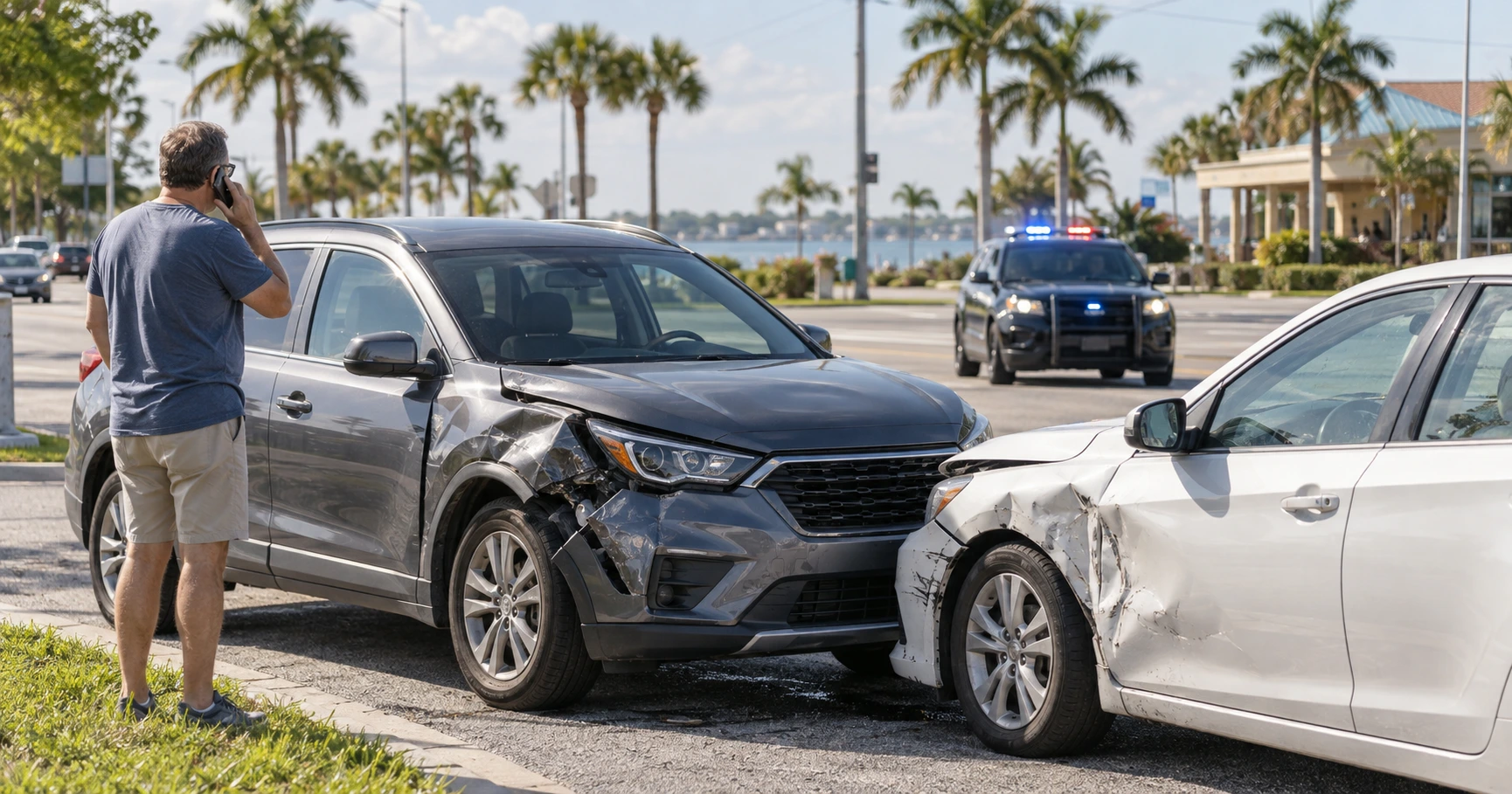
You didn’t expect your day to go like this. One minute, you were driving through Tampa, minding your own business. Next, a company van, a delivery truck, or a branded fleet vehicle hits you, changing everything.
Now you’re dealing with pain, lost wages, and a pile of medical bills. And on the other side of this mess is a corporation with lawyers, adjusters, and a playbook designed to minimize what they pay you.
Here’s what most people don’t realize: fleet vehicle crashes are legally different from regular car accidents, and that difference can matter enormously for your claim. This article breaks down exactly why, who can be held responsible, and what you need to do to protect yourself.
Quick Summary
- Fleet vehicle crashes aren’t like regular accidents. The company behind the wheel may be just as liable as the driver.
- Florida law gives you 2 years from the date of the crash to file a claim under Florida Statute § 95.11(3)(a). That clock starts immediately.
- Florida recorded 381,210 traffic crashes in 2024, and commercial and fleet vehicles were involved in every single one.
- Get medical attention, document everything, and call a fleet vehicle accident lawyer before you speak to any insurance company.
- Had a bad day? Call The Reyes Firm at 833-4 BAD DAY — free consultation, no fee unless we win.
Who Is Liable in a Fleet Vehicle Accident?
The driver who hit you is liable. But in a crash involving a fleet vehicle, the vehicle’s owner is often liable as well.
When an employee causes a crash while driving a company vehicle for work, the employer can be held responsible under a legal doctrine called vicarious liability. In plain terms, that means a business is responsible for what its employees do on the job, including when they are behind the wheel. If the driver was making deliveries, traveling between job sites, or running a company errand when the crash happened, the employer’s liability follows.
That changes the entire landscape of your claim. Instead of dealing with one driver’s personal auto policy, you may be facing a corporate insurer with much higher coverage limits and far more resources to fight you.
Florida’s statute of limitations for personal injury claims is 2 years from the date of the accident under Florida Statute § 95.11(3)(a). Miss that window, and you permanently lose your right to recover compensation, no matter how strong your case is.
Why Company Fleet Crashes Are Different From Regular Accidents
This is the question that matters most, and the answer comes down to three legal doctrines that simply don’t exist in a typical two-car collision.
Vicarious liability is the foundation. When an employee is driving for work and causes a crash, the employer is automatically held responsible. You don’t have to prove the company did anything wrong on its own. The employment relationship is enough.
Negligent entrustment goes further. This doctrine applies when a company hands the keys to someone they knew, or reasonably should have known, was an unsafe driver. A history of DUIs, a suspended license, prior at-fault crashes on their record, and the company gave them a vehicle anyway. That’s negligent entrustment, and it makes the company independently liable in addition to vicarious liability.
Negligent hiring is the third angle. If the company failed to run a basic background check, skipped required driver qualification reviews, or ignored obvious red flags during the hiring process, they may be responsible for putting a dangerous driver on the road in the first place.
These aren’t just legal technicalities. There are three separate, independent pathways to holding a company accountable. A skilled fleet vehicle accident attorney investigates all of them, because any one of them can significantly change what your case is worth.
According to the Florida Department of Highway Safety and Motor Vehicles (FLHSMV), Florida recorded 381,210 traffic crashes in 2024, which works out to more than 1,000 crashes per day. Commercial and fleet vehicles were part of that statewide crash total.
What Evidence Do You Need in a Fleet Vehicle Crash Case?
Evidence in a fleet case goes well beyond the police report and photos from the scene.
Because the company itself may be liable, you need records that the driver simply doesn’t have access to. Your attorney should be pursuing these from day one:
- Driver’s employment records — hiring documents, performance reviews, prior complaints
- Motor vehicle records (MVR) — the driver’s complete licensed history
- Vehicle maintenance logs — to determine if a mechanical failure played a role
- GPS and telematics data — many fleet vehicles track speed, braking, and location in real time
- Dashcam footage — from the vehicle itself or nearby business cameras
- Company driving policies — to show whether the employer followed their own rules
- Training records — to establish what the driver was or wasn’t taught
Companies and their insurers know exactly what this evidence can do to a case. They also know it disappears fast. Telematics data gets overwritten. Dashcam footage gets deleted. The Reyes Firm works with investigators and experts who know how to preserve this evidence before it’s gone.
Does Florida’s No-Fault System Apply to Fleet Vehicle Crashes?
Florida is a no-fault state, which means your own Personal Injury Protection (PIP) coverage pays your initial medical bills and lost wages regardless of who caused the crash. That requirement is governed by Florida Statute § 627.736, which requires Florida drivers to carry at least $10,000 in PIP coverage.
But PIP has a hard ceiling. It covers 80% of medical expenses and 60% of lost wages, only up to that $10,000 cap. After that, you’re on your own unless you pursue a claim directly against the at-fault party.
Filing a fleet insurance claim against a corporate policy is a very different process from dealing with a personal auto insurer. Corporate carriers have dedicated claims teams whose job is to minimize what they pay you.
To step outside the no-fault system and sue the company, your injuries generally need to meet the “serious injury” threshold under Florida Statute § 627.737. That includes significant and permanent loss of an important bodily function, permanent injury, significant scarring or disfigurement, or death.
In fleet and commercial vehicle crashes, those thresholds are met more often than people expect. These vehicles are heavier and faster-moving than the average passenger car, and the injuries they cause tend to reflect that.
Under Florida Statute § 768.81, Florida follows a modified comparative fault system. If you are found more than 50% at fault for the crash, you cannot recover damages. If you are 50% or less at fault, your compensation is reduced by your percentage of fault. Shared fault does not automatically mean you do not have a case.
How Much Is a Fleet Vehicle Accident Case Worth in Florida?
No honest attorney will quote you a number before reviewing your specific case. But fleet vehicle crashes often result in higher recoveries than standard passenger car accidents, and there are real reasons for that.
Corporate insurance policies carry much higher limits than personal auto policies. Businesses also face reputational and regulatory pressure to resolve serious injury claims. And the presence of negligent hiring or negligent entrustment can, in extreme cases, open the door to punitive damages.
The categories of damages you may be entitled to recover include:
- Medical expenses, past and future
- Lost wages and reduced earning capacity
- Pain and suffering
- Permanent disability or disfigurement
- Property damage
- Loss of enjoyment of life
According to the National Highway Traffic Safety Administration (NHTSA), there were an estimated 39,345 traffic fatalities nationwide in 2024, and crashes involving commercial and fleet vehicles account for some of the most severe injuries in that dataset.
The Reyes Firm handles fleet accident cases on a contingency fee basis. You pay nothing unless we recover compensation for you.
Frequently Asked Questions About Fleet Vehicle Accident Claims in Florida
Who can be held liable after a fleet vehicle accident in Florida?
In many fleet vehicle accident cases, both the driver and the company may be legally responsible. The driver may be personally liable for causing the crash. The company may also be liable under Florida’s vicarious liability rules if the driver was working at the time of the accident. A fleet vehicle accident lawyer can investigate the case and identify every liable party.
What happens if the company says the driver was an independent contractor?
This is a common defense in fleet vehicle accident claims. However, the company’s label does not automatically protect it from liability. Florida courts often look at the real working relationship, including how much control the company had over the driver’s schedule, duties, and route. If the company controlled the work, it may still be legally responsible.
How long do I have to file a lawsuit for a fleet vehicle accident in Florida?
Under Florida Statute § 95.11(3)(a), most personal injury claims must be filed within 2 years from the date of the crash. That deadline usually starts on the day of the accident. It is important not to wait too long because key evidence in fleet accident cases, such as GPS records, driver logs, and telematics data, may be lost or overwritten.
Can I file a claim if I was a passenger in the fleet vehicle?
Yes. If you were a passenger in a fleet vehicle during the crash, you still have the right to seek compensation for your injuries. Because passengers are rarely at fault, you may have a claim against the driver, the fleet company, or another responsible party, depending on how the accident happened.
Do I need a lawyer after a crash involving a fleet vehicle?
You are not required to hire a lawyer, but fleet vehicle accident cases are often more complex than regular car accident claims. These cases may involve corporate insurance policies, multiple liable parties, GPS data, maintenance records, and company defenses. An experienced Florida fleet vehicle accident lawyer can protect your rights and handle the legal process while you focus on recovery.
Does it cost anything to talk to The Reyes Firm about a fleet vehicle accident?
No. The Reyes Firm offers free consultations for fleet vehicle accident cases in Florida. We also work on a contingency fee basis, which means you pay nothing unless we recover compensation for you. Call 833-4-BAD-DAY to get started.
How Can The Reyes Firm Help You?
If you’ve had a bad day, a car accident, a slip and fall, a trucking crash, or any injury that wasn’t your fault, The Reyes Firm is in your corner. Our Tampa personal injury attorneys offer free consultations and work on a contingency fee basis, which means you pay us nothing unless we win your case.
You shouldn’t have to fight the insurance companies alone. Let us fight for you.
📍 4730 N. Habana Ave., Suite 201, Tampa, FL 33614 📞 833-4 BAD DAY 🌐 Schedule your free consultation today
Had a bad day? Call The Reyes Firm. We’ll handle the rest.
The information in this blog post is provided for general informational purposes only and does not constitute legal advice. Reading this article does not create an attorney-client relationship between you and The Reyes Firm. Every case is different. If you have been injured in a vehicle accident, consult with a licensed Florida personal injury attorney about the specific facts of your situation.

Local attorney Edward Reyes is the founder and managing attorney of The Reyes Firm. He brings experience from both the medical and legal sides of personal injury and built the firm to help injured people get clear answers after serious crashes.
Read more about Edward Reyes.