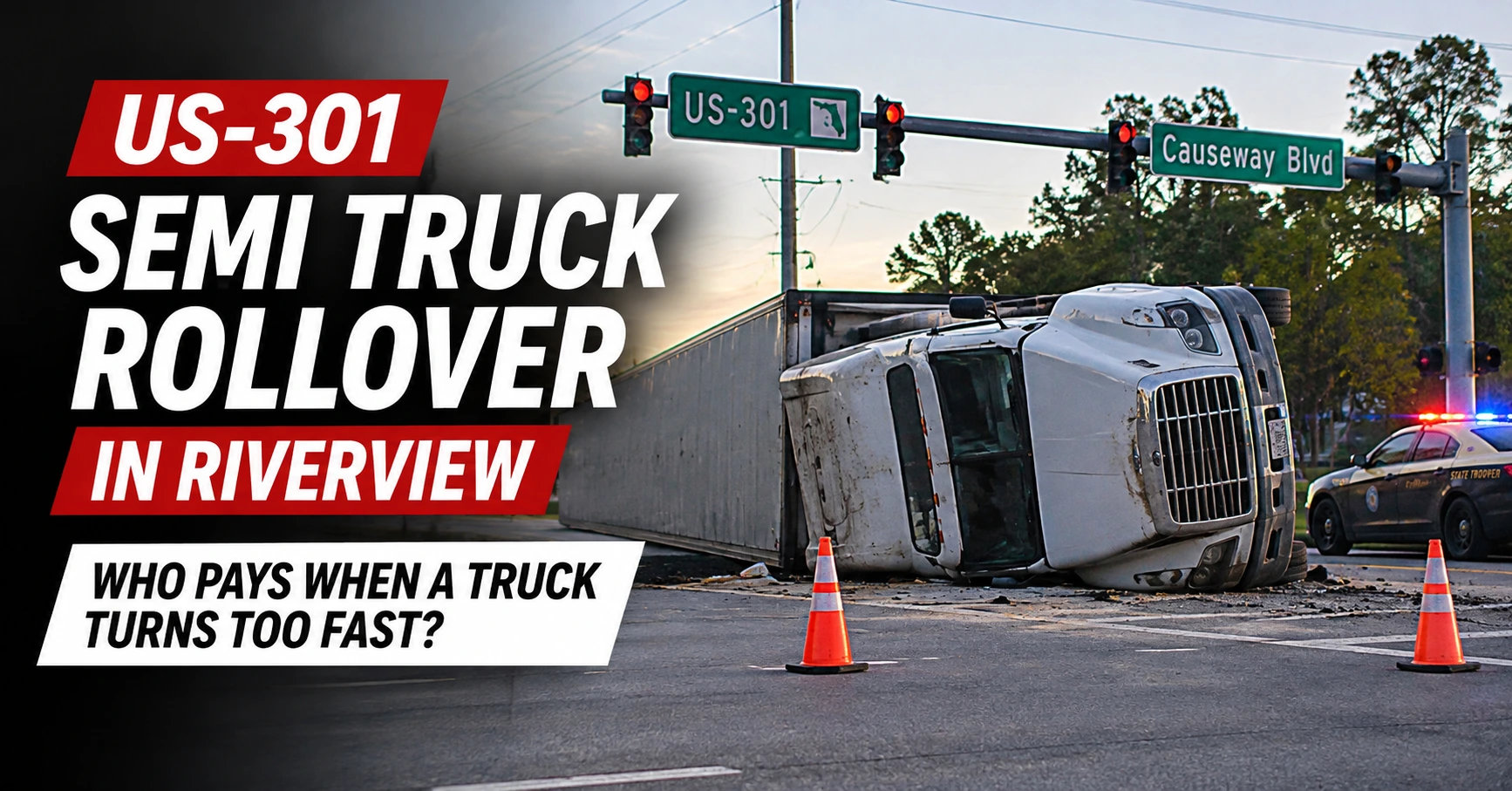
 A crash with an overturned semi can feel like a scene from a movie, except it is real, it is loud, and people’s lives are suddenly at risk. One minute, the road is moving, and the next minute, all northbound lanes are blocked, cars are stopped bumper to bumper, and drivers are trying to figure out if they are safe, hurt, or about to be hit from behind.
That is what makes an I-295 semi truck accident so dangerous. A semi-truck is heavy, tall, and hard to stop quickly. When it overturns, it can slide, spill cargo, or leave debris across multiple lanes. Even drivers who do everything right can get caught in a chain reaction.
On January 29, 2026, reports in Jacksonville described an overturned semi that shut down all northbound lanes on I-295 near I-10, with injuries reported and hours of traffic disruption before lanes reopened later that day. For anyone hurt or shaken up by a wreck like this, the next steps matter because early choices can protect health, protect evidence, and protect a future claim.
What happened in the Jacksonville I-295 semi truck accident near I-10
News reports described a crash involving an overturned semi-truck on I-295 near I-10 in Jacksonville that shut down all northbound lanes for several hours. Injuries were reported, and the driver of the semi was taken to the hospital with injuries described as non-life-threatening. Troopers also reported that metal beams were discarded onto the roadway, which is an important detail because roadway debris and cargo issues can become key evidence in a truck case.
This kind of traffic shutdown usually means the crash was not minor. When a semi-truck overturns, emergency responders must manage injuries, secure the scene, address fuel or fluid hazards, coordinate towing, and clear debris. That creates a fast-moving situation where evidence can disappear quickly unless someone knows what to preserve.
This incident was reported on I-295 near the I-10 interchange in Jacksonville, Duval County.
Map: I-295 at I-10 interchange, Jacksonville (Duval County), Florida.
Why is an overturned semi more dangerous than a normal crash
A typical fender bender is usually one lane, two cars, and damage that stays in a small area. A semi rollover is different because the truck’s weight and size can affect the entire roadway.
Here is why injuries tend to be more serious in a rollover truck crash:
- More force at impact. A semi can weigh many times more than a passenger car, so the force transfer is larger even at lower speeds.
- More vehicles are involved. Sudden stops on I-295 can cause rear-end crashes following the initial collision.
- Debris and cargo hazards. When items spill or metal beams end up in lanes, drivers can hit them, swerve, or lose control.
- Longer emergency response and cleanup. Spending more time at the scene can increase the risk of secondary crashes as drivers approach a blocked interstate.
For drivers and families, the main point is simple: a semi-rollover often creates hidden injury risks and complex legal issues. That is why the response should be calm, careful, and focused on protecting the basics.
Step 1: Protect health first, even if the pain feels small
After an I-295 semi truck accident, many people say they “feel okay” at the scene. Then symptoms show up later that day or in the next few days. This happens because adrenaline can hide pain, and swelling can take time.
Common delayed symptoms people should not ignore
A person should get checked if they notice:
- Headache, dizziness, nausea, or confusion
- Neck pain, back pain, stiffness, or sharp shooting pain
- Numbness, tingling, or weakness in arms or legs
- Shoulder, hip, or knee pain that gets worse after resting
- Trouble sleeping, nightmares, or panic when driving
- Brain fog, memory problems, or trouble focusing
Why early medical care helps both health and the claim
Medical care is not just about paperwork. It helps doctors spot injuries early and create a treatment plan. It also establishes a clear timeline linking injuries to the semi-truck crash. Insurance companies often look for gaps in treatment and then argue the injury was not serious or was caused by something else.
If a person is taken to the hospital, they should keep copies of discharge paperwork, follow-up instructions, and prescriptions. If they were not taken to the hospital, they should still consider urgent care or a doctor visit, especially after a major truck rollover on a high-speed interstate.
Step 2: If it is safe, document the scene before everything changes
In a major interstate semi-truck crash, vehicles are often moved quickly, and debris is cleared. That is good for safety, but it can erase key details.
What photos and videos should capture?
If it is safe and the person is not seriously injured, documentation can include:
- The position of vehicles (if visible before towing)
- Damage to all sides of the vehicle, not just the obvious dent
- The roadway, including skid marks, gouges, and debris patterns
- Any spilled cargo or objects in the lanes
- Nearby signs that show location, such as “I-295,” “I-10,” mile markers, and exits
- Weather conditions and lighting, especially early morning visibility
If troopers mention debris, such as metal beams, on the roadway, photos of the debris and where it landed can be important later, as they can help explain how secondary impacts occurred.
Witness information matters more than people realize
Witnesses leave fast after a highway crash. If someone saw the semi drift, tip, strike a barrier, or spill debris, their statement can help prove what really happened. A person should try to get:
- Name
- Phone number
- A short note about what they saw
Step 3: Get the Florida crash report and keep the right records
Many people do not know where to obtain the official report or what to save. After a truck crash, good record-keeping can reduce stress later.
Where crash reports usually come from
In Florida, crash reports are commonly requested through the Florida Crash Portal. People often need the report number, date, and location. Some reports take time to become available.
Records that should be saved right away
A person should keep:
- ER and urgent care paperwork
- Follow-up visit notes
- Prescriptions and pharmacy receipts
- Photos of injuries as bruising develops
- Tow bills, storage bills, and rental car receipts
- Pay stubs showing missed work
- A short daily symptom journal (pain levels, sleep, activities they could not do)
A simple symptom journal can be powerful because it shows the real-life impact. It does not need to be dramatic. It just needs to be honest and consistent.
Step 4: Be careful with insurance calls and recorded statements
After an I-295 semi truck accident, insurance adjusters may call quickly. Sometimes they sound friendly and helpful. But their job is often to reduce the company’s costs.
Safer ways to handle early insurance conversations
A person can:
- Report the crash to their insurer promptly
- Share basic facts only: date, time, location, vehicles involved, injuries being evaluated
- Decline a recorded statement until they understand their rights
- Avoid guessing about speed, distance, or fault
Common mistakes that hurt claims
These mistakes show up all the time:
- Saying “I’m fine” before a medical evaluation
- Apologizing at the scene or on the phone
- Posting about the crash on social media
- Signing broad medical authorizations that allow deep digging into old records
A person does not need to be rude. They just need to be careful. A major truck crash is not the time to wing it.
Why semi-truck rollover cases are more complex in Florida
A semi rollover is rarely “just an accident.” It often has a cause that can be investigated.
Common factors in an overturned semi crash
These are some common issues that may contribute:
- Cargo shift from poor loading or improper securement
- Speed too fast for traffic flow, curves, or road conditions
- Driver fatigue or distraction
- Tire blowouts or mechanical failures
- Brake problems or poor maintenance
- Sudden evasive moves due to debris or road hazards
Because this incident involved reports of roadway debris, it is reasonable to say that cargo, debris, or objects on the road could become an important part of the investigation. Evidence such as dashcam footage, witness accounts, and scene photos can help establish whether debris caused another driver to brake, swerve, or crash.
Who may be legally responsible in an I-295 semi truck accident
In Florida truck cases, liability is often shared among multiple parties. That matters because it can affect insurance coverage and the total recovery.
Possible responsible parties may include:
- The truck driver, for unsafe driving decisions
- The trucking company, for hiring, training, supervision, or scheduling pressure
- Maintenance providers, if brakes, tires, or other parts failed
- Cargo loaders or shippers, if the load was poorly secured or unbalanced
- Manufacturers, if a defective part contributed to the loss of control
Truck companies and insurers often have teams working quickly after a major crash. That is one reason why injured people should act promptly to preserve evidence, especially electronic data and trucking records.
What compensation can include after a serious truck crash
In a strong personal injury claim, damages may include more than the first hospital bill. Real recovery often involves follow-up care, time off work, and long-term pain.
Common damages may include:
- Medical bills (ER, imaging, therapy, specialists)
- Future medical care
- Lost income and reduced earning ability
- Pain and suffering
- Loss of normal life activities
- Property damage and related costs
A person should not try to “estimate” the value too early. The value of a case often depends on medical findings, treatment needs, and how the injury changes daily life.
Florida legal rules that can affect the case
Florida law can shape what happens next in a truck accident claim.
Comparative fault can change the outcome
Florida uses a comparative fault system in many negligence cases. This means insurers often argue that the injured person shares blame. That is why evidence matters, because small details can shift fault arguments.
Deadlines matter
Florida has filing deadlines that can be strict. Waiting too long can weaken a case because evidence fades, witnesses disappear, and records become harder to locate. A person does not need to file a lawsuit immediately to get advice, but they should not delay getting legal guidance.
What injured drivers should do in the first 24 to 72 hours
This checklist is written for real life, not perfection.
- Get a medical evaluation and follow instructions.
- Take photos of injuries and vehicle damage.
- Write down the timeline while your memory is fresh.
- Save dashcam footage and back it up.
- Collect witness info if available.
- Keep receipts for every crash-related cost.
- Avoid social media posts about the wreck or recovery.
- Be careful with insurance statements and do not sign documents you do not understand.
- Talk to a Florida truck accident lawyer if injuries are involved or liability is unclear.
FAQs about an I-295 semi truck accident near I-10 in Jacksonville
What if the pain starts the next day?
Delayed symptoms are common. A person should get checked and document when symptoms began and how they changed.
What if a driver hit debris instead of hitting the truck?
Debris crashes can still create valid claims, especially if the debris came from an unsafe load, poor securement, or a roadway hazard connected to the crash. Photos and witness statements become very important.
What if the trucking company blames the car driver?
That is common. Truck cases often involve aggressive fault-shifting. Evidence, medical records, and a clear timeline help fight unfair blame.
Should someone accept a quick settlement offer?
Quick offers are often made before the full injury picture is clear. Once a person signs a release, it can be difficult or impossible to seek more later. Legal advice can help avoid a costly mistake.
How Can The Reyes Firm Help You
After an I-295 semi truck accident, injured people often feel overwhelmed. They are dealing with pain, car damage, missed work, and constant calls. They should not have to fight a trucking company and insurance carriers alone.
The Reyes Firm helps by building truck accident cases the right way, starting early and staying aggressive:
- Preserving key evidence before it disappears
- Investigating liability beyond just the driver
- Handling insurance pressure and protecting the client’s words
- Documenting damages clearly, including future care and lost income
- Pushing for full compensation and preparing every case as if it could go to trial
The Reyes Firm
4730 N. Habana Ave., Suite 201, Tampa, FL 33614
Call: 833-4 BAD DAY
Had a bad day?