What You Need to Know
- Florida Highway Patrol reported that a driver fled from a trooper on I-4 at speeds above 100 mph before a serious rollover crash.
- The crash happened on Saturday, July 11, 2026, on westbound I-4 in the Tampa and Hillsborough County area.
- A passenger reportedly suffered a broken femur, but authorities did not disclose possible injuries in the other vehicle.
- Criminal charges against a driver do not automatically decide fault or compensation in a civil injury claim.
- Anyone injured in a similar crash should seek medical care, preserve evidence, notify the proper insurers, and get legal guidance quickly.
Had a bad day? Call The Reyes Firm at 833-4 BAD DAY.
A high-speed crash can leave you hurt before you understand why it happened. If you were a passenger or an uninvolved driver, you may also have no control over the dangerous choices that placed you in harm’s way.
A reported I-4 police pursuit crash in Tampa raises these concerns. Florida Highway Patrol said a silver SUV fled from a trooper at more than 100 mph before sideswiping another vehicle and rolling several times. A passenger in the SUV reportedly suffered a serious leg injury.
In the accompanying YouTube video, Edward Reyes, Esq. discusses the risks created when a driver tries to flee from police. This article provides general legal information. It does not decide fault in the reported crash or suggest that The Reyes Firm represents anyone involved.
In this video, Edward Reyes, Esq. discusses the danger created by high-speed police pursuits and the legal questions that may follow when passengers or other motorists are injured.
What Happened in the Reported I-4 Police Pursuit Crash?
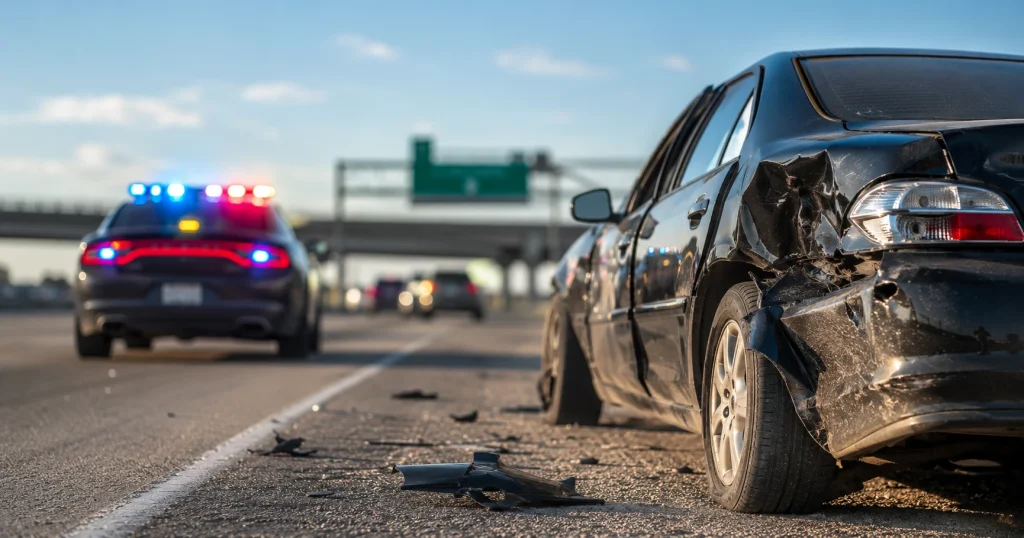
Florida Highway Patrol reported that a silver SUV passed a trooper on the westbound I-4 shoulder, fled at more than 100 mph, sideswiped another vehicle, rolled several times, and struck a traffic sign. The driver was arrested. A passenger suffered a broken femur and required emergency rescue.
According to FOX 13, the trooper was finishing another crash investigation when the SUV passed on the emergency shoulder. FHP said broadcast warnings had also described a reckless driver weaving through traffic.
Troopers alleged that the driver refused to stop and traveled above 100 mph in a posted 70 mph zone. FHP said the driver attempted to pass a vehicle on the left shoulder but struck it instead.
Both vehicles reportedly spun out of control. The SUV rolled and struck a traffic sign.
Emergency crews had to free the passenger from the SUV. Paramedics then transported her to a hospital.
FHP arrested the driver and reported charges of reckless driving involving serious bodily injury and fleeing or attempting to elude an officer resulting in serious injury. The report did not disclose injuries involving occupants of the second vehicle.
💡 Did You Know? FLHSMV recorded 16,102 speeding or aggressive-driving events in Florida during 2024. These events can affect drivers, passengers, pedestrians, and other people who had no control over the speeding vehicle.
What Legal Issue Does Edward Reyes Explain in the Video?
In the video, Edward Reyes, Esq. explains that fleeing from police can put passengers, nearby drivers, and officers at serious risk. He also raises a separate legal question: a law enforcement pursuit may require review if it was handled without proper care for public safety.
The first issue is the conduct of the fleeing driver. Driving at extreme speed, using a shoulder to pass, weaving through traffic, or refusing to stop may become important evidence in a civil injury investigation.
The second issue is more limited. A police pursuit does not automatically make a law enforcement agency responsible for a resulting crash.
Florida law gives authorized emergency vehicles certain privileges during a pursuit. An officer may exceed a speed limit only so long as the officer does not endanger life or property. The law also states that an emergency vehicle driver must act with due regard for the safety of others.
The facts must be examined carefully. Relevant questions may include:
- Why the pursuit began
- The seriousness of the suspected offense
- Traffic and road conditions
- The speed and duration of the pursuit
- Supervisory decisions
- Applicable agency policies
- The actions of the fleeing driver
- The relationship between the pursuit and the crash
These questions require evidence. They cannot be answered from a short news report or video clip alone.
Who Could Be Responsible After a Police Pursuit Crash?
Potential responsibility may include the fleeing driver, the vehicle owner, an insurer, another driver, or, in limited cases, a government agency. No party should be labeled legally responsible from a news report alone. A full civil investigation must examine each person’s actions, available insurance, and Florida law.
The fleeing driver
If the reported conduct is supported by evidence, the fleeing driver may face a civil claim from an injured passenger or an occupant of another vehicle.
A criminal case and a civil claim are separate. Still, crash evidence gathered during the criminal investigation may become important in a passenger injury claim.
The vehicle owner
The SUV’s ownership should be confirmed. Florida vehicle-owner liability rules may become relevant when the owner allowed another person to use the vehicle.
Ownership alone does not answer every liability question. Insurance exclusions, consent, vehicle use, and other facts must be reviewed.
Another driver
Investigators should examine every vehicle involved. A fleeing driver may carry most or all of the responsibility, but evidence could identify additional contributing conduct.
Florida’s modified comparative fault law generally prevents a person from recovering damages when that person is found more than 50 percent responsible for their own harm. A person assigned 50 percent or less may have damages reduced by their share of fault.
Insurance companies
Several policies may need to be investigated, including:
- The SUV’s bodily injury coverage
- Insurance belonging to the passenger
- Coverage on the second vehicle
- Uninsured or underinsured motorist coverage
- Medical payments coverage
- Florida PIP benefits
- Umbrella or excess coverage
A serious injury may exceed the limits of one policy. Identifying all available coverage can be one of the most important early steps.
A government agency
Claims involving a government agency are legally complex. Florida law provides a limited waiver of sovereign immunity, but it also imposes written notice requirements and other procedural rules.
A claimant may need to provide written notice to the correct agency and, in some cases, the Florida Department of Financial Services. General tort claims against a government entity have a three-year pre-suit notice period under section 768.28, while wrongful death notice has a two-year period. These notice rules do not replace every other filing deadline.
Your Rights
Florida Statutes section 316.072 gives emergency vehicles limited privileges during a police pursuit. It also states that those privileges do not remove the duty to drive with due regard for everyone’s safety or protect an officer from the consequences of reckless disregard. Government claims remain subject to section 768.28 and its strict procedures.
Can Criminal Charges Affect a Florida Injury Claim?
Criminal charges can provide useful evidence, but they do not automatically decide a Florida injury claim. Prosecutors must prove criminal offenses under criminal standards. An injured person must separately establish civil fault, causation, and damages. The arrest report, testimony, crash evidence, and final criminal outcome may still matter.
FHP reported two felony charges in this case:
- Reckless driving involving serious bodily injury
- Fleeing or attempting to elude an officer resulting in serious injury
These are allegations unless established through the criminal process. An arrest is not the same as a conviction.
For a civil case, the injured person must generally prove that someone failed to use reasonable care, that the failure caused the crash or injury, and that the injured person suffered measurable losses.
Those losses may include:
- Medical expenses
- Future treatment
- Lost income
- Reduced earning ability
- Physical pain
- Emotional distress
- Disability
- Loss of normal activities
- Vehicle and property damage
A Tampa car accident lawyer may review the criminal case without waiting for every criminal issue to end. Important evidence should still be preserved as soon as possible.
What Evidence and Immediate Steps Matter After a Similar Crash?
After a serious pursuit crash, evidence can disappear quickly. Injured passengers and drivers should get medical care, report all symptoms, preserve photos and messages, request the crash report, identify witnesses, and avoid recorded insurance statements before understanding their rights. A lawyer can also send preservation notices for video and vehicle data.
Important evidence may include:
- FHP crash and arrest reports
- Trooper dashcam recordings
- Body-worn camera footage
- Highway surveillance video
- Nearby business security footage
- 911 recordings and dispatch communications
- Pursuit authorization and supervisory records
- Agency pursuit policies
- Vehicle event data recorder information
- GPS and cellphone records
- Photos of vehicle damage and roadway marks
- Witness statements
- Fire rescue and emergency medical records
- Hospital records and imaging
- Insurance policies
- Towing and vehicle storage records
After a similar Tampa high-speed chase crash, you should:
- Get emergency or urgent medical care.
- Tell each provider how the crash happened.
- Report pain, numbness, dizziness, and mobility problems.
- Photograph injuries as they develop.
- Save damaged personal items.
- Request the crash report number.
- Avoid posting crash details on social media.
- Do not sign a broad medical release without reviewing it.
- Do not accept an early settlement before understanding future care.
- Speak with an attorney about evidence and insurance.
⚠️ Warning: Florida PIP benefits generally require initial medical services and care within 14 days after a motor vehicle accident under
Florida Statute § 627.736. Florida negligence and wrongful death actions also commonly have a two-year deadline under
Florida Statute § 95.11. Exceptions and government-claim rules may change the analysis, so do not wait to protect your rights.
Why Does This I-4 Crash Matter to Tampa Drivers?
This reported I-4 crash matters to Tampa drivers because interstate traffic can expose many people to one person’s high-risk choices. A passenger or uninvolved driver may face surgery, missed work, and insurance disputes. Local evidence can also be spread across FHP, fire rescue, hospitals, towing companies, and roadway cameras.
I-4 carries residents, tourists, commuters, delivery vehicles, and commercial traffic through Hillsborough County. A high-speed incident can involve several vehicles within seconds.
FLHSMV recorded 381,210 codable traffic crashes and 3,184 traffic deaths across Florida in 2024. Its final 2024 report also identified 16,102 speeding or aggressive-driving events.
NHTSA reports that 11,288 people died in speeding-related traffic crashes nationwide in 2024. Speeding was a contributing factor in 29 percent of all traffic deaths that year.
These figures do not decide what caused this reported crash. They show why speed-related evidence deserves immediate attention.
The Reyes Firm assists injured people in Tampa and the South Shore communities, serving Tampa, Riverview, Brandon, Plant City, and communities across
How The Reyes Firm Handles Your Police Pursuit Injury Case
The Reyes Firm moves quickly in police pursuit injury cases because video, vehicle data, witness memories, and government records can be lost. The firm investigates the fleeing driver, other vehicles, insurance coverage, and any legally supportable agency issue. Each case is prepared for negotiation with the evidence needed for trial.
The firm may take the following steps:
- Begin an immediate investigation and preserve evidence. This may include crash reports, roadway video, dispatch communications, dashcam footage, vehicle data, and witness statements.
- Identify all insurance coverage and handle insurer communication. The firm reviews vehicle policies, household policies, PIP, bodily injury coverage, and uninsured or underinsured motorist benefits.
- Document medical care. The legal team organizes emergency records, imaging, specialist visits, therapy, surgery recommendations, and future treatment needs.
- Analyze each source of potential liability. This may include the fleeing driver, vehicle owner, other motorists, and a government entity when the evidence and law support further review.
- Document the full effect of the injury. The firm gathers wage records, employment information, medical expenses, pain documentation, and evidence of changes to daily life.
- Use qualified experts when appropriate. Accident reconstruction, medical, economic, roadway, or law enforcement procedure experts may help explain complex issues.
- Prepare for settlement and trial. The firm builds the claim with supporting records and remains ready to litigate when an insurer refuses to make a fair offer.
The Reyes Firm
4730 N. Habana Ave., Suite 201
Tampa, FL 33614
833-4 BAD DAY
thereyesfirm.com
Frequently Asked Questions About Police Pursuit Crashes in Tampa
Can a passenger file a claim against the driver who was fleeing?
An injured passenger may have a claim against a driver whose conduct caused the crash. The passenger may also have access to PIP, bodily injury, or uninsured motorist coverage from more than one policy.
Do felony charges prove who is liable for the crash?
No. Charges are allegations and do not automatically establish civil liability. The civil case still requires evidence showing fault, causation, injuries, and damages.
Can I file an injury claim before FHP finishes its investigation?
You may begin protecting a claim before the investigation is complete. Early action can help preserve video, witness information, vehicle data, insurance records, and medical documentation.
Can a police department be responsible for a pursuit crash?
A government agency may face liability only under limited facts and legal rules. Florida law gives emergency vehicles certain privileges, but officers must still act with due regard for public safety, and government claims have strict notice procedures.
What if I was injured in the other vehicle?
An uninvolved driver or passenger may pursue compensation from a person whose conduct caused the collision. Your own PIP and uninsured or underinsured motorist coverage may also apply.
Can I recover money if I was partly at fault?
Florida uses a modified comparative fault system. A person found more than 50 percent responsible for their own harm generally cannot recover damages, while a lower share of fault may reduce the recovery.
Do I need medical treatment within 14 days?
Florida’s PIP law generally requires initial medical services and care within 14 days for medical benefits. You should seek care sooner when you have pain, weakness, numbness, dizziness, or trouble moving.
How soon should I contact a Tampa injury lawyer?
Contact a lawyer as soon as you can after addressing urgent medical needs. Pursuit video, roadway footage, dispatch records, and vehicle information may be lost if preservation requests are delayed.

Edward Reyes, Esq. is admitted to The Florida Bar and practices in Tampa, Florida. He focuses on helping people injured in serious Florida car crashes and other preventable accidents. Through The Reyes Firm, he provides clear legal guidance to injured people and families facing insurance and liability questions.
How Can The Reyes Firm Help You?
If you’ve had a bad day — a car accident, a slip and fall, a trucking crash, or any injury that wasn’t your fault — The Reyes Firm is in your corner. Our Tampa personal injury attorneys offer free consultations and work on a contingency fee basis, which means you pay us nothing unless we win your case.
You shouldn’t have to fight the insurance companies alone. Let us fight for you.
📍 4730 N. Habana Ave., Suite 201, Tampa, FL 33614
Had a bad day? Call The Reyes Firm. We’ll handle the rest.
This article is provided for general informational purposes only. It is not legal advice, and reading it does not create an attorney-client relationship.
Every injury case depends on its specific facts, available evidence, insurance coverage, and applicable law. Past outcomes cannot predict the result of another case.
The Reyes Firm does not represent any person involved in this reported incident unless explicitly stated. News facts, allegations, charges, injuries, and the status of the investigation may change as additional information becomes available.