 A crash on I-75 can turn a normal day into a confusing, scary moment. One minute, traffic is moving. Next, cars are stopped, people are looking around, and drivers are trying to figure out what just happened.
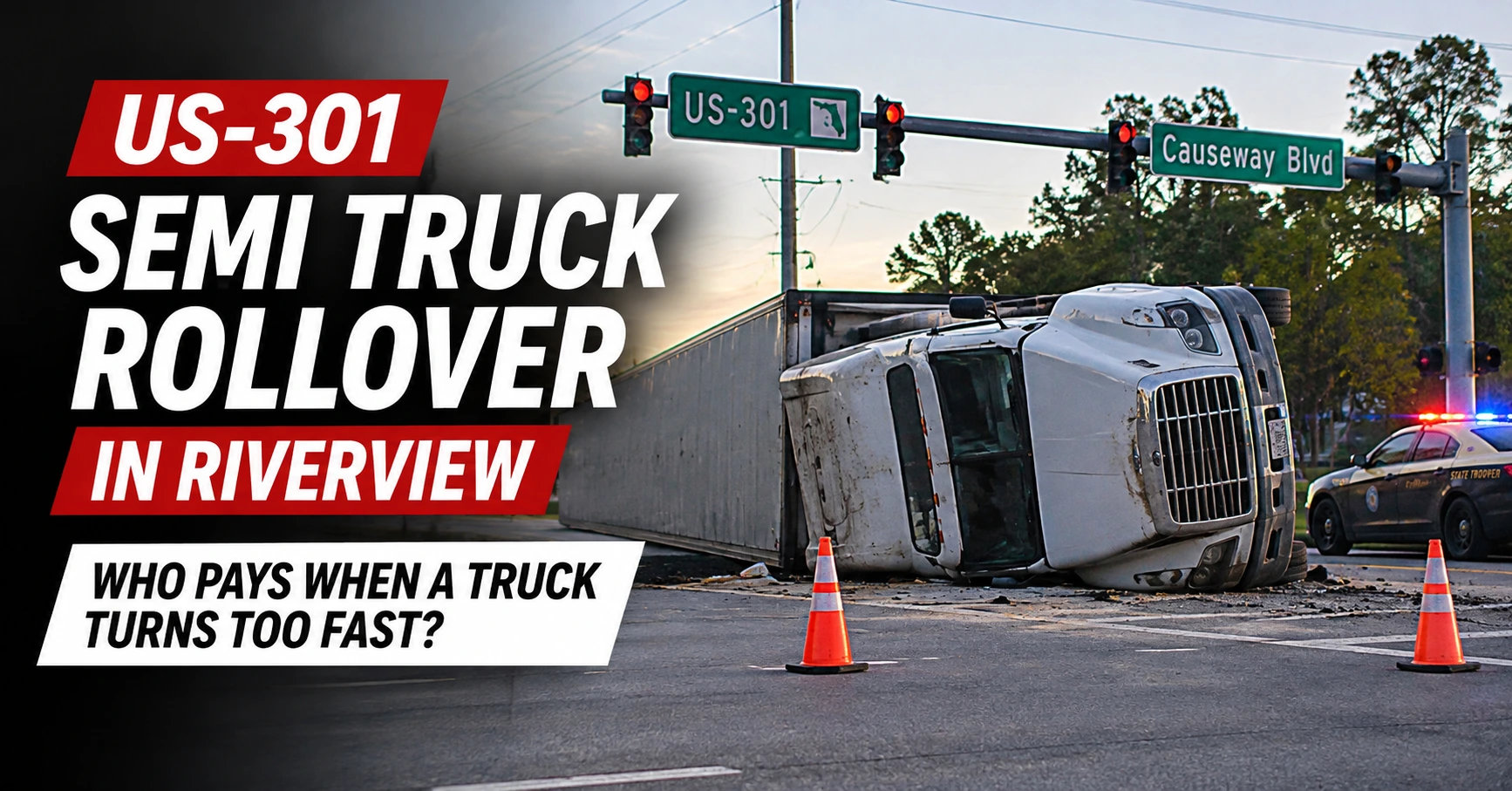
On February 27, 2026, MySuncoast (WWSB) reported a crash involving a dump truck on I-75 near the Sarasota-Charlotte County line around mile marker 173. The report described a dump truck on its side along the guardrail in the center median, along with major slowdowns and lane closures during cleanup.
What happened on I-75 near the Sarasota Charlotte County line (MM 173)
According to the MySuncoast report, the crash occurred on I-75 near the Sarasota-Charlotte County line, around mile marker 173. The report said the dump truck was on its side on the guardrail in the center median, and that traffic was slowed in both directions, partly due to cleanup and people looking at the crash scene.
This kind of crash matters because “traffic delay” headlines often hide the real impact. A multi-vehicle crash near a busy interstate border area can mean:
- Hard impacts at highway speeds
- Sudden stops and rear-end collisions
- Unsafe lane changes as drivers try to avoid debris or blocked lanes
- Injuries that do not show up right away
For injured drivers, the next steps should focus on two things: health and evidence.
Why are dump truck crashes more serious than typical car crashes
A dump truck is a commercial vehicle designed to carry heavy loads. Even when it is not carrying a full load, it still weighs far more than a normal passenger car.
That difference changes the entire crash.
More force in a collision
When a heavier vehicle hits a lighter vehicle, the lighter vehicle usually takes more damage. That can lead to stronger impacts on the head, neck, back, and joints.
More ways the crash can happen
Dump truck crashes can involve problems that are not common in normal car wrecks, such as:
- A load shift that makes the truck unstable
- Tire blowouts or brake problems
- Poor maintenance
- Unsafe turns or lane changes
- Speed that is too fast for the road or traffic conditions
More companies involved
A dump truck driver often works for a company. There may also be a separate company that owns the truck, maintains it, or loads it. That matters because responsibility can fall on more than one party.
This is one reason people search for an I-75 dump truck accident attorney after an interstate crash. These cases are usually not simple.
Step 1: Get medical care early, even if the pain feels “not that bad”
After a crash, adrenaline can hide injuries. Many people feel “shaken up” and think they will be fine. Then the next day, the pain starts.
Common injuries after highway crashes include:
- Concussions and head injuries
- Whiplash and neck strain
- Back injuries, including herniated discs
- Shoulder and knee injuries from bracing
- Soft tissue injuries that get worse over time
Getting checked is not just smart for health. In Florida, it can also protect important insurance coverage.
Florida’s 14-day PIP rule
Florida’s PIP law includes a major deadline. To qualify for PIP medical benefits, a person generally must receive initial services and care within 14 days after the crash.
That means injured drivers should not wait weeks, hoping the pain will go away.
A simple, safe move is to get checked at an ER, urgent care center, or doctor’s office, then follow up if symptoms persist.
Step 2: Document the crash and injuries as soon as possible
Evidence is easiest to collect right after the wreck. If the injured driver can do it safely, they should document:
- Vehicle damage from multiple angles
- Skid marks, debris, and road conditions
- Lane closures or traffic patterns
- Any visible injuries, like bruises or swelling
- The dump truck’s company name, license plate, and any DOT markings
If police respond, the injured driver should also write down:
- The agency name (often Florida Highway Patrol on I-75)
- The time and location
- Any officer names or report numbers, if available
When the scene is too dangerous, it is okay to prioritize safety. Evidence can still be gathered later, but early photos often tell the clearest story.
Step 3: Watch what is said to insurance companies
After a truck crash, insurance calls can happen fast. Some people receive calls within a day or two.
A key rule is simple: injured drivers should be careful with recorded statements.
Insurance adjusters may ask questions that seem normal, like:
- “How fast were you going?”
- “Are you feeling okay?”
- “Did you see the truck before the crash?”
If the injured driver is still in pain, confused, or unsure, they can accidentally say something that sounds like an admission of fault.
A safer approach is:
- Provide basic contact information
- Say medical care is ongoing
- Ask for questions in writing
- Avoid guessing about speed, distance, or timing
This is also where an I-75 dump truck accident attorney can help. A lawyer can handle communications and protect the injured person from being pressured into harmful statements.
Step 4: Understand Florida fault rules in plain language
Florida uses a rule that affects how much money an injured person can recover if they are partly at fault for the crash.
Under Florida law, if someone is found more than 50 percent at fault, they generally cannot recover damages in a negligence case.
If they are 50 percent or less at fault, their compensation can be reduced by that percentage.
This is why early evidence matters so much. A truck company may try to shift blame quickly. Strong proof can make a huge difference.
Step 5: Know the time limit to act in Florida
Many people think they have “plenty of time” to deal with a claim. That can be a costly mistake.
Florida’s general deadline to file many negligence actions, including many injury cases, is two years.
Even before that deadline, waiting can hurt the case because:
- Vehicles get repaired or sold
- Witnesses forget details
- Video footage gets recorded over
- Company records can be lost if not preserved
If a crash involves a commercial truck, moving sooner is often better.
Step 6: What an injured driver should track during recovery
A good claim is built on clear, simple proof. Injured drivers should keep:
Medical records and bills
Keep visit summaries, prescriptions, physical therapy notes, and imaging results.
Work impact
Track missed workdays, reduced hours, and any job restrictions given by doctors.
Pain and daily limits
A short daily log helps. Examples:
- “Could not lift groceries.”
- “Neck pain made driving hard.”
- “Headaches started after the crash.”
This is not about being dramatic. It is about showing what the injury actually changed.
Step 7: Common causes lawyers investigate in dump truck crashes
Dump truck crashes often have deeper causes than what is seen in a quick news clip or a crash photo.
A thorough investigation may look at:
- Driver training and decision-making
- Speed and following distance
- Blind spot checks and lane changes
- Maintenance history for brakes, tires, and steering
- Whether the truck was overloaded or poorly loaded
- Safety policies inside the trucking or hauling company
In a major event in which a dump truck ends up on its side, investigators also consider whether the truck tipped due to a load shift, a sudden maneuver, or impact with another vehicle.
What compensation may be available after a dump truck crash
Every case is different. But when a dump truck crash causes injuries, damages can include:
- Medical costs (past and future)
- Lost wages
- Loss of future earning ability if injuries limit work
- Pain and suffering, when the law allows it based on the facts
- Out-of-pocket costs like medication, mileage to appointments, and vehicle replacement needs
A careful case review is important because commercial cases can involve larger policies and stronger defense teams.
Local reality: why I-75 cases need fast action
I-75 is one of Florida’s busiest highways. Crashes near county lines like Sarasota and Charlotte often involve:
- Heavy commuter and travel traffic
- Multiple agencies responding
- Commercial vehicles moving between cities
- Quick cleanup and towing operations that remove key evidence
In these situations, the injured person benefits from a clear plan early, not later.
That is why people searching for an I-75 dump truck accident attorney should focus on quick, practical steps that protect both health and legal rights.
How Can The Reyes Firm Help You
When someone is hurt in a dump truck crash on I-75, they should not have to fight a trucking company and an insurance carrier alone. The Reyes Firm helps injured drivers by building a strong case from the start.
The Reyes Firm can help by:
- Investigating what happened and identifying who is responsible
- Sending preservation letters to protect key evidence
- Handling insurance calls and paperwork so the injured person can focus on recovery
- Collecting medical records and documenting how the injury affects daily life
- Preparing the claim with the detail and seriousness that commercial cases require
If someone needs an I-75 dump truck accident attorney, The Reyes Firm is ready to help them understand their next steps.
The Reyes Firm
4730 N. Habana Ave., Suite 201, Tampa, FL 33614
Phone: 833-4 BAD DAY
Had a bad day?
FAQs
1) Can an injured driver still file a claim if they did not have a dash cam?
Yes. Many truck cases rely on other proof, like witness statements, nearby business footage, vehicle damage patterns, and official scene documentation.
2) What if the dump truck was owned by a contractor or a construction company, not a “trucking company”?
Liability can still extend beyond the driver, and more than one company may be responsible depending on who owned, maintained, or controlled the work and vehicle.
3) How long do dump truck accident claims usually take to settle in Florida?
Some claims resolve in a few months, but cases with serious injuries or disputed fault can take a year or longer.
4) What questions should someone ask before hiring a truck accident lawyer?
They should ask about experience with commercial truck cases, how evidence will be preserved, expected timelines, and how fees and costs will be handled.