A brain injury can change the way you think, work, communicate, and care for yourself. It can also leave your family trying to understand whether someone else is responsible. The answer depends on more than receiving a traumatic brain injury diagnosis.
You may be able to file a traumatic brain injury lawsuit in Florida if another person, company, or organization caused or worsened your injury through negligence or another legal basis. A successful claim generally requires evidence showing who was responsible, how the incident caused or worsened the injury, and how the injury has affected your life.
A diagnosis alone does not establish liability. Likewise, having grounds to submit an insurance claim does not guarantee that an insurer will accept responsibility or offer fair compensation. Every TBI claim must be evaluated based on its medical records, accident evidence, insurance coverage, and applicable law.
When a traumatic brain injury causes lasting changes to a person’s memory, communication, independence, or ability to work, it may qualify as a catastrophic injury that requires a broader evaluation of future care and financial losses.
What You Need to Know
- A Florida brain injury claim based on negligence generally requires proof of duty, breach, causation, and damages.
- The medical evidence must connect the accident to the diagnosed injury or show that the accident aggravated an earlier condition.
- A normal CT scan does not automatically rule out a mild traumatic brain injury or concussion.
- Family members, coworkers, teachers, and other witnesses may help document cognitive or behavioral changes that are difficult to see on a medical bill.
- Florida generally gives a person two years to file a negligence lawsuit, but special cases may have different deadlines and notice requirements.
Can You Sue for a Brain Injury in Florida?
You may be able to bring a brain injury lawsuit when another party had a legal responsibility to act carefully, failed to meet that responsibility, and caused an injury that resulted in measurable harm. The responsible party might be a driver, employer, property owner, business, product manufacturer, contractor, or another person or organization.
It is also helpful to understand the difference between a claim and a lawsuit. A brain injury claim often begins with an investigation and a request for payment from an insurance company. A lawsuit begins when someone files a legal complaint in court. Some claims resolve without a lawsuit, while others require litigation because responsibility, causation, damages, or insurance coverage remains disputed.
Whether a lawsuit is appropriate depends on the facts. A person can have a medically real brain injury without having a valid case against someone else. The key question is whether the evidence connects another party’s wrongful conduct to the injury and its consequences.
What Must You Prove in a Traumatic Brain Injury Lawsuit?
Most TBI lawsuits based on negligence require the injured person to establish four elements: duty, breach, causation, and damages. Florida courts regularly describe these as the essential elements of a negligence claim.
| Element | What it means | Possible evidence |
| Duty | The defendant had a legal responsibility to act with reasonable care. | Traffic laws, property duties, company responsibilities, or applicable safety rules. |
| Breach | The defendant failed to meet that responsibility. | Video, reports, witness statements, electronic data, maintenance records, or safety documents. |
| Causation | The breach caused or aggravated the brain injury. | Medical timeline, examinations, testing, provider opinions, and prior health records. |
| Damages | The injury caused physical, financial, or personal harm. | Medical expenses, lost income, future-care evidence, and testimony about daily limitations. |
Duty and Breach
The duty depends on how the injury happened. A driver must operate a vehicle with reasonable care. A property owner may have responsibilities involving dangerous conditions. A business may be required to follow safety rules that apply to its work. A manufacturer may be responsible for a dangerously defective product.
Evidence of a breach may include surveillance footage, dashcam video, photographs, witness accounts, vehicle data, maintenance records, inspection records, training materials, or company policies. The right evidence will depend on the defendant and the event being investigated.
Medical Causation
Causation is often the most disputed issue in a TBI claim. It is not enough to show that an accident occurred and that a brain injury was later diagnosed. The evidence must connect the accident to the injury or show that the accident worsened an earlier condition.
A clear chronology can be important. Emergency records, early symptom reports, follow-up visits, neurological examinations, diagnostic testing, rehabilitation records, and treating-provider opinions may help show when the symptoms started and how they developed. Earlier medical records may also be reviewed to determine which symptoms were new or aggravated.
Damages
Damages describe the harm caused by the injury. In a brain injury claim, that harm may extend beyond hospital bills. A person may have difficulty remembering instructions, managing money, returning to work, driving, communicating, or completing household tasks. The damages evidence should show both the financial costs and the effect on everyday life.
Source: Florida Fifth District Court of Appeal decision discussing the four negligence elements
Can You Sue If Your CT Scan or MRI Was Normal?
A normal CT scan or MRI does not automatically prevent someone from pursuing a TBI claim. Imaging can help doctors identify bleeding, fractures, and certain structural injuries. However, the Centers for Disease Control and Prevention explains that a brain scan is not necessarily needed to identify a mild TBI or concussion.
Depending on the patient and symptoms, medical professionals may use a clinical examination, symptom assessment, balance or vision testing, cognitive evaluation, treatment history, or neuropsychological evaluation. The appropriate evaluation is a medical decision. No single test should be presented as mandatory in every case.
Important: Medical imaging is only one part of a brain injury evaluation. A qualified medical professional may also consider the person’s symptoms, medical history, clinical examination, and other appropriate testing when determining whether a traumatic brain injury occurred.
Source: CDC: About Mild TBI and Concussion
Do You Need to Lose Consciousness to Have a TBI Claim?
No. Loss of consciousness is not required in every mild TBI or concussion diagnosis. A person may remain awake but experience confusion, memory problems, dizziness, headaches, slowed thinking, fatigue, or sensitivity to light and noise.
From a legal standpoint, the absence of unconsciousness does not automatically defeat a claim. The issue is whether qualified medical evidence and the surrounding facts support the diagnosis and connect it to the incident.
What If Your Brain Injury Symptoms Appeared Later?
Some mild TBI symptoms may appear immediately, while others may develop hours or days later. Delayed symptoms can include headaches, concentration problems, dizziness, fatigue, sleep changes, irritability, and sensitivity to light or noise.
A delayed onset is different from an unexplained delay in seeking care. An insurance company may question why you didn’t report symptoms sooner or whether another event caused them. Medical records should accurately describe when each symptom began. A dated timeline or symptom journal may also help preserve details that become harder to remember later.
Source: CDC: Symptoms of Mild TBI and Concussion
Can You File a TBI Claim Without Hitting Your Head?
Myth: A person cannot suffer a brain injury unless their head strikes a steering wheel, window, floor, or another object.
Fact: A forceful bump, blow, or jolt involving the head or body may cause the brain to move inside the skull. A qualified medical professional must determine whether a TBI occurred.
A sudden acceleration and deceleration in a crash, a violent fall, or another forceful event may be medically relevant even when the person does not remember a direct impact to the head. Still, the mechanism alone does not prove that a particular person suffered a TBI.
What Evidence Can Help Prove a Brain Injury Claim?
Strong evidence should explain how the incident happened, how the injury was diagnosed and treated, and how the person’s life changed afterward. Depending on the case, useful evidence may include:
- Accident reports, photographs, video, and witness information
- Emergency records, specialist evaluations, testing, and rehabilitation records
- Records involving previous concussions or neurological conditions
- Employment, attendance, or academic records
- Specific observations from family members, friends, teachers, or coworkers

Before-and-after evidence can be especially important when cognitive or behavioral changes don’t show up on imaging or medical bills. Read our detailed guide on how to prove a traumatic brain injury after a Tampa accident.
Can You Sue If You Had a Previous Concussion?
A previous concussion, migraine condition, mental health diagnosis, or neurological problem does not automatically prevent a new brain injury claim. Evidence must separate symptoms that existed before the incident from symptoms that were newly caused or worsened.
Complete prior medical records can help establish that comparison. Attempting to hide earlier treatment may damage credibility and give the insurer another reason to challenge the claim. The better approach is to document the previous condition honestly and explain any medically supported change after the new incident.
Who Can Be Held Responsible for a Brain Injury?
Who is responsible depends on how the injury happened. Some cases involve more than one person, business, or insurance policy.
| How the injury happened | Parties that may need to be investigated |
| Car crash | A negligent driver, vehicle owner, or employer |
| Commercial truck crash | The driver, motor carrier, maintenance provider, shipper, or another contractor |
| Slip and fall | A property owner, occupier, management company, or maintenance provider |
| Defective product | A manufacturer, distributor, or seller, depending on the facts and legal theory |
| Workplace incident | A negligent third party and potentially the workers’ compensation system |
| Government vehicle or property | A government entity, subject to special notice rules and statutory limits |
| Medical negligence | A provider or facility, subject to separate malpractice procedures and deadlines |
Being listed as a possible party does not mean that person or organization is liable. Each party’s conduct and legal responsibility must be investigated separately.
How Might an Insurance Company Challenge a TBI Claim?
Brain injuries can be difficult to document because many symptoms are not immediately visible. In a traumatic brain injury claim, an insurer may accept that an accident happened but dispute that it caused the person’s symptoms. Common arguments include:
- The CT scan or MRI was normal.
- The injured person never lost consciousness.
- Symptoms were not reported immediately.
- The impact was not severe enough to cause the claimed injury.
- The symptoms came from a preexisting condition.
- Treatment was inconsistent, or the medical history had gaps.
- Returning to work or participating in activities is inconsistent with the claimed limitations.
- The injured person caused or contributed to the accident.
These arguments should be evaluated against the complete record. A single fact, such as returning to work, may not show whether the person struggled, required accommodations, reduced hours, or could no longer perform the same responsibilities.
What Florida Rules Apply to a TBI Caused by a Car Accident?
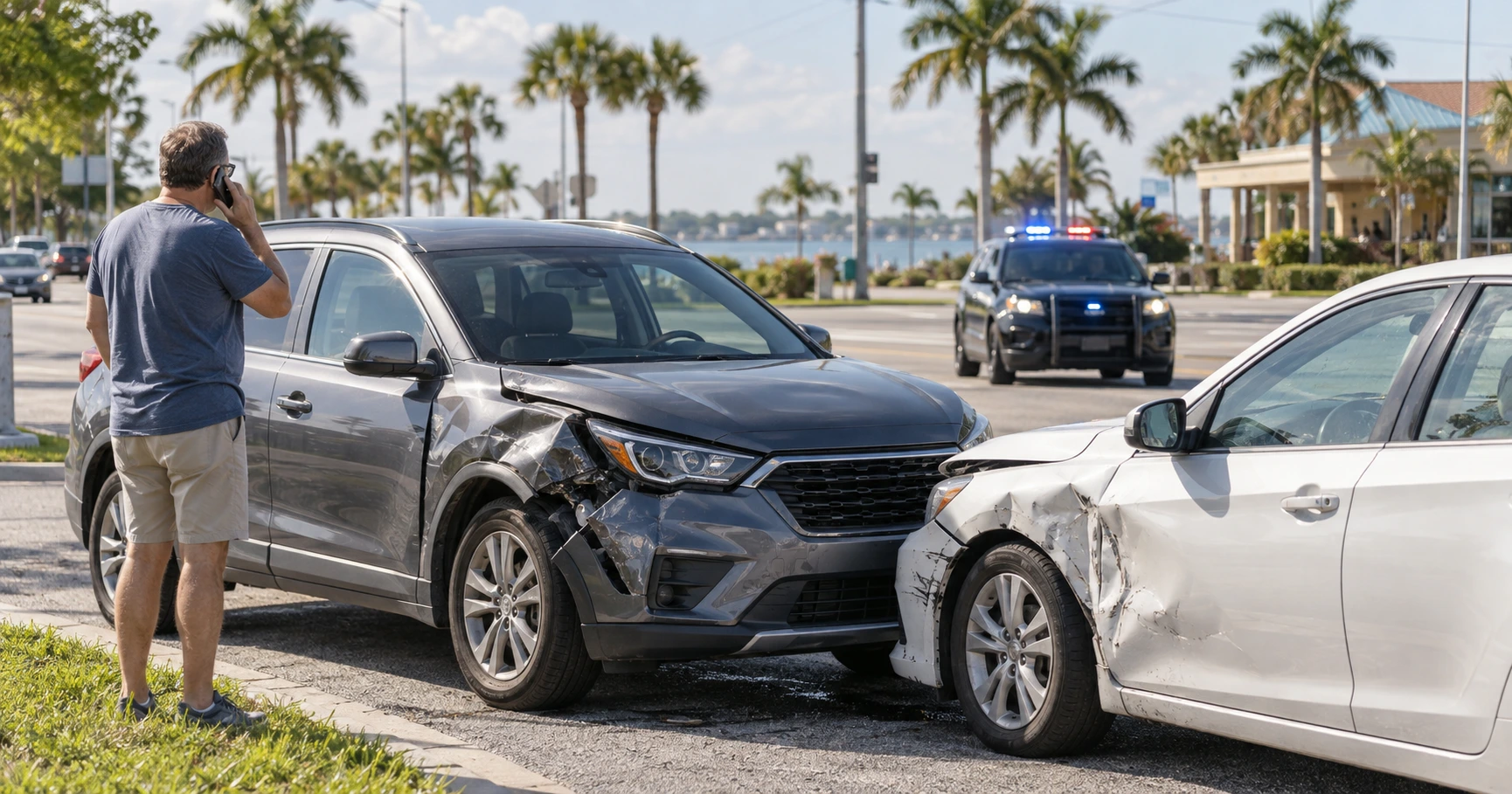
A brain injury caused by a motor vehicle crash can involve rules that do not apply to every other type of case. When a high-impact collision causes permanent or life-changing harm, it may also support a catastrophic car accident claim.
Florida’s 14-Day PIP Rule
Florida’s personal injury protection law generally requires an injured person to receive qualifying initial services and care within 14 days after a motor vehicle accident to obtain PIP medical benefits. This is an insurance-benefit requirement. It is not the deadline for filing a brain injury lawsuit.
PIP coverage may pay a portion of certain medical expenses and income losses, subject to the policy and statutory requirements. It does not necessarily cover the full cost of a serious brain injury.
Source: Florida Statute §627.736
Florida’s Serious-Injury Threshold
In a covered motor vehicle case, recovering damages for pain, suffering, mental anguish, and inconvenience generally requires meeting Florida’s statutory threshold. The statute includes permanent injury within a reasonable degree of medical probability and significant and permanent loss of an important bodily function.
A TBI diagnosis does not automatically establish that the threshold has been met. Whether the threshold is met depends on the medical evidence and the injury’s lasting effects.
Source: Florida Statute §627.737
What Compensation May Be Available in a Brain Injury Lawsuit?
Compensation depends on the claim type and the available evidence. There is no standard brain injury settlement amount. Potential compensation may include current expenses, future care, lost income, reduced earning capacity, and the injury’s effect on the person’s daily life.

Economic Losses
- Emergency and hospital care
- Neurology and other specialist treatment
- Medication and diagnostic testing
- Physical, occupational, speech, or cognitive rehabilitation
- Future medical care and monitoring
- Personal assistance or home health care
- Past lost income
- Reduced future earning capacity
- Home, vehicle, or workplace modifications when medically supported
Noneconomic Losses
- Physical pain
- Emotional distress
- Cognitive limitations
- Disability and loss of independence
- Loss of enjoyment of life
- Effects on relationships and family life
When a severe TBI creates lifelong medical or personal-care needs, a life care plan after a catastrophic injury may help document expected treatment, rehabilitation, equipment, home assistance, and related expenses.
Evidence of medically necessary treatment the injured person is expected to receive should support future medical expenses. Florida Statute §768.0427 governs evidence used to prove past and future medical expenses in personal injury and wrongful death actions.
Source: Florida Statute §768.0427
Can You Recover Compensation If You Were Partly at Fault?
Possibly. Florida’s modified comparative negligence rule generally reduces damages according to a claimant’s percentage of fault in covered negligence cases. A person found more than 50 percent responsible for their own harm generally cannot recover under §768.81. Different rules or exceptions may apply to certain claims.
For example, an insurer may argue that an injured driver contributed to a crash even if the other driver was also negligent. Photographs, video, witness statements, vehicle data, and expert analysis may become important when fault is disputed.
Source: Florida Statute §768.81
How Long Do You Have to File a Brain Injury Lawsuit in Florida?
To file a TBI lawsuit based on negligence in Florida, you generally have two years from the date the claim arises under Florida Statute §95.11. Other claims may follow different deadlines or procedures.
⚠️ Deadline Warning: The two-year period does not apply in exactly the same way to every case. Medical malpractice, wrongful death, government claims, claims involving minors, and other circumstances may have different deadlines, notice requirements, or procedures.
Even when the two-year deadline applies, waiting can make a brain injury claim more difficult to prove. Video may be overwritten, vehicles may be repaired, physical evidence may be discarded, and witnesses may become harder to locate.
Our guide to Florida personal injury lawsuit deadlines explains when the filing period generally begins and why some cases may follow different rules.
What Should You Do If You Suspect a Brain Injury?
- Seek appropriate medical care and describe your symptoms honestly.
- Follow your providers’ recommendations and attend scheduled appointments.
- Preserve photographs, reports, video, damaged property, and witness information.
- Keep a dated record of symptoms, appointments, and daily limitations.
- Ask family members to write down specific changes they have observed.
- Save medical bills, insurance letters, wage records, and benefit information.
- Use social media carefully because isolated posts may not show your full condition.
- Do not sign a release without understanding which claims and parties it covers.
- Ask a Florida attorney to review the potential defendants, insurance coverage, evidence, and deadlines.
Recovery can feel isolating. Your medical provider may recommend rehabilitation services, community resources, or local TBI support groups for injured people and their families.
Frequently Asked Questions About Brain Injury Lawsuits
Can you sue for a concussion?
A concussion is a form of mild traumatic brain injury. A lawsuit may be possible when someone else caused the injury, and the concussion resulted in legally recoverable harm. The word “mild” does not decide whether a claim is valid or how the symptoms affect a particular person.
Can a family member file for someone who cannot communicate?
A family member may help locate counsel and gather information. However, the legal authority to make decisions or bring a claim depends on the injured person’s capacity, existing powers of attorney, guardianship issues, and other facts. A Florida attorney can review the appropriate procedure.
Does every traumatic brain injury lawsuit go to trial?
No. Some claims resolve through negotiation, while others proceed to litigation or trial because important issues remain disputed. No lawyer can guarantee whether a case will settle, reach trial, or conclude within a particular time.
How much is a TBI claim worth?
No standard TBI settlement amounts exist. Potential value depends on responsibility, medical evidence, permanency, future care, work limitations, available insurance, comparative fault, and the injury’s effect on the person’s life. Past results do not predict the outcome of another case.
How Can The Reyes Firm Help?
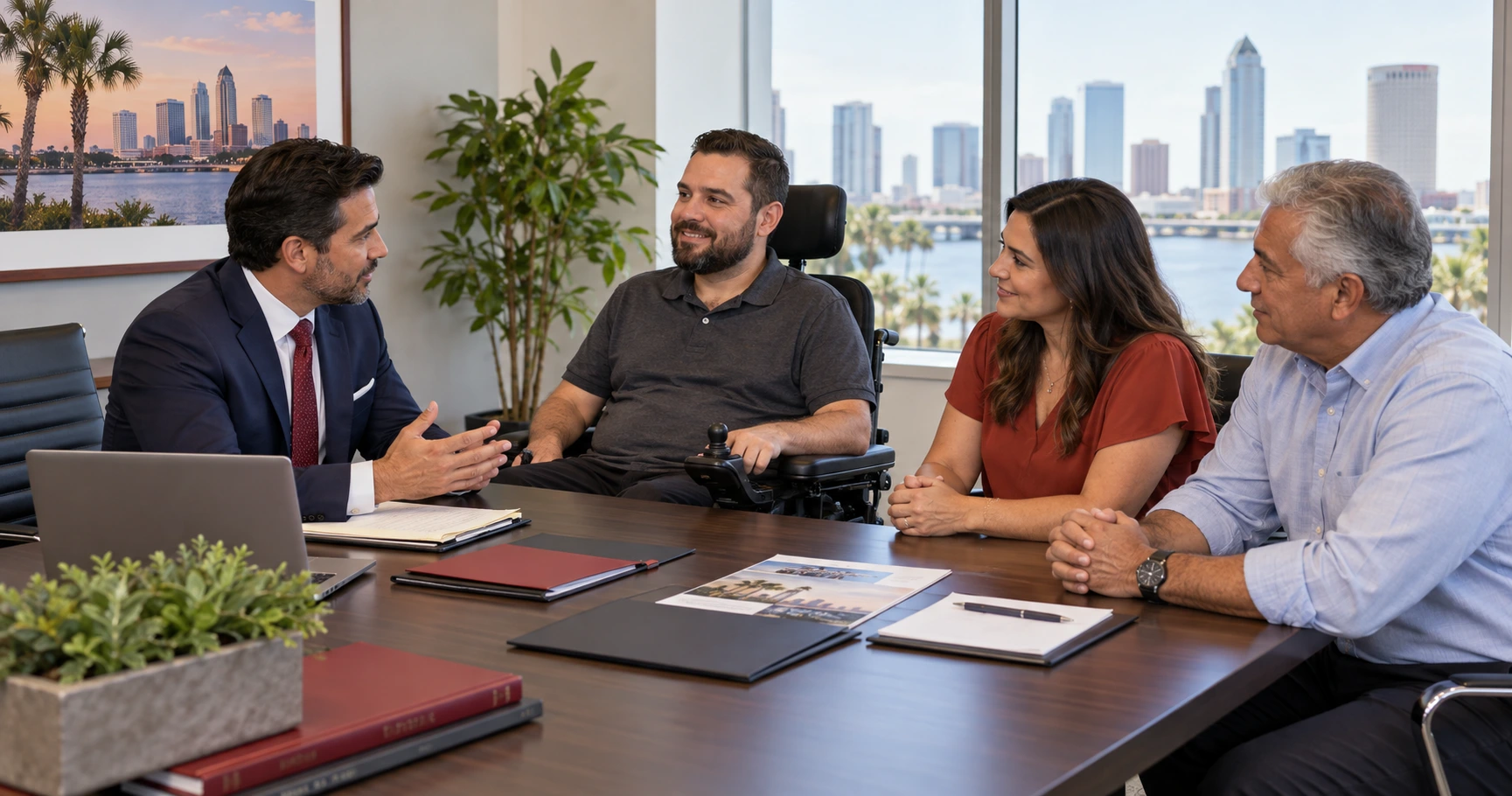
A brain injury affects more than a medical chart. It may change how you work, communicate, care for your family, and plan for the future. The Reyes Firm investigates how serious injuries happen and works to document both the immediate and long-term effects.
Depending on the case, our work may include preserving accident evidence, identifying responsible parties, reviewing insurance coverage, gathering medical and employment records, consulting qualified experts when appropriate, and preparing the claim for disputed negotiations or litigation.
A Tampa traumatic brain injury attorney can review how the injury occurred, which parties may be responsible, and what evidence may be needed. The Reyes Firm serves injured people and families in Tampa, Riverview, Brandon, Plant City, and communities across Hillsborough County.
Had a bad day? Call The Reyes Firm at 833-4 BAD DAY
to schedule a free consultation.
The firm handles personal injury matters on a contingency fee basis, subject to the written representation agreement.

Edward Reyes, Esq. is admitted to The Florida Bar. He represents people in personal injury matters involving serious and complex injuries. His practice focuses on helping injured people and their families understand their rights and pursue claims supported by careful investigation and preparation.
Legal Disclaimer: This article provides general information and is not legal advice. Reading it does not create an attorney-client relationship. Every case involves different facts, evidence, deadlines, insurance coverage, and law. Past results do not guarantee future outcomes. Speak with a qualified Florida attorney about your circumstances. This content may be considered attorney advertising under Florida Bar rules.