Blog

Blog, FAQ, Legal, Our Community, personal injury attorney, Why we serve

Trucking Regulations: Key Rules Every Driver Must Know

Navigating the complex trucking world requires a deep understanding of federal and state regulations. Non-compliance with these rules can have devastating consequences, leading to accidents, injuries, and significant legal penalties.   This blog post will explore the critical federal and state trucking regulations that every driver and company must know.    We will discuss the importance of compliance, the potential consequences of non-compliance, and how trucking lawyers can assist victims of truck accidents. Federal Trucking Regulations: An Overview The Federal Motor Carrier Safety Administration (FMCSA) is the regulatory agency responsible for overseeing the safety of commercial trucking operations in the United States.  The FMCSA establishes and enforces federal regulations that govern various aspects of commercial trucking, including: Driver Qualifications: The FMCSA sets standards for commercial truck drivers, including requirements for obtaining a Commercial Driver’s License (CDL), passing medical examinations, and completing required training. Vehicle Safety: The FMCSA establishes safety standards for commercial trucks, including requirements for vehicle inspections, maintenance, and equipment. Operational Guidelines: The FMCSA regulates various aspects of truck operations, such as service hours, recordkeeping, and hazardous materials transportation. If you or someone you know has been involved in a truck accident, contact The Reyes Firm to discuss your legal options. Hours of Service (HOS) Rules and the 8/2 Split Rule The Federal Motor Carrier Safety Administration (FMCSA) imposes strict Hours of Service (HOS) regulations on commercial truck drivers to reduce fatigue-related accidents.  These regulations limit how long a driver can be behind the wheel to prevent excessive tiredness. Fundamental HOS rules include: 14-Hour Driving Window: Drivers cannot operate a commercial motor vehicle for more than 14 hours in 24 hours. 11-Hour Driving Limit: Within the 14-hour driving window, drivers are limited to driving for a maximum of 11 hours. 30-Minute Rest Break: Drivers must take a 30-minute break after driving for 8 hours. The 8/2 Split Rule The 8/2 split rule allows drivers to divide their required 10-hour off-duty break into two segments: Eight hours: This 8-hour segment must be spent in a sleeper berth. Two hours: This 2-hour segment can be off-duty but does not need to be spent in a sleeper berth. If you’ve been involved in a truck accident where the truck driver exceeded legal driving hours, it’s crucial to consult with truck wreck attorneys. Safety Regulations for Commercial Vehicles Commercial truck drivers and trucking companies must adhere to strict safety regulations to ensure the safe operation of their vehicles.  These rules encompass various aspects of vehicle maintenance, including: Tire and Brake Safety: Trucks must maintain adequate tire pressure and tread depth, and brakes must be inspected and maintained regularly to ensure proper functioning. Vehicle Inspections: Commercial trucks are subject to regular inspections to identify and address any mechanical issues that could lead to accidents. Hazardous Materials Transportation: Trucks transporting hazardous materials must comply with specific regulations, including proper packaging, labeling, and emergency procedures. CDL Requirements and Driver Responsibilities Commercial truck drivers must obtain a Commercial Driver’s License (CDL) to operate commercial motor vehicles.  The CDL requirements differ based on the vehicle type. There are three classes of CDLs: Class A authorizes drivers to operate combination vehicles with a gross vehicle weight rating (GVWR) of 26,001 pounds or more, including a combination of a tractor and one or more trailers. Class B: This class enables drivers to operate single vehicles with a GVWR of 26,001 pounds or more or combination vehicles with a GVWR of 26,001 pounds or more and a GVWR of 10,000 pounds or less for the towed vehicle. Class C permits drivers to operate vehicles with a GVWR of 26,001 pounds or less, transporting 16 or more passengers or hazardous materials. In addition to the CDL class, drivers may need to obtain endorsements for specific types of vehicles or operations, such as: Hazardous Materials Endorsement: Necessary for drivers responsible for hauling dangerous substances. Passenger Endorsement: Required for drivers transporting 16 or more passengers. Tanker Endorsement: Required for drivers operating tanker trucks. Doubles/Triples Endorsement: Required for drivers operating vehicles with double or triple trailers. Suppose a truck driver fails to meet these CDL requirements or operates the vehicle safely, and an accident occurs. In that case, The Reyes Firm can help prove liability and pursue compensation on your behalf. The Legal Consequences of Violating Trucking Regulations Violating federal trucking regulations can have severe legal and financial consequences for commercial truck drivers and companies. These consequences may include: Fines and Penalties: The FMCSA can impose substantial fines on trucking companies and drivers who violate trucking regulations. These fines can range from thousands to hundreds of thousands of dollars. Lawsuits: Violations of trucking regulations can increase the risk of lawsuits in the event of an accident. If a trucking company or driver is found to have violated truck accident laws, it can be easier for plaintiffs to prove negligence. Criminal Charges: In some cases, violations of trucking regulations can lead to criminal charges, mainly if the violations result in serious injuries or fatalities. Best lawyers for truck accidents are crucial when trucking companies and insurance firms try to minimize liability in truck accident cases. Conclusion To sum up, understanding and complying with federal trucking regulations is essential for ensuring road safety and protecting the public.  Adhering to these rules can reduce the risk of accidents and minimize liability for commercial truck drivers and trucking companies. If you or a loved one has been involved in a truck accident, it is crucial to consult with a qualified truck accident lawyer.  The Reyes Firm, a leading law firm in Tampa, Florida, has the experience and expertise to help you navigate the complex legal landscape and secure the compensation you deserve. Contact us today for a free consultation, and let us help you obtain justice. Frequently Asked Questions How long does it typically take to settle a truck accident case? The timeline for settling a truck accident case can vary depending on several factors, including the case’s complexity, the insurance company’s willingness to negotiate, and the need

Settlements and Claims
After an Accident, Blog, FAQ, Legal, personal injury attorney, Settlement, Why we serve

Understanding Truck Accident Lawsuits: Settlements and Claims Explained

Truck accidents can have devastating effects on victims and their families, leading to severe injuries, emotional trauma, and significant financial burdens due to medical bills and lost wages. Understanding the intricacies of truck accident lawsuits, including settlements and claims, is crucial for victims seeking compensation. This article aims to provide a comprehensive overview of truck accident lawsuits, the average settlement amounts, how to choose the right lawyer, what damages can be claimed, and common mistakes to avoid in the claims process. What is a Truck Accident Lawsuit, and How Does it Work? Overview of Truck Accident Lawsuits A truck accident lawsuit is a legal action taken by an injured party or the family of a deceased victim against a truck driver, trucking company, or other responsible parties for compensation related to injuries or damages sustained in a collision involving a truck. These lawsuits fall under personal injury law, which addresses negligence cases that harm individuals. In a truck accident case, the plaintiff must prove that the defendant’s negligence contributed to the accident. This may involve demonstrating that the truck driver was operating the vehicle recklessly, that the trucking company failed to maintain their commercial truck properly, or that another party was responsible for the accident. The complexity of these cases often necessitates the expertise of a truck accident lawyer to navigate the legal system effectively. Steps Involved in Filing a Truck Accident Lawsuit The process of filing a truck accident lawsuit typically begins with the collection of evidence that supports the claim. This evidence may include police reports, witness statements, photographs of the accident scene, and medical documentation of injuries. Once sufficient evidence is gathered, the injured party or their personal injury lawyer will file a complaint with the appropriate court, detailing the circumstances of the accident and the damages sought. Following the filing, both parties may engage in a discovery process, exchanging information and evidence related to the case. If the case does not settle during negotiations, it may proceed to trial, where a verdict will be reached, and a judge or jury will determine a settlement amount. Key Players in a Truck Accident Lawsuit Several key players are involved in a truck accident lawsuit. The primary parties are the plaintiff, usually the injured person or their family, and the defendant, who may be the truck driver, the trucking company, or even a third party responsible for the accident. Insurance companies also play a significant role, as they often handle the claims process and negotiate settlement offers on behalf of the defendants. Additionally, expert witnesses may be called upon to provide testimony related to the accident, such as accident reconstruction specialists or medical experts who can detail the extent of the injuries sustained. Each of these players contributes to the overall dynamics of the lawsuit, influencing the outcome of settlement negotiations or trial proceedings. What Are the Average Truck Accident Settlement Amounts? Factors Influencing Truck Accident Settlement Amounts The average truck accident settlement amount can vary significantly based on several factors. One crucial factor is the severity of the injuries sustained by the accident victims. Cases involving severe injuries, such as traumatic brain injuries or spinal cord injuries, typically result in higher settlement amounts due to the extensive medical bills and long-term care needs associated with such conditions. Other factors include: Lost wages due to the inability to work. The degree of negligence involved. The specific circumstances of the accident. Additionally, the experience and reputation of the truck accident lawyer representing the victim can influence the settlement amount, as a skilled attorney may be more adept at negotiating favorable terms with insurance companies. Average Semi-Truck Accident Settlement Explained When discussing truck accidents, it’s essential to understand the average semi-truck accident settlement. These settlements can range from tens of thousands to over $1 million, depending on the case’s specifics. Factors such as the extent of injuries, property damage, and the impact on the victim’s quality of life determine the settlement amount. For instance, an accident in Texas involving an 18-wheeler may have different average settlements compared to a collision involving a smaller commercial truck due to the potential for more severe injuries and damages. Each case is unique, and understanding the average settlement can help victims set realistic expectations for their claims. Comparing Settlement Amounts for Different Types of Truck Accidents Settlement amounts can differ significantly based on the type of truck accident involved. For example, a semi-truck collision will likely yield a higher settlement than a minor auto accident due to the severe injuries often associated with larger commercial vehicles. Accidents involving multiple cars or trucking companies’ negligence in maintaining their fleet may also lead to higher settlements. Understanding these differences is crucial for accident victims to navigate their claims effectively and to seek compensation that accurately reflects the damages incurred. How to Choose the Right Truck Accident Lawyer? Qualities to Look for in a Truck Accident Lawyer Choosing the right truck accident lawyer is essential for successfully navigating the complexities of a truck accident lawsuit. One of the most critical qualities to look for is experience, particularly in handling truck accident cases. A lawyer specializing in truck accident law will deeply understand the regulations governing trucking companies and the unique challenges associated with these cases. Additionally, strong communication skills are crucial, as a reasonable attorney should be able to explain legal concepts clearly and keep clients informed throughout the process. Moreover, a proven track record of successful verdicts and settlements in similar cases strongly indicates a lawyer’s ability to secure favorable client outcomes. How a Truck Accident Lawyer Can Help Your Case A skilled truck accident lawyer can provide invaluable assistance throughout the claims process. They will investigate the accident thoroughly, gathering evidence and expert testimony to build a strong case. This includes obtaining police reports, medical records, and any available surveillance footage from the accident scene. Furthermore, an experienced attorney can negotiate with insurance companies on behalf of the victim to ensure that the settlement offer

large truck crash | fatal 18-wheeler crash truck
Accident Injuries & why, Blog, FAQ, Legal, personal injury attorney, Settlement, Truck Accidents, Why we serve

Large Truck Crash: Tragic Accident Involving Texas A&M Professor

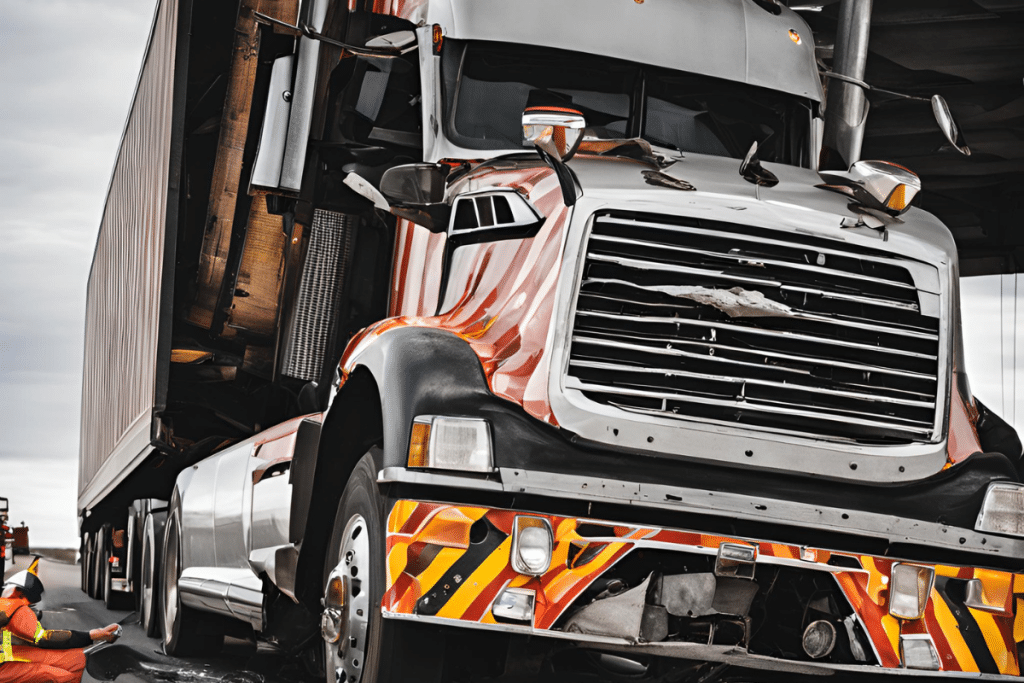
The recent large truck crash in College Station has shaken the local community and drawn attention to the critical issues surrounding truck safety and regulation. This tragic accident, which involved a Texas A&M professor, resulted in severe injuries and raised questions about the factors that contribute to such devastating truck wrecks. As we delve deeper into the details of this truck accident, we aim to explore its causes, implications, and the legal aspects that follow such incidents. What Happened in the Large Truck Accident in College Station? Details of the Truck Crash Incident The large truck crash occurred on a busy afternoon in College Station, Texas, when a semi-truck collided with a passenger vehicle, leading to a catastrophic truck wreck. Eyewitnesses reported seeing the truck driver lose control of the car while navigating a lane change on the interstate, which ultimately resulted in the truck rolling over and crashing into a nearby bus stop. The impact of the collision was severe, causing extensive damage to the large truck and the passenger vehicle involved. Emergency services arrived promptly, assessing the scene for injuries and fatalities. The tragic nature of this accident has prompted a crash report sampling system initiated by the National Highway Traffic Safety Administration (NHTSA), aiming to gather critical data on the incident. Victims Involved in the Truck Wreck The truck crash sadly resulted in fatalities, including the Texas A&M professor who was an occupant of the passenger vehicle. The NHTSA’s fatality analysis reporting system has indicated that the professor was a respected member of the academic community and a beloved figure among students and colleagues. Multiple other truck occupants sustained injuries, with some requiring immediate medical attention. The toll of this accident extends beyond physical injuries, affecting the emotional well-being of the victims’ families and the local community as a whole. Immediate Response to the Truck Accident Following the truck accident, local authorities and emergency responders worked diligently to secure the scene and assist the injured. This immediate response is crucial in truck crash cases, as it can significantly affect the victims’ outcomes. Paramedics transported injured individuals to nearby hospitals, where they received critical care for their injuries. The police launched a thorough investigation to determine the circumstances leading to the crash, gathering evidence and interviewing witnesses to piece together the events that led to this tragic accident. What Are the Causes of Large Truck Crashes? Common Factors Leading to Truck Accidents Crashes involving large trucks often stem from vehicle maintenance issues, driver error, and external conditions. The size and weight of large trucks play a significant role in their ability to maneuver and stop effectively, making them more susceptible to accidents in certain situations. Road conditions, weather, and traffic patterns can also contribute to the likelihood of a collision. Understanding these factors is paramount in preventing future truck accidents and ensuring the safety of all road users. The Role of Driver Error in Truck Crashes Driver error remains a leading cause of truck crashes, with studies indicating that a significant percentage of accidents involve mistakes the truck driver makes. Distracted driving, fatigue, and improper training can all lead to a hazardous situation on the road. In the case of the College Station accident, investigators focus on the truck driver’s actions leading up to the incident. The Federal Motor Carrier Safety Administration (FMCSA) emphasizes the importance of proper training and adherence to safety regulations as vital components in reducing driver error and preventing truck wrecks. Impact of Vehicle Maintenance on Collision Rates Maintenance of large trucks is another critical factor in crash prevention. A well-maintained truck is less likely to experience mechanical failures that can lead to accidents. Regular inspections and adherence to maintenance schedules are essential practices that trucking companies must follow to minimize risks. Failures in brakes, tires, or other critical systems can result in devastating truck crashes, as evidenced by the recent incident in College Station. The trucking industry must prioritize vehicle maintenance to safeguard truck occupants and other road users. How Do Truck Accidents Affect the Community? Implications for Local Traffic Safety Truck accidents, such as the one involving the Texas A&M professor, have far-reaching implications for local traffic safety. Following a tragic event, the community often experiences heightened anxiety about road safety. This can lead to increased calls for stricter regulations and enhanced safety measures to prevent similar incidents. Local authorities may respond by implementing awareness campaigns and educational programs aimed at promoting safe driving practices for both truck drivers and the general public. Support for Victims and Their Families In the aftermath of a truck crash, support systems must be in place for the victims and their families. Community organizations, mental health services, and even local government agencies can provide resources to help those affected cope with the emotional and financial repercussions of a truck accident. The tragic loss of life and injuries sustained in such accidents necessitate a compassionate response from the community, ensuring that victims receive the necessary support during their recovery process. Long-Term Community Recovery After a Truck Crash Long-term recovery from a truck crash involves physical healing and rebuilding the community’s sense of safety and security. This can include infrastructural changes to improve road safety and the establishment of memorials to honor those lost in tragic accidents. Communities often rally together to advocate for safer road conditions, pushing for legislative changes that address the root causes of truck-related incidents. Fostering a safety culture can help mitigate the impact of future truck accidents and create a more secure environment for all road users. What Are the Legal Aspects of Truck Accident Cases? Understanding Liability in Truck Wrecks Understanding liability is essential for victims seeking justice and compensation for their losses following a truck accident. Determining fault can be complex in many cases, as multiple parties may share responsibility, including the truck driver, the trucking company, and vehicle manufacturers. Liability can hinge on factors such as adherence to safety regulations and vehicle maintenance during the crash. Legal experts often

Truck accident legal help infographic
After an Accident, Blog, Legal, personal injury attorney, Settlement, Truck Accidents, Why we serve

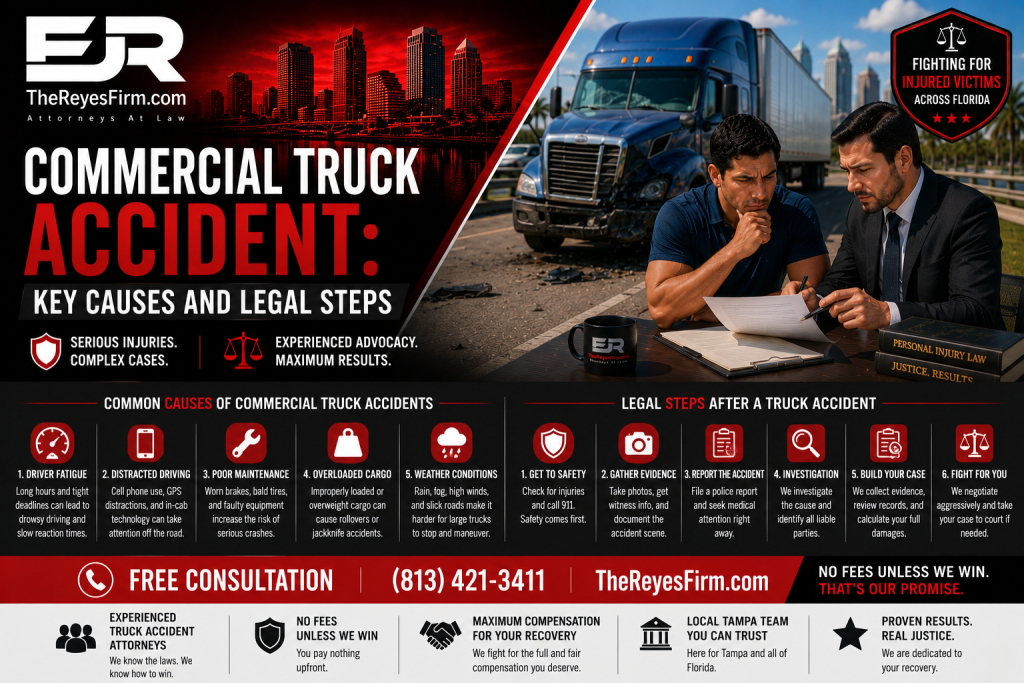
Commercial Truck Accident: Key Causes and Legal Steps

One moment traffic was moving normally. The next, a fully loaded commercial truck turned your day into a fight for your health and your future. Between severe injuries, mounting bills, and a trucking company’s insurer already building its defense, the steps you take now matter. Here is what is really behind these crashes and what to do next. The Reyes Firm Hit by a Commercial Truck in Tampa? Get clear next steps against the trucking company and its insurer. Had a bad day? Contact Us Now 46,651 Florida CMV crashes in 2024 FLHSMV By the Numbers 2024 2 Years Florida statute of limitations Fla. Stat. § 95.11(3)(a) $750K+ FMCSA min. liability coverage 49 C.F.R. § 387.9 315 CMV fatalities in Florida, 2024 FLHSMV By the Numbers 2024 Commercial trucks keep Florida’s economy moving, but their size makes them dangerous when something goes wrong. The category covers semi-trucks and tractor-trailers, tanker trucks hauling liquids or gas, dump trucks loaded with heavy material, and refrigerated trucks. When any of these collides with a passenger vehicle, the people in the smaller vehicle almost always bear the worst of it. Understanding the causes, the liability, and the legal steps puts you in a far stronger position. Can you sue a trucking company after a commercial truck accident in Tampa? Yes, if a truck driver or trucking company’s negligence caused your crash, Florida law allows you to pursue compensation for your injuries. These cases are rarely as simple as a standard car accident claim, because responsibility can extend beyond the driver to the company and other businesses behind the truck. They also involve federal trucking regulations, large commercial insurance policies, and evidence the trucking company controls. That is why the steps you take in the first days after a crash, and the lawyer you choose, can shape the entire outcome of your case. ⚠️ Deadline Warning: Under Florida Statute § 95.11(3)(a), you generally have two years from the date of your crash to file a personal injury lawsuit. Missing this deadline almost always means losing your right to recover anything. Don’t wait to call a lawyer. What are the most common causes of commercial truck accidents? Most commercial truck crashes trace back to preventable failures by the driver or the trucking company. Identifying the cause matters legally, because it often points directly to who is responsible. The most common causes include: Driver fatigue. Long hours and tight delivery schedules push drivers past safe limits, slowing reaction time and impairing judgment. Federal hours-of-service rules exist to prevent this, but violations are common. Speeding. Driving too fast for conditions, or passing unsafely, leaves a driver unable to react in time and lengthens an already long stopping distance. Distracted driving. Texting, phone use, eating, and other distractions pull a driver’s attention off the road at highway speed. Mechanical failures. Worn brakes, tire blowouts, and engine problems can cause a driver to lose control, often the result of skipped maintenance. Adverse weather. Florida’s sudden rain, fog, and high winds make trucks harder to control, and a driver who fails to slow down sharply raises the risk. 💡 Did You Know? According to FLHSMV’s 2024 “By the Numbers” report, Florida recorded 46,651 commercial motor vehicle crashes in 2024, resulting in 315 fatalities. That is nearly 128 CMV crashes every single day across Florida’s roads. Source: FLHSMV By the Numbers 2024, flhsmv.gov. Note: 2024 crash numbers are preliminary. Why are commercial truck accidents so much more severe than car crashes? The damage comes down to physics. A loaded commercial truck can weigh many times more than a passenger car, so the force it transfers in a collision is enormous, frequently crushing or pushing the smaller vehicle off the road. Trucks also have a high center of gravity that makes them prone to rollovers, which can cause catastrophic injuries. Several features of large trucks make them especially dangerous, and knowing them helps you share the road more safely: Large blind spots. Trucks have wide blind zones on all sides, so avoid lingering directly in front of, behind, or beside one where the driver cannot see you. Long braking distance. A loaded truck needs far more room to stop, so never cut in front of one or tailgate it. Overloading. Trucks carrying too much weight, or poorly secured cargo, are harder to control and more likely to roll or jackknife. Who is liable for a commercial truck accident in Florida? Liability in a commercial truck crash often extends well beyond the driver. Because federal regulations and commercial contracts govern how these trucks operate, several parties may share responsibility for your injuries, including: The truck driver, for negligent driving, fatigue, distraction, or hours-of-service violations The trucking company, for poor hiring, inadequate training or supervision, unrealistic schedules, or neglected maintenance A maintenance provider, for failing to inspect or repair brakes, tires, or other critical systems A cargo loading company, when overloaded or improperly secured freight contributed to the crash A parts manufacturer, if a defective component such as a brake or tire failed Commercial trucks must carry federally mandated insurance, often $750,000 or more under FMCSA rules (49 C.F.R. § 387.9), far above a typical car policy. Identifying every responsible party is one of the most important parts of building a full claim, especially in the most serious crashes that lead to a wrongful death or a traumatic brain injury. 🛡️ Your Rights Under Florida Law: Under Florida Statute § 768.81, your compensation is reduced by your share of fault, and you may be barred from recovery if you are found greater than 50% responsible for your own harm. An experienced Tampa truck accident lawyer works to protect the facts, challenge unfair blame, and keep your percentage of fault as low as the evidence allows. Why do commercial truck accident cases move faster than you think? The most important evidence in a truck accident case can disappear within days of the crash. Trucking companies are not required to preserve everything indefinitely, and routine business

Accident Injuries & why, Blog, FAQ, Legal, Motorcycle Education, Motorcycles, personal injury attorney, Why we serve

Motorcycle Riding in Rain: How to Stay Safe and Confident

Motorcycle riding in the rain can be a thrilling experience. Still, a different approach is required to ensure safety.  According to the Federal Highway Administration, rain can significantly reduce visibility and road traction, making it essential for riders to adapt their techniques. Thus, adjusting your riding style and gear can help you confidently navigate wet roads.  This guide provides essential tips and techniques for riding safely and enjoyably in the rain. Let’s get into it! Guidelines for Safe Motorcycle Riding in the Rain To begin with, driving a motorcycle in the rain presents unique challenges due to reduced visibility and slippery roads.  So, adjusting your riding style and practicing safe techniques can significantly enhance your safety on wet roads. Adjust Your Riding Style Reduce Speed: Slow down to give yourself more time to react to changing conditions. Increase Following Distance: Maintain a safe following distance to allow braking time in case of sudden stops. Avoid Sudden Movements: Smoothly accelerate, brake, and turn to avoid losing traction. Throttle Control Smooth Throttle Input: Gradually apply and release the throttle to prevent sudden acceleration or deceleration. Avoid Sudden Jerks: Avoid abrupt movements that can cause wheelspin or loss of control. Braking Gentle Pressure: Apply the brakes progressively and avoid sudden, hard braking to prevent skidding. Anti-lock Brakes (ABS): If your motorcycle has ABS, use it effectively to help prevent wheel lockup during braking. Cornering Reduce Speed: Approach corners with reduced speed to maintain control. Lean Less: Lean into corners less than usual to avoid excessive lean angles on slippery surfaces. Avoid Sudden Changes: Avoid abrupt changes in direction or speed while cornering. Avoid Puddles Deep Puddles: Avoid deep puddles, as they can cause hydroplaning, in which your tires lose contact with the road surface due to water buildup. Loss of Control: Hydroplaning can lead to loss of control, so exercise caution and avoid deep puddles whenever possible. Proper Gear for Rain Riding Furthermore, having the right gear to stay dry, comfortable, and visible when riding a motorbike in the rain is crucial.  Here are some essential items to consider: Waterproof Gear Waterproof Jacket and Pants: Invest in a high-quality jacket and pants to keep you dry in heavy rain. Look for garments with sealed seams and waterproof materials. Waterproof Gloves and Boots: Protect your hands and feet from the elements with waterproof gloves and boots.  Choose options with good traction to help you stay safe on wet roads. Anti-fog Helmet Visor Clear Visibility: A fogged-up visor can significantly impair your vision in the rain. Opt for a helmet with an anti-fog visor, or consider using an anti-fog spray to prevent fogging. Reflective Gear Visibility: In low-light conditions, reflective gear is essential for other drivers to see you. Wear reflective jackets, vests, or patches to increase your visibility on the road. Handling Wet Roads and Slippery Conditions Riding in wet weather requires extra caution due to reduced traction. Here are some tips for handling slippery conditions: Tire Grip Reduced Traction: Tires have less grip on wet roads, so you need to be more careful with your throttle control and braking. Smooth Throttle Control: Avoid sudden acceleration or deceleration, as this can cause wheelspin and loss of traction. Gentle Braking: Apply the brakes progressively and avoid harsh braking to prevent skidding. Body Position Upright Position: Maintain an upright body position to help you balance better on slippery surfaces. Relaxed Grip: Avoid gripping the handlebars too tightly, as this can make it difficult to react to changes in road conditions. Anti-lock Brakes (ABS) Prevent Skidding: ABS systems help prevent wheel lockup during braking, reducing the risk of skidding. Improved Control: ABS can help you maintain control of your motorcycle in wet conditions, even during emergency braking. Tire Maintenance and Traction Proper tire maintenance ensures optimal traction and safety, especially in wet conditions. Tire Pressure Optimal Traction: Maintaining the correct tire pressure ensures that your tires have the proper contact patch with the road, which is essential for good traction. Check your tire pressure regularly, especially before long rides or in changing weather conditions. Tread Depth Grip on Wet Roads: Adequate tread depth is vital for griping wet roads. Worn tires with shallow treads may have difficulty displacing water, increasing the risk of hydroplaning. Regular Inspections: Check your tire tread depth regularly using a tread depth gauge or visually inspect the tread. Tire Types Wet Weather Tires: Consider using tires specifically designed for wet weather riding. These tires often have deeper grooves that help displace water and provide better traction in moist conditions. Sport Touring Tires: Many sport touring tires offer a good balance of performance and wet weather handling. By paying attention to tire maintenance and choosing the right tires, you can significantly improve your traction and safety on wet roads.  For legal assistance in case of motorcycle accidents, visit The Reyes Firm for expert support. Visibility During Rainy Rides In terms of visibility, it is also crucial for safety riding in the rain, so here are some tips to improve it: Headlights and Reflective Gear Headlights On: Always keep your headlights on, even during daylight hours, to increase your visibility to other drivers. Reflective Gear: Wear reflective clothing or vests to make yourself more visible to other road users, especially in low-light conditions. Anti-fog Solutions Clear Vision: Apply anti-fog solutions to your helmet visor to help prevent fogging and maintain clear visibility. Bright Clothing Stand Out: Wearing bright-colored clothing or vests can help you stand out and be seen more quickly by other drivers.   Following these tips can significantly improve your visibility during motorbike riding in the rain and reduce the risk of accidents. Weather Conditions and Emergency Preparedness Riding in the rain on a motorcycle requires skill and preparedness. Here are some tips for handling various weather conditions and emergencies: Adjust to Rain Intensity Light Rain: Maintain a steady pace and be cautious of slick surfaces. Heavy Rain: Reduce speed, increase the following distance, and avoid deep puddles. Torrential Rain: If possible,

Semi-Truck Crash
Accident Injuries & why, Blog, FAQ, Injury, Legal, personal injury attorney, Truck Accidents, Why we serve

Major Semi-Truck Crash Shuts Down Highway Lanes: Accident Details Inside

  The roads are designed to facilitate smooth traffic flow, but incidents can lead to extensive disruptions and serious consequences. A recent semi-truck crash has captured attention due to its severity and impact on highway operations. This article delves into the details surrounding this major accident, exploring what happened, the causes, law enforcement responses, and how we can prevent such incidents in the future. What Happened in the Latest Semi-Truck Crash? Details of the Semi-Truck Collision The latest semi-truck crash occurred on a busy highway involving multiple vehicles, resulting in a chaotic scene. According to reports from the Florida Highway Patrol, the accident happened when a semi-truck driver lost control of their vehicle, causing it to collide with another truck and a passenger car. Witnesses described the moment of the crash as alarming, with flames erupting from one of the vehicles following the collision. Emergency responders quickly arrived on the scene, and the situation necessitated a complete shutdown of the eastbound lanes to clear the wreckage and transport the injured to the hospital. Which Highway Was Involved in the Accident? The accident occurred on Interstate 95, a significant highway crucial for regional transportation. This highway is known for its heavy traffic, especially during peak hours, exacerbating the consequences of such accidents. The closure of the eastbound lanes near mile marker 252 led to significant delays as traffic was backed up for miles, forcing many drivers to seek alternate routes. The Department of Transportation worked diligently to manage the situation and inform motorists about the ongoing closure and the expected reopening time. What Time Did the Crash Occur? The semi-truck crash occurred on a Tuesday afternoon at approximately 3:45 p.m. This timing coincided with a busy period for commuters returning home from work, which increased the number of vehicles affected by the highway closure. Law enforcement and emergency responders faced the challenge of handling the accident scene and the growing traffic congestion resulting from the collision. They worked tirelessly to ensure the area was secured and the situation was controlled. What Are the Causes of Semi-Truck Accidents? Common Factors Leading to Truck Crashes Understanding the causes of semi-truck accidents is essential for preventing future incidents. A variety of factors can contribute to the occurrence of crashes involving these large vehicles. Common causes of truck accidents include driver fatigue, speeding, and mechanical failures. The sheer size and weight of semi-trucks make them more challenging to maneuver, and even minor errors can lead to severe consequences. Furthermore, distractions, such as mobile phone use, can significantly impair a driver’s ability to operate a semi-truck safely. How Do Driver Errors Contribute to Accidents? Driver errors are a leading contributor to many truck accidents. These errors can range from misjudging the distance required to stop to failing to signal lane changes adequately. In the recent crash, preliminary investigations indicated that the semi-truck driver may have been engaging in unsafe driving practices, ultimately leading to the collision. Authorities emphasize the importance of rigorous training and adherence to safety regulations to mitigate the risks associated with driver errors. The Role of Road Conditions in Truck Accidents Road conditions play a significant role in truck operations’ safety. Poorly maintained highways, inclement weather, and construction zones can all create hazardous driving situations. In this particular crash, investigators are investigating whether road conditions contributed to the semi-truck driver’s loss of control. The importance of regular road maintenance by the Department of Transportation cannot be overstated, as it plays a crucial role in preventing accidents and ensuring safe travel for all vehicles, including huge trucks. How Does Law Enforcement Respond to Truck Accidents? What Actions Do Police Take After a Semi-Truck Crash? In the aftermath of a semi-truck crash, law enforcement agencies take several critical actions to ensure public safety and gather information for investigations. First responders, including officers from the local police department and the highway patrol, secure the area to prevent further accidents and ensure the safety of those involved. They assess injuries, provide assistance, and work to clear the wreckage as quickly as possible. Additionally, they document the scene, taking photographs and gathering witness statements to contribute to their reports. How Are Suspects Identified and Arrested? When a semi-truck accident involves suspected negligence or criminal activity, law enforcement conducts thorough investigations to identify any suspects. In some cases, this may include reviewing video footage from traffic cameras or eyewitness accounts. If driver impairment is suspected, officers may conduct sobriety tests on-site. If evidence supports charges against a driver, such as reckless driving or DUI, the police can make arrests and bring the case to the court system for prosecution. What Reports Are Generated Following a Collision? Following a semi-truck crash, law enforcement generates multiple reports detailing the accident’s circumstances. These reports typically include accident reconstruction details, witness statements, and any charges filed against individuals involved in the incident. The data compiled in these reports is crucial for understanding the factors that contributed to the collision and for making informed decisions regarding highway safety improvements in the future. What Are the Consequences of a Major Truck Accident? Injuries and Fatalities: What to Expect? Major truck accidents can lead to severe injuries or fatalities, impacting not only those involved in the collision but also their families and communities. Injuries sustained in these accidents can range from minor to life-threatening, often requiring extensive medical treatment and rehabilitation. In tragic cases, fatalities may occur, leading to emotional trauma and financial burdens for the victims’ families. It is essential for all drivers, especially those behind the wheel of semi-trucks, to prioritize safety to prevent such devastating outcomes. Impact on Traffic and Road Closures The impact of a significant truck accident extends far beyond the immediate scene of the collision. Road closures can cause significant traffic delays, as seen with the recent incident on Interstate 95. Commuters may face detours, leading to frustration and lost time. Local businesses can also suffer due to decreased access and potential customer loss. Transportation departments need to communicate

Blog, FAQ, Injury, Motorcycle Education, Motorcycles, personal injury attorney, Why we serve

Motorcycle Group Riding: Safety and Etiquette Guide

Have you ever dreamed of motorcycle group riding? Cruising down the open road with a pack of fellow riders offers unparalleled freedom, camaraderie, and shared passion. But to ensure a safe and enjoyable experience for everyone involved, it’s crucial to understand and practice the essential guidelines for group riding safety and etiquette. In this guide, we’ll delve into the key aspects that will help you contribute to a positive and memorable journey for all riders.  Get ready to hit the road with confidence and create lasting memories! Motorcycle Group Riding: A Community on Wheels Motorcycle group riding is often organized by motorcycle clubs, charities, or individual riders. It’s a popular activity among motorcycle enthusiasts who enjoy the camaraderie, shared experiences, and enhanced riding safety. Types of Group Rides Motorcycle Club Rides: These rides are organized by motorcycle clubs and typically involve club members.  They offer a strong sense of community and often include club-specific activities like rallies, charity events, and social gatherings. Charity Rides: These rides are organized to raise funds for charitable causes.  They often involve many riders from various clubs and organizations and may include stops at designated locations for donations or fundraising activities. Adventure Rides: These rides are designed to explore new and exciting destinations. Adventure rides may involve off-road riding, camping, and other adventurous activities. They often attract riders who enjoy challenging and unique experiences. Benefits and Challenges of Group Riding Benefits Companionship and Camaraderie: Riding in a group fosters a strong sense of community and camaraderie.  It’s a great way to meet like-minded people, share stories, and create lasting friendships. Safety in Numbers: Riding in a group can provide added protection. Having multiple riders can deter potential threats and increase visibility on the road.  Additionally, group members can look out for each other and assist in emergencies. Shared Experiences: Group rides offer the opportunity to explore new destinations, experience different riding conditions, and create shared memories.  It’s a fantastic way to broaden your horizons and discover new riding adventures. Challenges Varying Skill Levels: Group rides often involve riders with different skill levels. Maintaining a consistent pace and ensuring everyone feels comfortable can make it challenging.  Communicating and adjusting the ride’s pace is essential to accommodate all riders. Different Riding Styles: Riders may have varying preferences for riding styles, such as aggressive or defensive riding.  This can lead to disagreements and safety concerns.  Clear communication and expectations are essential to ensure everyone feels comfortable and safe. Communication Difficulties: Miscommunication can be a significant challenge in group riding.  Effective communication methods, such as hand signals and verbal cues, ensure everyone is on the same page and can respond to changing situations. Essential Safety Tips for Group Riding Riding Formation Staggered Formation: This is the most common formation for group riding.  Riders are positioned in a staggered line, with each rider slightly behind and to the side of the rider in front.  This allows for better visibility and easier maneuvering in various traffic conditions. Single-File Riding: Switching to single-file riding may be necessary in tight conditions, such as crowded city streets or narrow roads.  This reduces the risk of collisions and makes it easier to navigate through traffic. Communication Hand Signals: Effective communication is essential for safe group riding.  Riders should be familiar with and use standard hand signals to indicate intentions, such as stopping, turning, or slowing down. Pre-Ride Meetings: Before embarking on a group ride, it’s essential to hold a pre-ride meeting to discuss the route, expected conditions, and any specific safety concerns.  This helps to ensure everyone is on the same page and understands the plan. Motorcycle-to-Motorcycle Communication Systems: While not always necessary, motorcycle-to-motorcycle communication systems can enhance communication and safety.  These systems allow groups of motorcycle riders to communicate directly with each other, providing real-time updates and warnings. Motorcycle Group Riding Etiquette Respect for Fellow Riders Maintain Proper Distance: It is crucial to maintain a safe following distance between your motorcycle and the one in front of you.  This allows for sufficient stopping time and prevents rear-end collisions. Respect Formations: Always adhere to the agreed-upon formation and follow the ride leader’s signals.  Only cut in or pull out of formation with proper communication. Avoid Aggressive Behavior: Aggressive riding, such as excessive speeding, tailgating, or passing on the right, can be dangerous and disruptive to the group.  Always ride defensively and courteously. Staying in Formation Maintain Your Position: Once in a staggered formation, it’s important to maintain your position and avoid weaving in and out of the line.  This can disrupt the flow of traffic and create confusion. Respect the Ride Leader’s Signals: Pay close attention to the ride leader’s signals and adjust your speed or position accordingly.  This helps to ensure the group stays together and avoids accidents. Tips for Joining a Motorcycle Group Finding the Right Group Utilize Online Resources: Many motorcycle clubs and groups have an online presence, such as websites, social media pages, or forums.  You can find potential options online using keywords like “motor bike clubs near me” or “motorbike riding groups.” Attend Local Events: Participate in local motorcycle events, such as rallies, bike nights, or charity rides.  These events are excellent opportunities to meet other riders and learn about local groups. Ask for Recommendations: Talk to friends, family, or acquaintances involved in motorcycle riding.  They can recommend groups or clubs that align with your interests and riding style. Joining a Motorcycle Club Understand Club Rules and Expectations: Before joining a motorcycle club, it’s essential to research their rules, expectations, and commitment levels.  Some clubs may require specific experience, equipment, or membership fees. Attend Club Events: Attend club events as a guest to get a feel for the group’s culture and dynamics. This will help you determine if the club is a good fit for you. Be Patient: Joining a motorcycle club may take time. Be patient and persistent in your search for the right group.  Remember, the goal is to find a club that shares your passion for riding

Maximizing your car accident settlement
Blog, Car accident, FAQ, Legal, personal injury attorney, Settlement, Why we serve

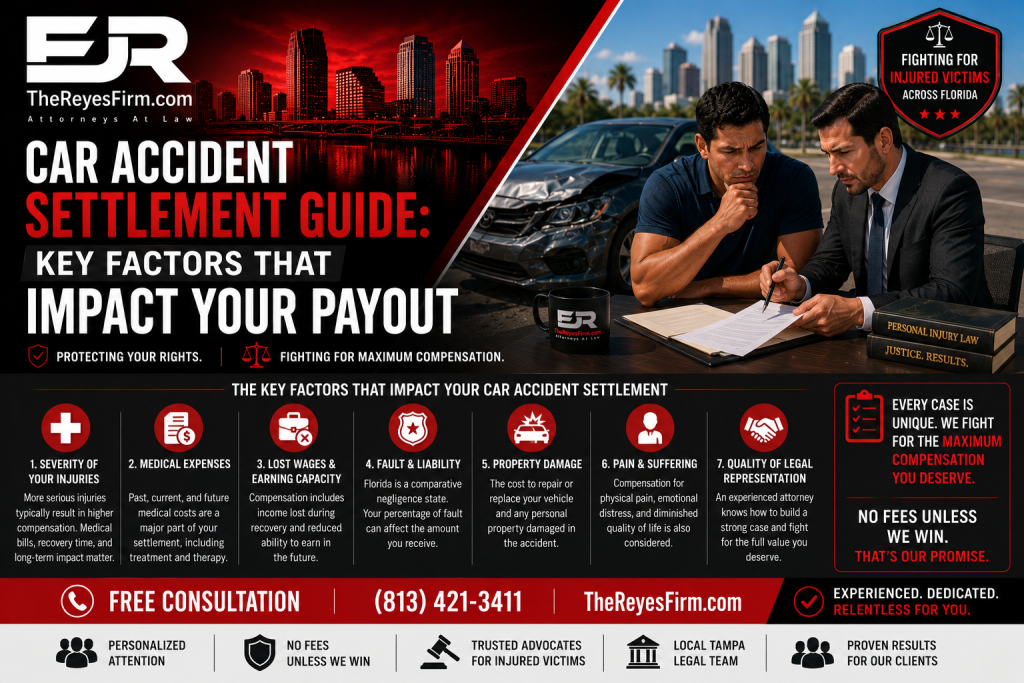
Car Accident Settlement Guide: Key Factors That Impact Your Payout

You were just driving through Tampa when someone else’s mistake left you injured and facing a pile of bills. Now an insurance adjuster has put a number in front of you after your car accident, and it feels like a lifeline. Before you accept it, here is what actually drives the value of a settlement in Florida and why that first offer is rarely what your claim is worth. The Reyes Firm Offered a Settlement After a Tampa Car Accident? Find out what your claim is really worth before you sign. Had a bad day? Contact Us Now 2 Years Florida statute of limitations Fla. Stat. § 95.11(3)(a) 50% Fault share that bars recovery Fla. Stat. § 768.81 $10,000 Florida minimum PIP coverage Fla. Stat. § 627.736 14 Days Deadline to seek care for PIP Fla. Stat. § 627.736(1)(a) A car accident settlement is rarely a random number, and it is rarely the figure an insurer offers first. Understanding what shapes your payout, from your injuries to Florida’s fault and insurance rules, puts you in a far stronger position to recover what you actually deserve. Here is how it works. How much is a car accident settlement worth in Tampa, Florida? There is no fixed dollar figure, because every settlement reflects the specific harm a crash caused. A claim involving a permanent injury and years of future treatment is worth far more than one involving a minor injury that fully heals. The strength of your evidence, the available insurance coverage, and your share of fault all factor in alongside the injuries themselves. Because so much depends on details that are easy to undervalue, the steps you take early and the lawyer you choose can significantly change the outcome. ⚠️ Deadline Warning: Under Florida Statute § 95.11(3)(a), you generally have two years from the date of your crash to file a personal injury lawsuit. This deadline was shortened from four years in March 2023, so older guides may be out of date. Missing it almost always means losing your right to recover anything. What is a car accident settlement, and what does it cover? A car accident settlement is an agreement to resolve your claim without a trial, where you receive compensation in exchange for releasing your right to pursue further legal action. Most settlements are reached out of court through direct negotiation between you, your attorney, and the insurance company. In some cases, a settlement comes through court-supervised mediation or arbitration. A settlement can compensate you for several types of losses, including: Medical bills, covering current and future treatment, surgery, medication, and physical therapy Lost wages, for the income you missed while unable to work, plus reduced future earning capacity Property damage, to repair or replace your vehicle and other damaged property Pain and suffering, for the physical pain and emotional toll the crash caused Loss of consortium, when the injury harms your relationship with your spouse or partner What factors affect the size of your car accident settlement? Several specific factors determine what your claim is worth, and overlooking any of them can cost you. The most significant include the severity of your injuries, the total of your medical expenses, your lost income, and the extent of property damage. The more serious and lasting the injury, the higher the settlement tends to be. Permanent or catastrophic injuries carry the highest value because they require lifelong care. A serious spinal cord injury or a claim that rises to the level of a catastrophic injury often involves future surgeries, therapy, and assistive care. In these cases, a life care plan can project those long-term costs so your settlement reflects what you will truly need, not just the bills you have already received. 💡 Did You Know? Florida’s PIP law requires you to seek initial medical care within 14 days of your car accident. Waiting longer can cost you your Personal Injury Protection benefits and can also weaken your settlement, because a gap in treatment gives insurers a reason to argue your injuries were not serious. Source: Fla. Stat. § 627.736(1)(a). How does Florida’s comparative negligence rule affect your payout? Your share of fault can reduce your settlement, and in some cases eliminate it. As of March 24, 2023, Florida shifted from a pure comparative negligence system to a modified comparative negligence system under Florida Statute § 768.81. Under the current rule, your compensation is reduced in proportion to your percentage of fault, and you are barred from recovering anything if you are found more than 50% responsible. This is exactly why insurers work so hard to shift blame onto you. Even a modest increase in your assigned fault can shrink your payout, which makes protecting the facts of your case a critical part of any settlement. 🛡️ Your Rights Under Florida Law: Under Fla. Stat. § 768.81, your compensation is reduced by your share of fault, and you may be barred from recovery if you are found greater than 50% responsible for your own harm. An experienced Tampa car accident lawyer works to protect the facts, challenge unfair blame, and keep your percentage of fault as low as the evidence allows. How does Florida’s low insurance minimum affect your settlement? The available insurance coverage sets a practical ceiling on many settlements, and Florida’s required minimums are surprisingly low. State law requires only $10,000 in Personal Injury Protection under Florida Statute § 627.736 and $10,000 in property damage liability. Importantly, Florida does not require most drivers to carry bodily injury liability coverage at all. That gap matters when the at-fault driver has little or no coverage. In those situations, your own uninsured or underinsured motorist coverage may become the primary source of compensation for your injuries. Identifying every applicable policy, including your own, is one of the most important steps in pursuing a full settlement. Watch: How Car Accident Settlements Work in Tampa If you prefer to hear it explained, the short video below walks through what shapes a car accident

Accident Injuries & why, After an Accident, Blog, FAQ, Injury, Legal, personal injury attorney, Truck Accidents, Why we serve

Understanding 18-Wheeler Accidents: What You Need to Know

[vc_row][vc_column][vc_single_image image=”12508″ img_size=”1700 x 1000″ css=””][/vc_column][vc_column][vc_column_text css=””]Given the sheer size and weight of these large trucks, 18-wheeler accidents are a significant concern on U.S. roadways. The impact of a collision involving an 18-wheeler can lead to devastating consequences, including catastrophic injuries and fatalities. Understanding the causes, immediate actions to take after an accident, and the legal recourse available can empower victims and their families in navigating the aftermath of a truck accident. This article delves into critical aspects of 18-wheeler accidents, providing essential insights for those involved in such wrecks.   What Are the Common Causes of 18-Wheeler Accidents? Driver Fatigue and Its Impact on Truck Accidents One of the leading causes of 18-wheeler accidents is driver fatigue. Truck drivers often work long hours, driving for extended periods without adequate rest. This fatigue can impair a driver’s ability to respond quickly to changing roadway conditions, increasing the likelihood of an accident. When a tired truck driver operates a large commercial truck, the risk of losing control or misjudging distances can lead to catastrophic collisions. Statistics indicate that many truck accidents occur due to drowsy driving, underscoring the importance of proper rest and adherence to federal regulations regarding driving hours. Improper Loading and Cargo Shift Issues Another factor contributing to 18-wheeler accidents is improper loading of cargo. When the cargo is not secured correctly, it can shift during transit, affecting the truck’s balance and control. This cargo shift can cause the truck driver to lose control, leading to a severe truck crash on the lane. Additionally, overloading a truck can violate safety regulations and impact braking distance, making it more challenging for the truck driver to stop safely. Ensuring cargo is loaded according to guidelines is paramount in preventing accidents caused by shifting loads in 18-wheelers. Negligence by the Truck Driver or Truck Company Negligence is a prevalent factor in many truck accident cases. This negligence can stem from the truck driver, the trucking company, or both. For instance, if a truck driver fails to perform necessary vehicle maintenance checks or ignores safety protocols, they may be considered negligent in the event of an accident. Similarly, if the trucking company pressures drivers to meet unrealistic deadlines, they may be held accountable for promoting unsafe driving practices. Understanding who is liable in an 18-wheeler accident is crucial when pursuing legal action for personal injuries sustained in a truck accident.   What Should You Do Immediately After an 18-Wheeler Accident? Steps to Take for Your Safety and Health In the aftermath of an 18-wheeler accident, your safety and health should be your top priority. First, assess your injuries and ensure that you are in a safe location away from traffic. Call emergency services immediately if you or others involved in the accident require medical attention. It’s essential to seek medical help even if you feel fine, as some injuries may not be immediately apparent. Once you are safe, try to move vehicles out of the roadway to prevent further collisions and ensure the right of way for emergency services. How to Document the Accident Scene Effectively Documenting the accident scene is vital for future legal proceedings, particularly in cases involving 18-wheelers. Take clear photographs of the vehicles involved, the accident scene, and any visible injuries. Ensure to note the accident’s time, date, and location, as this information will be crucial for your accident attorney later. Gathering contact information from witnesses can also provide additional support for your case. A thorough documentation process can significantly impact the outcome when dealing with insurance companies or pursuing a settlement. When to Contact an Accident Attorney Deciding when to contact an accident attorney can be challenging, but doing so as soon as possible after an 18-wheeler accident is advisable. An experienced truck accident lawyer can provide valuable guidance on navigating the complexities of accident cases, including dealing with insurance companies and understanding your rights regarding 18-wheelers. Contacting an attorney early in the process can help preserve evidence and witness statements, which are critical in building a solid case for your type of accident. If you have sustained injuries or damages, do not hesitate to call us for a free consultation to discuss your situation.   How Can an 18-Wheeler Accident Attorney Help You? The Role of an Accident Lawyer in Your Case An 18-wheeler accident attorney plays a crucial role in your case by representing your interests and ensuring you receive fair compensation for your injuries and damages. The lawyer can investigate the accident, gather evidence, and determine liability, whether it lies with the truck driver, the trucking company, or another party. Their expertise in accident law enables them to navigate the legal system effectively, advocating for your rights and negotiating with insurance companies on your behalf. Understanding Your Rights and Settlement Options Knowing your rights after an 18-wheeler accident is essential for pursuing a successful claim. An experienced accident lawyer can help you understand the various settlement options available, including compensation for medical expenses, lost wages, and pain and suffering after a semi-accident. They will work diligently to ensure you receive a settlement reflecting the true extent of your injuries and losses. An attorney’s guidance is particularly invaluable when dealing with the complexities of insurance claims and negotiations with the trucking company’s insurance provider. What to Expect During a Free Consultation You can expect an open discussion about your case during a free consultation with an 18-wheeler accident attorney. The lawyer will ask questions about the accident, your injuries, and any documentation you have gathered. They will assess the details of your situation and provide an overview of the legal options available to you. This initial meeting is an excellent opportunity to ask questions about the lawyer’s experience, fees, and how they plan to approach your case involving an improperly loaded truck. Feeling comfortable with your attorney is essential, as this relationship will be crucial throughout the legal process.   What Types of Injuries Are Common in Truck Accidents? Catastrophic Injuries Resulting from Large Truck

Uninsured motorist coverage in Tampa
Accident Injuries & why, After A Car Accident, Blog, FAQ, Uninsured Motorist Coverage

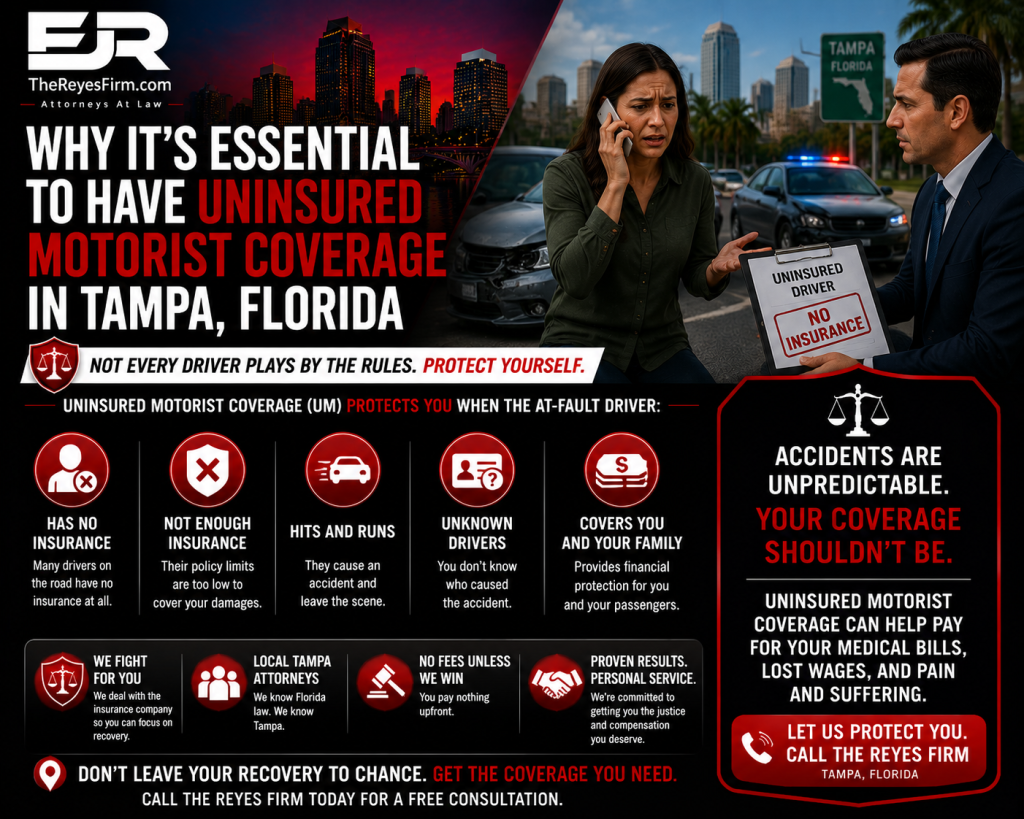
Why It’s Essential to Have Uninsured Motorist Coverage in Tampa, Florida

Picture this: you’re driving down Bayshore Boulevard, doing everything right, when another driver runs a light and slams into you. You’re hurt, your car is wrecked, and then you learn the driver who hit you has no insurance at all. In Florida, that nightmare is far more common than most people realize, and whether you walk away financially protected often comes down to one line on your own policy. Here’s why uninsured motorist coverage may be the most important coverage you can carry after a Tampa car accident. TL;DR — QUICK SUMMARY Florida has one of the highest rates of uninsured drivers in the country, with an estimated one in five drivers carrying no insurance at all. Florida does not require most drivers to carry bodily injury liability coverage, so even an insured driver may have nothing to pay for the injuries they cause you. Uninsured and underinsured motorist (UM/UIM) coverage steps in to pay your medical bills beyond PIP, your lost wages, and your pain and suffering. Under Florida Statute 627.727, your insurer must offer you UM coverage, and settling with the at-fault driver without your UM carrier’s consent can wipe out that coverage. UM even covers hit-and-run and phantom-vehicle crashes, and you generally have two years to file an injury claim under Florida Statute 95.11(3)(a). The Reyes Firm Hit by an Uninsured Driver in Tampa? Find out if your own coverage can pay your claim. Had a bad day? Contact Us Now 1 in 5 Florida drivers are uninsured Insurance Research Council $0 Bodily injury coverage Florida requires of drivers Florida law Must Offer Insurers must offer you UM coverage Fla. Stat. 627.727 2 Years To file an injury lawsuit Fla. Stat. 95.11(3)(a) Why is uninsured motorist coverage so important in Florida? Uninsured motorist coverage is so important in Florida because two facts collide on our roads: a large share of drivers carry no insurance, and state law does not require most drivers to carry coverage for the injuries they cause. An estimated one in five Florida drivers has no auto insurance at all, one of the highest rates in the nation according to the Insurance Research Council, and Tampa’s heavy traffic and steady stream of out-of-town drivers only raise the odds of being hit by one. Here is the part that surprises people most. Florida requires drivers to carry Personal Injury Protection and property damage coverage, but it does not require them to carry bodily injury liability coverage, which is the coverage that would pay for your medical bills and pain after a crash they caused. That means even a driver who is following the law may have nothing available to compensate you, and your own uninsured motorist coverage becomes your safety net. What is the difference between uninsured and underinsured motorist coverage? The two go hand in hand but apply in different situations. Uninsured motorist (UM) coverage applies when the driver who hit you has no bodily injury liability insurance at all, or cannot be identified, as in a hit-and-run. Underinsured motorist (UIM) coverage applies when the at-fault driver does have liability insurance, but not enough to cover the full extent of your injuries. In Florida, the two are usually sold together as a single UM/UIM coverage, and both draw from your own policy. The practical point is the same in either case: when the other driver cannot make you whole, this coverage is what stands between you and paying for someone else’s mistake out of your own pocket. How does UM coverage fill the gap left by Florida’s no-fault system? Florida’s no-fault system gives you some protection, but not nearly enough for a serious injury. Your Personal Injury Protection coverage pays 80% of your medical bills and 60% of your lost wages, but only up to a standard limit of $10,000, and it pays nothing at all for pain and suffering. A trip to the emergency room and a single surgery can blow through that $10,000 in days. Uninsured motorist coverage picks up where PIP stops. It can pay your medical expenses beyond the PIP limit, your lost wages and reduced earning capacity, and your pain and suffering, and it protects not just you but the relatives in your household and the passengers in your car. It is especially vital for motorcycle riders, who are not covered by PIP at all and depend heavily on UM coverage when an uninsured driver hits them. 💡 Did You Know? Florida is a no-fault state that requires only $10,000 in PIP and $10,000 in property damage coverage, and it does not require most drivers to carry bodily injury liability at all. With an estimated one in five Florida drivers uninsured, your own uninsured motorist coverage is often the only source that will pay for your injuries, lost wages, and pain and suffering. Source: Insurance Research Council; Fla. Stat. § 627.736. Watch: Why you need uninsured motorist coverage in Tampa In this short video, attorney Edward Reyes explains how uninsured motorist coverage works and how it can protect you when the driver who hit you cannot pay. If you were hit by an uninsured driver, The Reyes Firm offers free consultations and can review your coverage at no cost. Does UM coverage protect you in a hit-and-run or no-contact crash? Yes, and this is one of its most valuable features. If a driver hits you and flees, or if a phantom vehicle runs you off the road without ever making contact, there may be no at-fault driver to identify and no liability insurance to pursue. Uninsured motorist coverage is built for exactly these situations and can pay for your injuries when the other driver vanishes. These claims do come with conditions, often including a requirement to corroborate that another vehicle caused the crash, which makes fast evidence-gathering critical. In the most tragic hit-and-run cases, where a family loses a loved one, UM coverage can also support a wrongful death claim when the driver is never found. ⚠️ Deadline

Scroll to Top