Commercial Vehicles

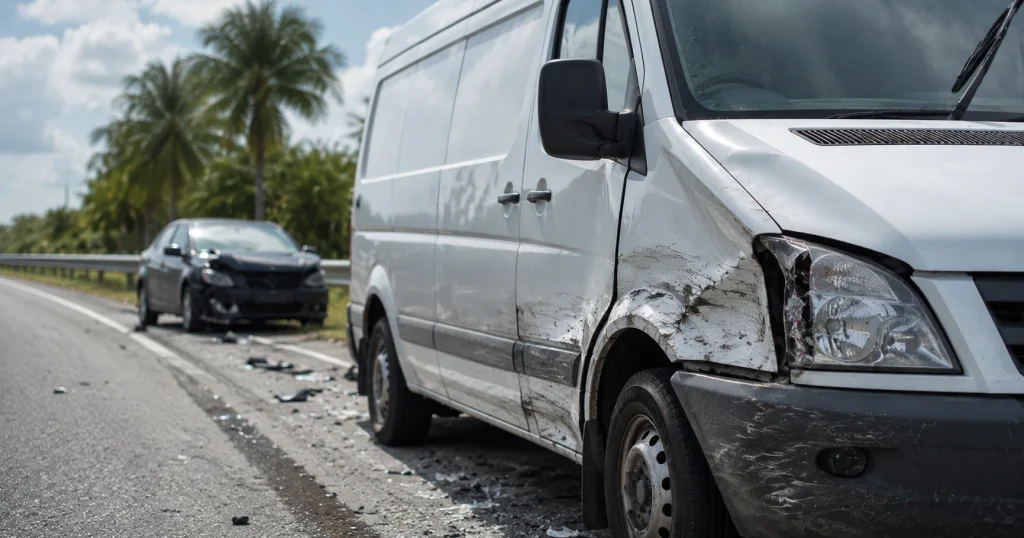
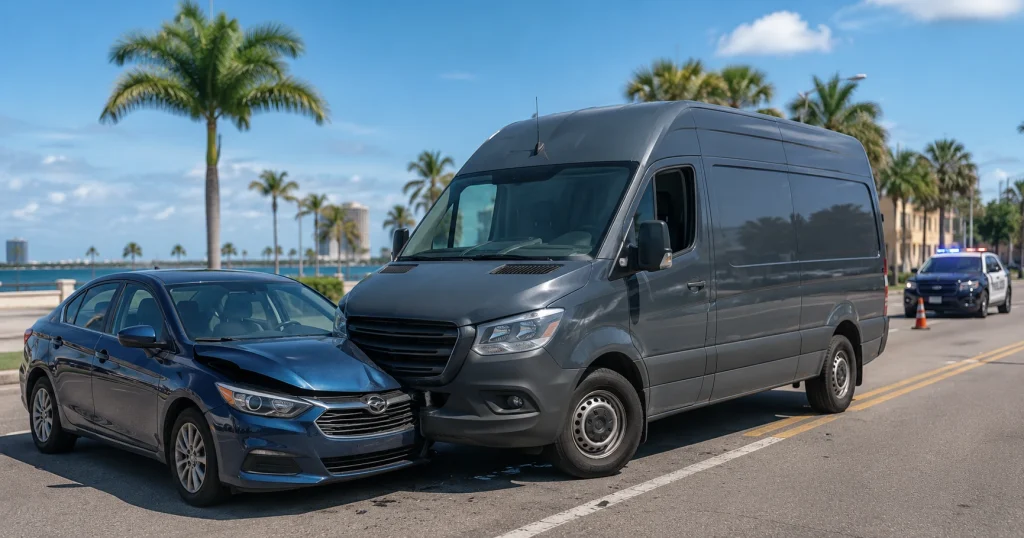
Amazon delivery truck accident attorney featured image showing an unbranded delivery van and passenger car after a crash in Tampa, Florida, for illustrative purposes only.
Blog, Commercial Vehicles, Truck Accidents

Amazon Delivery Truck Accident Attorney: Why These Cases Can Be Complicated

What You Need to Know Amazon deliveries may involve DSP employees, Flex contractors, or another delivery arrangement. The Amazon logo may not identify the driver’s legal employer or the vehicle owner. Several companies and insurance policies may need to be investigated. GPS data, camera footage, app records, and route information may become important evidence. Early legal help can protect evidence and clarify who may be responsible. The Reyes Firm Hurt in an Amazon Delivery Accident? Get clear answers about the driver, delivery company, insurance coverage, and your next steps. Had a bad day? Contact Us Now An Amazon-branded van hit you, and now several companies may be calling. You may not know who employed the driver, owned the vehicle, controlled the route, or provided insurance. An Amazon delivery truck accident attorney can investigate those questions before key records become harder to obtain. The Reyes Firm helps injured people understand the path forward. An Amazon van accident lawyer in Tampa can review the crash, identify the delivery model, and deal with the insurers while you focus on medical care. Call 833-4 BAD DAY for a free consultation if an Amazon delivery vehicle injured you in Tampa, FL. What Happens If You Get in an Accident With an Amazon Truck? After an Amazon delivery vehicle crash, call 911, get medical care, document every vehicle, and collect information about the driver, employer, vehicle owner, and insurance. The Amazon logo can help identify the delivery connection, but it may not show which business employed the driver or controlled the vehicle. Take these steps as soon as you safely can: Call 911 and request medical help. Photograph all vehicles, damage, license plates, and road conditions. Photograph company markings, packages, uniforms, and driver identification. Ask for the driver’s employer, vehicle owner, and insurance details. Get witness names and contact information. Save the crash report number and every medical record. Avoid a recorded statement until you understand the claim. Florida PIP coverage may help with early medical expenses. To qualify for PIP medical benefits, Florida law generally requires initial services and care within 14 days after the crash. PIP may be only one part of the available coverage. ⚠️ Warning: Florida Statute § 95.11 generally gives you two years to file a negligence lawsuit. Florida Statute § 627.736 also ties PIP medical benefits to initial care received within 14 days. Other deadlines or exceptions may apply based on the parties, claim type, and facts, so do not wait to get advice. Why Can an Amazon Delivery Truck Accident Attorney Case Be Complicated? Amazon delivery claims become complicated because the driver, employer, vehicle owner, delivery platform, and insurance carrier may be different entities. Many branded vans are operated through Delivery Service Partners, while Amazon Flex drivers generally use personal vehicles. Each model creates different records, policies, and questions about responsibility. Why Delivery Truck Accident Claims Can Be More Complicated In this video, The Reyes Firm explains why an accident involving an Amazon, FedEx, or other delivery vehicle may involve different insurance coverage and liability questions than a typical car crash. Delivery accident claims may require an investigation into the driver, employer, vehicle owner, insurance policies, and the company directing the delivery work. Amazon describes DSPs as independent businesses that hire and develop their own drivers, with Amazon providing infrastructure, technology, and services. Amazon Flex uses a separate model in which delivery partners use their own vehicles and reserve blocks through an app. Amazon also states that its Flex auto policy applies only while a partner is actively delivering during a block.  That structure can make a delivery crash different from a basic two-car claim. A Florida delivery truck accident lawyer may need to identify the company behind the driver before making an insurance demand. Driver model Typical vehicle Possible employer or contractor Potential insurance questions Useful evidence DSP driver Branded commercial van or delivery vehicle A Delivery Service Partner or another delivery business Which commercial policy applies? Who owns or leases the van? Route data, driver file, cameras, GPS, DSP records Amazon Flex driver Personal car, SUV, van, or eligible truck The individual delivery partner Was the driver actively delivering? Does a personal-policy exclusion apply? Delivery-block status, app logs, location data, personal and supplemental policies Other delivery arrangement Branded or unbranded vehicle Another contractor, carrier, or business Which company controlled the trip and provided coverage? Contracts, dispatch records, registration, insurance documents The legal investigation must focus on the actual delivery arrangement involved in your Tampa crash. A logo, uniform, or package may be evidence, but none automatically proves who must pay. Who May Be Responsible for an Amazon Delivery Accident? Responsibility may reach beyond the delivery driver. The investigation can include the driver’s employer, a DSP, the registered vehicle owner, a leasing company, a maintenance provider, an insurer, and an Amazon-related entity when the facts support that claim. A defective vehicle part may also create a separate claim. Possible responsible parties include: The delivery driver The DSP or another employer The registered vehicle owner A fleet or vehicle leasing company An Amazon-related entity supported by the evidence A maintenance or repair provider A parts manufacturer when a defect contributed One or more insurance carriers A contract may call a driver or business an independent contractor. Florida courts still examine the written agreement and the parties’ actual relationship. A 2026 Florida appellate opinion explained that the right to control the manner of the work, not only the label in the contract, can help distinguish an agent from an independent contractor.  Evidence of control may include route assignments, schedules, performance standards, app instructions, safety policies, driver monitoring, training rules, branding requirements, and the power to remove a driver from delivery work. Your right to sue Amazon after a delivery van accident depends on the specific facts. Amazon is not automatically responsible for every crash, but the company should not be removed from the investigation before contracts, records, and operational control are reviewed. How Are Amazon DSP and Amazon Flex
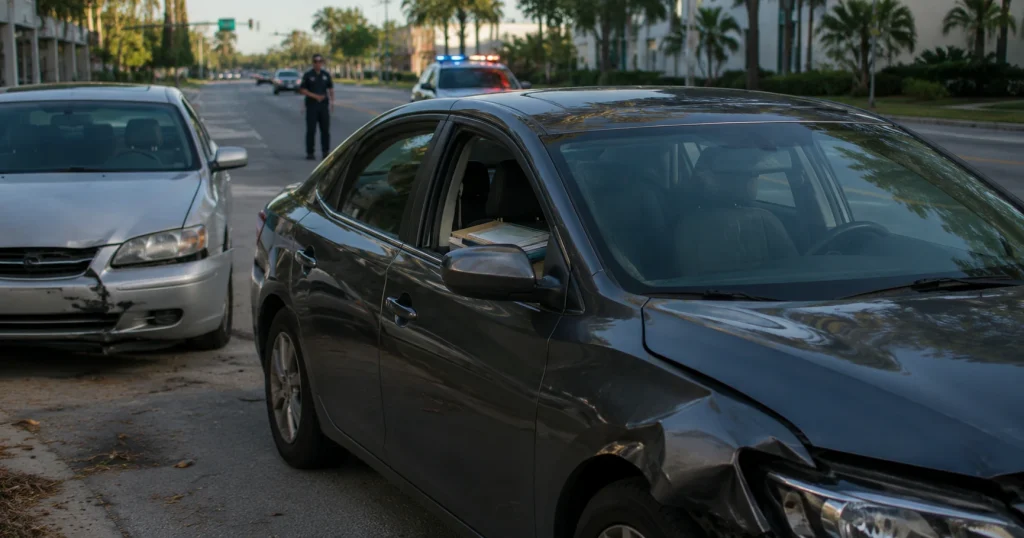
Unmarked personal sedan stopped after a minor Tampa crash while being used for a work errand.
Blog, Commercial Vehicles, Company-Caused Car Accidents

Can a Company Be Liable When an Employee Crashes a Personal Vehicle?

Quick Summary A company-owned or marked vehicle is not always required for an employer liability claim. The purpose of the employee’s trip may matter more than who owned the vehicle. Being on the clock is relevant evidence, but it does not automatically make the employer responsible. A normal commute, personal detour, mixed-purpose trip, or contractor relationship can affect the claim. Preserve work assignments, messages, location data, and all possible insurance information as soon as possible. Had a bad day? Call The Reyes Firm at 833-4 BAD DAY. The Reyes Firm Hit by an Employee Driving for Work? The company may share responsibility, even if the employee was driving a personal or unmarked vehicle. Learn your next steps after a work-related crash in Tampa. Schedule a Free Consultation The driver who hit you may have been working, but the car had no company logo, business name, or commercial markings. That can leave you unsure about who should pay. Employer liability for employee car accident claims in Florida does not turn only on who owned the vehicle. In a recent YouTube Short, Edward Reyes, Esq. explains why a personal or unmarked vehicle does not automatically remove the employer from a car accident claim. A Tampa personal injury lawyer can investigate the purpose of the trip, the driver’s work status, the company’s control, and every available insurance policy. This guide explains how Florida evaluates work-related crashes, when an employer may share responsibility, how personal and business insurance may apply, and what evidence can show that the driver was working. Edward Reyes, Esq. explains when an employer may share responsibility after an employee causes a crash in a personal or unmarked vehicle. Can an Employer Be Liable If the Employee Used a Personal Vehicle? Yes. A Florida employer may share responsibility when an employee causes a crash in a personal, borrowed, rented, or unmarked vehicle while carrying out company business. The key questions usually concern the purpose of the trip, the employer’s control, and if the employee was acting within the scope of employment. Florida calls this type of responsibility vicarious liability in Florida. In plain English, a company can sometimes be held responsible for an employee’s negligence even when the company did not personally cause the crash. The doctrine is also called respondeat superior. Florida’s general rule comes mainly from court decisions and agency instructions, not from one statute that automatically makes every employer liable. The current Florida civil jury instructions focus on the company’s right to control the worker and ask if the employee was performing assigned services, trying at least in part to serve the employer, or doing something reasonably connected to the job. The Florida Supreme Court’s decision in Tsuji v. Fleet also recognizes that an employer may sometimes answer for an employee’s negligence committed within the course and scope of employment. An accident involving a personal vehicle used for work may arise during tasks such as: Delivering documents Picking up supplies Visiting a customer Traveling between job sites Making a bank deposit Getting coffee or food at a supervisor’s request Completing another authorized task for the business None of these examples creates automatic liability. The details still matter. A coffee run requested by a manager for a meeting may support a work-purpose argument. An employee leaving solely to buy a personal drink may present a different issue. The same analysis may apply to an employee driving a borrowed or rented vehicle. Vehicle ownership and commercial markings are evidence, but they are not always the deciding facts in a work-related personal vehicle accident. Does Being on the Clock Automatically Make the Company Responsible? No. An employee’s paid status is useful evidence, but it does not settle the issue by itself. Florida courts look at what the driver was doing, who directed the trip, how the trip served the business, and if the employee had left the work assignment for a personal reason. A crash involving an employee who was on the clock may support a claim when the worker was carrying out a manager-directed task. The claim can become harder when the employee had finished the assignment, made a substantial personal detour, or was simply traveling to or from the regular workplace. A normal commute is often treated differently from a trip made for company business. A short stop during a work trip may also be treated differently from a major departure that no longer serves the employer. Mixed-purpose trips require a close review of the route, timing, instructions, and benefit to the company. Situation Possible Liability Issue Evidence to Check Manager-directed errand The trip may fall within the employee’s assigned work Texts, emails, timecards, manager testimony Employee visiting a client The travel may directly benefit the employer Calendar, appointment records, mileage logs Employee’s normal commute The company may argue the employee was outside the scope of employment Work schedule, route, special instructions Personal lunch trip The employer may argue the trip was solely personal Receipts, messages, destination, timing Work trip with a personal detour Liability may turn on the length and purpose of the detour GPS data, phone location, route history Independent contractor completing a delivery The company may dispute an employment relationship or right of control Contract, app rules, dispatch records, payment records For a Florida scope-of-employment car accident claim, “on the clock” is one fact among many. The work assignment, the employer’s benefit, and the company’s control often carry more weight than the label used on a timesheet. ⚠️ Warning: Florida Gives You Limited Time to File Florida Statutes section 95.11 generally gives an injured person two years to file a negligence lawsuit. Waiting can also cause texts, videos, GPS data, and company records to disappear. Claims involving a state agency, local government, or public employee may have added written-notice rules and special procedures under section 768.28, so early review matters. What If the Employee’s Car Had No Company Logo? No. A company logo, commercial plate, or business name on the door is not required before

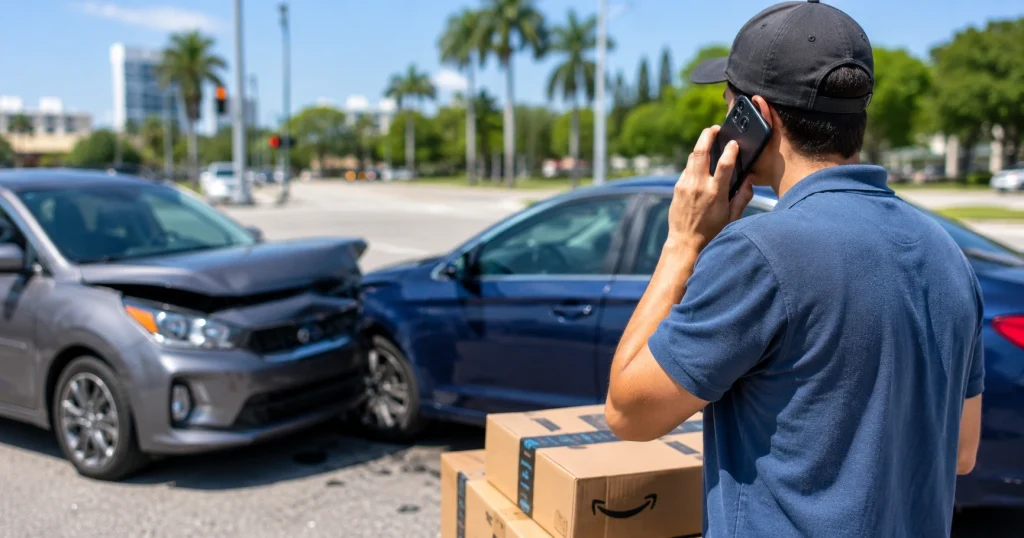
Tampa Amazon Flex accident lawyer reviewing a crash involving a personal delivery vehicle carrying packages in Tampa, for illustrative purposes only.
Blog, Commercial Vehicles

Tampa Amazon Flex Accident Lawyer: Who May Be Liable After a Crash?

What You Need to Know An Amazon Flex driver usually delivers packages in a personal vehicle, not an Amazon-branded delivery van. The driver, an insurer, Amazon, a vehicle owner, or another careless party may be responsible based on the facts. Amazon says its commercial auto policy applies only while a Flex delivery partner is actively delivering during a scheduled delivery block. App records, route details, package scans, GPS data, photos, and witness statements can help prove the driver’s work status. Florida deadlines and insurance rules can affect your Amazon Flex accident claim, so early legal review matters. Had a bad day? Call The Reyes Firm at 833-4 BAD DAY. The Reyes Firm Injured in an Amazon Flex Accident in Tampa? A Tampa Amazon Flex accident lawyer can review the driver’s delivery status, available insurance, and your legal options. Had a bad day? Call us. Schedule a Free Consultation You may know the other car was carrying Amazon packages, but that does not tell you which insurance company must pay. After you are injured by an Amazon Flex driver, a Tampa Amazon Flex accident lawyer can investigate the driver’s delivery status, preserve app records, and identify every policy that may apply. Amazon Flex crashes can be confusing because the driver often uses a regular personal vehicle. There may be no blue van, company logo, or clear sign that the driver was making deliveries. Questions may also arise about when the delivery block began or ended and which insurance policy applied at the time of the crash. You do not have to sort through that alone. The Reyes Firm helps injured people in Tampa understand who may be liable, what evidence matters, and how to protect a serious Amazon Flex injury claim. Who May Be Liable After an Amazon Flex Driver Causes a Crash? Liability may fall on the Amazon Flex driver, the vehicle owner, an applicable insurer, Amazon, or another person whose actions contributed to the collision. Amazon is not automatically responsible for every Flex crash. The answer depends on work status, control, policy language, available evidence, and the cause of the crash. The driver may be liable for careless conduct such as: Running a red light or stop sign Following too closely Speeding for traffic or road conditions Looking at a phone or navigation screen Making an unsafe turn or lane change Backing into another vehicle or pedestrian The vehicle owner may also matter if someone other than the Flex driver owns the car. A separate driver may share fault if that person helped cause a multi-vehicle crash. A defective vehicle part or unsafe repair may create another claim in rare cases. Amazon may become part of the liability analysis when the evidence supports a legal claim tied to its own conduct, its control over the delivery activity, or an agency relationship. Amazon describes Flex participants as delivery partners who use their own vehicles and choose delivery blocks. That model differs from the Delivery Service Partner program, where independent delivery businesses hire and develop drivers. A lawyer must review the actual relationship and records. Labels in an app agreement do not settle every factual or legal question. The investigation may include route instructions, performance standards, required procedures, safety rules, communications, and the driver’s actions at the time of impact. A crash with a personal Flex vehicle is also different from a branded van case. People injured in a larger delivery vehicle collision may need guidance from a Florida delivery truck accident lawyer who can examine company ownership, commercial policies, and delivery-business records. You may also need to understand when an injured person can sue Amazon after a delivery van accident. That analysis is separate from a Flex claim because Amazon-branded van drivers often work for Delivery Service Partners, not through Amazon Flex. How Is an Amazon Flex Driver Different From an Amazon Van Driver? An Amazon Flex driver generally uses a personal vehicle and selects delivery blocks through the Flex app. A Delivery Service Partner driver works for a separate delivery business that hires drivers and often operates Amazon-branded vans. The driver type affects which records, policies, employers, vehicle owners, and legal theories should be investigated. The differences usually look like this: Issue Amazon Flex Driver DSP Van Driver Vehicle Usually a personal car Often an Amazon-branded van Work arrangement Selects available delivery blocks Hired and managed by a Delivery Service Partner Key digital records Flex app, block, route, scans, delivery history Dispatch, route, driver files, van telematics, DSP records Insurance review Personal policy plus possible Amazon Flex commercial coverage DSP commercial coverage plus other potentially applicable policies Main status question Was the driver actively delivering during the block? Was the driver acting within the delivery job and route? Do not assume a regular-looking car was off duty. A Flex driver may have packages in the trunk, a route running in the app, or completed scans tied to the crash time. Do not assume a blue van driver was an Amazon Flex driver either. If your crash involved a commercial van, read about a delivery van accident in Tampa and the records that may exist beyond the police report. A person hit by a branded van may also need an Amazon van accident lawyer in Tampa, Florida to identify the Delivery Service Partner, vehicle owner, insurer, and other entities in the delivery chain. 💡 Did You Know? FLHSMV reported that more than 52,900 distracted-driving crashes occurred in Florida in 2025 and caused more than 2,100 serious bodily injuries. NHTSA reports that crashes involving distracted drivers killed 3,208 people and injured 315,167 people nationwide in 2024. These figures are not Amazon Flex-specific, but they show why phone, navigation, and app-use evidence may matter in an app-based delivery crash. Which Insurance May Cover an Amazon Flex Accident Claim? The driver’s personal auto policy may apply, Amazon’s commercial policy may apply, or both insurers may dispute coverage. The central question is often the driver’s delivery status at the exact time of the

Commercial truck driver reviewing a DOT medical certificate beside a parked tractor-trailer in Tampa, for illustrative purposes only.
Blog, Commercial Vehicles, Truck Accidents

Can an Expired DOT Medical Certificate Affect a Florida Truck Accident Claim?

What You Need to Know An expired DOT medical certificate may show that a covered truck driver was not medically qualified to operate. The expired certificate does not automatically prove that the driver caused your Tampa truck accident. Evidence must connect the certificate lapse, the driver’s condition, the carrier’s knowledge, and the collision. The trucking company’s driver qualification file may show when it learned about the expiration. Current FMCSA rules allow limited use of newly issued paper certificates, but they do not extend an expired certificate. Had a bad day? Call The Reyes Firm at 833-4 BAD DAY. You may have learned that the truck driver who hit you had an expired medical card. That can raise serious questions about the driver’s qualifications and the trucking company’s safety practices. An expired DOT medical certificate truck accident claim requires more than showing that a date passed. You need evidence explaining what the expiration meant, what the carrier knew, and how the lapse relates to the crash. A Tampa truck and commercial vehicle accident attorney can move quickly to preserve the driver’s qualification records before key documents or electronic data are lost. Can an Expired DOT Medical Certificate Strengthen a Florida Truck Accident Claim? Yes. An expired DOT medical certificate can support a Florida truck accident claim when it shows the driver was not medically qualified to operate and the lapse relates to the crash. It does not prove fault by itself. The strongest cases connect the expired certificate to driver condition, carrier knowledge, and crash evidence. Federal law requires covered commercial drivers to remain physically qualified. A motor carrier generally may not require or permit a driver to operate if that driver is not qualified under the applicable rules. Florida Statute § 316.302 applies many federal commercial-vehicle safety requirements to trucks operating on Florida roads. The exact rules can differ for some intrastate operations and exempt vehicles. An expired certificate may support claims involving: Negligent operation by the driver Negligent hiring Negligent retention Inadequate supervision Poor qualification tracking Failure to enforce company safety policies Allowing an unqualified driver to remain on the road The certificate becomes more important if evidence shows the driver had symptoms or a medical condition related to the collision. Examples may include a loss of consciousness, severe fatigue, impaired vision, or another physical limitation. The investigation must still establish a legal connection. A certificate that expired one day before a crash may raise concerns, but the date alone does not explain why the collision happened. ⚠️ Warning: Florida Statute § 95.11 generally gives an injured person two years to file a negligence lawsuit. Do not treat that deadline as permission to wait. Driver files, camera footage, dispatch messages, and electronic truck data can disappear much sooner. Review Florida Statute § 95.11. What Does an Expired DOT Medical Certificate Actually Prove? An expired certificate proves that the listed certification period ended. It may show the driver could not lawfully continue certain non-exempt commercial driving without a new certification. It does not automatically prove that the driver was ill, impaired, or caused the collision. Those points require medical, licensing, company, and crash-specific evidence. FMCSA guidance states that a medical examiner’s certificate expires at midnight on the listed expiration date. The guidance also states that there is no general grace period for continued operation under an expired certificate. The certificate may establish: The date the driver’s last certification ended The length of the prior certification period The medical examiner who issued it The presence of a medical variance or restriction A gap between the expiration date and a later examination A possible failure in the carrier’s qualification-monitoring process It does not establish: That the driver had a disqualifying condition on the crash date That the driver intentionally concealed a medical problem That a medical condition caused the crash That the trucking company knew about the lapse That every commercial driving operation required that specific certification Some commercial drivers and operations fall under limited exceptions. The driver’s license class, cargo, route, employer, vehicle weight, and interstate or intrastate status must be reviewed. What about the FMCSA paper-certificate exemption in 2026? From April 11 through October 11, 2026, FMCSA permits certain interstate CDL holders and carriers to rely on a newly issued paper certificate for up to 60 days while electronic certification information is processed. That rule may protect a driver whose new examination was completed on time but whose updated information had not yet appeared electronically. It does not add 60 days to an expired certificate. Investigators should compare: The prior certificate’s expiration date The date of the new medical examination The date the new certificate was issued The date information was electronically transmitted The driver’s CDL or CDLIS record The carrier’s copy of the new certificate FLHSMV instructs non-exempt CDL holders to maintain current medical documentation. A failure to keep that documentation current may result in CDL disqualification. How Do Truck Accident Lawyers Connect the Expired Certificate to the Crash? Truck accident lawyers connect the lapse to the collision by building a timeline. They compare the certificate expiration date with the crash date, the driver’s symptoms, medical-exam history, license status, dispatch records, and vehicle data. They also examine what the carrier knew and why it still allowed the driver to work. The goal is not to point to an expired card and stop investigating. The goal is to determine if the lapse reveals a safety failure that contributed to the crash. Important questions include: Did the driver complete a new medical examination before the old certificate expired? Did the new examination identify restrictions or require follow-up care? Was the driver’s commercial license downgraded or disqualified? Did the carrier receive an expiration warning? Did dispatch continue assigning routes after the expiration date? Did the driver experience symptoms before or during the crash? Did the company ignore earlier medical or safety concerns? Useful evidence may include the driver qualification file, medical examiner certificates, motor-vehicle records, CDLIS status, dispatch messages, safety-system alerts,

Injured passenger beside a damaged rideshare vehicle after an Uber accident in Tampa, for illustrative purposes only.
Blog, Commercial Vehicles, Ride Sharing

Injured in an Uber Accident in Tampa? Here Is What Happens Next

What You Need to Know Get medical care, report the crash, and save your Uber trip information. The available insurance may depend on the driver’s exact app status. Passengers may have claims involving the Uber driver, another motorist, or several insurance policies. Florida’s PIP rules and filing deadlines can affect your right to compensation. Do not accept a settlement before you understand your injuries and available coverage. Had a bad day? Call The Reyes Firm at 833-4 BAD DAY. The Reyes Firm Injured in an Uber Accident in Tampa? Get clear answers about insurance, medical bills, and what to do next after a rideshare crash. Schedule a Free Consultation An Uber accident in Tampa can leave you hurt, confused, and caught between several insurance companies. You may not know who should pay your medical bills. You may also have trouble proving that the Uber driver was working at the time of the crash. A ride-sharing accident is not always handled like a regular car crash. The driver’s Uber app status, the cause of the collision, your insurance coverage, and the seriousness of your injuries can all affect your claim. Here is what may happen next and how you can protect yourself. Watch: What Happens After an Uber Accident in Tampa? This video explains who may be responsible after an Uber crash, how the driver’s app status can affect insurance coverage, and what you should do to protect your claim. Learn how Uber insurance may apply after a crash and why the driver’s activity in the app matters. What Should You Do Right After an Uber Accident in Tampa? After an Uber accident, call 911 if anyone is hurt or the scene is unsafe. Get medical care, take photos, collect information, and save your trip receipt. Report the collision through Uber, but avoid detailed recorded statements or settlement agreements until you understand your injuries and the insurance coverage. People searching for what to do if your Uber gets in an accident should take these steps: Call 911. Ask for police and emergency medical help. Get medical attention. Some head, neck, back, and shoulder injuries become more noticeable after the shock fades. Take photos and videos. Capture the vehicles, damage, road, traffic signals, debris, and visible injuries. Save your Uber trip information. Screenshot the driver’s name, vehicle, license plate, pickup time, route, and receipt. Collect witness details. Get names, phone numbers, and email addresses. Report the collision through Uber. Save copies of every report and response. Avoid guessing about fault. Do not speculate about speed, distance, or what another person saw. Keep every document. Save medical bills, prescriptions, work notes, repair estimates, and insurance letters. Our guide on what to do after an Uber crash in Tampa outlines additional steps to protect evidence and deal with insurance companies. Reporting the crash through the Uber app does not replace a police report, medical records, photos, or witness statements. These records may become important if an insurer disputes the driver’s app status, the cause of the crash, or the seriousness of your injuries. ⚠️ Warning: Florida Deadlines Can Affect Your Claim: Florida’s PIP law generally requires initial medical care within 14 days after a motor vehicle accident under Florida Statute § 627.736. Florida Statute § 95.11 also generally gives an injured person two years to file a negligence lawsuit. Evidence can disappear much sooner, so do not wait until an insurer finishes its investigation to protect your claim. How Does Uber Insurance Work After a Florida Accident? How Uber insurance works depends mainly on the driver’s activity in the app. Different coverage applies when the app is off, when the driver is waiting for a request, and when the driver has accepted a ride. Confirming the correct insurance period is a key part of an Uber injury claim. Florida law divides rideshare insurance into several stages: Uber driver’s status Insurance that may apply Uber app is off The driver’s personal auto insurance generally applies. App is on, and the driver is waiting for a request At least $50,000 per person, $100,000 per incident for bodily injury, and $25,000 for property damage. Driver accepted a trip or is transporting a passenger At least $1 million in primary liability coverage, plus PIP and uninsured or underinsured motorist coverage required by Florida law. A prearranged ride begins when the driver accepts the request. It continues while the driver transports the passenger and ends when the last passenger exits the vehicle. Florida law also permits personal auto policies to exclude coverage for losses that occur while a driver is logged into a rideshare network or completing a prearranged trip. This can create disputes between the personal insurer and the rideshare insurer. People sometimes refer to this coverage as the Uber driver accident policy. It is not one single policy that applies in every situation. The available coverage changes with the driver’s app and trip status. Understanding who pays after an Uber crash requires reviewing the app records, insurance policies, crash evidence, and the actions of every driver involved. 📊 Did You Know? Florida law requires at least $1 million in primary liability coverage while an Uber or other rideshare driver is completing a prearranged ride. This period begins when the driver accepts the ride request and ends when the last passenger exits the vehicle. The available coverage may be lower when the driver is logged in but has not yet accepted a ride. Uber app records, trip details, and driver login times can help prove that the driver was working when the crash happened. This evidence may also show which insurance coverage was active at the time. Who Pays If You Were a Passenger in an Uber Accident? If you were an Uber passenger, the responsible insurer may depend on who caused the collision. You may have a claim involving the Uber driver, another motorist, or several policies. Because the driver had accepted your request, Florida’s active-trip rideshare insurance requirements may apply to the accident. An Uber

Generic white delivery truck beside a damaged passenger car after a collision on a Tampa street, for illustrative purposes only.
Blog, Commercial Vehicles

What Happens If a FedEx Truck Hits Your Car?

What You Need to Know Call 911, move to a safe location, and get medical care after the crash. Photograph the FedEx vehicle, unit number, plate, driver information, and any contractor name. A FedEx logo does not always show who employed the driver or insured the vehicle. FedEx vehicle accident claims may involve several companies and insurance policies. Florida has important medical and lawsuit deadlines, but company evidence may disappear sooner. Had a bad day? Call The Reyes Firm at 833-4 BAD DAY. The Reyes Firm Did a FedEx Truck Hit Your Car? Get clear answers about who may be responsible, what evidence to save, and what steps to take next. Schedule a Free Consultation A FedEx truck just hit your car. You may be hurt, your vehicle may be badly damaged, and an insurance adjuster may already be asking questions. You may be thinking, “A FedEx truck hit my car. Who do I call?” Understanding what happens if a FedEx truck hits your car starts with protecting your health, reporting the crash, and documenting the delivery vehicle before it leaves the scene. A FedEx-branded truck may be driven by an employee or a contracted service provider. The right claim depends on who employed the driver, owned the vehicle, controlled the route, and provided the insurance. What Should You Do If a FedEx Truck Hit Your Car? If a FedEx truck hit your car, call 911, move to a safe place, and get medical care. Then photograph the vehicles and collect the driver, employer, insurance, unit, plate, and contractor details. These steps protect your health and create a clear record before vehicles move or memories fade. When it is safe, photograph or record: The FedEx logo, vehicle type, and unit number The license plate and USDOT number, if displayed The driver’s name, license, and insurance information Any contractor or employer name near the driver’s door Damage to your car and the delivery vehicle Skid marks, debris, road signs, signals, and weather Witness names and contact information Look closely for a company name other than FedEx. That name may identify the business that employed the driver or operated the delivery route. FedEx has reported that service providers handle pickup and delivery work in some locations, while employee couriers handle other routes. The logo alone may not identify the correct employer or insurer. You should also save: The police report or report number Medical records, bills, and appointment notes Tow, storage, repair, and rental receipts Photos showing visible injuries or swelling Proof of missed work or reduced hours Letters, emails, and texts from insurance companies Every claim number and adjuster’s contact details Delivery claims can become complex when one business employs the driver, another owns the truck, and another controls the delivery operation. A Florida delivery truck accident lawyer can review these relationships and the applicable insurance policies. Avoid detailed social media posts about the collision, your activities, or your injuries. Insurers may review public posts and compare them with statements made during the claim. ⚠️ Warning: Florida Deadlines: Florida Statute § 95.11(5)(a) generally gives you two years to file a negligence action. Florida Statute § 627.736 also generally requires initial medical services within 14 days of a motor vehicle crash before PIP medical benefits are available. Company videos, route data, and GPS records may disappear much sooner. Who May Be Responsible for a FedEx Vehicle Accident Claim? A FedEx vehicle accident claim may involve the driver, the driver’s employer, a contracted delivery company, the vehicle owner, a maintenance provider, a FedEx operating company, or another driver. Responsibility is based on evidence of employment, ownership, control, insurance, maintenance, and the actions that caused the collision. Possible responsible parties include: Possible party What may need to be reviewed Delivery driver Speed, distraction, backing, lane use, and other driving conduct Driver’s employer Hiring, training, supervision, and work schedules Delivery contractor Route operations, driver management, and insurance FedEx operating company Employment, dispatch, control, or direct negligence Vehicle owner or lessor Ownership, leasing terms, inspections, and insurance Maintenance provider Brake, tire, steering, lighting, and repair records Another driver Conduct that caused or contributed to the crash The investigation should not stop with the name printed on the truck. Records may be needed to answer these questions: Who paid and supervised the driver? Who assigned the delivery route? Who owned or leased the vehicle? Who maintained and inspected the truck? Which company set delivery or scheduling expectations? Which insurance policies covered the driver and vehicle? Did another person or company contribute to the crash? People often ask, can you sue FedEx after an accident in Florida? A claim against a FedEx entity may be possible when evidence supports its legal responsibility. Other cases may involve only a contractor, the driver, the vehicle owner, or several parties together. No company should be included in a claim based only on its logo. The facts and business records must support the legal allegations. Who May Be Responsible After a FedEx Truck Accident? Delivery truck crashes may involve the driver, a delivery contractor, a vehicle owner, a FedEx operating company, and one or more commercial insurance policies. Watch this short video to learn why FedEx vehicle accident claims may be more complex than an ordinary car accident. This video provides general information about delivery truck and commercial vehicle accident claims in Tampa, Florida. It is not legal advice. What If a FedEx Truck Hit Your Parked Car or Left the Scene? If a FedEx truck hit your parked car, photograph the damage before moving the vehicle, call law enforcement, and look for witnesses or security cameras. If the driver left without providing information, report a possible FedEx hit-and-run immediately. Delivery records and nearby video may help identify the driver and vehicle. If you return to your car and find damage: Photograph your vehicle from several angles. Look for a note, paint transfer, broken lights, or debris. Call law enforcement and request a report. Ask nearby homes and businesses to preserve

Unbranded delivery van and damaged passenger car illustrating whether you can sue Amazon after a delivery van accident in Tampa, Florida, for illustrative purposes only.
Blog, Commercial Vehicles

Can You Sue Amazon After a Delivery Van Accident?

What You Need to Know You may be able to pursue Amazon, but Amazon is not automatically responsible for every delivery crash. Your case may involve the driver, a Delivery Service Partner, the van owner, Amazon, and several insurance companies. Delivery app data, GPS records, camera footage, and company contracts can help show who controlled the work. Florida generally gives you two years to file a negligence lawsuit, but important evidence may disappear much sooner.  Getting medical care within 14 days can help protect your Florida PIP benefits. The Reyes Firm Hurt in an Amazon Delivery Van Crash? Your claim may involve the driver, a delivery company, Amazon, and several insurers. Get clear answers before important evidence disappears. Schedule a Free Consultation You saw the Amazon logo before the crash. Now you may be hurt, without a car, and facing bills you did not expect. Then the driver gives you insurance details from a company you have never heard of. Amazon, the delivery company, and their insurers may each try to shift the blame. Can you sue Amazon after a delivery van accident? You may be able to. The answer depends on who employed the driver, owned the van, controlled the work, and caused the crash. A fast investigation can identify the right companies before key evidence disappears.  Can You Sue Amazon Directly After a Delivery Van Accident? You may be able to sue Amazon. However, the Amazon name on the van does not automatically make Amazon legally responsible. Your claim may involve the driver, a Delivery Service Partner, the vehicle owner, and Amazon. Evidence must show that Amazon’s actions or control helped cause the crash.  Many Amazon packages are delivered by Delivery Service Partners, often called DSPs. Amazon describes DSPs as separate businesses that hire and manage their own drivers. Amazon also provides technology, route support, infrastructure, and other services.  That working relationship must be examined carefully. Evidence may support a claim involving Amazon when it shows that Amazon: Controlled important parts of the driver’s route or work Used delivery demands that encouraged unsafe driving Took part in driver training or safety monitoring Knew about repeated safety problems Owned, leased, or controlled the vehicle Failed to address a known danger Made decisions that contributed to the collision The name used in a contract does not answer every legal question. What matters is how the delivery operation worked in real life. Investigators may review who created the route and tracked the driver. They may also examine who set delivery times and sent instructions. Safety rules and the power to remove a driver may also matter.  You can learn more about how these claims work in our guide to a delivery van accident in Tampa. The next step is finding every person or company that may share responsibility.  Who May Be Responsible for an Amazon Delivery Crash? An Amazon delivery crash may involve more than one responsible party. Each company’s role should be investigated before you accept a settlement.  The driver may have caused the crash. The employer, van owner, Amazon, or a repair company may also share blame.  Watch: Who Pays After an Amazon Delivery Truck Accident? Delivery van crashes may involve the driver, the delivery company, Amazon, and several insurance policies. This short video explains why these claims are often more complex than a normal car accident. Injured in a delivery vehicle crash? Learn more about your options from an Amazon van accident lawyer in Tampa, Florida . Video provided for general educational purposes. It does not constitute legal advice. Possible responsible parties include: The Delivery Driver A driver may be responsible for: Speeding Following too closely Running a red light Failing to yield Using a phone or delivery device Backing into another vehicle Driving while tired Making an unsafe turn The Delivery Service Partner A DSP may be responsible for the driver’s actions while the driver was working. The company may also face a direct claim if it: Hired an unsafe driver Failed to provide proper training Ignored earlier driving complaints Allowed a dangerous driver to remain on the road Failed to maintain the van Pressured drivers to complete routes unsafely Amazon Amazon may be part of a claim when evidence connects its decisions or safety practices to the crash. Its technology, vehicles, or control may also matter.  A logo alone is not enough. The evidence must show how Amazon’s actions or role contributed to what happened. The Van Owner or Leasing Company The company that owns or leases the delivery van may also matter. Vehicle title records, lease agreements, and insurance policies can show who had control of the vehicle.  Florida Statute § 324.021 covers vehicle ownership and legal responsibility. Different rules may apply to business vehicles, rentals, leases, and borrowed vehicles.  An Amazon Flex Driver Amazon Flex drivers usually use their own vehicles. Amazon states that eligible Flex drivers may have up to $1 million in auto liability coverage. The driver must usually be making deliveries during a scheduled block. The driver’s personal insurance may also need to be reviewed.  💡 Did You Know? FLHSMV reported 26,269 crashes in Hillsborough County during 2024. FLHSMV also reported 46,651 commercial motor vehicle crashes in Florida in 2024, resulting in 315 fatalities. Not every Amazon delivery van falls within the commercial motor vehicle category used for that report. NHTSA reported that distracted drivers were involved in crashes that killed 3,208 people and injured more than 315,000 people nationwide in 2024. Delivery devices, navigation systems, calls, and route messages should be reviewed when distraction may have played a role. Once the possible parties are identified, the evidence must show what each one did.  What Evidence Can Show Who Controlled the Amazon Driver? The most useful evidence often shows who controlled the route, schedule, vehicle, training, and delivery work. GPS records, app data, videos, contracts, and company messages may explain the crash. They may also show which companies had the power to prevent it.  Important evidence may include: The police

What happens when a company truck hits you in Tampa, showing a damaged passenger car beside a commercial truck, for illustrative purposes only.
Blog, Commercial Vehicles, Truck Accidents

What Happens When a Company Truck Hits You in Florida?

What You Need to Know The driver may not be the only person responsible for the crash involving the company truck. The employer, vehicle owner, maintenance provider, or another business may share fault. Company records, video, GPS data, and vehicle information can disappear quickly. Several commercial and personal insurance policies may apply to the same accident. Had a bad day? Call The Reyes Firm at 833-4 BAD DAY. What happens when a company truck hits you is different from what happens after a typical car accident. You may have claims against the driver, the employer, the vehicle owner, and other businesses connected to the truck. Call 911, get medical care, and photograph the truck before it leaves. Do not accept an early settlement before you understand your injuries, the available insurance, and the evidence controlled by the company. A company vehicle may be a delivery van, box truck, fleet pickup, tractor-trailer, utility truck, or company car. The type of vehicle and the work being performed can change who is responsible and which rules apply. What Happens When a Company Truck Hits You at the Crash Scene? When a company truck hits you, call 911, request medical help, and document the vehicle before it leaves. Photograph the company name, truck number, license plate, damage, road conditions, and visible injuries. Get witness information, avoid discussing fault, and do not give the company’s insurer a rushed recorded statement. Call 911 even if the driver asks you not to A company driver may offer to report the damage to a manager without involving the police. Do not rely on that promise. A police report can help identify: The driver. The employer. The vehicle owner. The insurance carrier. Witnesses. Traffic citations. Tell emergency responders about every symptom you notice. That includes headaches, dizziness, neck pain, back pain, numbness, confusion, or trouble breathing. Do not say you are fine just because you can stand or walk. Photograph the company truck before it leaves The logo on the truck may not identify the company that owns the vehicle or employs the driver. Take clear pictures of: The company name and logo. The truck and trailer numbers. The license plate. The USDOT number, if displayed. Damage to every vehicle. Skid marks and debris. Spilled or unsecured cargo. Traffic signs and signals. The surrounding road. Take close pictures and wide pictures from several angles. Stay out of traffic and do not risk another injury. Get the driver’s work information Collect more than the driver’s personal name and phone number. Ask for: The driver’s license. The commercial driver’s license, if applicable. The employer’s name. The vehicle owner’s name. The insurance card. A supervisor’s contact information. The truck’s route or delivery information. Write down anything the driver says about the trip. Comments about rushing, working late, making a delivery, or returning to the warehouse may help explain what the driver was doing when the crash happened. Get medical care and save your records Some injuries become more painful after the shock of the crash wears off. Follow your doctor’s instructions and save: Medical records. Medical bills. Prescription receipts. Work restriction notes. Pay stubs. Towing bills. Rental car receipts. Insurance letters. Pictures of your injuries. You can also keep a short daily record of your pain, sleep problems, missed activities, and physical limits. Be careful when the company’s insurer calls A commercial insurance adjuster may contact you before you know the full extent of your injuries. You can report basic facts without guessing about speed, distance, fault, or your recovery. You can also explain that you are still receiving medical care and are not ready to give a recorded statement. Do not sign a release before you know what it covers. Signing a settlement release can end your claim, even if your symptoms later get worse. ⚠️ Warning: Florida Deadlines Can Affect Your Claim: Florida Statute § 95.11 generally gives you two years to file a negligence lawsuit. Florida Statute § 627.736 generally requires qualifying initial medical services within 14 days for potential PIP medical benefits. Videos, GPS records, and company data may disappear much sooner. Who May Be Liable After a Company Truck Crash in Florida? Liability may extend beyond the person behind the wheel. The driver, employer, motor carrier, vehicle owner, maintenance provider, cargo company, or parts manufacturer may share responsibility. The investigation should focus on who controlled the driver, owned the truck, planned the trip, maintained the vehicle, and created the unsafe condition. The company truck driver A driver may cause a crash by: Speeding. Following too closely. Running a red light. Making an unsafe lane change. Looking at a phone. Driving while tired. Driving under the influence. Failing to inspect the truck. A citation can help, but it may not show the full story. The officer may not have access to dashcam footage, GPS data, company messages, or maintenance records at the scene. The driver’s employer A company may be responsible when an employee causes a crash while completing assigned work. This can include: Making a delivery. Driving to a service appointment. Moving equipment. Returning to a warehouse. Traveling between work sites. Running an errand for a manager. Employer responsibility for an employee’s work-related conduct is sometimes called vicarious liability. The company may also be responsible for its own unsafe decisions. Examples include: Hiring an unsafe driver. Failing to train the driver. Ignoring prior violations. Allowing a tired driver to work. Setting unsafe delivery deadlines. Failing to enforce safety rules. Keeping an unsafe vehicle on the road. The vehicle owner The company name on the door may not match the name on the vehicle title. A separate business may own or lease the truck. A local delivery contractor may also operate a vehicle carrying a larger company’s logo or branding. Vehicle ownership records, lease agreements, insurance policies, and permission to use the truck should be reviewed before anyone is ruled out. A maintenance or repair company A maintenance provider may share responsibility if poor work contributed to

Persona entregando las llaves de un vehículo a un conductor con una botella en la mano, con un auto dañado y luces policiales al fondo en Florida, para fines ilustrativos únicamente.
Blog, Commercial Vehicles, Company-Caused Car Accidents

Entrega Negligente de un Vehículo en Florida: 5 Formas de Probar la Responsabilidad del Propietario

Lo que usted necesita saber En Florida, la persona que entregó las llaves puede ser legalmente responsable, no solo el conductor que causó el choque. Esto se llama “confianza negligente”, y ocurre cuando el dueño de un auto, camión o vehículo de empresa le da acceso a alguien que sabía, o debía saber, que no era seguro para manejar. Esto puede aplicar a padres, empleadores, dueños de vehículos particulares y empresas que permiten que un conductor inseguro se ponga al volante. La confianza negligente puede aplicarse a padres, empleadores y dueños de vehículos. Florida también tiene la doctrina del instrumento peligroso, que es distinta pero relacionada. Tiene dos años desde la fecha del choque para presentar una demanda bajo el Estatuto de Florida § 95.11(5)(a). Esperar puede poner su caso en alto riesgo. Tuvo un mal día. The Reyes Firm está de su lado. Llame al 833-4 BAD DAY. Introducción La mayoría de las personas piensan que entregar las llaves del auto es un momento sin importancia. Un padre le lanza las llaves a su hijo adolescente que va a la práctica. Un dueño de negocio le asigna un camión de trabajo a un empleado antes de la ruta matutina. Un amigo deja que alguien maneje a casa después de la cena porque parece más fácil en ese momento. Pero cuando la persona equivocada queda al volante, esa decisión ordinaria puede cambiar la vida de otra persona. Un choque puede quitarle el viaje diario al trabajo, el juego de béisbol del fin de semana, el viaje familiar, o la simple libertad de manejar adonde usted necesite ir. La lesión no es toda la historia. La vida interrumpida también lo es. Por eso la confianza negligente importa en Florida. Este reclamo legal se enfoca en si el dueño del vehículo sabía, o debía haber sabido, que el conductor no era seguro antes de darle acceso al auto, camión o vehículo de trabajo. Si lo golpeó un auto prestado, un vehículo de empresa, un camión de trabajo o un vehículo familiar en Tampa, Riverview, Brandon, Plant City, o cualquier parte del condado de Hillsborough, el conductor puede no ser la única persona responsable. También puede ser necesario investigar a la persona o empresa que le dio acceso al vehículo. ¿Tuvo un mal día? Llame a The Reyes Firm al 833-4 BAD DAY. ¿Qué es la confianza negligente en Florida? La confianza negligente es un reclamo legal que puede hacer responsable al dueño de un vehículo por darle un auto, camión o vehículo de empresa a alguien que no era seguro para manejar. Este reclamo se enfoca en la conducta del dueño. La pregunta clave es si el dueño sabía, o razonablemente debía haber sabido, que el conductor no estaba capacitado para manejar de forma segura. Esto es diferente de un reclamo básico contra el conductor. En un reclamo estándar de accidente de auto, la atención suele centrarse en lo que hizo mal el conductor. En un reclamo de confianza negligente, la atención se extiende a la persona o empresa que permitió que ese conductor usara el vehículo desde el principio. Algunos ejemplos incluyen: Un padre que permite que un adolescente sin licencia maneje. Una empresa que le asigna un vehículo a un empleado con historial de manejo peligroso Un dueño de vehículo que le presta el auto a alguien que parece intoxicado Una empresa que no revisa el historial de manejo antes de darle a un empleado acceso a un camión de trabajo. Un dueño de flotilla que ignora quejas repetidas sobre la seguridad de un conductor Si lo golpeó un auto prestado, un vehículo de empresa, una camioneta de reparto, un camión de trabajo o un vehículo comercial en Tampa, Riverview, Brandon, Plant City, o cualquier parte del condado de Hillsborough, la confianza negligente puede ser un tema legal importante que investigar. The Reyes Firm investiga cada ángulo de responsabilidad desde el primer día. Esto incluye al conductor, al dueño del vehículo, al empleador y a cualquier persona o empresa que haya permitido que un conductor inseguro se pusiera al volante. ¿Cuándo aplica la confianza negligente después de un choque en Florida? La confianza negligente puede aplicarse cuando el dueño de un vehículo le da acceso a un conductor sin licencia, intoxicado, imprudente, con impedimentos médicos, sin experiencia o con historial de manejo peligroso. La pregunta central es simple: ¿El dueño sabía, o debía haber sabido, que esta persona no era segura para manejar? La confianza negligente puede aplicarse cuando el conductor tenía señales de advertencia, como: Licencia suspendida o revocada Historial previo de DUI Citaciones previas por manejo imprudente Choques anteriores Violaciones repetidas de velocidad Intoxicación visible antes de manejar Falta de experiencia al volante Manejar siendo menor de edad sin licencia válida Problemas de salud conocidos que afectan el manejo seguro Quejas previas de seguridad por parte de clientes, compañeros, familiares o supervisores Este problema aparece a menudo en choques con vehículos de empresa, choques con conductores adolescentes, choques con vehículos familiares, choques con autos prestados, choques con vehículos de reparto, y accidentes con flotillas comerciales. Esta diferencia importa porque el conductor responsable puede tener un seguro limitado. Un reclamo de confianza negligente puede revelar cobertura de seguro adicional, responsabilidad de la empresa, u otras partes responsables. ⚠️ Advertencia: Florida tiene un plazo corto para reclamos de negligencia. En la mayoría de los casos de negligencia en Florida, el plazo para presentar una demanda es de dos años desde la fecha del choque, según el Estatuto de Florida § 95.11(5)(a). Pueden aplicar algunas excepciones, pero esperar puede poner su reclamo en serio riesgo. Si cree que la confianza negligente pudo haber jugado un papel en su choque, llame a The Reyes Firm al 833-4 BAD DAY. ¿Cuáles son los 5 elementos de la confianza negligente en Florida? Para probar confianza negligente en Florida, generalmente debe demostrar que el dueño le dio acceso al vehículo al conductor, que el conductor no estaba capacitado, que el dueño sabía o debía

vehicle with a logo accident lawyer Tampa, company vehicle accident lawyer Tampa, Tampa commercial vehicle accident lawyer, Florida logo vehicle accident claim, work vehicle accident attorney Tampa
Blog, Commercial Vehicles, Company-Caused Car Accidents

Hit by a Company Vehicle With a Logo in Tampa? Here Is What To Do

What You Need to Know A crash with a company vehicle is not the same as a regular car accident. The driver, employer, vehicle owner, maintenance company, or another business may share fault. Some commercial vehicle cases involve federal and Florida safety rules. Evidence can disappear fast, including dashcam footage, driver records, GPS data, and repair logs. You should get medical care, report the crash, and speak with a lawyer before the insurance company controls the story. Had a bad day? Call The Reyes Firm at 833-4 BAD DAY. A company vehicle accident lawyer Tampa residents trust can help when a crash involves a work truck, delivery van, service vehicle, rideshare car, or any vehicle with a business logo. These cases often move fast because the company and its insurer may start protecting themselves right away. You may be in pain. You may not know who owns the vehicle. You may only remember the logo, color, or company name on the door. That detail matters. The Reyes Firm helps injured people in Tampa and the South Shore communities understand what to do after a crash with a business vehicle. Our office is located at 4730 N. Habana Ave., Suite 201, Tampa, FL 33614, and we serve Tampa, Riverview, Brandon, Plant City, and communities across Hillsborough County. Why Is a Company Vehicle Accident Different From a Regular Car Crash? A company vehicle crash can involve more parties, more insurance coverage, and more evidence than a regular car accident. The driver may have been working, the company may own the vehicle, and business records may show what really happened before the crash. A logo on the vehicle is a clue. It may show that the driver was acting on behalf of a business at the time of the wreck. Common company vehicles include: Delivery vans Plumbing, HVAC, or electrical trucks Landscaping trucks Construction vehicles Food service vehicles Box trucks Cargo vans Rideshare or fleet vehicles Branded pickup trucks Company vehicle crashes need careful investigation from the start. These cases may involve business insurance, driver records, vehicle maintenance logs, GPS data, and other evidence that can disappear quickly. 📊 Did you know? FLHSMV’s preliminary 2024 data reported 46,651 commercial motor vehicle crashes in Florida, with 315 fatalities. These are not minor insurance claims. Many involve serious injuries, lost work, and complex fault issues. What Should You Do After a Crash With a Logo Vehicle? After a crash with a company vehicle, protect your health first. Call 911, get medical care, take photos, save the company name, and avoid giving a recorded statement before you understand your rights. The company may already have adjusters working on the claim. Try to collect: What to Save Why It Matters Company name or logo Helps identify the business or vehicle owner License plate Helps confirm the vehicle Driver name Helps connect the driver to the company Photos of the vehicle Shows branding, damage, and road position Witness names Helps prove what happened Police report number Helps track the official crash record Your medical records Connects your injuries to the crash Do not rely only on what the driver says at the scene. Some drivers may claim they were “off the clock.” Others may say the vehicle was personal. A lawyer can review employment records, dispatch logs, GPS data, and insurance coverage. Who Can Be Responsible for a Company Vehicle Accident in Florida? More than one person or company may be responsible for a crash involving a company vehicle. The driver may be at fault, but the employer, vehicle owner, maintenance provider, cargo loader, or contractor may also be involved, depending on the facts. Possible responsible parties include: The company driver The driver’s employer The vehicle owner A leasing company A maintenance or repair company A company that loaded cargo A dispatch or logistics company Another negligent driver This matters because crashes involving company vehicles often involve business insurance, fleet policies, and corporate defense teams. The insurance company may try to limit the case to the driver only. That can leave out important parties. What Evidence Needs To Be Preserved Right Away? Company vehicle cases require rapid evidence preservation because key evidence may be deleted, overwritten, repaired, or lost. A lawyer can send preservation letters that require the company to retain records related to the crash, the driver, and the vehicle. Important evidence may include: Dashcam video GPS or route data Driver logs Delivery app records Dispatch records Maintenance logs Inspection reports Hiring and training files Cell phone records Vehicle repair records Insurance policies Prior safety complaints ⚠️ Warning: Florida law generally gives injured people two years to file a negligence lawsuit. Some deadlines can be shorter, especially when government vehicles or special claims rules are involved. Do not wait to protect your case. How Do Federal and Florida Rules Affect a Commercial Vehicle Accident? Federal and Florida safety rules may apply when a crash involves a commercial motor vehicle, a large truck, an interstate carrier, hazardous materials, or certain regulated business vehicles. Florida Statute § 316.302 applies federal motor carrier rules to many commercial motor vehicles operating in Florida. That can affect the case because the company may have duties tied to: Driver qualifications Hours of service Vehicle inspections Maintenance Cargo securement Drug and alcohol testing Safety records Driver supervision Not every logo vehicle is a federally regulated truck. A small local business car may be handled differently than a box truck or tractor-trailer. Still, the business connection can change the investigation and insurance strategy. NHTSA’s 2024 overview reported 5,340 people killed in crashes involving large trucks nationwide, and most of those deaths involved people outside the large truck. That is one reason serious commercial vehicle cases require detailed crash investigation. 🛡️ Your rights: Florida uses modified comparative negligence. Under Florida Statute § 768.81, your recovery can be reduced by your percentage of fault, and a person found more than 50% at fault may not recover damages in most negligence cases. Evidence matters because insurers often

Scroll to Top